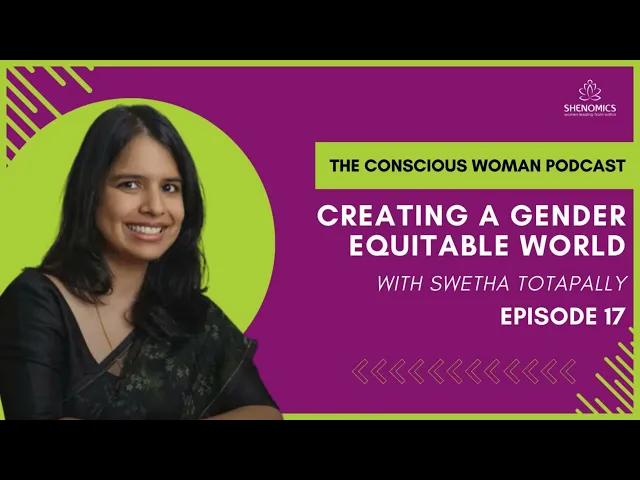
[Music] hey everyone thank you for joining us for this conversation with scha totali on creating a gender Equitable World gender inequality still hurts us everywhere is my genuine and honest answer it's not like we've won the battle scha is the regional director for dalberg Asia Pacific over her 13-year career at dalberg scha has led the film's global gender practice and developed a portfolio focused on addressing issues such as violence against women and girls sexual exploitation and unpaid care work violence against women and girls or violence against people who identifies that their gender or people who
identify as a sexual minority right scha brings a unique and informed perspective around what it takes to create a more Equitable world for women at all levels at the societal level at an organiz ational level and of course as an individual as a woman leader a mother and a wife and it's important to look at change across all of these levels because that is what it will take for us to reimagine and create a world that works for everyone especially women let's dive in welcome to the conscious woman podcast this is your host pavna T
our goal with this podcast is to bring you interesting and insightful conversations on a range of topics that will support you in both living and leading more consciously from conscious leadership and conscious inclusion to conscious eating conscious parenting and conscious passion this podcast is in conjunction with the leadership development work that we do to support women leaders in leading with mindfulness and compassion to learn more please go toomic.com hi thank you so much for joining me for this conversation I'm so happy finally I get the chance to speak to you this is wonderful so thank
you and thanks to you pabna I'm so glad that we're able to speak today wonderful so scha one thing that I've noticed in the Arc of your career is you are for sure a staunch advocate for gender equality and through the various things that you've done over the course of your career you've really advocated for gender equality in in in a variety of different ways and I'd be curious to know what informs this passion especially if we look back to your early experiences and and your life overall what has informed this this passion and this
vision of yours thanks BNA I guess for me at some point I really realized that the personal is political it's obvious now but in my childhood it wasn't and I think what I experienced and saw in my childhood both at the level of myself as an individual but also in the context of my family you know were deep inequities that just kind of seemed like dayto day and almost taken for granted and if you Tred to raise them you know it would just be the question of why are you even talking about it and some
things of course were also like in many families you know I had my own equivalent family equivalent of monsoon wedding things that happen that are really disturbing but are also just covered up and growing up I think I just felt like that's just me that's just my family it's very personal we keep it kind of closeted I think when I went into college there was this latent interest that I explored through some of my coursework but it always stayed in that personal realm and at that time when I was in university the term feminism was
still somewhat vilified actually right it was the the language back then was like if you're a feminist you're feminazi I think that has begun to change not fully as much as I would like to in the last 15 years or so but that was the culture in which I grew up and then when I came into the professional Workforce it was like a very different hat right it was you know work is very serious you're focused on the economy I was an investment banker in my first job even when I came to dalberg you know
I felt like I was working on issues that were really connected to the markets Financial inclusion digitization and it was only after a few years you know after being here at delberg that I I think I really saw how linked issues around gender Equity are to our markets to our politics to all of society and actually it's our mainstream language that kind of has it wrong right we so often we talk about GDP and GDP growth but for the purpose of whom and for you know to what end and really it should be for the
purposes of people and for families and the moment you start thinking about economic growth and that light in that context it completely changes you know your Vantage Point and how you think about Solutions I think that's the learning that I've kind of come into over my time over the last decade or so and then I think the other thing that I would say is that you know you have no Solutions you don't have a great society if you're not solving for half of humanity and women and girls are half of humanity and so it's impossible
for any of us especially in our line of work at dalberg to do our work well without taking into account gender equality yeah so true so true I think all the points that you shared are so valid the personal is political and yes women do take up half the sky so how can we how can we really Forge a better path ahead for for all of humanity without factoring in how it impacts women and if if it does indeed create Equitable outcomes for for all genders I'm curiousa where when you when you look at your
work in in social impact and in other areas that you're focusing on where are you seeing gender equality is still a serious concern and where is it still hurting us so what would be what would you say are the top areas that's a good question look I would say gender inequality still hurts us everywhere is my genuine honest answer it's not like we've won the battle anywhere whether it's in terms of our bodily rights our place in the you know our space in the workplace our representation and power and government and so I think we
have a lot long ways to go in all spaces and I think that you know we're also in a particularly painful time right now we in many geographies and context rights are being rolled back but the thing that I would say maybe as a more direct answer to your question I think there's at least one area that is very severely overlooked even in the context of all that has been done for gender equality over the last several decades and that I would say is is violence gender-based violence whether it's violence against women and girls or
violence against people who identify as a third gender or people who identify as a sexual minority right and that is pervasive it affects you know by conservative estimates more than a third of people all or a third of women all over the world and in some countries even more and and most people think that's an underestimate usually it's Violence perpetuated by intimate Partners so basically the people that we live with and it's something that kind of gets overlooked in most circles whether government circles or Foundation circles and it's usually overlooked because it's just cons considered
I think really hard to deal with it goes back to well this feels like a personal space this feels feel like it's normative what can we do about these issues and I think people find it just really hard to to deal with and therefore kind of put blinders on actually it's one of those things that impacts our ability to achieve our societal goals whether it's girls education you know improved maternal health and mortality whether it's higher and better economic outcomes for families you know gender based violence affects all of it yes yes and and the
scale of gender-based violence is is so vast it's it's almost shocking I believe a recent statistic that I read was that the number of women if you look at the number of women who have experienced some form of violence or harassment even yeah yeah sexual or otherwise that number could be as high as 80% just just that that number is is just so staggering so scha given how vast this problem is and as you mentioned it impacts so many other goals and objectives we would have for women whether it's in the areas of Education or
livelihoods or any anything that that would help create more Equitable outcomes for women what would you propose or what have you seen our potential solutions to minimizing the scale of gender-based violence for women thanks laa that's a it's a good question and I would start by just saying I think eliminating gender-based violence creates a more Equitable world not just for women and girls but for all of us and that's part of the the misnomer right we think we end violence just for the women and girls and of course we absolutely must and like it's our
humanly right to live without the fear of our own physical safety day in and day out but I think it also contributes to a better safer happier world for those all of us you know all of those who live with us as well in our us as well and look there's a lot of work that's been done on how to eliminate violence against women and girls we actually wrote a piece called the imperative to invest a couple of years ago that looked very closely at you know what works to end violence against women and girls
and there's a whole Rich body of evidence collected over the last 30 40 years by epidemics and we actually showed the links between implementing those Solutions and how to achieve societal goals especially around the stgs and I think there's maybe four or five things that really come through about what matters and it's one of those things where it's good news actually because you know that there are solutions that work despite the perception that this is just an intractable stubborn problem right you know and what what we've learned that it takes what we've learned about what
it takes is it takes a comprehensive set of solutions that work across all aspects of society everything from policies to services for women and girls to interventions in schools all of the you know engagement with civil society all of those things make a really big difference and I think it starts with you know how does government think about financing right where is the money even going and how to what extent and how does it address gbv or to what extent does even perpetuate gbv right we have to think about how policy around you know military
action has direct influence on the amount of violence that occurs that women and girls Experience day in and day out every time you wage war there is violence against women and girls right and so that is perhaps one of the most overlooked and perhaps biggest levers of change is actually what is our military spend and what is our approach and thinking around military policy and you know I think there's some statistics actually show that the amount of violence against women and girls that happens in a given year more losses to life due to that than
losses to life due to war actually so the comparison is not perfect obviously women and girls are lost in the context of War Etc as well but it tells you the scale of the problem it also highlights the scale of the differential spend in terms of the solutions as well we know how staggering military budgets are globally at the policy layer there's things that again people kind of Overlook it's not just about what happens you know when you have been abused but it's also things like what constitutes rape in a country context so what is
rape law what is family law is rape in the family context even considered right those are all things that have really different are treated very differently from country to country that have a really outsized impact in terms of the justice that women are able to achieve in in the country context then of course there's a question of like what is that service layer and service provision right so you know do you have access to contraceptives right and and sexual reproductive Solutions you know in the case that you do experience some kind of assault or abuse
what are the hel lines and hotlines how that you have that you're able to access how reliable are they what is the quality with which you are able to access those services are there domestic shelters in place that you can go to in case you need safety that really matters the question of how you know the legislative system and the judicial system come together really really matter especially in the South Asian context right where I think one of the things that you know in case women actually do speak up here oftentimes it's police themselves the
question women's morality and what did women do something wrong in the first place right and so unless you address kind of how our these particular aspects of our systems engage with women you're not going to achieve you know create safety for people to actually speak up and then you know when you talk about our civil society and vibrant and active Civil Society those are often the people who engage with women day in and day out right and they're also the people who are changing and working on engaging Norms of boys and men of often mother-in-laws
and families working in school the cool school system and outside of the school system to drive that change and that really matters as well and so that's why I say you know it's a it's a whole of society approach it's a comprehensive approach that that really matters we've seen that it works and it also works when you do it together and more effectively than when you do any of these individual types of interventions one oneon-one right so it is more effective when you put these things together than just say deeper focus on policies or just
a deep focus on on kind of need the whole package is with most things that require style change yeah so when we look at the the hope for a a more gender Equitable world at least if you look at what the world economic Forum puts out I believe the number is still that we're close to 100 over 130 years away from Full gender parity so we're not going to see it in our lives our daughters may not even witness full gender parity we're looking at a few Generations out you know what's what do you believe
how can we accelerate this process because 130 is is a big number so do you think there's a way to accelerate this process like what's how do you look at that well I I sure as hell hope so um you know for all of us for our next Generations in this moment it feels very difficult because of the global political climate that we're in I'm going to be really honest and and just saying that and to me I think the biggest shift that we need maybe two one is a shift in political will which all
of us know and that's what you know feminists and activists around the world fight day in and day out for and it requires you know for them to be effective much greater funding much greater mobilization to be able to effectively you know fight against I don't use the word lightly in this conversation fighting right but to to fight against anti-right actors I think the second thing is I don't know how controversial this is but I think we need to move away from capitalism as solution to gender equality and so what I mean by that is
that so much of the discourse around how to drive gender equality at least in mainstream spaces I'm not saying an activist space or even feminist spaces but has been around bringing women into the workplace giving them right their you know the right to work which again is like really really important I'm completely supportive of women's choice and agency and their participation in the economic sphere of our world but I think it has come at a cost of looking at the other aspects that also need to fall in place at the same time and so you
know what does care infrastructure look like how are we thinking about value in care and Care work in the first place how do we you know think about violence and basic rights and and all of these things are really intertwined and so because we've had this I think I would argue the somewhat narrow focus on let's bring women into the workplace and that's a solution that kind of feels happily acceptable to most of us and again it's a pretty controversial in many parts of the world still I don't think we're able to make progress on
these other pieces that you really need Sim simultaneously you know what rights in the workplace if you're not safe at home or safe at work what does it mean to be empowered in the workplace if you're also navigating all of the shifts at home right whether it's cooking or caring for children are caring for the elderly generation and so I want to be able to win those arguments and like make progress on those fights at the same time but I also in some ways think those are precursors to our women's ability to you know our
Collective ability to make progress and some these other fronts as well yeah and seg going into that because like yes on one hand you know we can look at gender gender inequality at a societal level but bringing it down to our day-to-day reality looking at the the workplace while it's not the only solution especially as you said if we only look at simply bringing women to work in the absence of other things that can support them it's not going to be the answer but just looking at the fact that it is for for many of
us who are working are a large part of our experience our data experience gets shaped in the workplace of course i' I'd love to know what you scha how you are approaching creating an equitable workplace because I know you are doing quite a you have quite a few initiatives in place to ensure that irrespective of whatever may be happening outside of work that at least when when that woman is in the workplace she is treated fairly and equitably so I'd love to hear more about that because I think there could be a lot to learn
from that for other leaders and other decision makers as well in terms of what they could consider as far as the workplace is concerned sure I can I can give it a shot and I would say like for most organizations it's a work in progress for for us as well and we're learning as as we're going I think of the most powerful things for us as an organization there's things that we do internally and then I think there's things that we do in the context of our work both of which I think I think matter
you know when you think about what matters in the workplace at the end of the day what are people looking for out of a work experience they're looking for challenge they're looking for great opportunities they're looking for purpose they're looking for camaraderie belonging you know and I think that is prob the first and foremost like are we giving people good meaningful work and growth opportunities no matter who they are that's kind of the core and the foundation of it and I think one of the things that I at least feel proud of about who we
are as as an organization at dolberg I think that we feel like we do really meaningful work because the sole purpose of our company and we haven't had a chance to talk about it yet you know we're we're advisers we're Consultants we're strategy advisers but our sole mission is to help our clients optimize social impact which means that all of the work that we do is optimizing for the benefit of people on our planet and that by Nature I think has a lot of purpose and meaning built into it so I think that's kind of
the first and foremost thing which is like what is the business and what is the business model then there's the question of you know what are the policies and practices and behaviors that we have in place within the organization as an organization in general we prioritize flexibility and you know this is of course a difficult Topic in the context of postco we've been trying to strike the balance alongside everyone else we're currently at three days a week back in office and two days a week you know kind of work from home it's an office first
policy but it gives you the flexibility of being where you need to when you need to by and large I think we also really have focused on especially when people become parents which is one of those inflection points right for people in the workplace we have tried to prioritize flexibility and leaving and flexibility for coming back Really in terms of individualized plans Etc with no impact to your professional career your trajectory and in some senses I'm I'm a case in point for that right I I've been on our management team for the last seven years
in the last four and a half or five years I've had three children including one in in the last year and I was asked to be a regional director at the same time that I was pregnant with my third child and no one questioned you know my ability to play this role in the context of having three very very young children and certainly even even being pregnant right and I think that is still pretty rare in this world there's a third thing that I would say that's linked as well to kind of parents and parenting
which is around you know how we even talk about our policies and who they for so by and large in India we have a maternity leave policy right six-month maternity bill there's not really provision for paternal leave and the way that we talk about our parental leave policy it's parental leave right whether you are a woman a man or identifies at their gender and so that is kind of the context of how we think about our parent to leave and you know you have the right to choose what kind of caregiver you want to be
whether you're the primary caregiver or the secondary caregiver and so in that sense we are trying to demonstrate also and encourage more men to be active caregivers in the workplace and one of the things I'm most proud about is that actually quite a few of our of men in our office actually take long parental leaves and demonstrate what it means to be shifting gender Norms at home as well and then beyond that within the workplace it's you know some of again back to the basics right how do you do Performance Management and reviews How Deeply
are you looking at gender parity across levels of the organization where does the decision- making sit and you know we're really diligent and pretty Vigilant also about making sure that we have that we're tracking our gender parity across all of our levels especially within our Senior Management we look at recruiting very closely from that perspective and then when you look across our senior management team whether on the Consulting side or also on our operation side we have lots of women represented in our in our senior leadership and so we take a lot of efforts and
Care around that to make sure that we're where we want to be as an organization and then I would say the last piece is so you know I bring it back to the content of our work I talked about at the beginning of like are you providing purposeful work I would say the content of our work quite a lot of it is specifically focused on gender equality right not just at dalberg but outside but outside of dalberg and that's where we've been able to push the needle on some of the issues that we've been talking
about right violence against women and girls the value of unpaid care work in society what does it mean to bring women you know to support women into the labor force women support women's entry into the labor force in a way that actually supportive with the context of their whole lives how do you think about institutional change no matter what kind of institution to be designed for gender transformative outcomes it represents a really big and core part of our portfolio and I think that's also another way in which we're shaping gender Equitable outcomes in this in
terms of who we are as an organization yeah th those are some really impactful measures and if I to just look at the research around what what does help create Equitable workplaces for women I I would say you you're really addressing a lot of those points because especially flexibility I think a recent study that I that I read said it still is among the top three preferences for women when they are choosing the the right Organization for themselves and as many as 80% of women leave if there is lack of flexibility even your point about
including encouraging men to become caregivers is is such an important point because you can have the right maternity policies in place but if we're not also encouraging men to step up as equal partners and caregivers then we're we're simply perpetuating the status quo that it's it's it's it's the woman's responsibility exactly exactly on that note and you know Switching gears to the personal domain because as you said we can't only look at the workplace and there's only so much we can do in the workplace we also have to be mindful and supportive of creating the
this kind of equality outside of work as well especially in our in our homes and to this point of encouraging men to step up as equal partners and equal caregivers what's what's been your experience like how have you been able to do that in your own in your own personal life yeah my husband and I so we've been married I guess it's been eight years it was eight years a couple of days ago we have spent a lot of time talking and working through this and in many ways I to be honest it was inspired
by some of the work that I've done in the delberg context I think it was I don't know seven or eight years ago we were do I was doing some work on unpaid care work in the context of America and I remember reading um Unfinished Business by anarie Slaughter and then it prompted like all slew of conversations at home we didn't have kids at the time right of like how do we think about structuring our time who does what kind of work at home what would it look like if we were to have children and
what does it mean to be supportive because both of us you know are working professionals what does it mean to be supportive for each other and I remember in that period we were given this really great piece of advice by one of ashu's colleagues who basically said this you know we're all many of us who are in working couple relationships aspire to 5050 right not everyone will some people will you know kind of prefer you know men working and women spending less time at home some might flip them switch all to flip the model all
together and and I see lot more and more examples of women being the primary Breadwinners and and actually choosing to stay home and and be with you know children take care of other responsibilities but for many who are working couples to the state I think 50/50 is kind of the model or ideal they aspire to and the advice that she gave us was 50/50 is not a point in time 5050 is something that you achieve over the course of a lifetime and so what that means is you know there are moments where someone may step
back for one person another May step you know and then three four years later or five years later then the rules revers and you kind of make active choices around that I remember that being really important for us then because when I moved back to India in 2018 that was a very conscious decision to say okay you know I should actually like put his job to enable me to come back to India and work for dalberg and he found a new job right so that was a really big moment for us and then in that
context I was about to have my our first child so not only had he left his first job we took four months of parent to leave together which again is not so common I think even when people when men do get parental leave off and still people kind of Stack their parental leaves to maximize the time off together but we were able to take it together which was a really lovely and rewarding experience for us and then when we were going back to work at that moment we actually both came back at three days a
week because we were optimizing to your point for flexibility for both of us spending time with our child our oldest son now Nan and so that was really important but then as the years have progressed I have kind of stepped more fully back into work I'm back fulltime right now as especially in the current role that I've taken and he's the one for for the last two or three years has continued to be part-time over the years and you know that it that takes sacrifice that's not easy in this world and so that is one
of the biggest things that we have had to navigate and discuss over and over again over the over the last several years and I'm I'm really grateful that he has helped both of us defy gender Norms because I don't think it's I don't think it's easy to do that and the second thing that I would say is that but it also takes a lot of other structures to fall in place right and in India especially where there's a lot of domestic workers and staff they play also a really outsized and often invisible role in enabling
working mothers or working parents in general to live their their working lives and I guess the reason I highlight them is because so often we're used to describing them as as help often they're actually like our staff often they're really quite underpaid it is that particular inequity right that enables us to be thriving working professionals and I think there's a hard look that we need to take also as Society in terms of how do we value them what are the rights that they have right especially in a place like India where their work is almost
entirely informal the rights are few many of them are working 247 or often at best six days a week and their salaries are for many minimum wage but minimum wage is not really living AG in this context and so in some ways it's also a call to remember and recognize actually our professional success is on the backs of other people who are doing our care work alongside and for us and we have responsibility back to them in terms of how we think about paying them which I I personally think needs to be better than what
is our current status quo yeah no that's so true and for me as well personally I I realize this the the really the true sacrifice that even the women who are supporting us as as as our our domestic staff the the sacrifices they are making I remember when I was leaving India to move to Singapore my my help who who essentially helped us raise my son as we were leaving she said you know what I I have to I have to say something to you my my children have always been very jealous of of your
son and I'm like really why is that and she like because for the last few years they they believe I've spent more time and more of my energy taking care of your son than I have of them yeah and until she said that sha it never occurred to me that wow yeah she's she's actually making a huge personal sacrifice to to help me and had she not helped me for all of us working women if we don't if we didn't have this kind of support we wouldn't be able to to do what we do so
you're right I I think we can't ignore the you know the plight of of of these women and as you said in India I mean it's it's it's still largely informal they still don't have a lot of the the rights and and policies in place to really support them as well so I'm I'm I'm so glad you you raised that point and equally I think what you what you said about creating that 50/50 partnership with your partner I think that was such a powerful point that it's not on a day-to-day basis if you look at
it across the lifetime then you realize yeah it's okay it's some at some point you know your partner may take the lead and maybe you step back some point you take the lead and you know he steps back it's okay I mean we all have to do our part as long as we're doing our part to really make make the whole thing work so sha outside of that but that's I mean that's of course a big big piece finding that equal partnership finding that support system at home whether it's through you know our domestic staff
or other family members I mean that's that's a big big piece of the pie other than that of course I think as as working women if we're going to continue to support our ambition we need to be very you know hyper I suppose Vigilant in and how we prioritize our time and our energy so that we are showing up fully for all the things that are important to us so I'm curious whether what is you know what what are a set of let's say daily practices or habits that you might have in place that support
you in showing up fully as as a leader that you are um I would say maybe it's a couple of things one there's a macro thing and then there's some day-to-day things I think one is now that I've had three kids and I've gone through a parent to leave and coming back to work three different times in a pretty short stretch what I've learned is what I need really evolves every five six months and so you know just kind of listening to my body and knowing when things feel off Balan has actually been a really
big part of it and then adjusting how I work accordingly right so for some stretch three or four years ago I was working half days every you know every day for five days sometimes I took Fridays off sometimes I was like okay I'll you know clock off between 5 and 8 and then I'll sign back on but then on the X days I won't be online and it changes every time but it changes pretty often but I think that has been part of the beauty of it is like children change our families change we as
individuals change and therefore our needs change and learning to recognize that has actually been really important for me in in the last several years on a more daytoday basis I would say there's some things just around structure that I've been experimenting with over the last year that have really helped I'm a morning person and my best thinking is in the morning and so I pretty religiously now block off like an hour and a half or two just to start my day with my deepest thinking work so that I preserve like the writing time the time
to just like plan the time to just take the step back and then on Friday I try to do no meeting Fridays as well so again it creates like structural space for me to think and reflect and not to react the SEC that that's probably the biggest structural thing the second the second thing is probably more from a behavioral perspective which is I feel like we're so often just working in what feels like a very very busy world and I try not to make the time that I have with people feel busy so for me
at least business creates a sense of like anxiety cre feels like a sense of stress makes me feel like I'm not doing deep thinking makes me feel like I'm not really engaging with people that I want to in the way that I want to in the way that I show up and so one of the things that I am working on is whether a conversation is five minutes or two hours to focus on just being really fully present and not worrying about the clock and that has just helped me shift how I show up and
engage and help focus on on quality and I don't know those are probably the two biggest ones that I think maybe matter the third one for me you know I do a lot of work globally and so it's always a practice of when do I take evening calls when when do I not and and you know just really focusing on nighttime Rhythm and routine that's just stepping away from from the office that has become increasingly important over time I think that we're pretty much we are from any of us in an always on work culture
and you know the the phone is always buzzing there's always always a text here and there something always feels urgent and I have for myself discovered that actually what I really need to do is to be able to most nights I can't do it every night is to actually just clock off fully when the kids are asleep and preserve just one or two hours that are completely away from from the office and so then between that and weekends which are almost entirely off for me now just because I can't have three kids and you know
they require care that has that has gone a long way for me and then the last thing that would say it's not a practice or anything but I've tried to internalize learning to just love the ride every day has so many ups and downs and there's you know people give me good news every day people give me really bad news every day um and I think I've just started to fall into a pattern where like it's kind of fun and that's part of the play and you know when you're enjoying work you feel happier and
make a more balanced person that's required for me a lot of work around compartmentalization I'm not a natural compartmentalize this is like the first time my entire professional career that I can say I've like started to learn to compartmentalize but the compartmentalization along with just kind of experiencing the highs and the lows and kind of like feeling it fully I think has also just made a difference in terms of how I show up and how I feel dayto day and that that's that's a good segue into the next thing I'd I'd love for you to
share your thoughts on which is you know what supports you in living more more consciously because and what I mean by that is just living with a greater awareness of at the end of the day what's most important to you and ensuring that you are whether it's work or or personally that you are honoring you know the priorities and values most important to you and at the end of the day you're able to end your day saying yes I I'm I'm I'm I'm proud of the way I'm I'm living my life so what what what
for you scha at the end of the day you know what what gives you that peace of mind as your head hits the pillow what gives you the sense of contentment to say yes this was a this was a day lived well we don't always do it but in our best moments my husband and I we have a practice of gratitudes and so we just take a moment to reflect and chat about you know we share back and forth what are we grateful for from the over the course of the day it's something that we
often do with our kids as they're falling asleep as well and that is a just a really nice reminder right of what is going right in the world what is going right in our in our lives how lucky we are in the context of everything that is happening around all around us and then the responsibility that we have to also help try to create a better world for those of us you know for everyone around us as well right so I would say that's the one and then we also take time you know every six
months or a year to like step back and reflect more broadly and then just to your point about Consciousness to consciously talk about you know actually what are our values we've at some point actually wrote them down as a family and have like our top 10 values we revisit are what are the values that we really care about how we living according to those the values need to be changed what does that mean for the next couple of years in our lives Etc but the day-to-day is the small things and the big things is you
know actually like planning the values and and talking about them and deliberately making changes in our in our lives to help us live live up to them right and speaking of values I I first of all I love that you're looking at values not just individually but as a family as well that's that's quite that's really beautiful and Powerful speaking of those values what what would you say are those for you because it looks like you do consciously step back and reflect on those so if if I was to ask you for these values if
if there are you know two or three things that you would want the world to remember you as or for what would you say those values would be for you that's a really good question I don't know if I'm going to fully answer it for myself or the family but it's some common com of those generosity is one that's really important to us generosity especially when things get tough curiosity and kind of just engaging with the world in an openhearted way and wanting to learn from the experiences and the perspectives of others and more and
more so probably because we have children and because they really Infuse it fun and play with the recognition of how important that is to living a a balanced and meaningful life beautiful beautiful thank you so mucha before we close this I do want to make this actionable for anyone who's listening to this so we started off talking about how important it is to create gender equality not just for women because it helps everyone at the end of the day so in our individual capacity anyone who's listening to this what part can any one of us
play even if it's something small that each of us can do in creating this gender Equitable world that's better for everyone I think we can look at our own family structures and how we're operating as a family as a starting point and as individuals in our own lives and then you know as a little unit and a a little system within ourselves and think about what are the changes that we want to make within that unit and for the Next Generation that's probably the most tangible and then I think in our other the broader systems
that we engage with right so whether it is the workplace and then when you see something say something I I think observation is is really really powerful oftentimes you don't even know when a policy is inequitable or needs to be revised to create a better workplace but then also within our community institutions and and our governments and asking more of the the people who work to represent us as well and so we have places to play in all of those spaces I think it's a question of where each of us feels number one most comfortable
and number two where we feel like we have the most agency to push the system a bit and I would say that as every single one of us as agency whether you know we're whether we're women whether we're girls whether we're men whether we're boys whether we identify as their gender yeah and and I think that's that's the the the most important point that every one of us does have agency and every one of us can do our bit to to create this this equal World for for everyone sha thank you so much for this
conversation today and thank you for the work that you are doing because it is very very much needed for for for all of us in in creating the kind of world I think for all of us as well as our future Generations the kind of world that we hope they can also thrive in so thank you so much and I wish you all the best as you continue to do this and thanks back at you bavna I so appreciate the way in which you look at leadership it's a very feminist approach to leadership and I
love the way in which you have conversations with people about how to be better leaders and more empathetic leaders and really bring their full authentic selves and I think that's something that you know women and feminists do really well and I'd I'm excited to see more of that shaping our world so thanks thanks back at you thank you thank you thank you so much thank you for listening I hope you found the conversation to be insightful if you did please do leave us a review as that would be most helpful in helping others discover this
podcast as well to learn more about the work that we do please go toomics.com we look forward to having you tune in again for future episodes until then may you be well may you be happy and may you be at peace