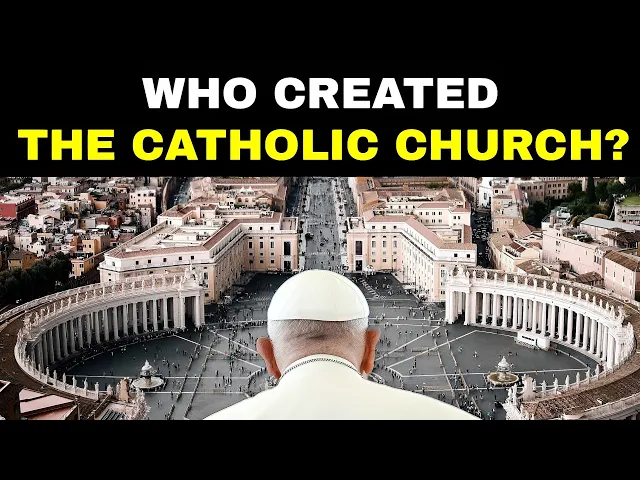
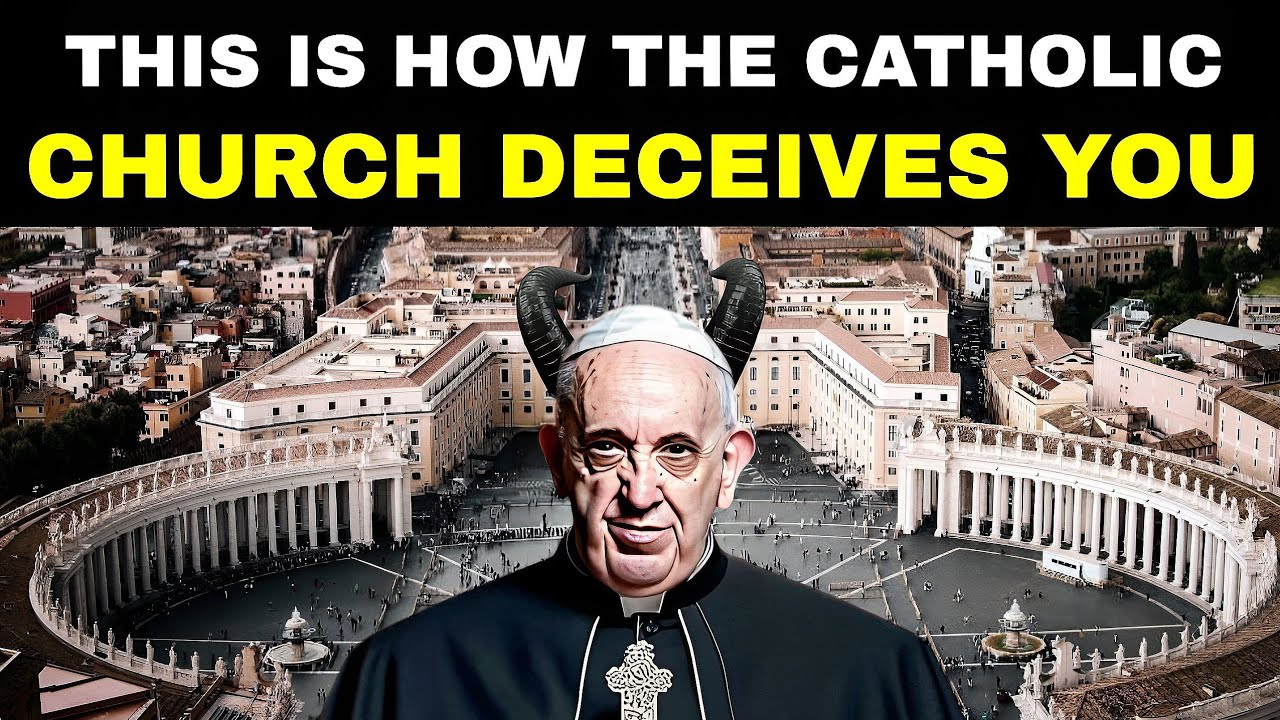
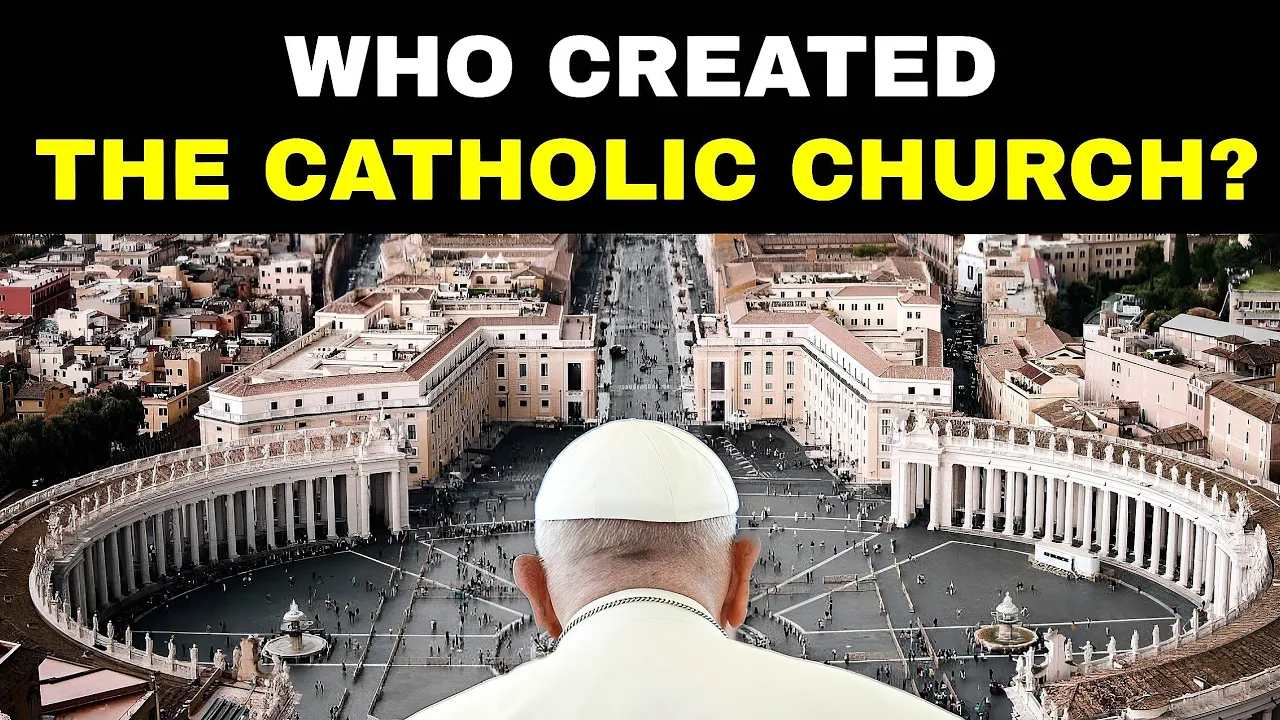
[Music] in the intricate tapestry of human history one of the most powerful and influential religious institutions in the world has emerged the Catholic church for centuries it has shaped Nations dictated customs and maintained unquestioned Spiritual Authority from Millions but behind its imposing facade are questions that few dare to explore is this really the religion that Jesus established what connection does it have with the early Apostles and how did the Roman emperors influence its development why are there so many differences between the early church and the current structure of Catholicism is the Vatican hiding secrets about
the past of the Catholic church is it possible that some of its doctrines are based more on human Traditions than on the word of God and finally how did it become one of the greatest political and cultural forces in the world in this video we will delve into the deepest corners of history and unmask the Mysteries surrounding the Catholic church we will analyze its roots its Transformations and its controversies always in light of the Bible and historical evidence before we continue we would like to know your opinion do you believe that the Catholic church is
as many claim the authentic Church established by Jesus Christ it would be an honor to hear your perspective on this let's get started concerning the origin of traditional Catholicism it is true that Catholic dogma is presented as a declaration that the Catholic church is the true church of Christ however to truly understand the birth and evolution of Catholicism it is crucial to look Beyond doctrinal claims and examine the historical record these do not always match the official image that the church has promoted over the centuries and often reveal complex and uncomfortable details that many prefer
not to explore the history of early Christianity marked by internal struggles theological differences and the gradual consolidation of power in Rome is a subject full of nuances that do not always fit into the simplified narrative sometimes presented one of the fundamental aspects in the formation of traditional Catholicism was without a doubt the figure of the Pope according to Catholic teaching Jesus gave Peter one of his Apostles special authority over his church which has been interpreted over the centuries as the foundation of papal Primacy this idea of a centralized Authority in Rome was essential to the
cohesion and expansion of the Catholic Church especially at a time when Christianity was in constant conflict with other interpretations of Jesus's message over the centuries this papal Primacy became a fundamental pillar of Catholicism allowing the church to maintain a unified hierarchical structure although not without its own challenges and controversy now it is important to understand the meaning of the word Catholic and its origin the term Catholic comes from the Greek catholicos which means Universal or total that is something that encompasses everyone without exclusions in its earliest uses within Christianity this term did not have the
connotation of a specific religious denomination as we understand today but rather it referred to the universal church or the universal Christian Community that is to the church that extended to All Peoples and Nations regardless of their origin culture or language in its early days the term Catholic was used to describe the inclusive and all-encompassing nature of early Christianity a movement that sought to unify Believers from diverse regions and backgrounds into a single Faith as Christianity spread Beyond Judea especially throughout the Roman Empire the term Catholic helped differentiate Christians from those who followed other religions or
sects in this sense being Catholic meant being part of a unified community of believers who shared not only the teachings of Jesus but also a common organizational structure and a uniform interpretation of those teachings the first time the term Catholic is used in this context is in a letter from St ignacius of Antioch around 110 after Christ who refers to the church in terms of the Catholic Church to emphasize its universality and its connection to all Christians throughout the world it was not just a geographical term but a principle of doctrinal and spiritual Unity thus
the concept of the Catholic Church implied a unified faith in the gospel of Christ and a system of shared beliefs and practices that transcended local or Regional differences it is interesting to note that in its Origins the use of Catholic was not necessarily linked to the idea of a centralized ecclesiastical hierarchy as in the case of the modern Catholic church but was used to describe a broader Unity encompassing all Christian communities United by their common faith in Christ over the centuries however the term took on a more institutional and doctrinal meaning especially with the consolidation
of papal Authority in Rome the definition of dogmas and the creation of a hierarchical structure that identified the church with the figure of the Pope as its visible head thus the term Catholic went from denoting a universal characteristic and spiritual Unity of the early church to becoming the name of a specific religious institution that over time it was distinguished from other branches of Christianity such as protestantism and Orthodoxy especially after the Reformation of the 16th century now the first four centuries of Christianity are key to understanding this topic Christianity began with the ministry of Jesus
in the first century who preached a message of Love forgiveness and salvation after his death and Resurrection the apostles continued to spread this message founding communities of Believers in Jerusalem and in various regions of the Roman Empire these early Christian communities met in homes where they shared bread and the teachings of the Apostles giving rise to what would later be known as the Lord's Supper and the first Christian liturgies during the first centuries Christianity developed in two major currents which despite sharing faith in Christ presented significant differences in their practices and Theological approaches first of
all the judeo-christian church Jerusalem led by the apostles Peter and James this Christian Community maintained a close relationship with Jewish Traditions considering Jesus to be the Messiah promised in the Hebrew scriptures for this reason they sought to preserve practices such as circumcision and compliance with the mosaic laws but adapted to the new Christian faith this movement maintained a strong link with the Jewish tradition and saw Christianity as a continuation of the Hebrew Faith the gospel of Matthew was written primarily for this community with a special focus on showing how Jesus fulfilled Old Testament prophecies in
second place the Gentile Greek Church founded by the the Apostle Paul this Christian Community was composed primarily of non-jews or Gentiles and was characterized by rejecting many of the Jewish traditions instead of following the mosaic laws Gentile Christians embraced salvation by grace and freedom in Christ emphasizing Faith rather than works of the law in his letters Paul stressed that salvation was a gift from God to all regardless of origin and he promoted an inclusive faith that welcomed Gentiles from all over the GRE Roman World these two currents the judeo-christian and the Gentile although they shared
the core of the Christian message began to differentiate not only in their religious practices but also in their theological understanding this initial division is crucial to understanding the evolution of Christianity which over time increasingly distanced itself from Jewish Traditions especially after the fall of Jerusalem in 70 after Christ and the spread of Christianity throughout the Greco Roman world now it is important to highlight that from the 1st to the 4th century Christians were subjected to intense persecution by the Roman Empire these persecutions which sought to eradicate Christianity actually had the opposite effect they strengthened the
faith of Believers and fostered a sense of solidarity and unity within Christian communities despite threats and violence many Christians remained steadfast in their faith and martyrdom became one of the most powerful testimonies of their devotion some key events of the persecutions include first of all 64 after Christ Emperor Nero began the first great persecution against Christians unjustly accusing them of being responsible for the burning of Rome this persecution was particularly brutal and many Christians were martyred in atrocious ways in second place the second and third centuries during the Reigns of Emperors such as Deus and
Diocesan persecutions intensified Christian texts were ordered destroyed and church leaders executed the church however not only survived these attacks but as repression increased its structure and organization became stronger martyrdom became the highest honor for Christians as it was seen as an act of total Fidelity to the faith in Christ Martyrs were seen as faithful and their sacrifice was considered an example to be followed by the entire Community during this period currents such as the gnostics also emerged which proposed a more esoteric and philosophical interpretation of Christianity the gnostics rejected many of the teachings and practices
of the early church which led them to develop a doctrine that contrasted with the Orthodox view now during the 4th Century Christianity underwent a fundamental transformation that took it from being a persecuted Faith to becoming the favor religion and eventually the official religion of the Roman Empire this transition was marked by decisive events such as the Edict of Tolerance in 311 and the Edict of Milan in 313 and above all by The crucial role of the emperor Constantine it is in this period under the leadership of Constantine that we can historically identify the rise of
what would later be known as the Catholic church since it was during this time that many of the structures and practices that would define the Catholic Church as we know it today began to be Consolidated when Constantine took up the Edict of Toleration which had already been issued by the persecuting emperor garius in 311 he adapted it into a new decree known as the Edict of Milan in 312 this decree put an end to the persecutions and was issued after the defeat of maxentius his co-emperor in the famous battle of the milvian bridge from that
moment on Constantine began to form what would become the official religion of the Empire although Christianity was not immediately declared an official religion this process marked the beginning of what would later be identified as traditional Roman Catholicism at the time of Constantine Christianity was composed of three main groups Jews Gentiles and gnostics each played a role in the identity of this nent ecclesiastical structure the early church depended on the scriptures although the New Testament had not yet been canonized it was an ongoing process however the apostolic writting ings were widely used in both church and
home Gatherings particularly in the breaking of bread this early church had a basic theology centered on the Plan of Salvation in Christ Jesus a salvation by grace it was a supportive and empathetic Community characterized by Mutual support among its members especially towards the persecuted and impoverished Christianity in its early days was based more on the Practical experience of Faith than on elaborate theologies now when the church stops St being persecuted and became the religion of the Roman Empire a significant change began the church went from being a movement to becoming an institution institutionalization brought with
it new theologies and schools of thought but it also had a negative impact on its testimony before Constantine the church was not a formal structure it was a movement in opposition to power structures the Roman Empire persecuting the church as a dangerous movement persecuted any attempt at ecclesiastical organization destroying temples and prohibiting the construction of a Consolidated structure however by declaring Christianity the official religion Constantine gave it an Institutional character marking the beginning of Roman Catholicism Constantine generated economic resources to finance the Bishops each City Bishop including that of Constantinople received a salary from the
emperor the seat of Constantinople which was formerly Troy the inspiration for The Iliad all also known as trois in the Pauline letters and in Acts became the capital of the eastern empire under Constantine today this region corresponds to Istanbul in the East specifically in Constantinople church leaders were known as Patriarchs thus we find the patriarch of Alexandria the patriarch of Ephesus and the patriarch of Constantinople who received a salary financed by the emperor in addition these Patriarchs began to receive favors from the Imperial power over time the Imperial power began to incorporate other religions into
its orbit these religions joined Christianity which at that time was still identified as traditional Catholicism which gave rise to the formation of a new theology this theological development combined lines from the Bible with influences from other religions thus began to take shape what is known today as traditional Roman Catholicism now in this stage of institutionalization and consolid ation prominent theologians emerged who contributed to the construction of this new Christianity structured as a political and religious power among them is St Augustine of Hippo who lived between the fourth and fifth centuries St Augustine contributed to the
formulation of the Theology of purgatory and the doctrine of predestination marking an important milestone in the history of Catholic theology later in the 6th Century the famous Roman Bishop Gregory the Great Gregory the Magnus appeared born in 540 and died in 604 Gregory the Great played a crucial role in the institutionalization of the church he ruled between 590 and 604 and is recognized as the first official Pope his leadership Consolidated the hierarchical and structural character of the church in this new historical stage it was Gregory who building on the theological Heritage of Augustine and Jerome
shaped traditional Roman Catholicism what exactly did he do he established the use of Latin in the Liturgy and introduced the concept of the mass as it is known in the Catholic tradition Gregory also dogmatized the practice of praying for souls in purgatory finally Gregory laid the foundations for the veneration of saints promoting the custom of having images or statues of them he promoted Gregorian chant and also encouraged missions being a great promoter of missionary work Gregory founded canon law a legal system that covered both the ecclesiastical and civil spheres this canon law became the basis
for a Theocratic Society characteristic of Western Europe in medieval times this legal system not only regulated ecclesiastical life but also influenced the subsequent development of criminal civil and administrative law now how did the priest's vestments come about they originated in medieval times in a context in which Constantine had made Christianity official as the religion of the Empire that's where Christmas was born along with many other Traditions furthermore in the 4th Century infant baptism emerged although there had already been an intention to baptize children previously however it was under Constantine that infant baptism was institutionalized also
during this period private confession of sins to priests was born and significantly the practice of Chastity was established for priests all this is part of the package of traditional Catholicism that persists to this day but where does all this come from According to Catholics many of these practices are based on biblical texts however although some ideas such as the clothing of priests find influence in the Old Testament there is also a strong influence from other religions and traditions now when Constantine decreed that Christianity was the only official religion of the Empire he began an intense
political propaganda that sought to evangelize the other religions by force at sword point this process generated a religious syncretism a practice that was also later encouraged by Charlamagne during the carolingian Empire Charles the great around 800 after Christ became the first Holy Roman Emperor now what was the problem the eagerness of the Catholic Church backed by the power of the state since the time of Constantine it was to dialogue with other religions to christianize them and merge their Customs which further fueled religious syncretism for example Christmas December 25th was originally a holiday dedicated to the
Invincible Sun related to the winter solstice in Rome this celebration was christianized decreeing that that day would commemorate the birth of the only son of Justice Christ likewise indulgences were established and the belief that the relics of the Saints had the power to Grant salvation was promoted all this arose as a result of adopting and formalizing practices from other religions which gave rise to traditional Catholicism now could we speak of a western Catholicism and an Eastern Catholicism is there any difference between these two currents before the Protestant Reformation in the 16th century there were two
main currents within Catholicism the Church of the West known today as the Roman Catholic church and the Church of the East which was renamed the Greek Orthodox Church which still persists in the 16th century with the Protestant Reformation a third Christian current emerged the Protestant Church which later divided into several denominations it is important to highlight that one of the fundamental pillars of Catholicism is the figure of Mary whose mariology began to develop in the 4th Century giving rise to the cult of Mary which includes specific practices of veneration and devotion towards her however Mary
and dogmas such as the Immaculate Conception proclaimed in 1854 which maintains that Mary was conceived without original sin and the Assumption of Mary declared in 1950 which states that she was taken to Heaven Body and Soul were formally defined much later now the question we must ask ourselves is this is Catholicism really the authentic Church founded by Christ this question is fundamental in the debate about the true identity and teachings of the church that remains faithful to Jesus Christ below are some reasons that cast doubt on whether Catholicism meets the criteria of the true church
according to the Bible number one the union of politics with religion Catholicism especially since the time of the Roman Empire has been deeply linked to political power the institutionalization of Christianity as the official religion of the empire under emperor Constantine marked the beginning of a symbiotic relationship between church and state this Union led to the accumulation of political and economic power by the church something that contrasts with the Simplicity and humility taught by Jesus and his Apostles Jesus himself said my kingdom is not of this world clearly separating his spiritual Mission from any Earthly political
structure number two there is no record of Peter leaving a legacy of popes Catholicism claims that the Apostle Peter was the first pope and that there is an unbroken line of apostolic succession from him however there is no biblical or historical evidence that Peter was ever appointed as a supreme leader of the church in the New Testament Peter is mentioned as an important Apostle but not as an exclusive authority figure furthermore the Bible does not record Peter leaving instructions for establishing a succession of popes this Doctrine is based more on later developed Traditions than on
biblical Foundation number three heretical doctrines not based on the Bible over the centuries Catholicism has introduce doctrines that have no support in scripture examples include the dogma of the Immaculate Conception of of Mary papal infallibility purgatory and the veneration of saints these teachings although defended by the Catholic Church are not found in the Bible and in many cases directly contradict its teachings for example the Apostle Paul gives a clear warning in Galatians 1:8 about not adding to or distorting the gospel message let us note what the biblical account says but even if we or an
angel from heaven should preach to you a gospel contrary to the the one we preach to you let him be a cursed number four religious syncretism Catholicism adopted and merged religious practices and symbols from Pagan cultures to facilitate the conversion of its people for example the veneration of saints and virgins in Catholicism has parallels with the practices of worship of pagan deities in the Roman Empire this has led to a syncretism that dilutes the original teachings of Christ instead of maintaining the purity of the Gospel this mixture of traditions has incorporated elements that have no
basis in the original Christian faith number five image worship the Bible explicitly condemns idolatry and the use of images in Worship in Exodus 20: 4 and 5 God commands you shall not make for yourself a carved image or any likeness of anything that is in heaven above or that is on the earth beneath or that is in the water under the Earth You shall not bow down to them nor serve them for I the Lord your God am a jealous God visiting the iniquity of the fathers on the children to the third and fourth generation
of those who hate me however in Catholicism the veneration of images and statues of saints is common although the Catholic Church defends this practice as veneration and not worship in practice many people place their faith in these physical representations something that contradicts God's Commandments number six mediation of Mary and the Saints Catholic Doctrine teaches that the faithful can pray to Mary and the Saints to intercede before God on their behalf however the Bible declares that there is only one mediator between God and Men let's read 1 Timothy 2:5 for there is one God and one
mediator between God and Men the man Christ Jesus the practice of seeking mediation outside of Christ contradicts this teaching and can be considered a deviation from the gospel number seven infallibility of the Pope the dogma of papal infallibility officially proclaimed in 1870 during the first Vatican Council holds that the pope cannot ER by speaking EX cathedra in matters of faith and morals however the Bible teaches that no human being is perfect or free from error all have sinned and fall short of the glory of God this Dogma grants the pope a status that scripture reserves
only for God number eight elevation of tradition above scripture Catholicism holds that the tradition of the church has the same Authority as the Bible and in practice tradition often prevails over scripture yet Jesus condemned the Pharisees for doing something similar let us read in Mark 7:9 he said to them you are quite willing to reject the Commandment of God in order to keep your own [Music] tradition the true church must base its teachings solely on the word of God dear listeners throughout this video we have shared valuable information that we trust has been edifying and
a blessing to your lives although we could continue to go into more details we believe that what has been presented is sufficient for now in concl inclusion it is important to reflect with humility and sincerity on such a crucial issue the Catholic Church despite the claims of many is not the true church established by Jesus Christ dear listener if you are part of Catholicism we sincerely invite you to examine the scriptures with an open heart and to seek the truth in the pure gospel distancing yourself from Human Traditions that could lead you away from the
path that Jesus taught us if this message has touched the depths of your heart we encourage you to take a step of Faith return to Christ repent and follow him according to the teachings of his word Jesus calls you to an authentic relationship with him based solely on the truth of his gospel and so we come to the end of this video thank you for being part of our Channel God bless you abundantly until the next video [Music]