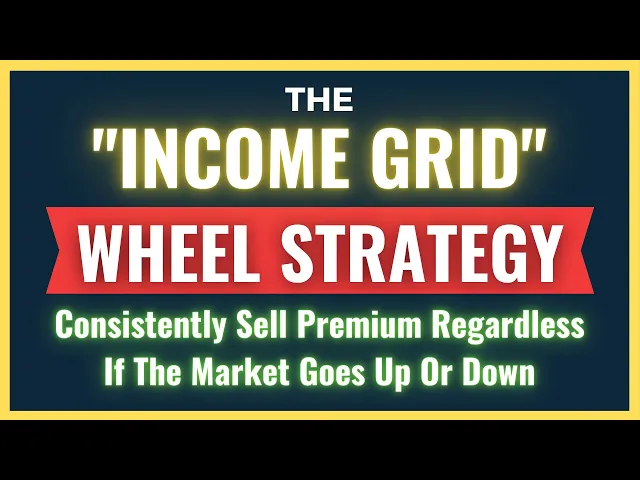
all right alrighty so today I have another view strategy video for you guys and I've pulled you guys not too long ago asking you guys you know what videos you would like me to create more of and the number one most popular topic is on the real strategy so I have a video for you today which is called the income grid real strategy and the whole idea here is to consistently sell premium regardless if the market goes up and more importantly if the market goes down because we all know that the real strategy weakness is if you get filled on the cashier coupled and the market continues to go down then you're in trouble because you have to just hold on to the stock until it finally comes up so I've changed this real strategy slightly all right so that it becomes like an income grid so that even though if the market drops or even crashes you still can continue to sell a premium right so I'm going to explain more on this on the latest slide but first of all just have a quick recap on what the real strategy is and if you're not familiar what the real strategy is it's actually a very simple strategy right you just start off by selling a cash secure right a cash a couple just means that you know you have the money to fulfill the obligations to buy 100 shares of the underlying stock at the strike price which you sold this cash check output now some people sell the cash check output hopefully that do they do not want to get assigned right but if you do get assigned right you will get 100 shares and then with the 100 shares you can then sell a covered call on it right so this cover call you can choose to sell at the same level which you sold the Cash ticket put so this way all you're doing is just getting the premium from this too right the cash check output and cover call or you could just sell the cover call above the cash to carpool which means you're actually selling the cover call above where you went long 100 shares so this way you also get capital gains on the 100 shares which you bought right now after sharing the cover call the aim here is to have the stock go above your cover call so that it expires in the money and your shares will be caught away so once your shares is called away right netnet you have zero position and you do this all over again so this is an income strategy but the problem is that if the market continues to go down after you get fuel on this 100 shares you will realize it becomes hard to sell this cover call but again I'll go through this later on so first of all let's talk about this traditional real strategy right so the basis of this real strategy is to simply just sell a cash check output at a single level then once if it's exercise you sell the cover call rinse and repeat right so for example right you take a look at the chart so most people when they enter into the real strategy what they do is that they will try and use technical analysis right they'll try and take a look at the chart and they see that oh this is in an uptrend so I want to sell a cash check output somewhere below the last low right the previous low or below the moving average or wherever it is that they think that the market would you know rebound after going back down for a while right ideally they want to sell a cash secure put and that it never gets filled on the cashier that means the market never goes below that they never get a sign on the hundred shares and they just get the premium and they just want to keep doing this right so I'm going to give you an example so let's say you have ten thousand dollars in capital to use on the wheel strategy right so maybe this 10 000 is part of your big portfolio or you just want to commit ten thousand to just a single stock for this stock to do the real strategy now this is our atnt now first of all I'm not saying that you should use it on at T I'm just using this as an example because this is actually quite a low price stock right so this is easily doable with just ten thousand dollars right if you want to do this on Google you will definitely need much more money you want to do this on Amazon or any other tech stocks that are much more expensive right ten thousand dollars is definitely not enough all right so for this example let's say you have identified that you want to sell the cashier put at 19. 50 so this is the level you want to sell your cash check output at so hopefully your you know you want the stock to just stay above this cash output right at expiration then you just collect the premium right you don't have to go through the hassle of getting assigned on it so if you have ten thousand dollars in capital what you'll be doing is you'll be selling five cash check output right because each cash secured put right let's say if you get few 100 shares on the underlying stock you will need to put up a thousand nine hundred and fifty dollars in capital so it's roughly two thousand dollars uh per capacity output right so since you have ten thousand dollars in capital you can afford up to five cash check output so even though if you're five cash check output get uh assigned you have the money right so this is the goal down here so you sold the cash coupled 19. 50 you sell five of them so let's say the stock goes down and it closes at 19 at expiration so at this point of time you will be assigned on the cash account board right and then now you'll be long 500 shares so at this point of time what you want to do is you're going to sell five cover calls so you're gonna sell five cover calls so in this example I choose to sell it at the same strike price as where you sold the cash check output so in this case all you're doing is just earning the premium from selling the cash check output and the cover call so total you have like 10 short options that you're receiving premium on which is going to be pretty nice in terms of income so you sell the five cover calls at 19.
50 and let's say if the stock goes up and closes above 19. 50 at expiration what's gonna happen is that your shares is going to be called away and then your position is back to zero and then you do this all over again right so basically this is the ideal situation which you want when you're doing the wheel strategy right now here's the problem what if the stock actually continues to drop further and further after you got assigned on the 100 shares so as you can see in this example this is a t what happened if you sold the cash check output at 19. 50 so as you can see the market went all the way down here so at this point this is quite a big problem because it's going to be hard for you to sell a cover call now right if the market is way below your entry price of where you are now longer 500 shares you're not going to get much premium for selling the cover call so what do you do in this case there are only two options that you can do if your current stock price right now is way below your entry price you can only either cut loss which is take the loss which is something we all want to avoid when we are doing the wheel strategy or to just simply hold on until the stock comes back up but the problem is that you may have to hold for many years in fact I've spoken to some of you guys I've spoken to some of my subscribers if they have emailed me regarding some of their situation and this is not uncommon because the market has just recently crashed right now we are in a bear market so a lot of uh the positions which most people have is that they face something like this right so they are long somewhere almost at the highest and then the market has just crashed all the way down right certain stocks have even crashed more than 50 so at this point of time there really isn't much you can do if you don't really have any more Capital right you could try and sell cover calls right at this point let's say from this point you could sell your cover calls below your entry price but then you will be risking your stock to be locked in at a loss because if there's suddenly going to be a rally let's say this there's some news out there let's say maybe the FED decided to you know ease up on a quantitative tightening or suddenly the wall stops or whatever news that comes up that the market sees as very positive the market can just suddenly rally and it's going to really pass your cover call and it's going to Rally very hard very quickly it's going to be difficult for you to roll up and out each time because that is the only rolling strategy that you have right just keep pushing to the further dated months and rolling to a higher strike price but if you're entry price is so far away from where the current stock price is you could end up locking in the loss right so if you have a cover call at this point this level down here in this cover call and you realize that you can no longer roll out and up then guess what you have already locked in this loss from where you entered to where your shares will be potentially caught away so this is one of the big dilemmas that you face when you are doing the traditional wheel strategy where you only enter with a single level so what is the solution right so the solution is the income grid view strategy and this is what I'm personally using when I'm using the real strategy by the way if this video has been helpful so far I'd appreciate if you hit the thumbs up button and also subscribe to my channel so I can create more videos like this for you in the future okay back to the video so this is the income grid real strategy so the income grid view strategy the difference is that you do not sell the cash to carport at just a single level instead you sell the cash you could put at multiple levels and we have multiple levels of cash a couple it means that you can sell your cover call at multiple levels as well so this way you will always be able to sell premium even if the market crashes right so the whole idea is to just keep selling your cash check output at different levels so this way regardless where the market is there is always a chance for you to keep selling premium so let's get into a similar example so let's say you have ten thousand dollars in capital as well so again remember when you're using the traditional wheel or the income grid wheel strategy the risk doesn't change right it doesn't mean that you're using the income grid therefore you know if you're placing more multiple levels you want to increase your risk no it shouldn't be that way the first you always start off with is the risk the maximum risk of the capital that you want to allocate to the real strategy right so it doesn't change Always prioritize how much you want to allocate to the strategy first so similarly we have ten thousand dollars in terms of capital to use for the income grid wheel so instead of just placing all five cash check outputs at just this single level what we're going to do is we're going to split them into different levels or rather like you know it's like grid right you have different levels uh throughout the the stock levels right so you have level one which you will activate first because this is the closest to where the current market is so you only sell the first cash check output at 19.
50 just only one cash a couple so this way you still have more capital for level two three four and five so when the market goes below this classical put right so at 19. 50 is your cash check output so if it goes below here what you can do next is to activate the next level by selling the next cash check output so you sell the next classic output let's say you have decided that the second level is two dollars away right so it will be at 17. 50 so at this point of time you can sell another cash check output at level 2 17.
50 and let's just say that the market just stays in within you know just this between these two lines these two strike prices and it expires there so what happens is that your first cash check output at the first level 19. 50 it will be assigned and you'll be long 100 shares at the same time your cash check output at the level two 17. 50 it will expire worthless so you have captured the full premium for this at the same time you already received the premium for the First Cash secure put down here so what do you do right now so what you can do right now is to do a covered strangle right so I've covered this in a previous video If you haven't watched that go ahead to watch them I'll put the link at the top right hand corner but basically the covered strangle is just simply selling a cashier cupboard and a cover call at the same time right so you can just sell the cover call at 19.
50 which you got assigned 100 shares on and then you sell the cashier couple again at 17. 50 so this way you still get income okay now what happens if the market crashes again it just drops below your second level now in the traditional wheel what you are left with is that you're stuck with this position right you may be able only to sell the cover call one time but then later on it's going to be very difficult for you to sell the cover call at your entry price instead you may have to resort to selling you know below the entry price which I don't really suggest because it can be you know quite tricky especially if the market rallies but then for the income grid view strategy you still can utilize your other levels because you have already planned for the levels all the way down to 11. 50 so it has only dropped to 16 and 50 cents so at this point of time activate level three cash check output sell it at fifteen dollars fifty cents at this level and then you have your third cash checkout put so as you can see if the market stays there at expiration what's going to happen is that the first level is going to expire your cover call so now you're still left with long 100 shares and at this point you cannot sell your cover call down here anymore because it's just too far away it's not going to yield any premium right but then you have this second level cash check output which got assigned now you can sell a covered call at this level right so you can sell a cover call at this level and you can sell another cash you can put at the 16.
50 level so now you're selling another covered strangle so here you have level three activated again for you so as you can see when you do the income grid real strategy you're pretty much factored in how far the market might crash right you do not know where the market will go right no one really knows you can only kind of use technical analysis or indicators you just give us an indication of where it might go but really no one will know right so especially the now that the market is crashing we are in a bear Market the market wants to go down so when you use the income grid view strategy you're kind of protecting yourself in a sense right so as you can see with at T even though after the huge gap down and the market just continues to go down guess what you're not out of business in a sense right you can still continue to sell premium over and over again compared to if you were just stuck with the 500 shares previously there's nothing you can do right you cannot sell any cover call but in this case notice that you still have two levels that you haven't used yet right so that means your mindset is going to be quite good right compared to if you had just 100 shares so when I approach trading mindset is actually very important the psychology which you have because if you had just you know all your cash check outputs so at this level guess what you're going to feel very painful as the market continues to crash continues to tank right but if you have this income grid real strategy you're not going to be that afraid right because you have still more levels down there because you know they that no matter where the market goes even though if it crashes down again further down you're still always able to keep selling your premium right you can keep selling your cash a couple at this level level two level three level four level five over and over again and you can even try and get some intrinsic value gains on your stock right because as the market does Rebound back up let's say the market rebounds back up you could sell your cover call at above this uh entry price or 70. 50 so let's say maybe you want to put a cover called 18. 50 and if the market the stock really closes Above This level not only do you get all the premiums from the cashier couple and the cover calls but you also get the intrinsic value gain from where you entered at 17.