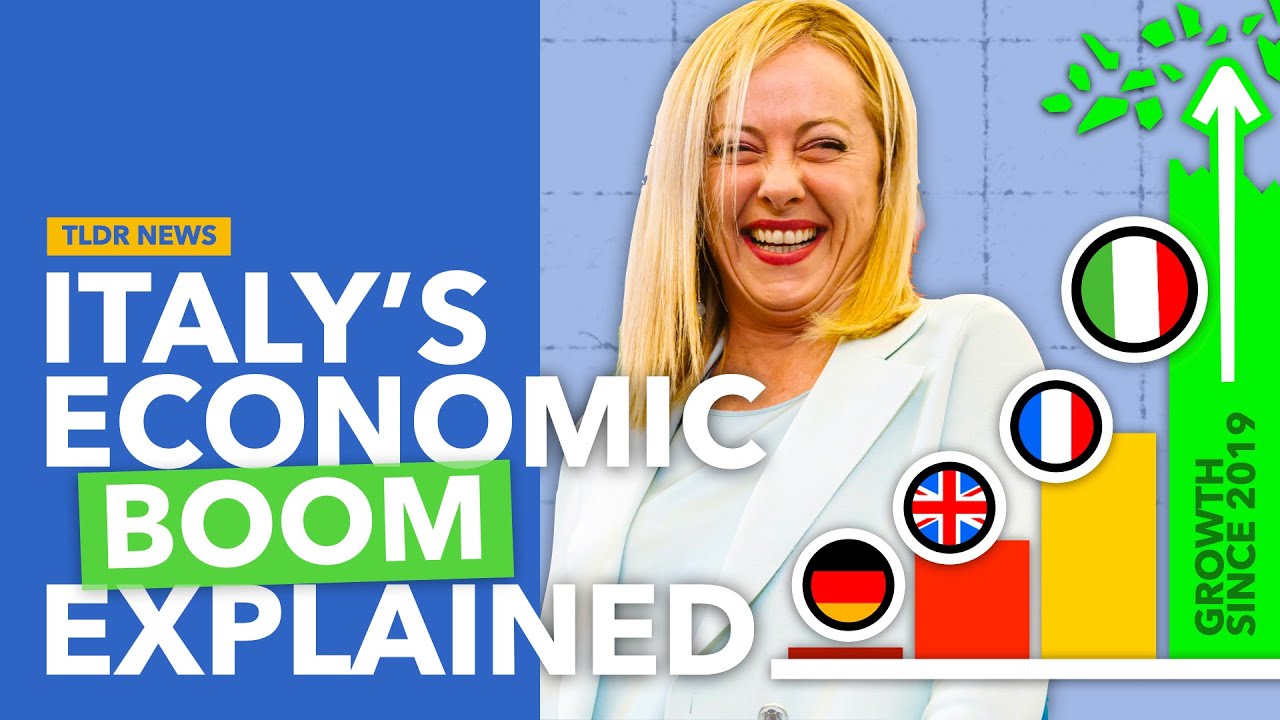
let me ask you a question do you think that today's workers live worse or better than their parents did has the economic situation improved over the last 20 or 30 years or have things gotten worse well I'm sure there are all kinds of answers here some of you will think that nowadays rent and the price of products are much more expensive than before others will say that fortunately salaries are also much higher and still others will simply think that there are no better or worse off than before but things are simply different evidently things have improved but the truth is that this question always generates doubts in the street but this is visual economic after all and there is an economic indicator that more or less serves to estimate how the purchasing power of citizens has evolved over time [Music] this indicator is GDP at constant prices it's something like normal GDP but corrected for price changes over time in other words it tells us how production has evolved independently of price variations so the question is what does this indicator say according to statistics is life better or worse than before well check this out as you can see in this graph in most major oecd countries including Latin American countries such as Chile and Mexico the economy is about 20 more prosperous more abundant today than it was 20 years ago however in this apparently positive graph there is one black sheep that is going from bad to worse a country that in recent years has done nothing but lose economic activity and has even become a major obstacle a major drawback to the Integrity of the European integration project I am of course talking about Italy Italy is in a bad way the country that was once the heart of the Roman Empire itself home of the rich States and many of History's Greatest artistic currents is now experiencing a complete decline specifically it is along with Greece the only country in the Eurozone that is significantly poorer today than it was 20 years ago and that is far from being the worst thing what is really worrying is that their future prospects are not at all positive to give you an idea Italy has the fifth largest public debt in the world its youth unemployment rate is higher than the countries like Egypt or Albania and hold onto your seats here according to the oecd almost two percent of its companies consistently shut down every single year can you imagine a country where every year there are fewer and fewer companies it's crazy [Music] however this was not always the case back in the 1980s Italy was the country of fashion music and theater Italy was not only not poor but it was the very reflection of the world's Jet Set so what on Earth happened to make the Italian republic fall into such a spiral of decadence why are Italians becoming poorer and poorer is there a solution for the birthplace of ancient Rome well in this video we will talk about it we will explain the key issues of the Italian economy what has led to its failure and of course we will talk about the challenges ahead for Fratelli d'Italia the party that won the most recent elections and whether the proposals it has made will succeed in getting the country off the ground again or whether to the country it will ruin it even more are you ready let's get cracking [Music] if we are asked about Italy's economic problems it is quite possible that we automatically think of two large estate too much political interventionism and too many civil servants however surprisingly this is not entirely true or at least we have to make some concessions yes the presence of the state in the Italian economy is enormous without going any further in 2019 public spending at Italy accounted for 48. 5 of GDP the eighth highest level all oecd countries and of course as you will see politicians have made this country a huge Labyrinth of rules laws and regulations of all kinds but nevertheless take a look at this graph what you are seeing on the screen is the number of public employees pair 1 000 inhabitants of the different oecd countries as you can see Eckley has one of the lowest numbers of workers on the list and yes I know we could then measure their presence in the labor market or take into account the resources or the working age population and it's very likely that this figure would change but in relation to the population Italy is the European country with the least number of public employees and you see the main reason why apparently Italy has so few public employees is that between the 1990s and the 2000s the politicians of the day had to cut public spending so what was their solution well basically to start getting rid of public employees as if there was no tomorrow for example they reduced the number of possessions in order to hire new younger employees therefore there are currently about 200 000 fewer public employees in Italy than there were in 2010 and given this situation let me ask you a question if Italy had been reducing its number of public employees for the last 20 years who do you think are the ones who were left who are the workers who have kept their jobs during all this time well indeed the oldest of all those who in the 80s and 90s got their place in City Hall and a court or in a government office in short elderly people who do not have the same Vitality as when they started working and who are not all adapted to technology digitalization or any modern method for increasing their productivity all this has made the Italian public administration one of the least efficient in the developed world what's more the Italian government spares no expense according to a report by the same oecd these Italian public sector workers are paid on average 10 to 20 and more than their private sector counterparts in short there are relatively few of them but they are very inefficient and on top of that they are very very expensive in other words hiring fewer young public employees was by no means the Panacea it was thought to be the number of public employees was reduced but in reality the administration did not change that much even as we will see in some areas things actually got worse now what has all this got to do with Italy's economic decline well pay attention to this chart because you will find out soon enough what you're looking at right now is the average time it takes for a court to resolve a disputed contract in several oecd countries again while in countries like the us or France trials are decided in little more than a year and Italy these same trials can easily exceed three years as we have said the Italian public administration functions poorly and that also applies to the judicial system and to the general Administration however if you are an ordinary person who does not usually go to court and who does not use public administration too much this isn't really a huge problem but if you are a company that needs to be in daily contact with the tax authorities with municipalities that need to fill out documentation or apply for permits constantly a slow Administration can lead you to ruin in addition Italy is one of the countries with the most absurd Professional Regulations you can imagine for example imagine you want to become a computer engineer well you need an accredited University's degree of at least five years duration and you also need to belong to the Italian Professional Association of Engineers if Bill Gates had been born in Italy he would not be able to have worked legally as a computer engineer but pay attention because that is the least of it beyond the recognized and approved degree you will need to pass a specific state exam to accredit your skills again and what's more you will not be able to work in the company you want not to set up your own computer engineering company easily do you know why because Italian companies need a specific permit to hire computer Engineers if they don't get that title then tough luck of course This only affects one profession out of thousands but in many others the number of active workers that can exist is limited the number of companies that can exist in the same field is limited and even the hiring of foreign Personnel is limited to be more specific 24 of all Italian workers are in regulated professions a figure that rises to more than 52 if we look at only skilled professions this is real Madness as you can imagine so much regulation in many cases absurd has dire consequences firstly workers find it very difficult to get quality jobs secondly in cases of changes in the economy it is difficult for workers licensed in some sectors to move to other more productive ones and finally if we add to this jumble of regulations the extreme slowness of the public bureaucracy then we will realize that the most dangerous consequence of all the birth rate of new companies in Italy particularly small companies is surprisingly low with almost 30 percent fewer companies being launched each year than in other Western countries and remember when we told you that Italy is a country that loses a lot of companies every single year well the main problem is not that the existing companies are closing the problem is that hardly any new companies are started of course it is the new projects particularly the small ones that have the hardest time adapting to regulations and bureaucracy in fact this private investment in Italy is very poor and being more specific and two studies that will leave references on screen for it was found precisely that companies in regulated professions have opening rates of nine percent lower than non-regulated professions in addition it is estimated that eliminating all of these regulations in the service sector which is the most effective of all will increase total productivity by more than 4. 3 percent however although bureaucracy is typically the main culprit of at least economic problems it is far from the only one and it doesn't end here by a long shot check this out foreign [Music] let's see if the problem in Italy is that the bureaucracy is slow and complicated as hell why don't they invest more money and improving it it's not that the Italian government doesn't collect enough taxes either there is money the question is where does the state's money go well as you can see in most public services and education Administration infrastructure Italy invests much less money than its oecd neighbors however there are two items in particular where the Italian government invests lots and lots of money interest on debt and old age pensions that's right Italy like countries such as Spain or France has a huge spending problem associated with its pension system [Music] as we've already told you here on visual economic and also on visualpolitik our sister Channel with an increasingly aging population countries with public pay-as-you-go pension systems are going to run out of money to stay afloat this is already taking its toll on Italy as you can see in the graph in recent years its public debt has soared to nearly 160 percent and is expected to get even more out of control over time so because Italy has so much debt it also has to pay a lot of interest on the debt which explains why that is the second most disproportionate expenditure item and keep in mind that the graphs mentioned above do not include the recent interest rate hikes so the question now is what effect does all this have on the real economy foreign on the one hand since the state covers almost everything regulation creates captive markets and public infrastructure receives little investment companies find it difficult to compete optimally with the outside world and don't just think of it as highways and railroads far from it by way of example only 30 of Italian companies have high speed internet connections on the other hand the lack of public investment also affects fundamental pillars such as r d and education for example less than 29 of young Italians have a University degree that figure is far below the Western average and then as you know there is the question of quality in Spain the percentage is 47 and what can I say but let's not get sidetracked we'll talk about that in another video so if you haven't subscribed don't wait any longer [Music] in short in Italy there is a lot of bureaucracy absurd regulations lack of infrastructure and lack of investment in human capital and as if that were not enough the money that could help solve these problems goes to maintaining an unsustainable pension system and to paying more and more interest on the debt this creates so what does all this imply then it comes as no surprise but productivity is stagnant wages are not Rising companies are surviving as best they can and no one is investing a penny to change the situation not because they cannot invest but because in a country without skilled workers without a functioning Administration and sometimes almost without high-speed internet it does not seem like the best decision in the world but is there still hope and does Italy have time to save itself what does the birthplace of pizza need to solve all of its problems the truth is that right now Italy has a unique opportunity for avoiding collapse do you want to know what it is of course you do so let's find out a thread of Hope after the coronavirus crisis the European Union launched the Next Generation plan a plan to help the countries of Europe economically especially southern Europe a plan to enable them to face the economic crisis stemming from the virus and supposedly to adapt their productive fabric to the New Economic reality well Italy has been the country in Europe that has received the most money out of all in this plan specifically it's been allocated more than 200 billion euros in total now true 200 billion euros is a lot of money but it will only serve to delay the inevitable sooner or later if Italy continues on the same path it will run out of money and the same old problems will return besides well let's just say it's not the best plan in the world if we say that its results have been very poor that would kind of be an understatement here however the Next Generation could have an important advantage in theory These funds are not in exchange for nothing the European Union has forced Italy to commit to change things in order to access the funds it's quite another matter if it is then enforced in that case the evidence does not allow us to be very optimistic but what changes does Italy have to try to make in order to get its hands on this juicy sum of money [Music] but what needs to change is contained in the National Recovery and resilience plan or PNR for those in the know a plan that addresses many of the problems we have discussed in this video and proposes mechanisms for solving them for example it includes increased investments in infrastructure and education digitalization and training programs for public workers the elimination of absurd regulations that hinder the labor market and business activity and other elements such as incentives for hiring and the transition to Green energy with this package of measures the bank of Italy expects to achieve annual GDP growth of 3.
5 by 2026. however the recovery plan does not take into account the fiscal deficit you could say it is a plan that entrusts everything to economic growth so that public debt does not Skyrocket [Music] this is why the oecd recently launched another package of recommendations for Italy to balance its Public Accounts and better consolidate the reforms of the National Recovery and resilience plan these oecd recommendations include freezing pensions adjusting them to the evolution of life expectancy or their tax cuts for workers increases in consumption taxes such as vat and an evaluation and accountability program for public employees but there is little point in digitalizing and offering training programs to civil servants if they are not properly implemented if the nrrp is implemented and everything goes according to the bank of at least four classes at best public debt can be maintained around 140 of GDP for the next 40 years and the state will not be in imminent danger of bankruptcy as it is now but if in addition the oecd recommendations were applied not only could the debt be brought under control but Italy could become a country with a healthy finances that at least is what the reports say now there is a problem here all of this is based on potentially very optimistic calculations calculations that tend to underestimate the effect of demographic aging do not take into account long-term phenomena and above all depend on the Promises of politicians who on many occasions are only looking for votes in the next election and Beyond this question there is the issue that the pnnr was approved under a different government than the current one in September 2022 the Italian political landscape took a last minute turn to the right Georgia Maloney leader of the Fratelli d'Italia party won the elections in a landslide and you know what it did that precisely by casting serious doubt on the National Recovery and resilience plan Fratelli dear Italia the pnrr needs to be reformulated because it is now inadequate with respect to some Central issues Fratelli d'Italia abstain from voting on The Next Generation funds which Finance the pnrr among other reasons for reasons they don't go very far in direction of wanting to correct Italy's horrendous taxation for dancer an MEP from Fratelli de Italia argued that next Generation risked creating new direct or indirect taxes on European citizens and businesses as well as bringing back austerity rules through the back window over the months what was supposed to be a recovery plan has turned into something different as for dancer explained we will abstain and continue to monitor relentlessly and not only that but apart from the European funds the new government Coalition which also includes Lega salvini's party does not seem to be going in the direction of the fiscal stability proposed by the oecd take a look at this salvini already met with the unions last week ensuring that labor and Social Security will be among the priorities of the northern League's electoral platform both salvini and Ed Fratelli d'Italia ran on electoral programs in favor of increasing pension spending which as we've already seen drains a lot of resources specifically everything points to the fact that the main proposal of these parties is to decouple pensions from life expectancy and increase them in the lower brackets in short spending even more which makes electoral sense since pensioners are a very very large group of Voters to put a figure on it this increase in pensions would mean an additional cost of up to 10 billion per year until 2030.