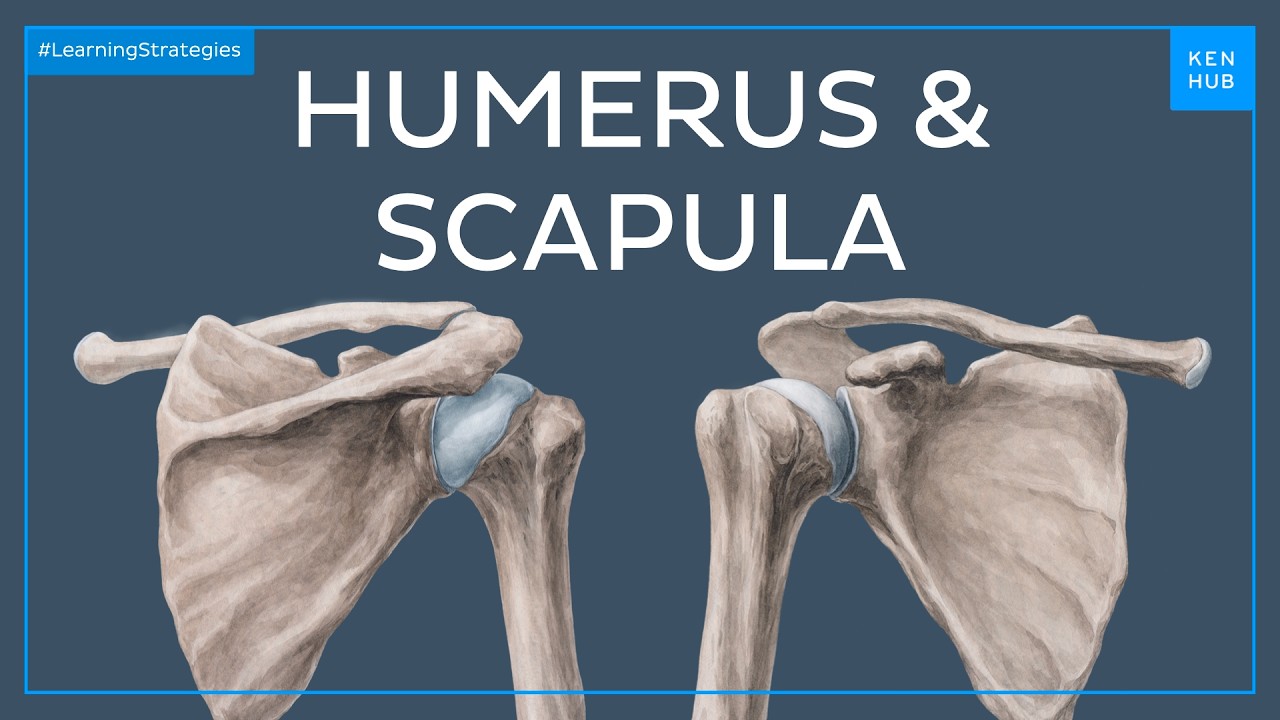
[Music] in this lesson we will review the rotator cuff muscles their locations and attachments let's start by looking at the right side of the shoulder region and we see the posterior vantage point I will also show you the right side from an anterior vantage point and in order to do that let me duplicate this and I will now rotate it so that we see the anterior vantage point note that both of these are the right-side one is seen from the anti vantage point the other from the posterior vantage point I'm going to now remove the
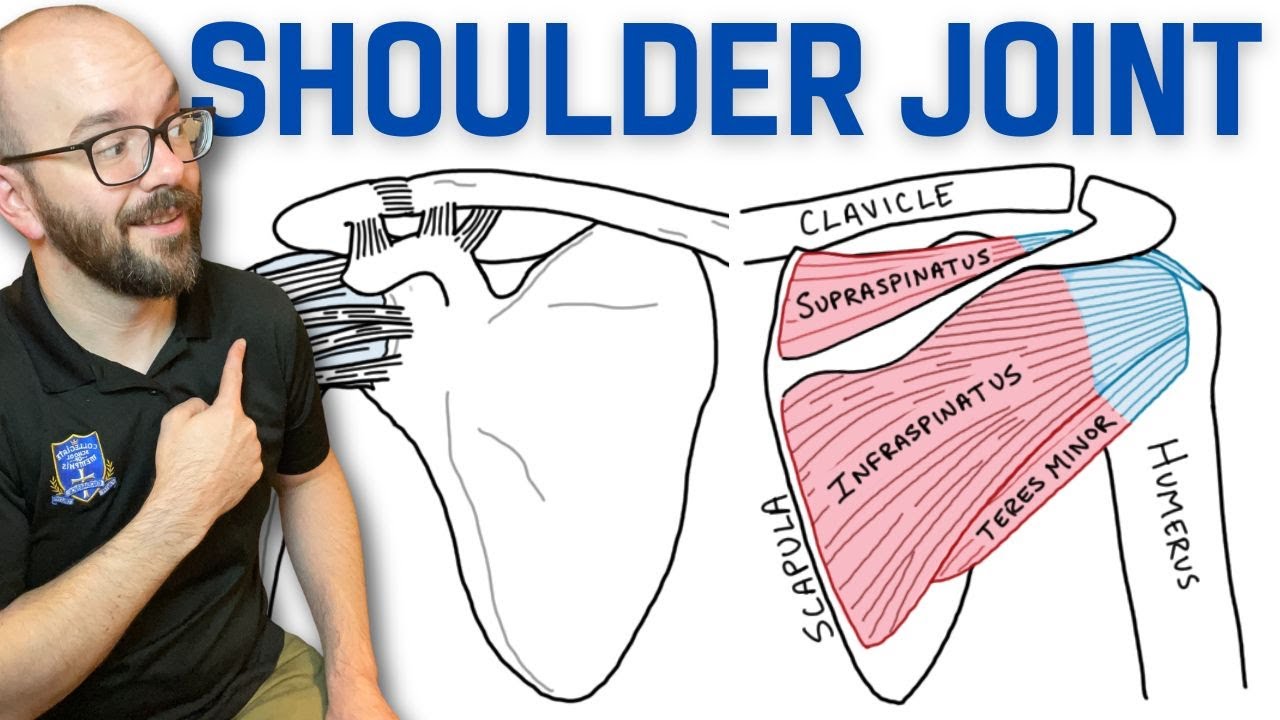
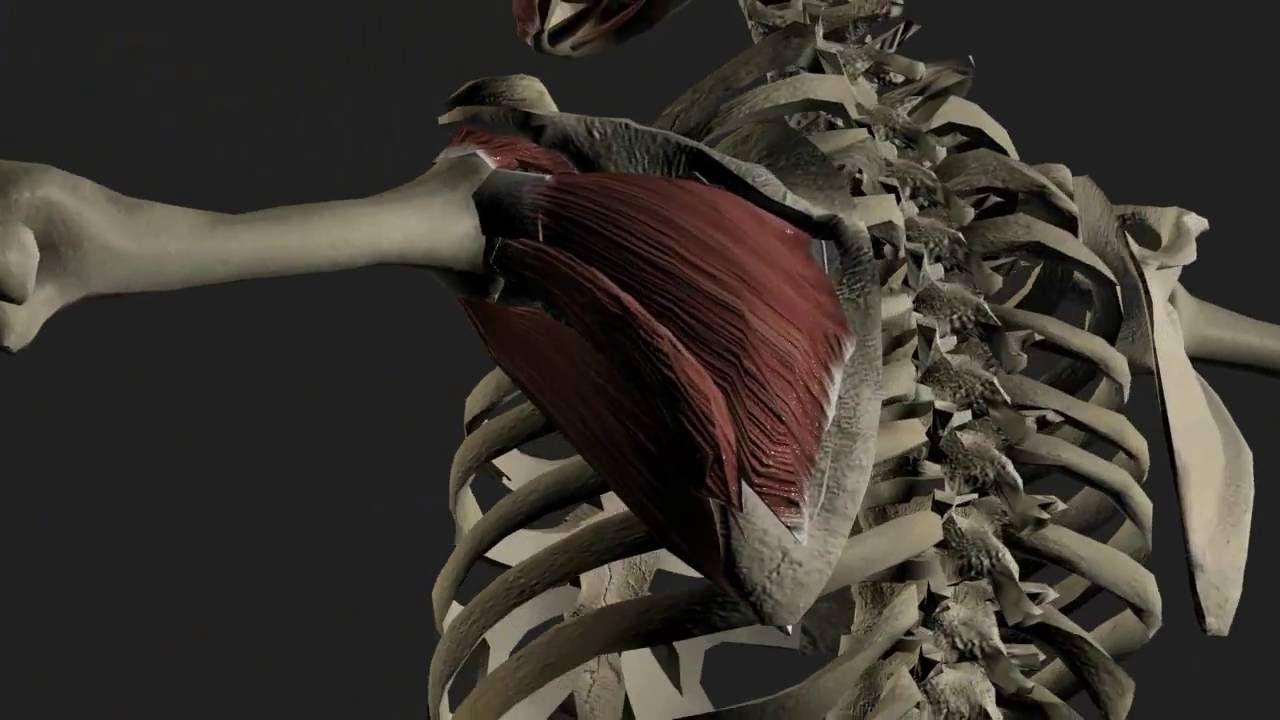
muscles and get down to very simple diagrammatic representation the rotator cuff is made up of four muscles that are very closely related to the glenohumeral joint and participate in rotational movements of this joint the first of these muscles is known as the subscapularis muscle and is seen only in the anterior view it fills the subscapular fossa and it's fibers go laterally and attach on to the lesser tuberosity the second muscle of the rotator cuff group is known as the supraspinatus muscle and we can see it both in the anterior view as seen here as well
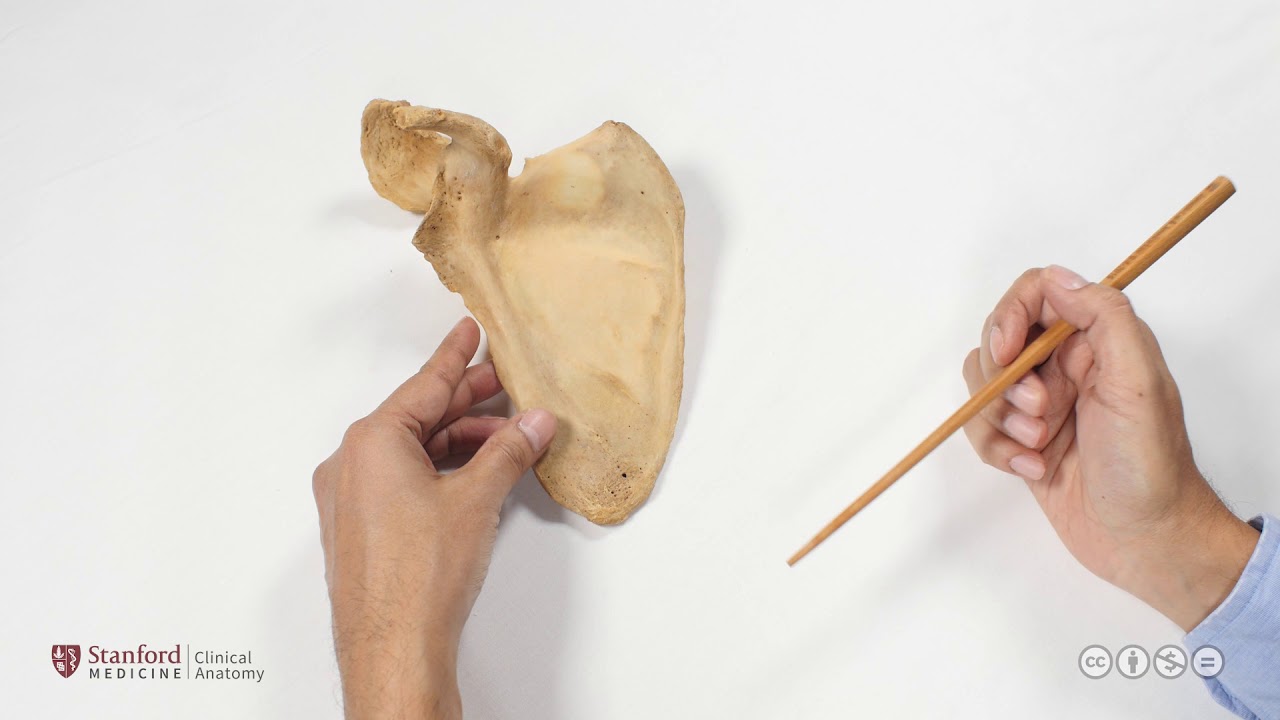
as in the posterior view as seen here note that the supraspinatus muscle fills up the super esprit and supraspinous fossa the area of the posterior part of the scapula which is superior to or above the spine of the scapula and the fibers extend laterally to attach on to the greater tuberosity this is the supraspinatus seen from the anterior view as well as the posterior view the third muscle is a muscle tone as the Cherry's minor muscle it attaches on to the lateral border of the scapula and the fibers extend laterally and superiorly to also attach
on to the greater tuberosity the fourth and final muscle of this group is a large muscle known as the infraspinatus muscle which fills the infraspinous fossa below or inferior to the spine of the scapula on the posterior surface and the fibers also extend laterally to attach on to the greater tuberosity so of these four muscles three of these muscles the supraspinatus infraspinatus and teres minor attach on to the greater tuberosity while the subscapularis attaches on to the lesser tuberosity in terms of movements the subscapularis has a movement which is internal or medial rotation if you
think about the movements and similarly you can think about the movements of these other muscles what do you think might be the movement of the supraspinatus muscle it is in fact involved in the movement of abduction because the location of the supraspinatus muscle the location of its attachment on to the greater tuberosity is at the superior location or the superior part of the greater tuberosity and therefore it is uniquely positioned to initiate abduction particularly important for the initial few degrees of abduction movement the infraspinatus muscle and teres minor muscle have similar actions and they are
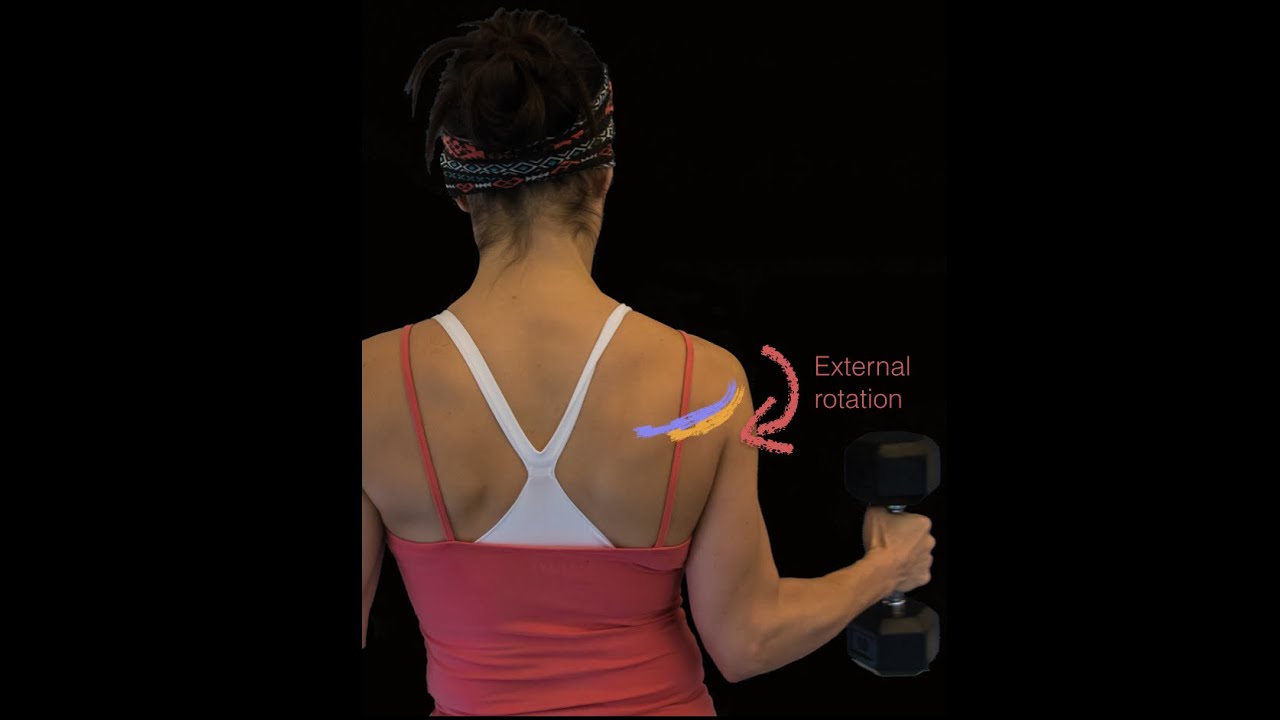
quite different from the other two muscles what do you think might be the action of these two muscles these two muscles are attached onto the greater tuberosity a little bit more posteriorly and are involved in external or lateral rotation of the Gila humeral joint we can now take a look at photograph of dissections of the rotator cuff muscles this is the right side and on the left side of the screen we see the ant here viewpoint and over here we see the posterior viewpoint let's start by focusing on the anterior view point and we can
see the supraspinatus muscle as shown here we can see a little bit of the supraspinatus muscle also from a posterior view point just above the spine of the scapula that has been removed note that it is extending all the way to the summit of the greater tuberosity if we look at the anterior view point again for a moment the subscapularis muscle completely fills the space of the scapular fossa and it's fibers extend laterally crossing the glenohumeral joint and attaches on to the lesser tuberosity the next muscle is the teres minor muscle and is seen only
on the posterior view and the small muscle by comparison and is seen here extending from the lateral border of the scapula to the greater tuberosity the remainder of this space which is inferior to the spine of the scapula which has been partly cut away is the infraspinatus muscle it's a large muscle which is seen here and it extends laterally to the greater tuberosity these four muscles have a surrounding of the capsule of the glenohumeral joint and are involved in the various rotational movements both medial as well as lateral the supraspinatus muscle has that peculiar additional
action of initiation of abduction [Music] you