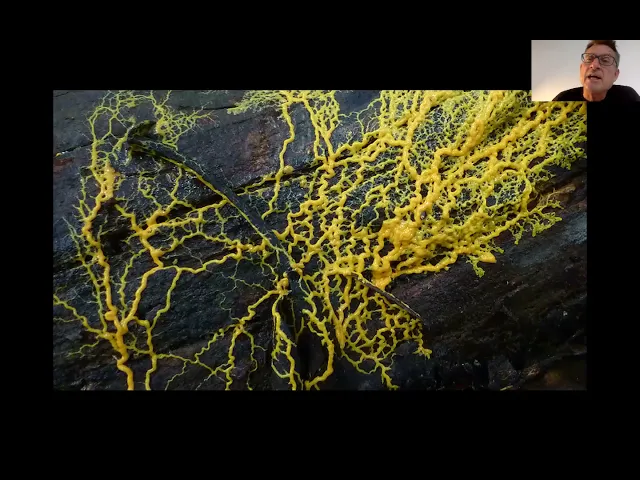
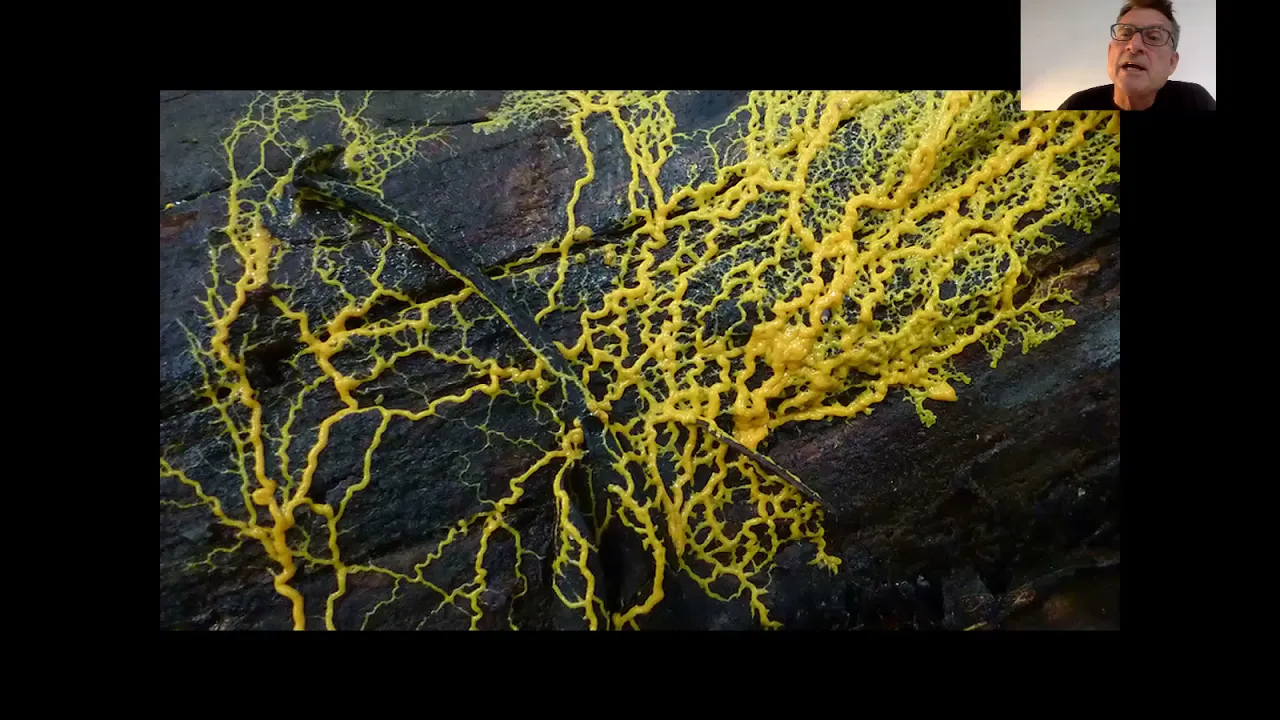
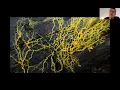
pheromone trails and now another manifestation of emergence or swim intelligence beyond the the logic of flocking behavior is the logic of the pheromone trail the way in which ants will follow certain pheromone trails laid by other ants and so on this itself leads to all sorts of possibilities within the world of nature itself a common manifestation of this would be for example the the logic of the slime mold the slime mold which is found in every in many gardens is a straightforward phenomenon but nonetheless it's actually fascinating and it proved when it was first discovered
and understood it was certainly for scientists it proved to be an astonishing form of behavior how was it that this particular entity composed it was it was of many thousands of agents could both operate individually and then at certain moments come together and operate collectively when foraging for food an interesting experiment was done using using a slime mold to try and track and map the logic of the the metro stations the subway stations in tokyo here you can see these individual um pieces of food that are attracting the slime mold and the slime mold is
is searching out for these things you can see it on the left hand side looking and finding nothing and therefore withering away but when it does start finding um some dominant trail it starts consolidating itself this is of course an oversimplification we cannot overlook the other aspects of what's happening what about the rivers the the contours of the land and so on it is much more complex than that and certainly a city is not could be not con simply modeled in so straightforward a way nonetheless this particular experiment does point out the way in which
the foraging behavior of of slime mold does start dictating certain logics of the pheromone trail one can see this with humans too this is a photograph i took from the plane once flying back from beijing it's i think somewhere in siberia and looking down on on this sort of this scene you can see the difference between on the top there the the road that has been engineered to be very precise and very rectilinear and to follow a certain top-down logic and the way that pathways start emerging pathways are emerging from where people are kind of
following the pathways led by other people and slowly they consolidate some consolidate themselves until they become some kind of dominant pathway interesting there was once an example of a a new school of biology that was um that was uh that was built um and before they laid out the landscape a professor of biology um wanted to go and see where people would actually want to walk so there had been a landscape plan that had been laid out in a top-down way but one frosty morning they uh this particular professor looked out to go and see
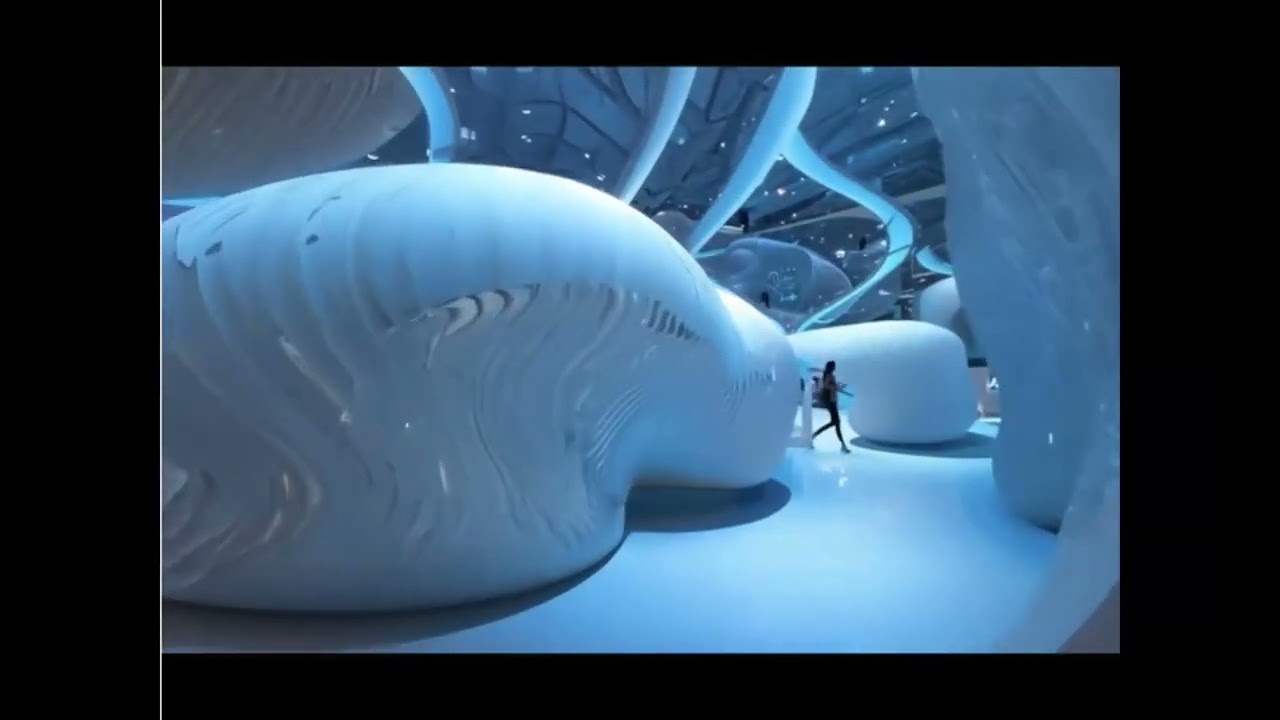
where people actually wanted to walk and you could see the trails laid in the frost of where people were actually walking in other words you could actually see the kind of desire the pathways that were desired by actual people rather than posed in a top-down way as a result of this of that this particular professor abandoned the initial landscaping scheme and the top-down landscaping scheme and adopted a bottom-up one that was based on people's actual behaviors within the context of architecture you can see how this particular logic has been played out here is the work
of kukuja the practice formerly run by roland snooks and rob stewart smith where what you see here looks very much like the like the the neurons of a brain it is actually a form that is generated using multi-agent system and when you compare it to the brain you can understand precisely why it is what it is because the behavior is precisely the same they are both multi-agent systems and hence they manifest similar forms of behavior the kokuja did a project project once for for the uh for melbourne where they were trying to trace out how
you could begin to sort of form these dominant pathways as a kind of urban planning exercise if the same forms of behavior are manifested in any form of multi-agent system from from ants to to to to brains to cities to software it would seem to suggest that one could use certain softwares in this case processing which is a form of multi-agent system software to go and map out potential urban pathways and this is precisely what they've done the challenge here of course these are not so easy to constrain anyway they're not necessarily bounded by certain
um constraints such as uh other obstacles and so on they have their own sort of behaviors but nonetheless they can begin to suggest certain forms of operation they can begin to be used as useful so tools to help develop some kind of urban plan