today we're in washington dc my name is nick potts i'm an architect and we are going to be doing an architectural walking tour of the national mall [Music] the extent of the mall right now from the capitol to the lincoln memorial that's exactly the same distance from 14th street to central park in new york so it's just an immense space and you can feel it you're walking blocks to move from building the building a lot of this is due to the mcmillan plan and its embrace of these mega buildings right now we're in front of
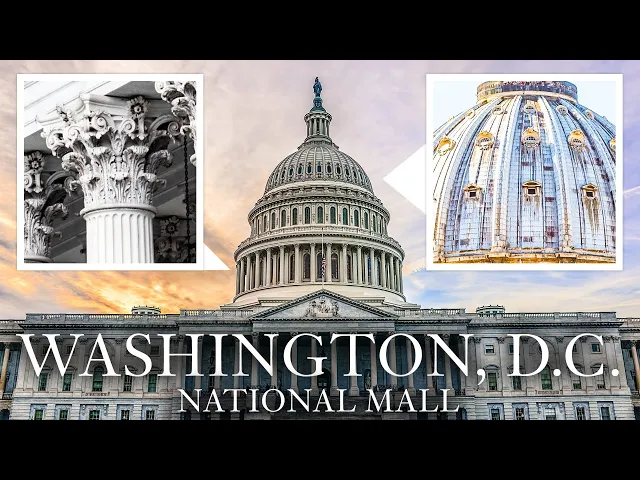
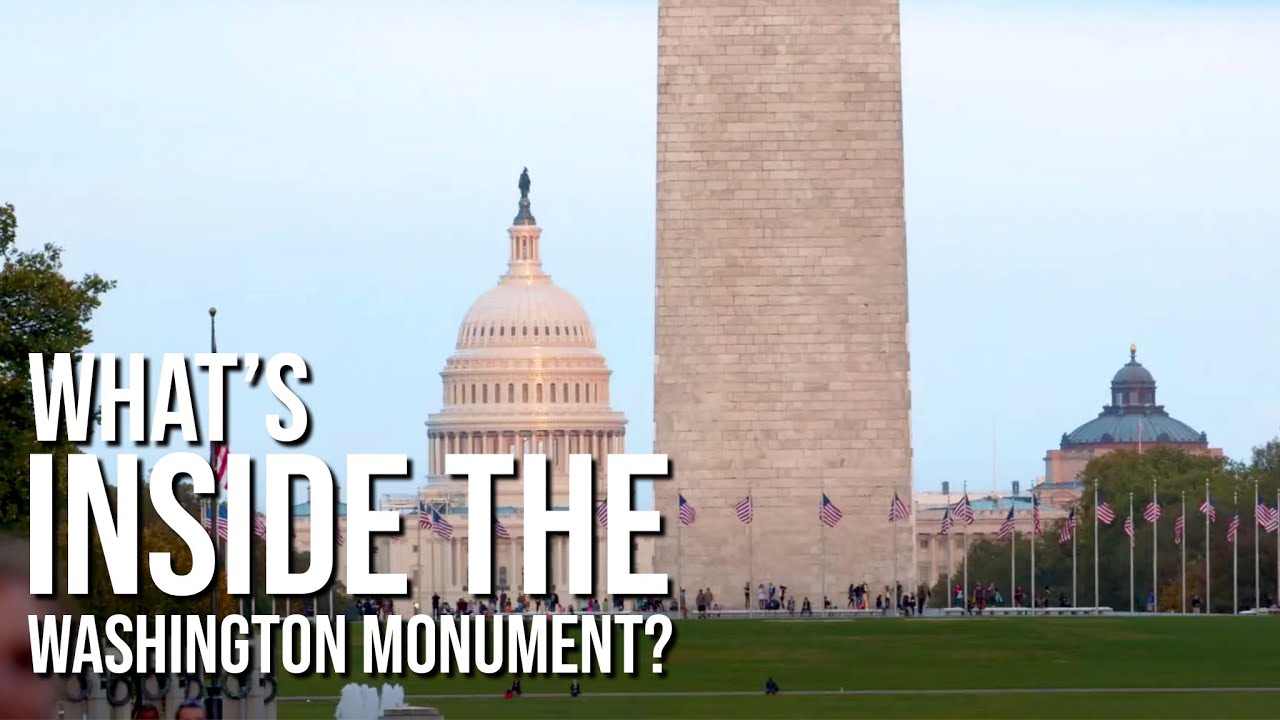
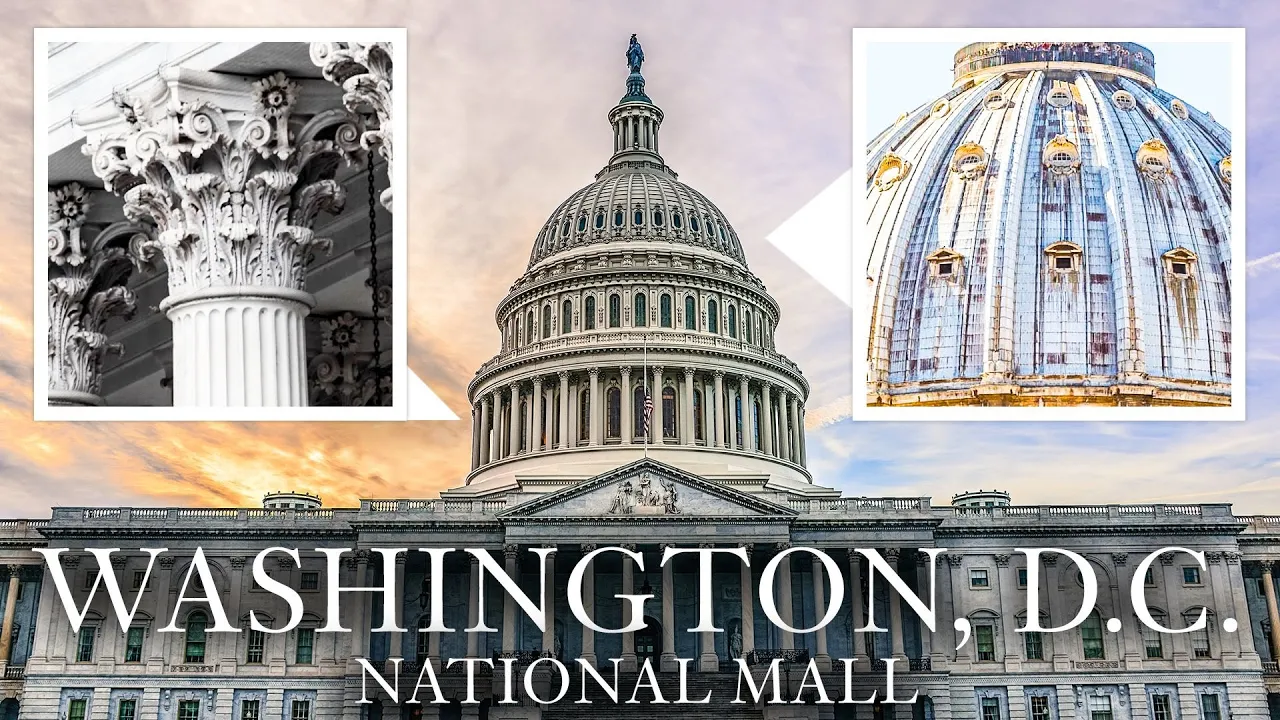
probably the most iconic building in washington dc the national capital on the mall the capitol building is really probably the most reworked and remade building on the national mall and i would say it looks absolutely nothing like the way it was originally envisioned you know it's a neo-georgian similar to the white house you can see the two parts of the building that don't have columns that was really the original capital everything else was a later edition as the nation grew and we discovered that we needed more space for our legislature as the building grew after
the civil war things really started magnifying immensely so the wings on the left and the right were introduced which created new house and senate chambers essentially enveloping the old capital in a much larger building at that point the dome just looked ridiculous it was too small the proportions were totally off and so this new dome was built on top of and it totally changed the composition what i find really interesting about the dome on the us capital as opposed to most of the other state house domes and the domes it was based on in renaissance
rome is that those were all built of stone this because it was on an existing foundation because it was introducing and working with new technology it's all cast iron it looks like it's always been here it looks like it's kind of not innovative it actually is quite innovative and doing something new with an old form if you look at the capitals and the columns they're not truly corinthian there's fun things like corn cobs and things so it's trying to americanize a non-american style we're here on pennsylvania avenue in front of one of the most famous
buildings in the world the white house what's interesting about the white house is like a lot of buildings in washington dc it's really a long history of being made and remade over and over again to suit a growing nation and to suit uh different and evolving styles so it was originally built by enslaved laborers and designed by an irish architect not intended to be a palace it was meant to be an everyman's sort of aspirational house the entire mall was originally intended to be not surrounded by museums but to be surrounded by mansions with gardens
it was actually designed originally without the porticoes and it was a much simpler kind of irish country house with minimal detail and sandstone the white didn't come until much later the porticoes were added to make it seem a bit more monumental but you can see traces of the original building behind it you can see the flat pileasters in a house like the white house where the walls are load-bearing masonry the pilesters are purely decorative the only flourish about the building are the pediments over the ground floor windows which alternate between a triangular and a rounded
impediment so it's using detail to embellish what's otherwise a very simple building and then it grew and became something totally different so the white house kind of has a dual personality there's the north facade that we're looking at right now and the south facade facing towards the mall in a proper georgian house at of the time sometimes you would see a portico facing either to the north or to the south but not to both sides these porticos were added about 20 years after the building was built the one to the north that we're looking at
now was more of a port cochair where carriages would drop someone off enter them so this is really the urban side of the white house and then the south portico the rounded one with the truman balcony which was actually added after the 1950s reconstruction of the building the portico itself was there but that was meant more to overlook the mall and the pastoral yard that was envisioned for that face of the house in the 1950s during the truman era the house was really falling apart it was way too small it had been renovated haphazardly over
the years it was essentially not structurally sound so everything that wasn't the exterior walls was demolished and a new steel building was built in place so it's a totally like essentially a modern building enclosed by the the remnants of what what it had been we're standing across the street from lafayette park and directly across three from the white house looking at a row of federal town houses a glimpse of what washington dc could have been when the white house was going up in like the 1790s up to around 1800 this was also being developed if
you look at old maps of this area there was a significant amount of house development in the 20th century the vision for washington dc shifted from being something much smaller and more a little less planned into kind of the totalizing neoclassical build-and-plan wall that we see today right now we're standing in front of the old executive office building directly next door to the white house by this point we're in the 19th century and the country in architecture is starting to struggle with the whole idea of bigness and how you deal with very large multi-purpose buildings
and it's really a love letter to the louvre in the french second empire style so even though the composition of the building is totally totally innovative and new it's using a lot of very familiar elements that we've seen in previous styles of architecture but it's going a bit to the extreme with them there are multiple columns that are paired that really aren't doing anything beyond breaking the building down into more cohesive and more legible parts you know whenever you see a man-side roof we really start thinking about france benjamin franklin was a huge proponent of
france franklin was a major celebrity in france and there was just a lot of love between these two nations undergoing revolutions under a similar period of time there's definitely some political alignment starting to show up in our architecture that we started looking at architecture has always been this back and forth between lightness and solidity and here we're in a moment of really sculptural solidity and trends will obviously swing back and forth you know think about this building being reviled and then loved and we'll probably be in a moment sometime soon where people want that sort
of thickness and shadow and relief again right now we're standing in front of the renwick gallery on pennsylvania avenue and 17th street so the renwick gallery is really peak fascination with france this building is essentially a miniaturized version of the entire louvre originally designed as an art gallery for the corcoran collection the corker and gallery of art there were relatively few precedents in museum design at the time aside from the louvre this is vermiculation which is a renaissance detail that essentially looks like a worm is even away at a material interestingly the material on this
is not the stone that the loot is built out of but this is actually brick it's been speculated that this was actually inspired by a visit to another site in paris the most voge which has a similar sort of neo-renaissance aesthetic but it's in brick so the form of the louvre squished into a very small compact box and then given a new material but because the ornament down the runway is carved out of stone it tends to pop a lot more and you know these sorts of round owls which are the round pieces and garlands
are neo-renaissance motifs that fascinated the architects as they were doing essentially their grand tour in paris as tastes changed the museum started becoming a little bit more like a temple which is what we see a lot of around the mall these kind of neoclassical greco-roman temples the louvre was built as a palace which was the place where a lot of these collections were originally housed a palace style architecture for for a museum was a fairly short-lived but crucial pivot in the emergence of museums as a building type [Music] right now we're in front of the
castle at the smithsonian institution what's really interesting about the castle is that it shows an example of what the mall was like before the macmillan plan the castle style is really reflective of the predominant tastes of when it was built in the mid 19th century around 1847 when there's a big interest in the picturesque and looking more towards the countryside than towards the city technically it's ruined bogan steel which is a rounded almost germanic version of an english baronial style so it's kind of picking and choosing from european influences but the notable thing about it
is its informality it's asymmetrical and it's fairly rough-hewned and the asymmetrical tower is really the thing that sticks out the most is this not being a formal classical building you can see these crenellations and these ramp parts these things that in the norman era when people were building castles they were so you could put a cannon or guns in front of it now it's purely decorative and communicating a lineage back towards history rather than it's that it's true function the door portal does similar things there's some renaissance motifs going on with kind of these twisting
shapes and the group columns and the fact that telescopes and recess is in james renwick who designed this had designed several churches including grace church in new york so there's definitely an ecclesiastical church language also going on here currently we think of there being a very pure separation between academia and religion but if you go back to english schools like oxford like cambridge you could see this building on the yale campus which did a lot of these collegiate gothic things i mean there's definitely a presence of ecclesiastical and spiritual architecture even if the institution is
not because if you think about the middle ages the research and the universities were coming from monasteries and religious orders [Music] right now we are in front of the arts and industries building at the smithsonian institution so this was 1881 30 to 40 years after the castle a bit more modern a bit less referential history really kind of prime example of an exhibition style building which is essentially a building type that emerged out of world's fairs and exhibits that were venues for people to trade and exchange cultural ideas the arts and industries building is a
highly decorated polychrome building if you imagine a warehouse being very kind of generic space that's meant to look like anything as exhibits come and go in this example and actually in a lot of these building types the exterior of the building becomes a means of communication and this is high victorian style it's using brick and lots of different colors of brick there are influences of arts and crafts it's a bit of an eclectic style that it's all about exuberance and whimsy and vibrancy an arts and crafts movement came out of a reaction against more formal
and class-sizing movements that proceeded at and it was the rise of machinery and ornament being made in factories so it's a return to the to the workshop and to to the makers versus the machines and a building like this because it's handcrafted you know you can picture the masons building up the stones and creating these patterns it's referencing some of that the blue brick up at the top of the towers think about different sorts of kilns if they need to fire that it's almost referencing pottery and and ceramics work right now we're standing outside the
west building of the national gallery of art andrew mellon bequested to the country an art museum which we hadn't had and this site became the site of the national gallery of art an immense building if the macmillan plan was about the expansion of buildings this is really kind of the ultimate expression of that john russell pope who designed the building really took advantage of the immense scale of the site it's six new york city blocks long and he really played it up the art museum really doesn't want windows the light particularly for the sorts of
old masters paintings that are in this building generally want to be top lit and so he embraced that there are a few blind windows but the rest of it is just pure wall space because there's not a lot of detail because there's not a lot of objects to distract you was about being meticulous even the selection of the marble if you look up the building it gradually changes it goes from a darker pink to lighter as you go out the building that was very intentional to make the building appear lighter and to float a little
bit more than it really does it's severe and maybe a little bit forbidding but there's a lot of thought and craft that went into every single move beyond what happened in this building and the entrance is the same thing it's very kind of overscaled but it terminates in a single door not a bank of several so you really feel the importance this is a monumental building if there ever was one and it knows that the clarity of what pope did here was about not overdoing it that's why it plays really well off the the imp
building because they're both about being simplicity and minimalism right now we're standing outside of i am pays east building of the national gallery of art for being one of the newest buildings on the mall takes its references and its materials to create a conversation between i am pay who's one of the great architects of america in the 20th century and john russell pope who did the west building directly in front of me who was one of the giants of american architecture in the early part of the 20th century so it's really a conversation between the
past and the present and between kind of neoclassicism and high monumental modernism in terms of the material it's using the exact same tennessee marble materiality of the west gallery but making it extremely flat so whereas the west gallery it's about sculpture and it's about the the play of shadow on the surfaces of the wall this is blowing those proportions up to the scale of the building we have these ins and these outs and these shadow lines that are happening that are taking the same surface and light play of neoclassism to a much bigger and bolder
composition one of the really interesting things that i find about this building is that even though it's fully contemporary and of its time this is you know the 1970s when this portion of the gallery was built the building is still brick by this point you know most stone buildings had become veneers over a steel building but behind the marble panels is actually brick walls that are tied back so it's kind of almost weirdly anachronistic and and solid for a building style that typically is about anything but being solid and this is another example of the
mall having friends in paris and particularly with the louvre and ian pei who famously did the pyramid at the louvre has a smaller version of it here that's doing a lot of similar things in terms of underneath us is a concourse that helps rationalize between the two buildings the gift shop the cafe there's a moving walkway that's used for exhibitions so this plaza you know it's a similar sort of idea [Music] buildings like the west gallery the east gallery i am pay in taking ideas that were generated here and building them in france it's a
complete inversion of what you see in other parts of the mall where we're building pieces of the louvre there's kind of a cross-generational trade that's happening and you can really see in the mall successive generations even though some of the language is shared you see kind of these similar you know white classical buildings the way they're interpreted the way that certain societies choose to talk more about ornament or more about a person's experience or more about the symbolism of a of a single move tells you a lot about what that society's values are at a
certain time you