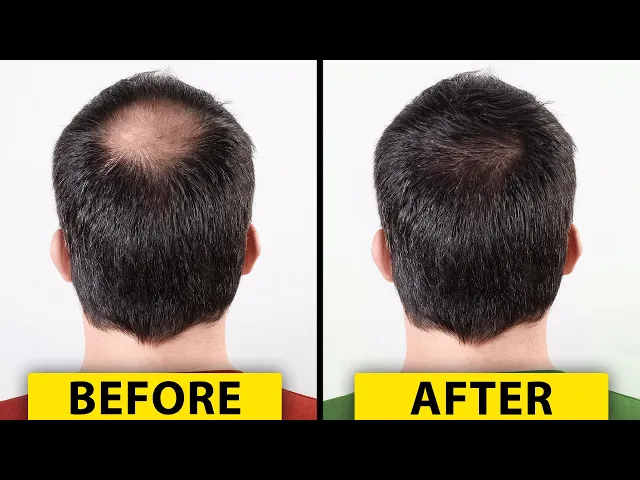
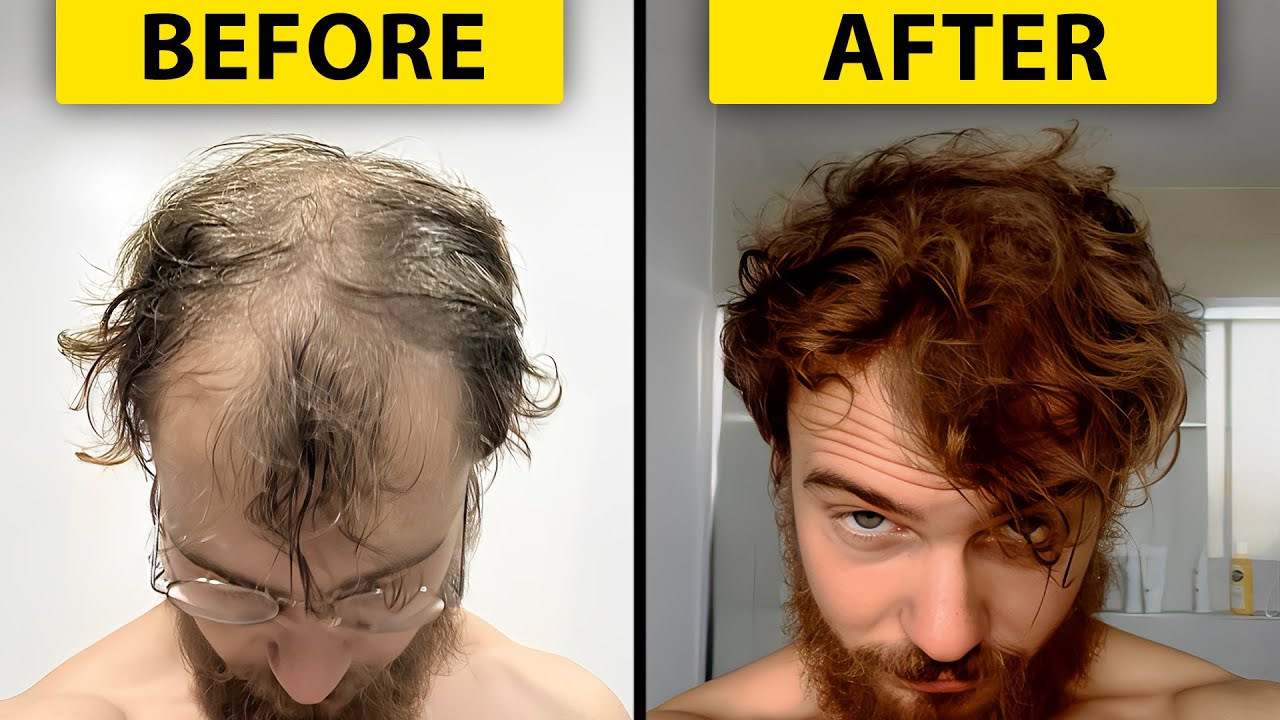
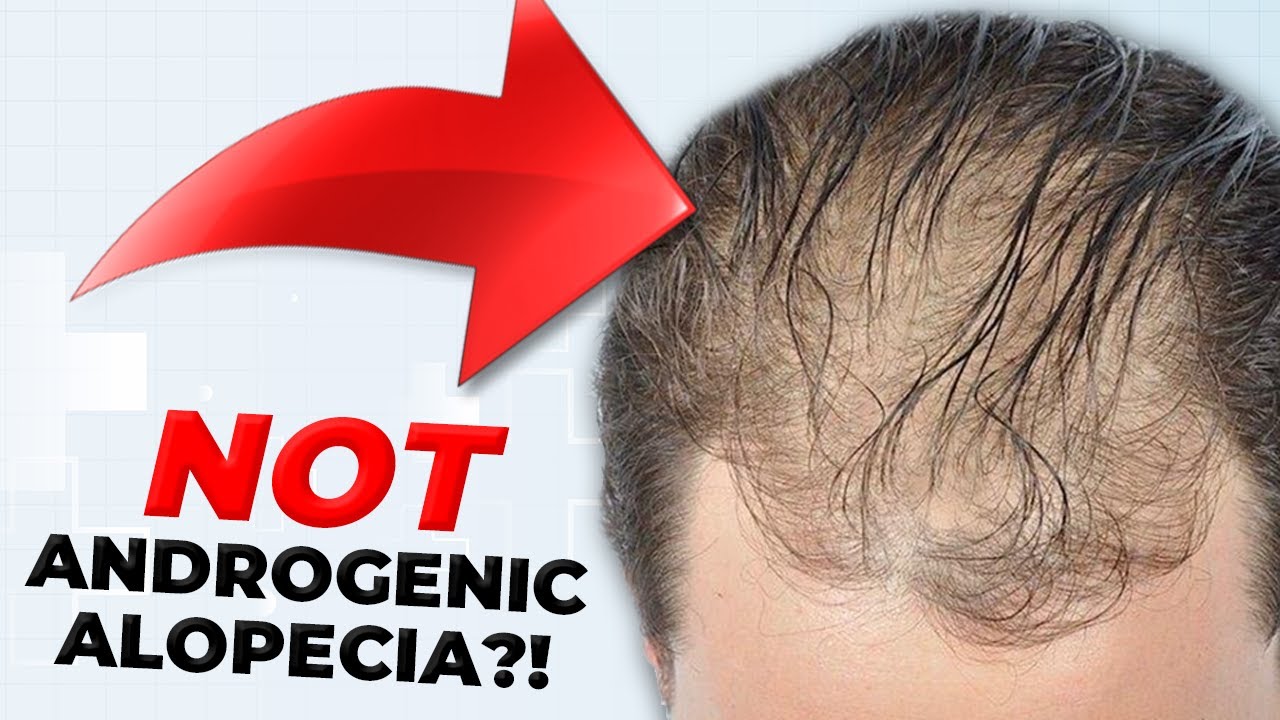
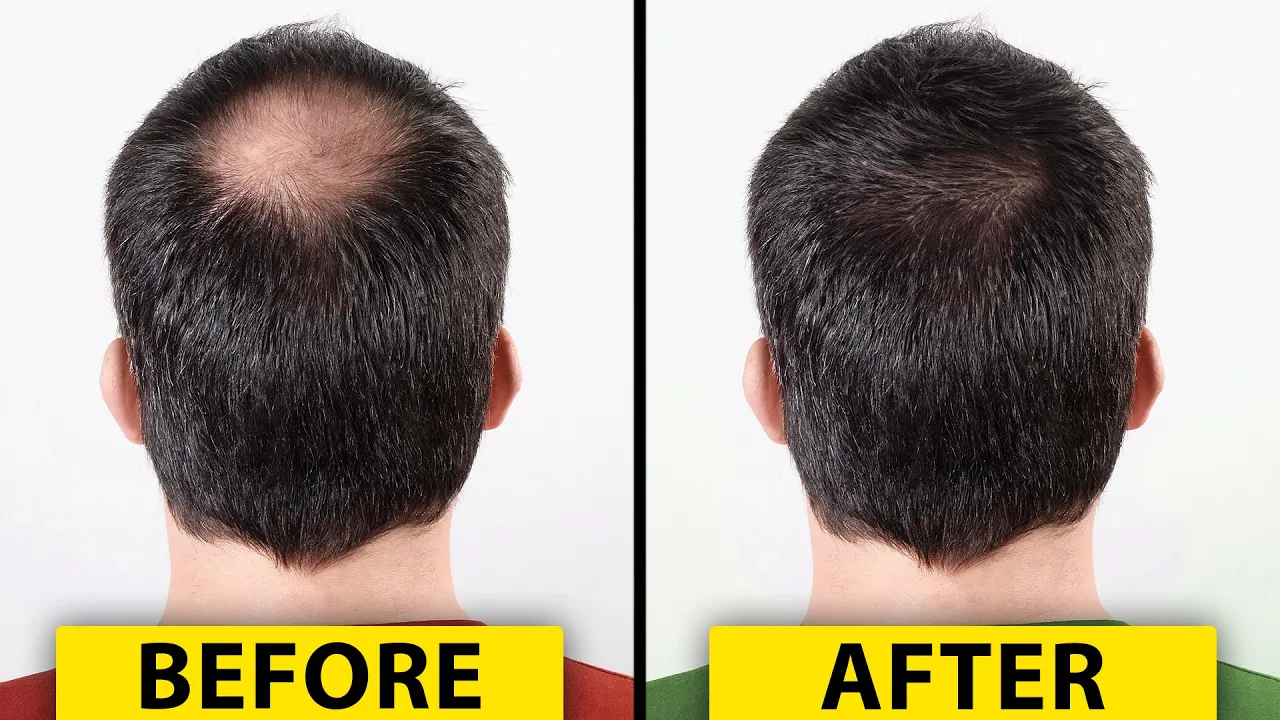
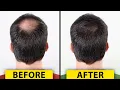
even though we cannot see the area as clearly as our hairline when the crown of the head is thinning it often bothers people what is the best way to improve the vertex or the crown of the head do hair transplants even work on that area let's dive into non-surgical and surgical ways of optimizing your crown men and women can experience hair loss differently but often the crown is involved and sometimes that's the first place where hair loss starts when it comes to a non-surgical hair restoration the first goal is always to not lose any more
hair and the best way to do that is usually to lower the levels of DHT because it's the DHT that's leading to the miniaturization of our hair follicles and we can do it with prescription-based medications like fastrite or dutasteride or more natural compounds like saw petto or pumpkin seed oil of course the prescriptions are going to be more potent than the non-prescription options but both types are available for from the feel confident brand of course a proper diet and the right nutrition is also extremely important in preventing further hair loss and stress reduction is often
not discussed enough but is critical for trying to maintain your hair because we know that high levels of cortisol can lead to hair loss another important goal when it comes to non-surgical hair restoration for our Crown is to improve the fullness of the hair in my clinical practice I find that the most power powerful way to do this is through the use of oral minoxidil while topical minoxidil has been shown to have some selectivity for the crown of the head what we find with oral minoxidil is that it usually causes an increased fullness of our
hair not only in the crown but also throughout other areas of the scalp and sometimes beyond the scalp as well other options to improve the fullness of our hair in the crown area can include low-level laser light therapy micro needling PRP or platelet rich plasma and we have a video dedicated to that scalp massage has even been shown to potentially have a minor role in improving the fullness of our hair and shampoos that have components like curcumin and caffeine have also been shown to increase the growth of hair other non-surgical options include trying to camouflage
the thinness of the crown of our head this can be done with for example the use of fibers which are known to be a bit messy and can look artificial but if they're applied daily in the right way they can surely make the hair look thicker in the crown another option is scalp micropigmentation or SMP I find that s SMP works great when there's already some hair present some people like the look of SMP on just bare scalp but I find that if there's at least some hair in the area if you add SMP it
can make the area look more full and we have a video dedicated to S&P so please make sure to check that out if you're interested and of course a wig or a hairpiece can be used to selectively Target the crown region when some people think of wigs they think that it has to Encompass the entire head but there are some wigs and Hair Systems that specifically address the crown so some people will get a hair transplant for the hairline and then they'll use a hair piece for the area further back now when it comes to
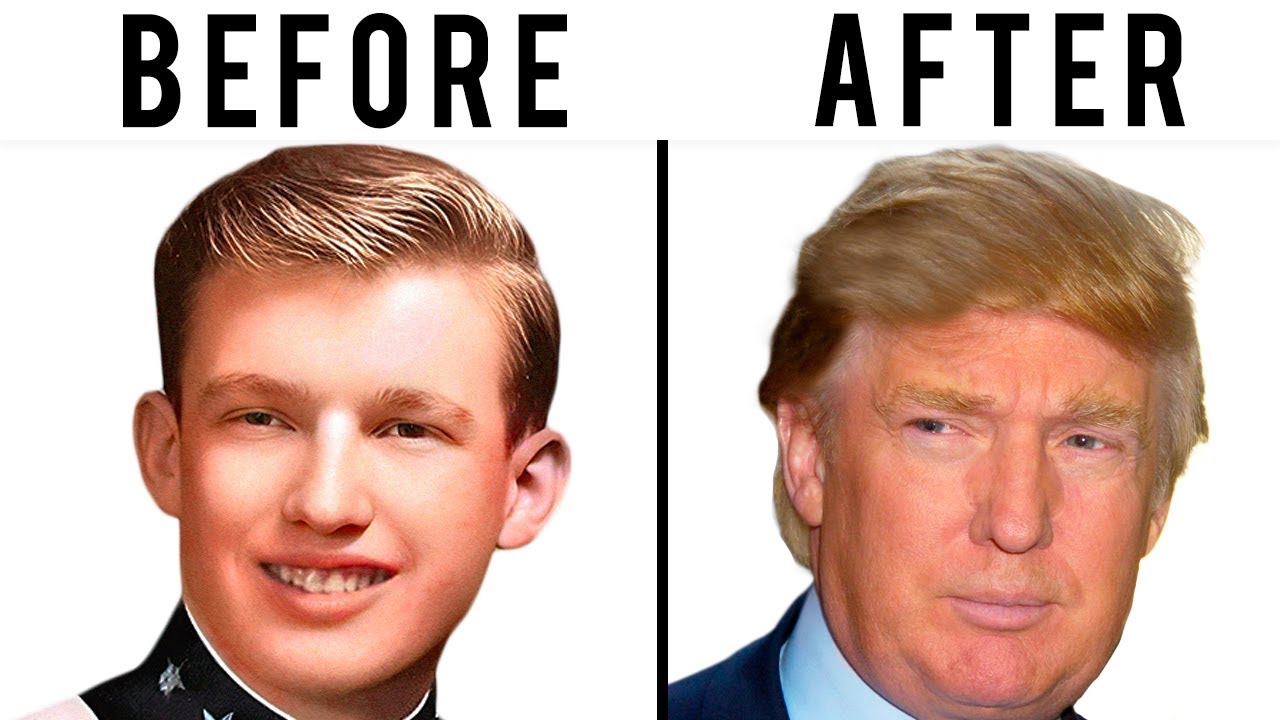
surgical options for crown hair restoration one option is a scalp reduction surgery this is a procedure that some people think Donald Trump may have had and we have a video dedicated to all the different procedures that he may have had to arrive to his current state of hair but a scalp production is rarely performed today for purely aesthetic purposes these can be painful procedures and sometimes they leave behind scars that are quite visible many of our modern hair transplant techniques have made scalp reduction surgery essentially Obsolete and when it comes to hair transplant surgery many
patients still ask me today if it works for the crown well let me tell you right here right now it does but there are some nuances that we need to discuss and remember that hair transplants can be performed using Fue or fut techniques both are equally as effective in restoring the crown area the main difference is how you harvest the graphs remember with fut we're cutting out a linear strip of tissue from the back of the scalp and leaving a linear scar behind and with the fuee technique we're removing individual graphs and leaving behind small
circular scars let's talk about some of the challenges of doing a hair transplant for the crown region the crown is usually a larger surface area than what most people realize sometimes I tell my patients to take their hand and put it on the frontal scalp and then move it back to the crown and see just how much space you need to cover when doing a crown hair transplant most are quite surprised at how much bigger the crown area can be compared to the frontal scalp also a curved surface area like the crown is harder to
create density in compared to a flatter surface like the frontal scalp the overall surface area when it comes to the crown can be quite large and later on in this video I'll be showing you some of my own patients some real clinical examples to help illustrate some of these points that I want to discuss today about the crown the crown also has a whirl pattern or a cck at least one some people have more than one cck in the crown and because of this there's an area that lacks the shingling effect and shingling refers to
hairs that essentially are overlapping one another and that's something that we more often see in the frontal scalp but when it comes to the crown because of the radial nature nature of that area you don't get as much shingling so the density never looks as impressive as the frontal scalp particularly if you start with the same sized area to cover and the same base density with the frontal scalp compared to the crown with the crown you're not going to get the same impact with the same number of graphs also the Angles and the directions of
the hair are constantly changing so again that is where we lose that jingling and we start to have weaker appearing densities it's very important with a crown hair transplant to avoid the halo effect and the halo effect is when a hair transplant is performed into the epicenter of the crown where it appears to be the weakest but there isn't a good fade out into where you have hair further out into the mids scalp or maybe the parietal scalp and because of that you have the central area that looks very dense and then you have this
almost clearing Zone this Halo that's starting to form and then the hair starts up again that is not a natural look so in order to avoid that what I frequently do these days is I create essentially two zones that I look to fill with the transplanted hair there's the outer zone that's going to get a slightly lower density of hair and then there's the inner Zone and that zone typically gets close to a 2X density that's going to be the weakest central zone so we're still usually adding higher density to that most bare area but
we're including that clearing zone so that we don't get the halo effect so here are some of my clinical pearls when it comes to Crown hair transplants for the same number of graphs placed you're going to get a better bang for your buck working into the frontal scalp compared to the crown in terms of the density that's generated so when you're working into the crown it's important to lower the patients expectations compared to doing frontal scalp work and it's equally important to remind patients that additional procedures might be necessary to further increase the density of
the area and when people ask me how close to my original hair density am I going to come with a single crown hair transplant what I often look at is what is their base density what is the overall coverage Zone that I'm working on also what is the caliber of their hair and how many graphs are we able to transplant in a given session to try to replenish the crown I'm then able to estimate what the approximate percentage of the original hair might be in the crown post hair transplant and that number can range fairly
broadly it can be anywhere from reaching maybe 10 15% of their original density if it's a massive area of the crown and for example they're starting off with absolutely a bare scalp or maybe we can reach percentages of closer to 80 or 90% but in order to reach those levels in a single surgery we usually have to have some base percentage of hair present maybe 20% maybe 30 maybe 40% of the original and then we're able to boost it up into percentages that closer match their original hair but if they're starting off with a completely
bald area it's not going to be possible in a single surgery to take them from 0 to 100% another pearl of mine is to not invest too many graphs into the crown until the frontal scalp looks sufficiently filled meaning that if someone comes in and most of the frontal scalp is gone I don't think that it's a wise decision to do an initial surgery into the crown area because the patient can likely use it in the frontal scalp much more especially from just an overall aesthetic perspective compared to putting a large number of graphs from
the beginning right into the crown and then still having a frontal scalp that's missing before we get into the clinical examples let's do a brief FAQ this Crown restoration take longer to show results compared to other areas that are transplanted the answer is no the shedding and regrowth patterns are quite similar whether you're working on the crown the frontal scalp or the mid scalp will a hair transplant last forever in the crown just like with all hair transplants not necessarily and the reason is because we don't know exactly how your hair will fare down the
road and the best way to ensure a great long-term outcome is to be on medical therapy so you're reducing the further loss of hair and you're increasing the overall fullness of your hair and that usually is the best way to maintain your surgical results for a long long time but for patients who get a hair transplant and they don't want to be on medical therapy for example we just don't know how they will fare down the road now let's get into some of my own personal clinical examples so we can see some of this crown
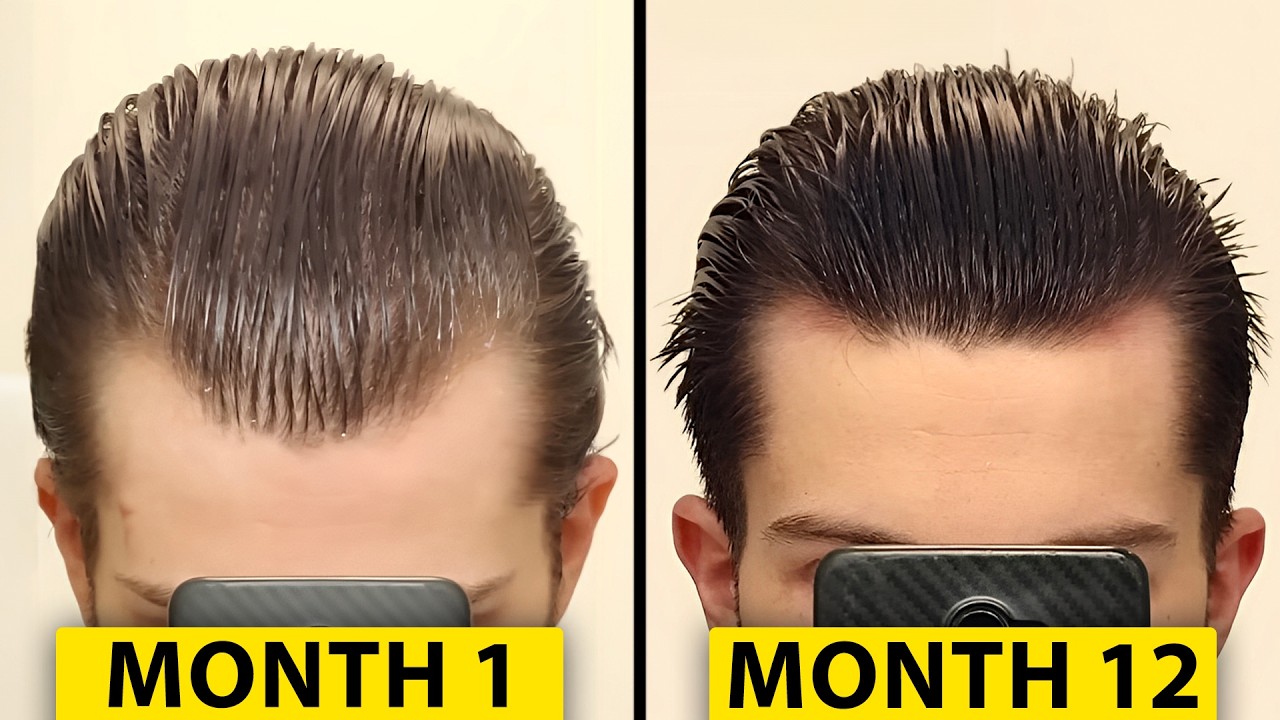
hair restoration come to life my first patient actually came to me initially for a frontal scalp procedure and we featured his result on our website that we'll show here and then he came back saying hey I'd like the rest filled in as well so he had a starting density that was very weak as you can see here here and the area to cover was quite large so we went in for a 2800 graph procedure this is now remember his second hair transplant with us and we worked from the outside in to avoid the halo effect
and you can see that his final result a year later looks significantly better than where he started as far as the crown is concerned even though there is still some thinning occurring in the center of that Crown but it still looks like something that you would see in nature because it doesn't have that halo effect we work from the outside in and we Clos down that crown and with a smaller procedure we can improve things even more for him but he's overall quite happy with his result and he's not looking to get a third procedure
at this time the next patient here also came to me initially for some hairline refinement and then came back for a crown procedure so when you look at his crown you can see that his starting density is rather weak and his overall coverage area is medium siiz so we place 2200 graphs into that crown and you can see his final result here granted he wears his hair longer now and he's colored it some but you can see that this is a really nice Improvement has it completely blocked the crown in its entirety no there's still
some light penetration and with a touchup procedure of let's say another 500 to 700 graphs we'd likely get that light penetration down significantly but again he's quite happy with his current outcome now here's another example of where our starting density was now a bit better than the first two examples I would call this a medium type of density and his overall area that we were working on to fill was also mediumsized and the other component in this patient case is that he had thick caliber hair so for this gentleman we actually transplanted four 1, 1400
graphs into the crown and you can see that you don't need 4,000 graphs to create a nice impact for someone and so this was able to minimize the scarring in the donor area cuz look at his donor area it looks immaculate because we didn't need a ton of graphs and his overall Crown exposure has significantly diminished I mean maybe there's still a little bit right at the Whirl but the Whirl is always going to be the thinnest part so he was extremely pleased with his outcome after a single procedure so as you can see hair
transplant surgery is not a one-sized fits-all type of solution it has to be customized to the individual and more graphs isn't always better and it's not always necessary so forget about just focusing on the graph count and make sure that your surgeon is doing a lot more about strategizing about what is best for your specific scenario I hope this shows you some of the promises and the limitations of crown hair restoration all of hair restoration starts with adequate planning and the proper strategy to optimize patients outcomes and I hope this presentation showed you all the
importance of setting realistic expectations when it comes to Crown hair restoration especially as it compares to doing work at the hairline