we're going to be talking about ancient greece we're mostly going to be covering the archaic period and the first part of the classical period today so as a brief introduction the ancient greeks refer to themselves as the hellenis established city-states and various locations around the coastal mediterranean they're very similar to a lot of the other civilizations that we've studied in the ancient mediterranean where we're starting off with these small city-states these smaller settlements that are accumulating land and power over time oftentimes obtaining alliances with one another or fighting with one another etc so these city-states
were largely independent um initially and sometimes even competed with and rivaled one another but were all united in a common language and religion so it is well known that there were many trade routes that existed between the greeks as well as other occupants of the ancient mediterranean so they definitely had contact with the ancient egyptians um down here with the ancient persians as well as the syrians so the ancient greek actually openly acknowledged that they borrowed motifs ideas skills and conventions from their mediterranean neighbors and especially when you look at the work from the archaic
period you can very clearly see these influences from these places manifesting in ancient greek artwork it's not really until the classical period that we're starting to see ancient greece manifesting its own kind of separate artistic identity so in terms of ancient greek culture society um we have athens which was considered the artistic and intellectual center of greece so this is basically the place where all of the architects the artists um the intellectual elites the philosophers worked um oftentimes they would guide these massive workshops athens was also considered the birthplace of democracy which is this relatively
new thing at this time where you're having decisions being made by people rather than like a king or a god basically um members of democracy like peop the ideal person in ancient greece was a free man so it was a collection of these free men that were making decisions um about life and society so another kind of aspect of this society was this notion of perfection and harmony and idealization often times you'll see mathematical formulas and ratios that are used to determine things that are perfect and just so the ideal greek human was both physically
and intellectually disciplined and male women weren't really considered people and oftentimes you had people like sappho that would just kind of go to their own island and then write about girls all day relatable so women were usually excluded from the racist society they were only permitted to participate in public events like weddings and funerals and they were typically expected to take care of children and household tasks every other time so typically when we see women in ancient greek art they're a little bit more reserved in their stances and their depictions unless you're seeing a depiction
of a goddess in that case like it's totally fine for athena to be doing stuff but you typically don't see mortal women um in very active poses in ancient greece um slaves were also very common in ancient greece so slaves in this case were people that were essentially from conquered lands um ancient greek culture was also um also manifested as this pantheon of gods and goddesses so the gods in ancient greece were very human they were flawed and imperfect um and and yet despite this oftentimes when we see depictions of gods and demigods they they
have these very godly perfect attributes to them so just to give you a super bare bones timeline of ancient greece um unfortunately we don't really get to talk about the time before the archaic period there's all these fabulous island civilizations that are happening that are creating amazing art and of course we don't get to talk about them which is sad but around 900 bce we're starting to see these more unified city-states forming so ancient greek art as we study it in the ap curriculum is typically divided into three periods that vary in style and artistic
choices so it's not like the ancient greeks were formally saying like we are now in the archaic period we are now in the classical period these periods were determined by art historians much later and these these divisions between the periods were marked by significant historical events in the case of the archaic period to the classical period the the catalyzing event was the destruction of athens in 480 bce when the persians retaliated against um the invasion of persia the event that is dividing the classical and the hellenistic period um is the death of alexander the great
so it's during the classical period that we're seeing ancient greece reach its cultural zenith that's the point when it has the the most occupied land uh when you're seeing the highest amount of wealth and during the hellenistic period you're seeing this increasing anxiety and increasing weariness in the art and it's at this point that ancient greece is eventually absorbed by the romans so these two pieces on the right here are um representing a very common theme in ancient greek art and that is warfare so warfare is a very common theme in ancient greek literature as
well you've probably read or been exposed to the iliad and the odyssey by homer in this image up here um we see a a greek attacking a persian so typically persians are represented as having these striped leggings and arm covers fun fact so the first period we're going to talk about is the archaic period so as the name suggests this is one of the older periods of ancient greece most of what survives in terms of sculpture was used as grave markers and monuments so up until this point there is very little life-size figaro sculpture produced
in ancient greece it's really starting at this point in time that we're starting to see life-sized and larger-than-life sculptures so the vast majority of the sculptures that have been found from this period were marble but gold bronze terra cotta limestone and iron were also used oftentimes statues that were made of metals are no longer with us because they were melted down and made into weapons or or stolen and melted down especially in the case of things like gold terra cotta is also quite fragile so naturally it wouldn't survive as long typically um in order to
create metal sculptures artists are using something called the lost wax process this typically involves creating a a wax copy of a sculpture and then placing it in investment which is usually like a kind of cement melting out the wax and then filling in the cavity that is left behind with molten metal so there's a youtube video down here if you want to see that process in action so the lost wax process is still used today albeit in a slightly different way than it was used by the ancients so um sculptures were usually painted to highlight
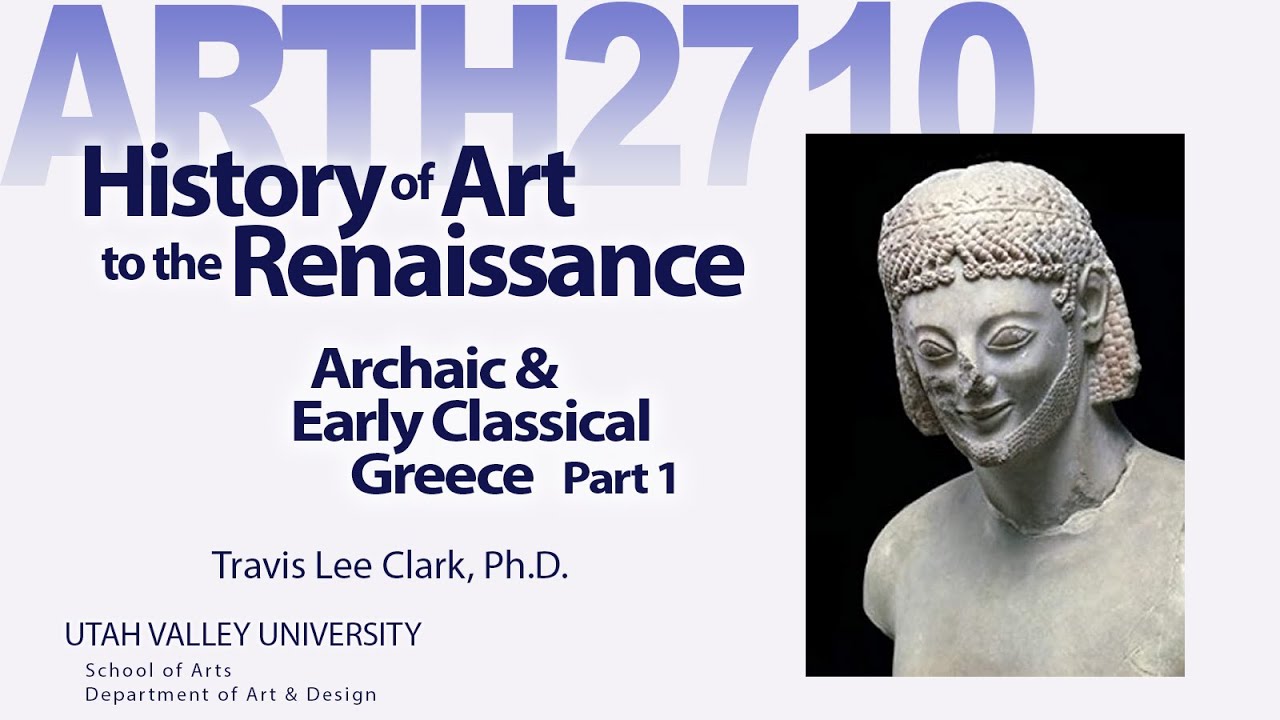
certain features especially faces and hair of course over the course of thousands of years that paint has since worn away but there are still traces left you can see some traces of the red paint left in the sculpture's hair here so during the archaic period we're seeing mostly front facing figures sometimes they're in this pharaoh pose in mid-stride i brought up menkaure and creen right here from the egypt unit to show you the similarities between these figures in terms of their stance and poses but there's a lot of differences as well for one thing this
statue was cut free of the stone matrix there's a lot more negative space that's being shown here you can see negative space between the arms and the legs um and you're not seeing a base that is supporting the legs so one of the things that is allowing this to happen is that the ancient greeks are developing iron tools which makes the carving of harder stone like marble a lot easier than it was in the past we also see this peculiar feature that is referred to as the archaic smile i've always thought of this as kind
of like an ancient depiction of the lenny face we have this slight upward curve of the lips and these kinds of like mischievous looking eyes so this was oftentimes included to make the statue seem more lifelike and human so there there oftentimes you're not seeing this this disattachment um and kind of unearthiness that you're seeing in ancient egyptian statuary so there's a real attempt here to make these figures seem more mortal and human some of these statues had metal accessories like harps spears and other kinds of weapons oftentimes these items would help to inform like
who the statue was of so if the figure was carrying a bow for example and was a statue of a woman then we might have assumed that it was the goddess artemis of course again a lot of these were made of metal and they've since been lost in terms of architecture um basically all architectures from the archaic period did not survive so most of what we know about architecture from this period was from ancient texts so most of these texts indicate that early architecture consisted of temples devoted to greek gods and these temples in particular
were made of euphemial basically not long-lasting materials like terra cotta tufa which is a sort of volcanic stone that's kind of crumbly mud brick wood and thatch so these materials don't last that long especially in a mediterranean climate that tends to get very hot so over time these buildings have disintegrated so permanent materials like stone became far more common a lot later typically like during the classical period when we started seeing these rivalries between the city-states so at this point the city-states are kind of trying to want up each other they enter these friendly and
sometimes not-so-friendly competitions and one of the ways that they kind of show off their material wealth is by using expensive materials like marble to create their temples and statuary the order of architecture that we see during the archaic period most frequently is the doric order so these involve very simple column capitals and baseless columns as we progress throughout the timeline of ancient greece you'll see that the these columns will become more complex and more involved in terms of um other elements of architecture we're still um seeing post and lentil architecture again posts being these things
that are holding the lintel up so there's a lot of fancy terms that are used in ancient greek architecture to refer to very specific elements i'm not going to ask you to memorize those because there are so many of them you can just get a sense of how many there are by looking at the the numbers on this but one two that you should remember are freeze f-r-i-e-z-e and architrave so an architrave is basically like an unadorned lentil and a freeze typically has some sort of imagery on it in shallow relief so our first ap
artwork from ancient greece is the athenian agora so the athenian agora nowadays is basically just ruins um the agora as well as the acropolis which we'll study in the next lecture were destroyed by the persians um in around 480 bce so the acropolis is um familiar to most people you can see a reconstruction of the acropolis right here um the acropolis and that associated complex is on a raised hill and on the base of the hill is this athenian agora so an agora is a public outdoor plaza that is used for commercial civic social and
religious functions so initially this agora served as a more commercial area there are lots of shops and vendors and then over time as we're starting to see these these aspects of democratic government coming in we are seeing um these government buildings and sacred spots like temples being built in the agora so one of the most important things that happened in the athenian agora was the panathenaic festival so athena was the patron goddess of athens athena is the goddess of wisdom you can probably see similarity between athena and athens in terms of nomenclature so typically cities
would have patron gods or goddesses similarly to what we saw in ancient mesopotamia so um there was this structure called the panathenaic way which was basically the the strip that was used for this annual procession of activities devoted to the goddess athena so there were many many temples within the athenian agora again i'm not going to ask you to memorize every single one but this diagram kind of gives you a sense of like how many there are there is also this strange structure called a bulutarian which is this chamber that is used by council of
citizens so this is really our indicator of democracy here there is a council of around 500 people um these are athenian citizens that are um members of government there is also a tholos which is a circular sort of temple which is a place where senators typically held emergency meetings a structure that will also see over and over again in ancient greek architecture is the stoa so estoa is basically a covered walkway you have columns on either side and it is usually covered so you're kind of creating this this long shaded pathway so these are some
examples of these structures i just mentioned again the athenian agora like no longer exists it's basically just foundations and rubble now these are examples of these kinds of architecture from other ancient greek sites and these are obviously reconstructions right here so etholos is basically a round temple estoa is again this elongated walkway and a bulletarian is this sort of amphitheater style meeting area so here is a um a drawing reconstruction of the athenian agora as you can see there's a lot of open space as well as greenery so you can really get a sense that
this was meant to be an area where people are gathering and getting things done you do not need to memorize all of these little scattered elements i've highlighted the ones that are the most important for you to remember our next work is the anavesos choros so koros is a word in greek that means youth so a youth is basically like a young man so korros is typically a designation used by archaeologists to determine sculptures of male youths made during the archaic period they're very canonized in their appearance they oftentimes have this very rigid frontal pose
they're staring straight ahead oftentimes the hands are at the sides or in a very simple gesture they're very conservative in terms of not having too much negative space at least in comparison to the sculptures that we're seeing later in ancient greek history this particular chorus was intended to mark a grave site of a fallen warrior and that was the most common use for koro statues but some were also made as offerings to gods or they were intended to represent the gods themselves in temples so what you see here is a a general uh and not
super personal representation of an ideal warrior rather than a strict portrait of the person that is buried so we have this very muscular lean and fit figure we're seeing a lot of similarities here with ancient egypt in terms of like these idealized proportions and musculature so um we're also as i mentioned previously seeing this this pose that's very reminiscent of ancient egyptian figure of sculpture but a couple of notable differences for one the figure is nude this is pretty common in ancient greek statuary of men throughout all of ancient greek history the statue is also
cut completely from the stone matrix again we're seeing this very kind of trademark element of the archaic smile this lenny face early greek statuary um typically has um shows figures with longer hair as well so we're seeing these this long knotted hairs cascading down the back this might be an influence from mesopotamian sculpture we're not entirely sure there's also traces of paint left on the sculpture most notably in the hair so the counterpart to the coros is the corey so corey is a designation used for sculptures of female youths or maidens that were made during
the archaic period so you're seeing a lot of similarities here in terms of the depiction of the figure between the corey and the koros where we have this archaic smile and this relatively rigid frontal pose that is not using a ton of negative space um a couple of differences though for one thing the corey is clothed she has this peplos shawl that's how she received her name and additionally she doesn't really have a walking pose her her legs are right next to each other she's standing it is very likely that she had an arm here
that was projecting forward and probably holding something that maybe indicated that she was a goddess of some sort we're not entirely sure so she's clothed and she's in a less active stance than we're seeing in the anadesis chorus and this is really illustrating the the societal roles of men and women in ancient greece so her face um it has these um naturalistic more rounded features she has this this kind of curled smirk that gives her a humanness and of course you are seeing remnants of paint in the sculpture most notably the red right here is
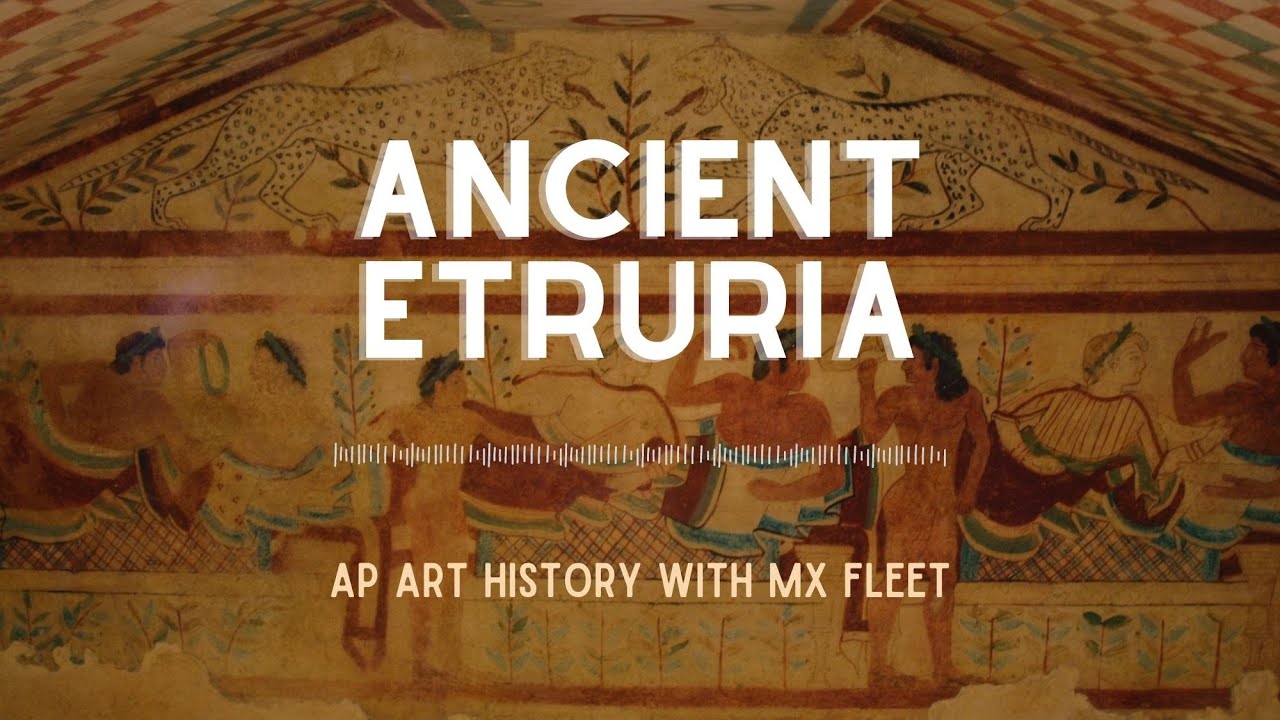
a reconstruction of what this statue may have looked like when it was originally displayed and you can see that there are metal ornaments that have since been lost you can see holes in the statue where these middle ornaments might have originally rested so all in all very similar to the anavisus choros in terms of the stylization um but still a couple of key differences in the treatments of the figures i bring up this work even though it's from ancient eteroria because it is quite similar to the work that we're seeing in ancient greece during the
archaic period i'm not going to be talking about it at length in this lecture but i just wanted to indicate that there were people that were close to ancient greece that were immediately influenced by that work and creating artwork that was very similar in style um to the stuff that we're seeing in archaic greece so we'll be talking about the etruscans later we are now moving on to the classical period so it's at this point that we're really starting to see ancient greece come into its own in terms of its own artistic express expression and
identity we're seeing a deviation from these rigid frontal poses that were very likely borrowed from ancient mesopotamia and greece and we're seeing this thing that we have not yet seen before in the ancient world and that is these more naturalistic relaxed poses so this relaxed kind of like alternating weight on the legs and alternating stress in the arms um this fluid stance is referred to as contrapposto we're going to be seeing this word over and over again so i suggest that you memorize it and get used to it so these poses are becoming a lot
more naturalistic and dynamic especially in comparison to these koro statues that we're seeing earlier in history men continue to be to be depicted naked in most sculptures um but we're seeing a little bit of a difference in terms of how women are depicted we're seeing um this transition of women being very fully clothed like the peplos corey where there's not much of a suggestion of the figure underneath to this curious phenomenon called wet drapery so the figures are not technically naked so it's seen as more socially acceptable to have statues of women because like they
you can see pretty much everything like there's not much left to the imagination um but they're still technically clothed so it's socially acceptable so we're also seeing statues become more dynamic in terms of their use of negative space you'll notice the use of negative space here like you could barely see it between the arms and between the legs whereas in this sculpture right here of dory for oh so you can see more negative space between the legs and the arms and then we occasionally get to this level of dynamism that we're seeing in the discus
thrower where we're having a massive amount of negative space here here and here so during the early and high classical period we're seeing these very god-like canonized idealized humans typically they're seven heads tall there's no way for people to actually look like this in the ancient world but rather they are ideals that people are intended to strive towards um these people like even if you're seeing individuals that are supposed to be in their 50s and 60s which was extremely old in the ancient world they still have these very heroic bodies which is always fun to
see like an old man face on a bodybuilder body during the late classical period we start to see this this human element injected back into sculptures even heroic figures have an element of exhaustion to them um they're not always these super heroic like separated from mortal concern sculptures this statue right here of hercules like he is he's exhausted he's leaning on his club and his his lion cloak he's tired he wants to take a nap right so it's at this point too that we're starting to see the eight heads canon where the figures are longer
and lenkier and they assume more of an s-shaped curve to the fingers in terms of architecture we see the introduction of the ionic and corinthian orders so ionic the ionic order is quite recognizable the column capitals have these double volutes at the end this kind of swirly and then corinthian columns have these smaller volutes as well as leaves so you can see that over time we're becoming a little bit more complex additionally ionic and corinthian orders have bases on their columns so temples and public complexes are continuing to dominate architecture into the classical period and
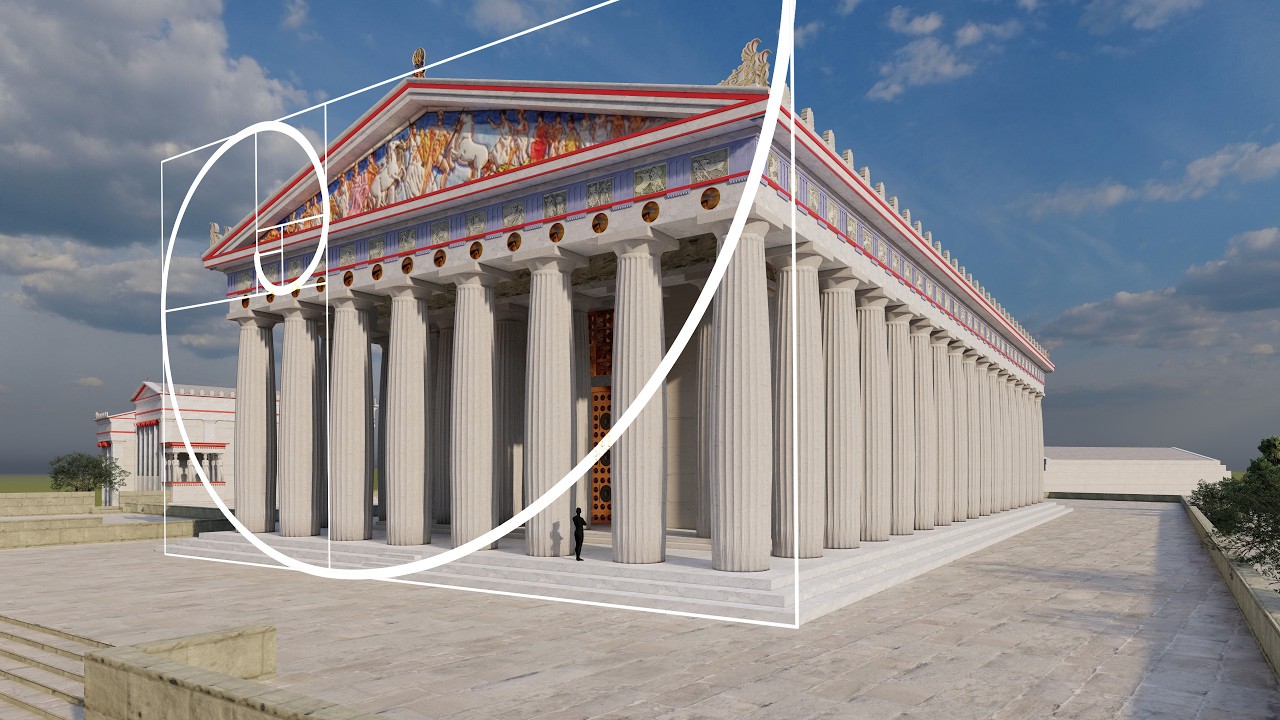
we're seeing mathematical formulas used to determine ideal building proportions and structures so we mostly see rectangular buildings though a couple of rounder ones also exist in terms of painting most of what survives from ancient greece and ancient greek painting manifests as pottery um so murals we have evidence that murals were very popular in ancient greece but again a lot of them were lost due to their perishable nature a lot of them were painted on wood or other surfaces that easily wore away over time we also have lots of surviving examples of mosaics which are images
made from these small differently colored stones cemented into a surface so um in terms of pottery there are several different styles of pottery that exist in ancient greece there's white ground pottery which is relatively rare typically there is a white slip that is used to cover the the vessel and then we see more naturalistic color that is being used to render the figures um red figure pottery typically has a black background and then lines are drawn in to show the contours of the figures later we have the development of black figure pottery where the figures
are painted black and then a stylus basically a pointy stick or piece of metal is used to etch out the lines of the figures so our one kind of greek vessel from the curriculum is the niobidis crater um this was actually found in italy and not greece suggesting that the greeks had pretty extensive trade networks and that these kinds of objects were sought out as commodities from ancient greece by other lands and civilizations so this particular piece uses the red figure technique again black background red figures so this item is quite large it is a
crater which is a a type of vessel that is used to mix water and wine typically the ancient greeks understood that if you just had water from a stream you could get sick from it so oftentimes they would mix water and wine to sterilize the water and make it safer drinking this vase has two sides one is this kind of ambiguous narrative we're not entirely sure what is happening we're pretty sure that this figure is hercules right here because he has this lying cloak and a club and he's ripped um and we're we're seeing these
these other warriors that are surrounding him so it could be a call to arms on the other side um the narrative is a little bit more clear um it depicts this narrative of the cautionary tale of niobe so nayobi um basically was this this mortal woman that bragged that she had more children than the god lee lito so lito was like um yeah but my kids are better so lito sent her children apollo and artemis to kill all of niobee's 12 children so this is a depiction of a narrative that is punishing hubris or unchecked
arrogance or pride so hubris is a pretty common motif in ancient greek narratives so this is one of the first times that we're seeing um figures deviating from this tradition of isocephalism in figure painting typically when you see images of of humans in these kinds of narratives they're all on the same ground line and their heads are all at relatively the same level what we're seeing here is this exploration of three-dimensional space we have some figures in the front and then we're seeing the ground line kind of go back and we're seeing this this kind
of ground line implied for the figures back here so this is it it probably doesn't seem significant but in comparison to other ancient artwork that we've seen where we have figures that are all on the same ground line this is quite significant here is our dory forest or spear bearer so the ancient romans loved this statue um there was a copy of the statue that was made in bronze that was brought into ancient rome and the romans loved it so much that they had several hundred if not several thousand copies of it commissioned in marbles
so there's actually several versions of this statue that have been found this particular statue was actually found in pompeii in a gymnasium and it was intended to serve as this ideal for athletes to aspire to so the ancient romans really loved ancient greek art and they imported lots of elements of ancient greek culture into their own including their pantheon of gods and goddesses so this is the most complete copy that remains so we have this very closed and firm stance and this very obvious contrapposto this alternating weight on the legs and alternating stress in the
arms interestingly we are seeing the artist use these little blocks of marble to connect these more free-floating elements of the sculpture this was intentional and oftentimes used to reduce the risk of breakage so that's probably the reason that the sculpture is in such good condition is that there were these little safeguards in place to make sure that it stayed whole so the dory forest embodies polyclatose's highly idealized human body including this canonized seven heads proportion so i've included the seven heads here to show you like he is exactly seven heads tall so he once carried
a spare um and probably a shield as well on his right arm this spear was probably made of metal which is again why it has since been lost so this work is really showing a marked transition between the archaic styles which use these more rigid frontal poses and less anatomical modeling to these classical styles that we in the modern era associate pretty strongly with ancient greece