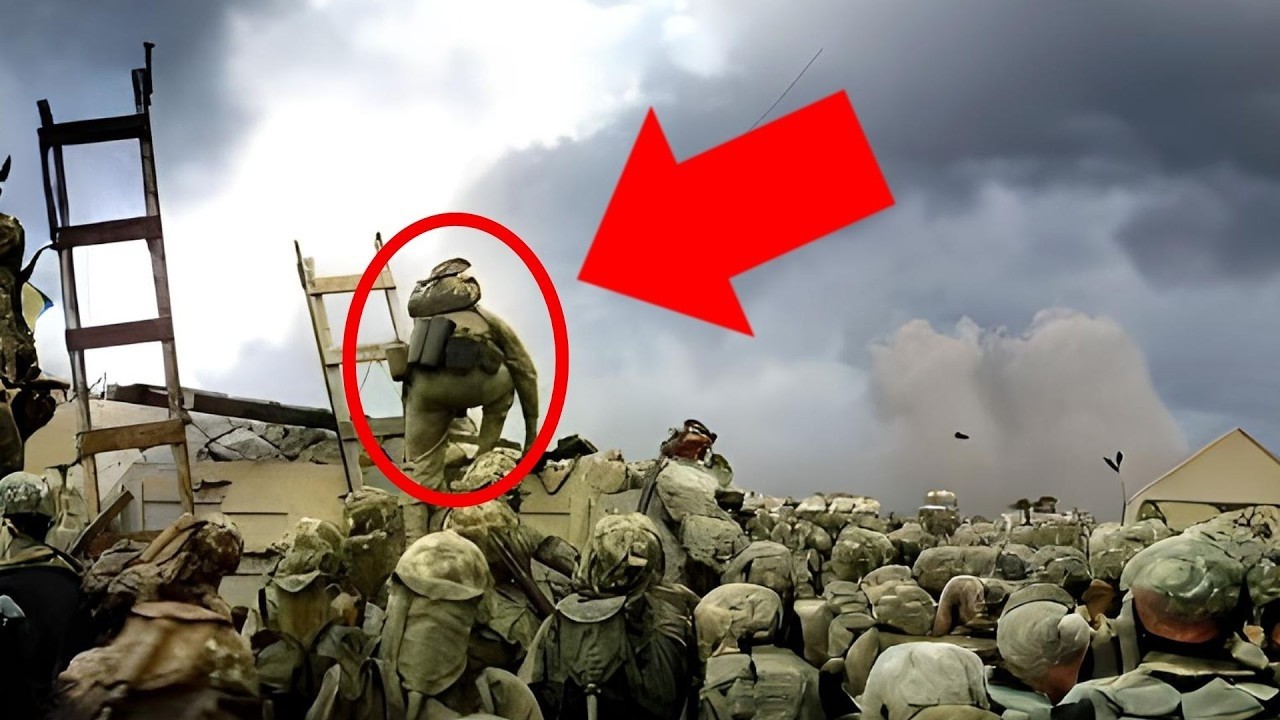
Unable to resist such a tantalizing target, a massive Allied fleet assembled in the pre-dawn darkness of June 29, 1945. Their objective was Borneo's oil reserves - the final lifeline sustaining Japan's desperate war machine. Naval artillery thundered across the water, the concussive blasts echoing through the hulls of nine tank landing ships as they lurched toward shore.
Inside, Australian soldiers from the 7th Division gripped their weapons, their knuckles white. But, suddenly, still 1,300 yards from the beach, Lieutenant Colonel Phillips raised his binoculars and froze. The blood drained from his face.
The men around him hesitated, sensing something terribly wrong. Phillips stared again through the lenses, his hand trembling slightly as he scanned the unfamiliar coastline. What he saw through those binoculars forced an immediate, desperate change to their entire battle plan - something no amount of intelligence or preparation had anticipated.
Prelude to an ending Before World War 2, Borneo was divided between British and Dutch territories. The British controlled the north, and the Dutch controlled the south as part of the Netherlands East Indies. By 1941, the island's population was about three million, mostly living in small villages.
The island's dense jungles, swamps, and lack of infrastructure made it difficult to defend, despite its strategic importance due to valuable resources like oil. The Japanese swiftly seized Borneo to control its oil fields and secure sea routes for further invasions. They landed in Sarawak on December 16, 1941, and attacked Tarakan on January 11, 1942.
Despite fierce resistance, British and Dutch forces were overwhelmed. In retaliation, the Japanese executed civilians, especially in Balikpapan. By 1944, Japanese forces were entrenched in Borneo.
The Allies, under General MacArthur’s leadership, planned an attack called Operation Oboe. The goal was to retake Borneo and deny Japan its resources. It would be the final major Allied campaign in the Pacific Theater of World War 2.
The plan had six stages, targeting key locations across Borneo and the Netherlands East Indies. However, in the end, only the operations against Tarakan, Balikpapan, and British North Borneo – at Labuan and Brunei Bay – took place. These were key targets for the Allies, and Australian forces were tasked with leading the assault.
Australian forces hadn’t fought in over a year, but now, with Japan on the defensive, it was their turn to strike. The Japanese were preparing their defenses. The 37th Army, along with naval and air forces, was positioned to repel the Allied landings.
Intelligence suggested there were about 32,000 Japanese troops in Borneo, but many were exhausted from long marches across the island. Allied troops were ready for the first assault on Tarakan. But as they prepared to land, the Japanese forces dug in.
The highways to Tarakan Before dawn on May 1, 1945, the Australian invasion fleet closed in on Tarakan, guns primed for assault. A naval and air bombardment pounded Japanese defenses along the southern coast, tearing into bunkers and artillery positions. As smoke and fire filled the air, landing craft surged forward.
At 8:00am, the 2/23rd Battalion stormed Green Beach, disembarking from American LVTs into thick, clinging mud. Japanese defenders fought back fiercely with machine guns and mortars from concealed bunkers. But despite the heavy fire, the 2/23rd fought through Japanese outposts in the hills around Lingkas, blasting pillboxes and snipers, then pushed inland, securing the vital Glenelg Highway toward Tarakan Town.
To the north, the 2/48th Battalion landed at Red Beach, advancing steadily over firmer ground. They overran Japanese pillboxes with grenades and small-arms fire, knocking out machine gun positions before securing oil storage tanks, some already burning from earlier bombardment. By nightfall, they occupied high ground overlooking Tarakan Town.
The 2/24th Battalion arrived as reinforcements later in the morning, holding in reserve until ordered northward along Anzac Highway in the afternoon. They encountered no resistance. But the Japanese were still present.
Snipers harassed the Australians throughout the night, and the 2/2nd Pioneer Battalion engaged in close-quarters skirmishes, clearing out isolated enemy positions with grenades, bayonets, and small-arms fire. However, logistical problems soon emerged. The muddy conditions bogged down vehicles, and several landing ship tanks, or LSTs, ran aground after misjudged beachings, worsening congestion at the landing sites.
Artillery from the 2/7th Field Regiment was delayed, and the influx of RAAF ground personnel with heavy equipment only compounded the issue. The stranded LSTs would remain stuck until May 13. Despite these setbacks, the Australians advanced inland.
The 26th Brigade Group pushed east into Tarakan Town and north toward the airstrip, where Japanese resistance stiffened. The 2/24th Battalion led the assault, advancing under sporadic machine gun fire. As they prepared to seize the airfield on the night of May 2, a sudden series of massive explosions tore through the darkness—Japanese forces had rigged the site with demolition charges.
Fires raged, debris rained down, and the Australians had to fight through fortified positions before securing the airstrip by May 5. The Japanese, however, still held the island’s rugged interior. More than 1,700 troops remained entrenched in heavily forested hills, their positions fortified with mines and booby traps.
To clear them out, Australian forces relied on artillery and air support to soften enemy defenses before launching infantry assaults. Tanks provided limited fire support but struggled to maneuver through the dense jungle and steep slopes. On May 7, the 2/3rd Pioneer Battalion and a Netherlands East Indies company advanced east of Tarakan Town, pushing forward through dense scrub.
As they moved, the air was thick with the sounds of distant firing, but nothing immediate. Then, suddenly, as they crested a small rise, enemy machine guns opened up from the heavily fortified Helen feature, a key strongpoint on Tarakan Hill, located south of the airfield. Men dove for cover as bullets cracked overhead.
The Japanese defenders, numbering around 200, had prepared their positions well. Over the next several days, Australian attacks were repelled with efficiency, and casualties mounted. On May 12, Corporal John Mackey’s platoon pushed forward again, determined to break the deadlock.
As they advanced, Mackey spotted machine-gun positions ahead, cutting off the Australians’ advance. He surged forward, leading the charge. Sprinting through the hail of fire, he reached three Japanese machine-gun posts.
Each fell to his attack, but as he reached the last position, a burst of fire hit him. His courage and sacrifice saved his comrades, and he was posthumously awarded the Victoria Cross. To break Japanese resistance, B-24 Liberator bombers and P-38 Lightnings launched coordinated airstrikes.
The Liberators carpet-bombed enemy positions, followed by P-38s dropping napalm to flush out surviving defenders. The tactic proved devastating. By May 14, the Japanese had abandoned Helen, having lost around 100 men.
The 2/3rd Pioneer Battalion pressed on, reaching Tarakan’s eastern shore by May 16. Meanwhile, US and Australian naval forces patrolled the surrounding waters, targeting Japanese supply lines. USN PT boats intercepted and destroyed at least a dozen enemy craft attempting to reinforce the garrison.
The Butler-class Destroyer, USS Douglas A. Munro, silenced a Japanese coastal battery at Cape Djoeata, further isolating enemy forces. By mid-June, the Japanese were in full retreat.
The last organized resistance collapsed on June 14, with survivors fleeing north. As fighting raged in the hills, Australian engineers worked to repair Tarakan’s bombed-out airstrip, cratered and unusable after the pre-invasion bombardment. Marshy terrain complicated reconstruction, and it took eight weeks to complete.
The airstrip became operational on June 28, but too late for the Brunei, Labuan, or Balikpapan landings. With the island secured, Australian forces turned to mopping-up operations. Japanese holdouts scattered into the jungle, moving north and east to evade capture.
Many attempted to swim across the strait to Borneo but were intercepted by Allied naval patrols. Others hid in the hills, launching occasional raids on Australian positions in search of food. As supplies dwindled, increasing numbers surrendered.
By early July, only isolated Japanese stragglers remained. Tarakan's oil fields were quickly repaired after the Allied landing. Engineers restored the first pump by June 27, and by October, the fields were producing 8,000 barrels per day.
The Battle of Tarakan had cost the Australians dearly in time and resources, but the island was now firmly in Allied hands. Casualties were significant: Allies suffered over 251 losses and nearly 700 wounded, while on the Japanese side, 1,540 perished, and 252 were captured. Historians are split on the battle's significance.
One historian called it: [QUOTE] “A very well conducted amphibious operation which attained its objectives with minimum loss,” While another argued: [QUOTE] “The results achieved did not justify the cost. ” The Pocket of North Borneo On June 10, the Australians launched the next two major amphibious landings in North Borneo. After intensive rehearsals at Morotai Island in May, an 85-ship assault force, led mainly by the US Navy, departed in early June.
Minesweepers and survey vessels moved ahead, clearing the way for the main naval attack group. The first landing targeted Labuan Island. Two battalions of the 24th Brigade—2/28th and 2/43rd—stormed ashore, backed by Matilda tanks from the 2/9th Armoured Regiment.
A third battalion, the 2/32nd, remained in divisional reserve. Cruisers and rocket ships unleashed a devastating bombardment, while eight squadrons of Liberator bombers rained anti-personnel bombs onto Japanese positions. The enemy had already pulled back from the beaches, leaving the Australians to land unopposed.
They pushed inland toward Victoria and the airfield, overcoming scattered resistance before securing both objectives by nightfall. The 2/11th Commando Squadron secured the western flank. The Japanese, not yet defeated, withdrew into a fortified redoubt—the Pocket—deep in the jungle, where swamps and ridges offered natural defenses.
The 24th Brigade Group pushed relentlessly toward the Pocket, facing fierce resistance from entrenched forces. Tanks were damaged, and casualties mounted. By June 19, artillery and air support intensified.
Two days later, C and D Companies, supported by flamethrower tanks, launched the final assault, overrunning the Pocket and terminating 60 Japanese soldiers. Meanwhile, the Australians unleashed a three-day naval and air bombardment, attempting to break Japanese resistance. Yet the enemy struck first, with 100 troops launching a desperate counterattack on the Australian maintenance area and airfield.
The Australians held firm. A few days later, the 2/28th Battalion attacked again. This time, tanks and flamethrowers spearheaded the assault.
The defenders, overwhelmed, fell one by one. By the time the battle of Labuan ended, 389 Japanese lay lifeless. The Australians had lost 34 men, with 93 wounded.
Simultaneously, the 20th Brigade struck Muara Island and the Brunei Peninsula. The 2/15th and 2/17th Battalions led the assault, supported by another squadron of Matilda tanks. The Australians swiftly advanced: the 2/17th captured Brunei on June 13, the 2/15th secured Muara Island and reached Limbang by June 18, and the 2/13th landed at Lutong two days later, supported by air cover.
They then pressed on to Miri and Seria. Upon arrival, they realized that retreating Japanese had set 37 oil wells ablaze. Engineers began the grueling task of extinguishing the fires, which would take over three months.
By June 24, the Australians had reached Kuala Belait. With their objectives secured, the 20th Brigade turned to patrolling. Using landing craft, they moved swiftly along rivers and streams, chasing Japanese remnants.
Resistance was scattered but grew fiercer beyond Miri. Meanwhile, RAAF Mosquitos and Beaufighters pounded Japanese positions, sinking an 800-ton vessel near the Tabuan River and destroying aircraft on the ground. Reinforcements arrived from Labuan, including two companies of the 2/28th Battalion for rear security.
Intelligence estimated that 800 to 1,000 Japanese held Beaufort, determined to secure their escape routes. On June 27, the 2/43rd Battalion led the charge toward Beaufort, the rain pouring down in sheets, turning the battlefield into a treacherous swamp. The 2/32nd Battalion provided flank protection, and the Australians fought through the muck, determined to push forward.
One company pressed directly into Beaufort, while another cut off the Japanese retreat route. The Japanese fought back fiercely, launching six brutal counter-attacks throughout the night. The battle devolved into vicious hand-to-hand combat.
One Australian company became isolated, surrounded by enemy forces. By morning, the pressure was mounting. A second company fought through multiple Japanese positions, carving a path to relieve the trapped men.
They struck the Japanese rear by nightfall, wiping out 100 defenders in a brutal strike. By the end of June, the Japanese were in full retreat, abandoning Beaufort in disarray, their last stronghold crumbling under the Australian assault. The Australians pressed forward, mopping up resistance.
The battle for North Borneo was drawing to a close, but the campaign was far from over. The Australians would continue hunting enemy stragglers well into August. The obscured shores of Balikpapan The Allied fleet, comprising over 100 US and Australian ships, assembled near Morotai Island on June 17, and after rehearsing landings, set sail on June 26, crossing the Makassar Strait.
With a force of 33,000 personnel, they faced Japanese defenders numbering between 8,400 and 10,000, of which 3,100 to 3,900 were combatants. On June 29, the faster bombardment ships peeled off as demolition teams, under fire, cleared obstacles off the coast. Several support vessels were damaged, and the central landing beaches remained obstructed.
A few days later, the convoy reached its assembly point 8 miles southeast of Klandasan. A brutal bombardment followed—63 Liberators, five cruisers, and 14 destroyers firing over 17,000 shells. Nine tank landing ships moved in, offloading troops to smaller craft such as Alligator tracked landing vehicles, crewed by US personnel from Amphibian Tractor Battalions.
By 9:00am, the landing craft hit the beaches. Right away, confusion erupted as two battalions landed far off-course, their intended positions obscured by smoke and the remnants of coastal obstacles. The soldiers scrambled, disoriented, trying to reorient themselves.
Despite the initial chaos, the Japanese defenders, caught off guard, offered little resistance. A few scattered shots were fired, but they were easily suppressed. Within 20 minutes, the soldiers had regrouped, forming a solid line and securing the beachhead.
By the time the final landing craft unloaded, no casualties had been reported, and the beach was in Australian hands, ready for the push inland. After securing the beach, the 18th Brigade pushed forward to capture high ground north of Klandasan, key for the advance into Balikpapan. The 21st Brigade moved along the coast road toward Sepinggang and Manggar airfields, pressing toward their targets.
But the 2/10th Battalion ran headlong into a brutal defense at Parramatta Ridge. Pillboxes, tunnels, and landmines littered the area, and enemy fire raked the assault. A last-minute diversion left the Australians without their planned fire support, and mechanical breakdowns halted tank reinforcements.
Still, the order was given to attack. The initial assault stalled immediately under withering enemy fire. Soldiers were pinned, their progress slow and costly.
Finally, by noon, two supporting tanks from the 1st Armored Regiment arrived, pushing forward and suppressing the Japanese positions. This allowed the infantry to press on, seizing the ridge by 12:40PM. By nightfall, the Australians had expanded their beachhead by 1.
2 miles. Fighting raged around Klandasan on July 2, as the Japanese, determined to hold their ground, were well entrenched and prepared for a fierce defense. As the Australians pressed forward, engineers moved in under fire to tackle the Japanese defenses.
Explosions ripped through the air as they set charges, destroying tunnels that crisscrossed the area, used by the Japanese to ambush and harass the advancing troops. But the real danger lay beneath their feet. The ground was littered with landmines and booby traps.
Every step was a calculated risk, with engineers working furiously to clear safe paths while under constant threat of attack. Each explosion of a mine echoed like a warning, but the Australians pressed on, clearing the way for their infantry to push forward and tighten the noose around the defenders. By nightfall on July 3, the 21st Brigade had secured five miles of Beachhead and prepared to take the Manggar airfield.
But Japanese defenders, perched on high ground overlooking the field, unleashed a relentless barrage of artillery and mortar fire, hammering the Australians as they moved in. The airfield was captured on July 4, but the Australians were far from safe. For days, the enemy continued to rain down fire, slowing progress as two Australian tanks were knocked out.
With the enemy dug in and artillery positions causing havoc, the Australians called for naval and air support. Then, naval bombardments neutralized key Japanese positions. Finally, the remaining defenders were taken out, and the airfield was secured.
On July 5, the 2/9th and 2/1st Pioneer Battalions, backed by the 2/7th Cavalry Commando Regiment, artillery, and tanks, landed at Panadjam using LVTs and LCMs to eliminate Japanese artillery and reopen the port. Resistance was minimal, and Panadjam was secured within two days. However, along the Milford Highway, a Japanese battalion fiercely contested the Australian advance toward Batuchampar.
The dense jungle offered cover, allowing the Japanese to set ambushes and slow the forward push. But the Australians responded decisively. Flamethrower-equipped tanks charged through the thick underbrush, incinerating hidden enemy positions.
Simultaneously, artillery pounded the area with over 8,000 rounds, creating a deafening roar as explosions tore through the jungle. By nightfall, the Japanese resistance had crumbled, and the path toward Batuchampar was cleared. Indigenous vengeance The British North Borneo campaign included a parallel guerrilla war led by Special Operations Australia, or the SOA.
This effort, codenamed Operations Agas and Semut, followed Operation Python, which had been considered a failure. Between March and July 1945, five SOA teams were inserted into North Borneo. Agas 1 and 2 built intelligence networks and guerrilla cells in the northwest.
Agas 3 scouted the Ranau area for I Corps. Agas 4 and 5, deployed on the east coast, achieved little. Because the locals were so eager to fight against the Japanese occupiers, the Agas teams were able to gain local control with relative ease.
They disrupted Japanese operations but provided inconsistent intelligence and took out fewer than 100 enemy troops. Operation Semut launched in March 1945, deploying over 100 Allied personnel, mostly Australians, into the dense, unforgiving jungles of Sarawak. Their mission was clear: infiltrate behind enemy lines, gather intelligence, and stir up a guerrilla force capable of striking at the heart of the Japanese occupation.
The Dayaks, indigenous to the region and hostile to the Japanese invaders, eagerly joined the fight. With their unparalleled knowledge of the terrain, they formed small, highly mobile units that could strike swiftly and vanish into the jungle, leaving no trace. While the 9th Division moved to secure coastal areas, oilfields, plantations, and ports, the guerrillas took to the rugged interior.
Operating from hidden bases in Balai, Ridan, and Marudi, they launched harassing attacks along the Pandaruan and Limbang Rivers and targeted the Beaufort-Tenom railway. These strikes disrupted Japanese troop movements, forcing enemy units into retreat under constant fire. The guerrillas fought with ferocity, often outnumbered and outgunned, relying on stealth, surprise, and relentless pressure.
The RAAF provided air support when possible, but there were numerous instances when the guerrillas had to evade Japanese counterattacks with only their wits and the cover of the jungle to protect them. By the end of the campaign, the guerrillas had inflicted severe damage on Japanese forces in the region. An estimated 1,800 enemy troops had been rendered ineffective, forcing a significant shift in Japanese control over North Borneo.
The operation, though carried out in the shadows, proved to be a decisive factor in the Allies' success, with the guerrilla force serving as a constant thorn in the side of the Japanese occupiers. A Debated Victory After the Borneo campaign, Australian forces remained until late 1945 to restore civilian administration, oversee reconstruction, and supervise the surrender of Japanese troops. They also liberated Allied POWs.
There were claims that the Australians encouraged the massacre of surrendered Japanese troops in revenge for the Sandakan Marches that ended the lives of nearly 6,000 men. Yet those claims remain unsubstantiated. The amphibious operations of Operation Oboe were hailed as the largest and most complex undertaken by Australians in the war, requiring extensive naval and air support.
Despite success, critics argued the campaign wasted lives, with some questioning its necessity. Peter Dennis described the operations as: [QUOTE] “Doubtful value strategically. .
. [but]. .
. they were skillfully conducted. ” With Max Hastings adding: [QUOTE] “Any rational strategic judgment would have left [the Japanese] to their own devices.
” Despite controversy, the campaign achieved its objectives through intense fighting and coordinated amphibious operations. It cut off Japanese forces, secured vital oil supplies, and liberated Allied POWs facing worsening conditions.