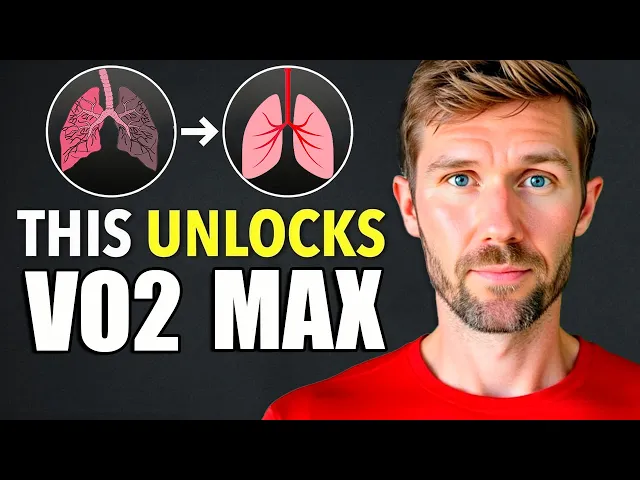
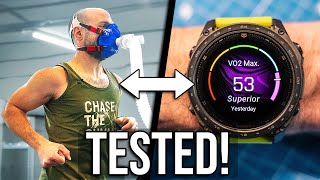
If you want to run faster, you must improve your V2 max. And recent studies have shown that there is a specific type of training strategy that can improve your V2 max twice as fast as traditional training. My name is Nicholas.
I'm a sport scientist, physiootherapist, and former professional triathlete. So, there are three components to improving your V2 max as fast as possible. How we train, how much we train, and when we train.
Let's start by how we train. So, what are the most effective way to improve your V2 max? This systematic review from 2015 asked that exact question.
They found that both regular endurance runs and high-intensity interval training make you fitter and improve your V2 max. But high-intensity interval training has been proven to improve V2 max more than regular endurance training. But that begs the question, what types of intervals should we do?
Should they be long or should they be short? In this iconic study from 2007, researchers tested exactly that. They found that most training forms improve V2 max, but one specific protocol produced superior results.
It's called the 4x4 method, and it goes like this. You warm up for about 10 minutes with some progressive easy jogging. Then you do four intervals of 4 minutes really, really hard at about 90 to 95% of your max effort.
This basically means that it's going to hurt. Then between each interval, you jog or walk slowly for about 3 minutes. Finish with a 5 to 10 minute cool down.
Doing this workout improves your V2 max and help you run faster over time. But that brings us to the second step of improving our V2 max as fast as possible, which is how much we should train. This is where things can get a bit complicated, but stick with me here.
I'll keep it simple. In the original study from 2007, the participants did it for eight weeks with three sessions each week and it worked really well. They saw huge improvements in V2 max.
But here's the thing. If you're also doing other types of hard training, so you're doing tempo runs or long runs or hill sprints, then three times per week might be too much. Your body needs time to recover between hard sessions.
That's where something called training intensity distribution comes in. Research has shown that if you train a lot, then doing 80% of that training easy and only about 20% of the training hard will make you better over time. This approach is called polarized training or 8020 training.
And it has consistently been shown to be better for people doing high mileage. But if you're not training that much, maybe only two or three times per week, then don't overthink it. You can just do 4x4minute intervals and don't worry about fancy periodization techniques or training intensity distribution.
Honestly, most people will see a huge improvement just doing this one type of workout three times per week for 8 to 10 weeks. But if you're training four or five or even more times per week, then we need to mix things up. And doing V2 max intervals three times per week is probably not the best approach.
But that brings us to the third step, which is when we train. Honestly, the study that I'm about to show you completely blew me away. Because if you nail this part, you can actually improve your V2 max twice as fast as normal, which is pretty insane when you think about it.
You see, this study from 2020 found that if we guide when we train using what's called HRV, guided training, it can have a massive impact on your performance. But before I show you how to use it, let's first define what HRV even is. HRV stands for heart rate variability.
It's the tiny differences in time between each heartbeat. For example, if your heart beats at 60 beats per minute, it does not mean that it beats every second. It might beat at 1 second and then 1.
2 and then 0. 8. That variation is heart rate variability.
A high HIV generally means that your body is primed and ready for some hard training. A lower HIV generally means that your body is under more stress or is trying to recover, which means that you might need an easier day. And last October, I was so intrigued by this science that I had to try it out for myself.
But when I first started to track HIV, I did not change my training at all. I was just curious. I wanted to see how my body reacted to hard training sessions, to low sleep, to a ton of things at work.
Basically, anything that I could throw at it. This was my first glimpse into how my body actually responded to the training load that I was trying to give it. You know, beyond feeling tired or feeling good.
And once I saw that, I could not unsee it. I started thinking, what if I actually adjusted my training based on these data? So, why would I do that?
Because this 2020 meta analysis looked at how using heart rate variability to guide your daily training actually improves your V2 max compared to just following a fixed plan. Here's what they found. HIV guided training had a significantly greater effect on V2 max with an effect size of about 0.
4 compared to 0. 21 for traditional training. In plain English, that's roughly double the improvement.
But is it just making things more complicated for no reason? To be honest, for complete beginners, yeah, it is. You just need to run consistently and I promise you, you will get better.
But for the data nerds who want to maximize their performance and all their time spent running, then the idea is actually pretty simple. By checking your HIV each morning, you can see if your body is primed for some hard intervals or if you need to take it slower. On the days where you're well recovered, you hit those quality sessions hard.
On days you're under stress, you take it easy or you even completely rest. This reduces your risk of overtraining and actually improves how well you respond when you do those quality sessions, which over time leads to better fitness gains. Now, the reason HIV works is because it tracks the autonomous nervous system.
Basically, how stressed your body is. When you're well recovered, then what's known as your parasympathetic nervous system kicks in. At this point in time, your HIV is high.
But when you're under stress from training or poor sleep or a bad diet, then your sympathetic nervous system kicks in and your HIV is low. So, it's literally measuring how ready your body is to adapt to training. So, how do you actually use this in practice?
First, you need a way to measure your heart rate variability. You can do this with a dedicated device like a Whoop strap, which is what I'm wearing. It's really expensive, so I won't necessarily recommend it unless you have the money to spare.
But you can also just use any running watch these days if you sleep with it. Almost all of them tracks your HRV. First, you need at least 4 weeks of baseline data.
During that time, you must measure your HIV daily without doing anything to change up your training protocol. This helps you figure out your normal range. Once you have that baseline, then you can start adjusting.
If you wake up and your HIV are within the normal range or even above it, then you can go hard. But if you wake up and your HIV is lower and your resting heart rate might be a bit higher and you feel a bit sluggish, then it's a sign that this is not the day to go hard. It's really about shuffling the plan, not skipping workouts.
Let me give you a concrete example. Let's say you got a hard interval session lined up on Tuesday, and on Wednesday, you're just going for an easy run. Then Tuesday morning, you check your HIV and it's a bit lower than normal.
Also, your resting heart rate is a bit higher and you feel a bit sluggish. Then instead of doing that hard interval session, you do the easy run that you were supposed to do on Wednesday and then you move the hard session to Wednesday. And then hopefully when you wake up on Wednesday, your HRV is higher.
That simple switch will make all the difference because now you're doing your hard session on the day that your body is most primed to adapt. But here's the thing, it does not mean you never train hard if your HIV is low. For example, if you only have one day that week that you can do your hard intervals, then I would do them anyway.
Or if you have a group session that you really love, I think that the benefits outweigh a single bad reading on your HRV. or maybe you just feel fine and ready, then don't let a number on an app tell you otherwise. It's about having an extra data point to help guide your decision.
But I do want to give you a warning. If you're anything like me and you just want to perfect your training, then you need to proceed with caution. I find myself becoming obsessed over these numbers and I really need to hide them when I have to perform like on race day because if I see a bad number then that alone will make me perform worse and tracking your HIV can be a double-edged sword.
It can lead to what researchers call datadriven stress. It's basically when tracking causes more worry than wellness. To help balance this, I actually plan for weeks and days where I don't track at all.
So, how do you know if you need to worry about tracking? I've noticed a few telltale signs in the athletes that I coach that means that it's time to stop tracking. If you have feelings of guilt or dread when you're not tracking, then it's time to back off.
So, here's my advice. Use HIV as a guidance, not a strict rule. Ask yourself, why am I tracking?
If it's to get healthier and get better, then great. But if it's making you anxious or feeling controlled, then back off. Combine HRV with other signals like your mood and generally just how you feel.
So, how do you blow up your V2 max? Do high-intensity intervals like the 4x4 method. Four sets of 4 minutes hard at 90 to 95% effort with 3 minutes of easy jog in between.
This is proven to improve V2 max more than regular running. So, how much? Two to three interval sessions per week is enough.
Balance hot days with easy runs or rest. Don't overdo it. If you're already running a lot, use an 80/20 approach with most of your runs easy.
The when. If you want to maximize your results even faster, use HRV to guide your training. Check your heart rate variability each morning.
If it's normal or high, go hard. If it's low, go easy or rest. This helps you train hard when your body is actually ready, potentially doubling how fast you improve.
But you won't get anywhere if you get injured like most runners.