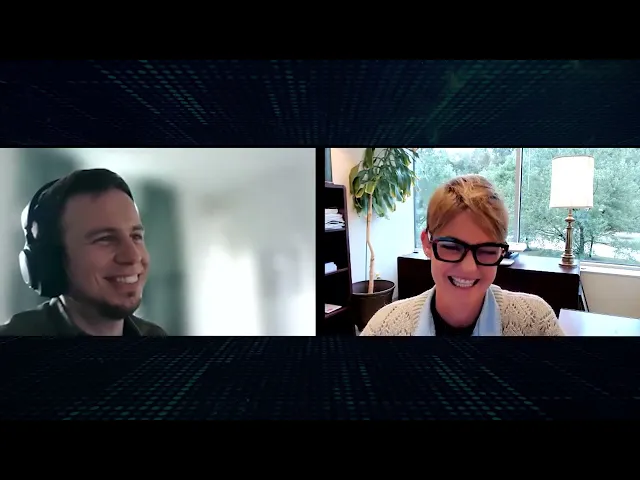
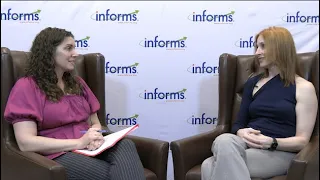
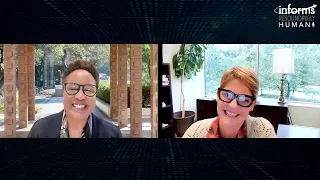
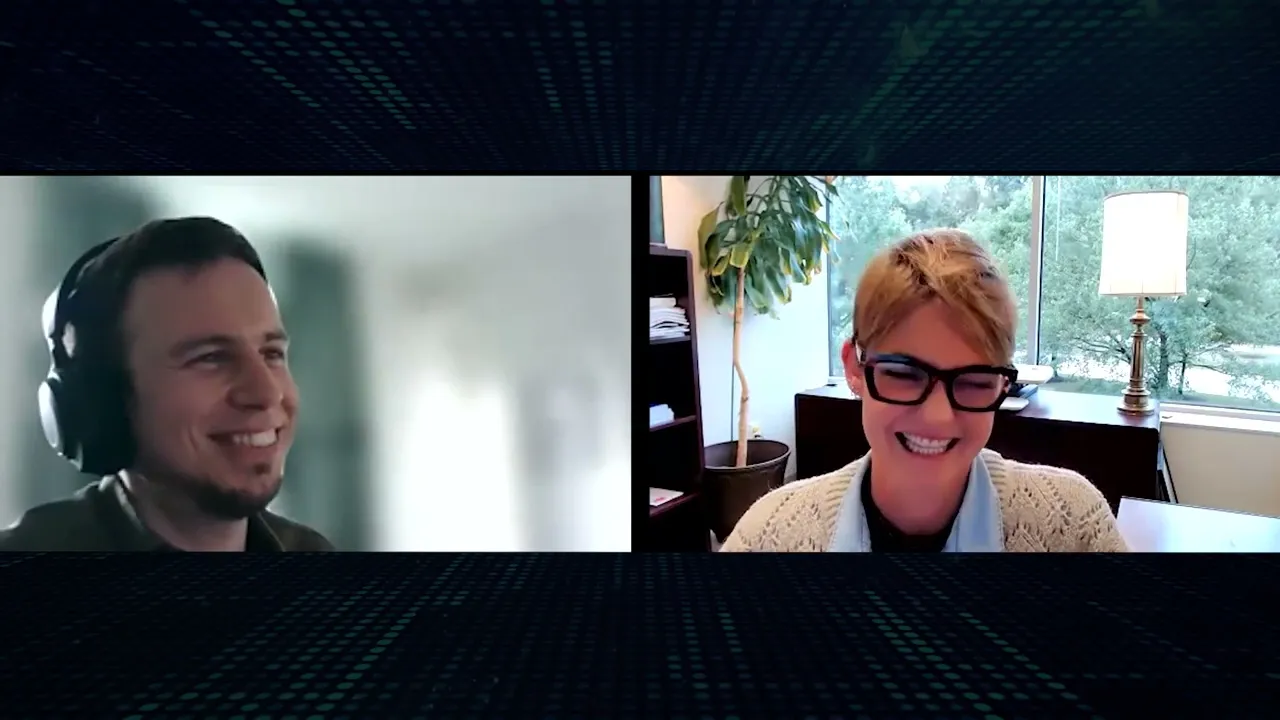
Welcome Back To resoundingly Human a podcast series that highlights the work of informs members who are transforming the world around us in ways both big and small I'm your host Ashley K and today we have cone perers head of optimization for the world food program supply chain planning and optimization Branch for the last decade he's been leading initiatives in the area of optimization and analytics including tools that are now used to inform the design of food baskets sourcing strategies and delivery networks before we start make sure to hit that subscribe button and turn on notifications
so you don't miss any of our future videos all right let's jump in I'm excited for the opportunity to chat with Co who was previously featured on the podcast highlighting the world food program as the Edelman award finalist and I will catch up on all that's happened with wfp in the years since as well as explore his own professional journey and share an exciting sneak peek at what he'll be presenting at the upcoming meeting so con thank you so much for joining me again thank you so much pleasure to be here I Like Your Enthusiasm
so my goodness Where Do We Begin uh first of all it's wonderful to speak with you again I think I'd love to start things off by asking you to share some insight into the kind of services the world food program provides the world food program I will call it wfp throughout the C because that that's much easier for me but it's it's the largest humanitarian agency worldwide have fighting hunger in some of the most crisis affected areas so really using food assistance to not just relieve hunger but even had to provide Pathway to to peace
in some countries to really encourage and improve stability prosperity and really provide a blanket of Hope to to people that are recovering from either conflict or or disasters it's a massive organization I think at the moment we have a presence in around 120 countries and last year we were able to reach around 150 million people either food or cash assistance so a very nice footprint and and and really grateful to be able to to contribute to that to that mission of course that requires the management of of a super complex supply chain all the way
from at the planning and procurement all of these these food items all the way to its final distribution to people in some of the most conflict affected areas in the globe I'm curious to know when did OMS and analytics begin to be utilized to enhance the work that w p is doing wfp and the humanitarian sector as a whole have always really valued datadriven decision making but for a very long time it was difficult to really get analytics up and running as you can imagine in the places that we serve even something as as normal
as connectivity can be a huge challenge right so having access to information on the ground getting that latest information flowing into your into your Solutions is already a massive Challenge and as you can imagine the situation on the ground is also constantly changing right we need to constantly plan and replan our operations we get a a steady trickling of conflicting information about the scale of the emergency how many people are in need where are they can we still reach them like are are the roads still working right so we are operating on this extreme level
of uncertainty so that makes it really difficult to to leverage some of the traditional or techniques in the sector around a decade ago we really started investing more heavily in optimization and more Predictive Analytics to really help us to to master this complexity and really also understand what it would take for us to be able to apply some of those standard state-of-the-art Solutions like we would be doing in the US or in the Netherlands where I'm from right like the typical tools and techniques that you would use there how do we need to change these
so that they actually hold up when we try to use them in chat or Ghana or somewhere in in a conflict Zone in in Syria for example and really try to kind of modernize how how some of these humanitarian operations are are being run and I'm happy to report that we managed to to somehow crack a little bit of the code on that I'd love to have you share a recap about the project for which your team from wfp was awarded the France adlman award we signed up for for the F adaman award basically doing
the peak of of Co right so we we had Bic been going through this kind of transformation journey in wfp of bringing more and more analytics into the way that we manage and design our operations which was really brought to kind of an explosion during the covid peak because we had to go from an organization that was 8 to9 billion per year to 134 billion per year in terms of assistance right so everything was was supercharged the complexity skyrocketed so yeah we really required H these these analytics to help us really Master this complexity and
for the 8 onone competition we kind of shared that Journey that we went through over the years to go from very initial prototypes and explorations of how we could use optimization how we could use control towers and dashboards and all these kind of En Solutions tailor them to a humanitarian operation and then build slowly that credibility build out the maturity of these solutions that is not just something that we could do but something that we do by default right to really help us to to support these complex emergencies and it's been fantastic to kind of
see that Journey over over the last decade we now have dozens of people with a background in operations research dozens of data scientists running around the organization turning our data into Insight so it's been a beautiful journey to uh to witness and encourage what are some of the ways that orms and analytics are sort of continuing to enhance uh the world food program wfp or in the future what what direction is this taking you we've definitely been building on the momentum of the adman award and and this this kind of standardization of a lot of
these Solutions into our business processes to really make it more and more normal to rely on advanced analytics to support that decision making whether it's at very operational level or more strategic decision making and we're seeing now more and more teams and divisions around the organization and even around the humanitarian sector as a whole building these cells of of data analysts and data scientists that are really trying to add more fuel right to this transformation last year the UN as a whole even published some of its Ambitions for transforming the overall humanitarian sector as part
of what they call Un 2.0 and data and analytics are one of the five pillars of that transformation so we're seeing more and more recognition for the value that our data and that our analytics can bring to really support that decision making so a lot of excitement a lot of cool new projects cropping up all over the organization to really help us to uh to make the right decisions in particular because of the immense need that we are still facing when it comes to to food security all right so now without giving too much away
could you give us a sneak peek at what you'll be presenting at this year's annual meeting don't worry I will leave some of the best tidbits for the for the actual presentation as I mentioned it's a really opportune moment I would say for the analytics Community to engage with the humanitarian sector in the wake of covid and then had the slow recovery of economies from the pandemic went straight into the UK crisis and several other conflicts had it have erupted since then so the actual humanitarian needs have been escalating rapidly over the last couple of
years funding is going in the opposite direction right so there's more and more pressure across the sector to do more with less now this is of course exactly what analytics is about right so there is this immense challenge for the humanitarian sector to to address we really need to rethink how we manage operations and really yeah maximize our cost Effectiveness and at the same time there's this increased recognition that our data and analytics are one of the key elements to make that happen so what we need now is an army of smart data scientists and
O experts will come and help us to to sort this out so during my presentation I I really want to shed some light on some of those challenges that the sector is currently facing what has been working well in terms of actually getting this or getting these analytics up and running in this sector so that we can really start transforming these humanitarian operations not just for wfb but for social safety nets public Distribution Systems Health Supply chains all of the different humanitarian and development activities that need this innovation in particular during this critical period ultimately
what do you hope is the biggest takeaway for es who come to your session what do you hope they take away with them back to the work that they're doing I hope to really challenge a little bit the the community of of our experts in the world to show not just how challenging the current humanitarian environment is looking at climate change increased conflict slow economic uptakes after pandemic but not just showing the challenge but also how realistic it is to actually enter now with our expertise with our analytics and make a difference there right right
sharing some of the impactful examples that we've seen firsthand at wfp where we are able to use optimization models to figure out which food items to distribute in Yemen or really showing concrete examples of how it can benefit as showing some of the big challenges that we are facing and then sharing as some of the inspirational examples that we are working on even this here to bring new Innovations into the way that we for example optimize our Logistics or figure out our our technical sourcing and delivery planning just giving a lot of concrete examples of
how this can be done and sharing some of those best practices so that others can also start replicating this for other un agencies local NOS government safety nets all the people that really need this this revolution well con that sounds so exciting uh thank you for sharing that little sneak peek and to our listeners if you want to hear more you'll just have to register for the conference so con to change gears a little what's something unique about you that others might not know uh maybe a hobby or a fun fact of course through my
work I spent a lot of time with computers and behind desk to work on on data and analytics so for my free time I tried to go into the opposite direction so I really enjoy also going on on adventures holidays for example we just came back from from Azores which is a very nice Portuguese island in the middle of the Atlantic Ocean where we did a lot of dolin and whale watching so in the last weeks I think I spent few dozen hours on the ocean trying to spot very small tails and fins in the
deep water and between the waves trying to kind of complete my list of different Dolphins to uh to see so that was beautiful experience that I would definitely try to try to do again soon that sounds lovely so again to change gears was there a moment in your career when you saw the impact of OMS and analytics and thought yes this is the career path for me this is where I'm going to make a difference yeah so so for me the moment that I decided to really get into the humanitarian sector was around 12 years
ago so I was attending a conference on some of the global challenges that we that we are facing and there was a element within that conference on food security right so we had some people sharing the fact that there's enough food being produced already in the world to feed everyone but at the same time there's 700 800 million people that still regular go to bed hungry right so to me having been studying o for the last couple of years at that time that sounded like an allocation problem to me right like the food is already
somewhere we just need to find like a smart way to get it to to a different place right where where it's more needed so that is when I decided that I would try to figure out how I could yeah apply my expertise in in operations research to This Global Food problem two years later I started my my internship with with the world food program and uh I haven't left since so there's clearly a lot to do and it's been really exciting to to see firsthand how we can actually apply or to to deal with this
complex this complex issue if you weren't working in the incredible field that you are what would you be doing today do you think basically when you were younger what did you want to be when you grew up yeah I think I changed my mind around every Monday but I always had an affinity for for puzzles and games even in Primary School secondary school so I didn't know yet where I was going to be res solving puzzles but I always knew that I wanted to do this and at some point I got in touch with the
field off of algebra which really felt like a nice mathematical puzzle to to to play around with so that set me on the path to operations research and it was all a very fast hurricane from there it would still take me a couple of years to figure out where I would be making a profession out of this enjoyment of solving puzzles but I found my feet for sure absolutely so the informs tagline is smarter decisions for a better world when you hear that what does that mean to you in the work that you do that
tagline couldn't describe my my working day more more accurately it's really what we've been trying to encourage at at the world food program for the last day every day we are really bringing these datadriven insight to support complex operations this year alone we've worked with more than 20 of our most complex humanitarian emergencies to assist them with optimization models with our tools with dashboards with control Towers to really help them understand the data that they have and how that can then inform their decision making so that we are able to reach more people that we
make sure that they are left with more nutritious food baskets that we invest more in local market markets and that we just reach as many people as possible with the resources that are made available to us so it's been a blessing to work on that with with the world food program so finally what if you if you can pick one thing out of the incredibly rewarding work that you do what's one thing that brings you the most joy out of what you're doing besides seeing the direct impact that at o is is bringing in this
sector one of the things that I get a lot of enjoyment of is also seeing the journey that our our experts and our data scientist are making when we are taught about operations research and about analytics the focus is often on the models and the data and how you kind of get those you know to to work together to get some different types of outputs in a very efficient way but it's not so much about what happens after you've run that model right so how do you now engage with the person who needs to do
something with your outputs right how do you engage with the decision makers how do you work with experts in in the field to make sure that your inputs are correct that your model is behaving the way that it should and that what you are recommending ultimately can actually be implemented and adopted by these operations so that has a bit of a learning curve and it's really wonderful to see also that kind of change in our data scientists see them engaging more and more with our Deep Field humanitarian see them mastering the language seeing them understand
how best to track translate their expertise to the needs of a logistician or a program officer somewhere in in the middle of nowhere that is just looking for for some answers but without much understanding right of what we need to do behind the scenes to get those set those answers to them so it's really wonderful to see how they are actually engaging with the humanitarian Community con I want to thank you again so much for taking the time to chat with me and I for one can't wait to see you in Seattle in go just
a few weeks time flies I'm looking forward to it everyone thanks for watching if you enjoyed this video be sure to give it a thumbs up and comment down below I'd love to hear your thoughts on today's interview with con perers in his upcoming plenary session at the 2024 informs annual meeting in Seattle all right see you next time [Music]