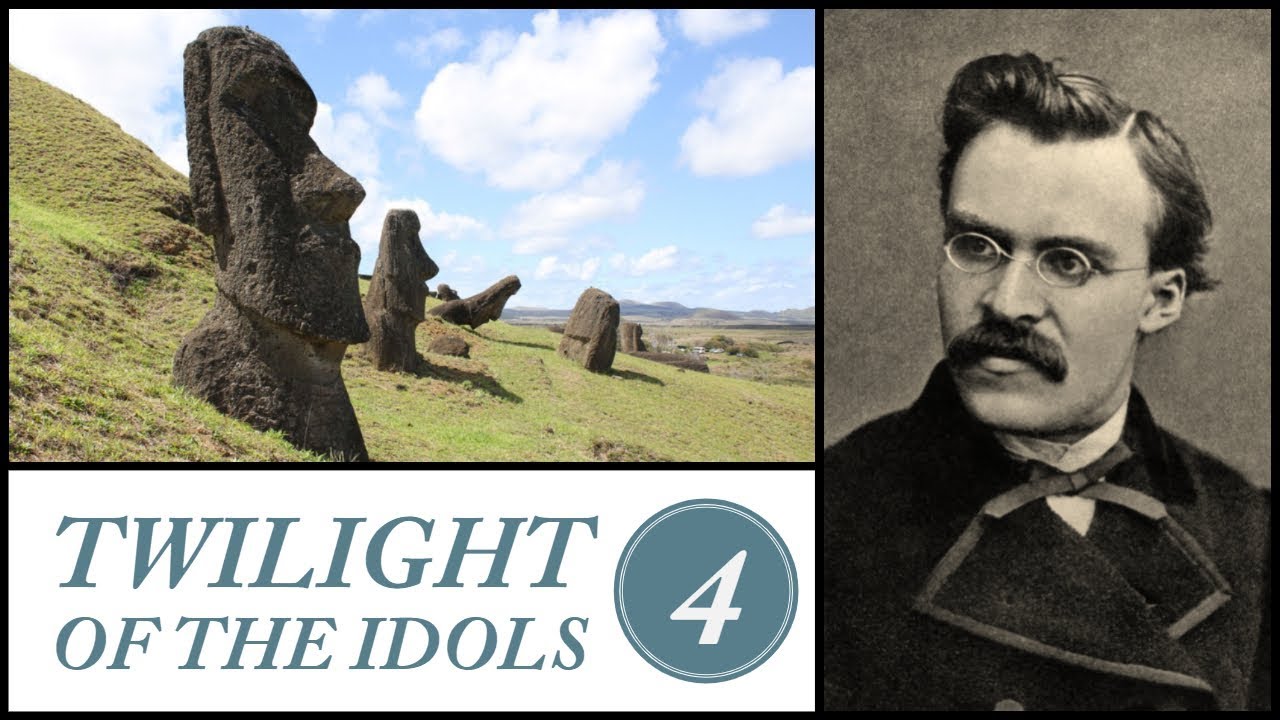
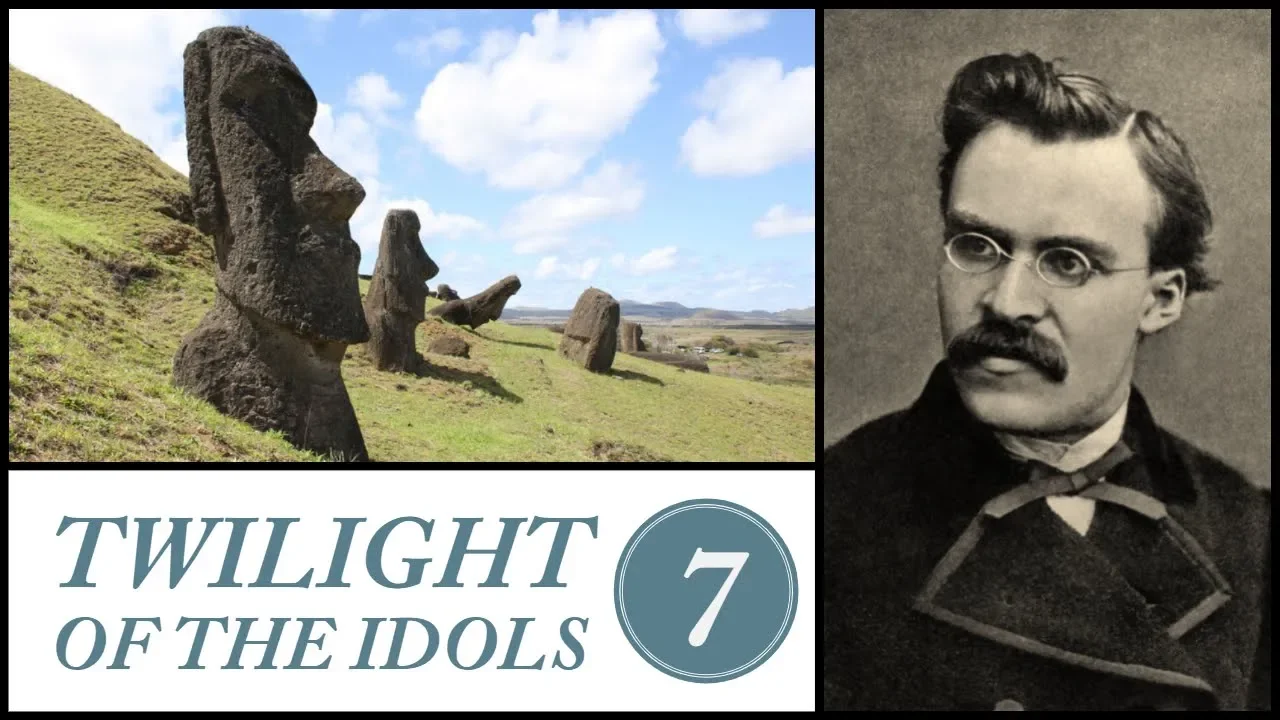
The seventh section of Twilight of the Idols is titled “The Four Great Errors. ” It consists of eight numbered sections and is about nine pages long. The first error is the error of confusing the effect for the cause.
Nietzsche says religion and morality are types of this error. Religion and morality both follow this formula: If you do certain actions and refrain from certain other actions, then as an effect you will have happiness. Nietzsche reverses this formula.
He says: In fact, if an individual being has happiness or fullness of life or will to power, then it will instinctively and habitually perform certain actions and be disgusted by and avoid certain other actions. And this is where the vocabulary of virtue comes from. Virtuous actions simply are the actions that a good, happy, fulfilled human being will do.
Religion and morality teach that immorality destroys a people, that wickedness will make a nation or a people miserable. Nietzsche says: On the contrary, when a people begins to degenerate physiologically or biologically, then immorality and luxury and vice will necessarily follow that weakening. So it is the physiological and the biological that is driving.
It is not the fact that ideas or virtues or free will are in the driver's seat. The second error is the error of false causality. Nietzsche says that people get their ideas of causality from three dubious inner facts.
These are: will, consciousness or spirit, and the ego, subject, or self. Of these, Nietzsche says the latter two are effects or offshoots of the will, and even the will itself is called into doubt today. The conclusion Nietzsche draws from this is that there are no mental causes at all, and with mental causes fall apart all empirical evidence.
The entire empirical world is based upon assumptions about these inner facts. The third great error is the error of imaginary causes. Nietzsche begins Section Four talking about dreams.
In dreams we imagine causes retroactively in order to suit the events of the dream. So if in the dream I have a sensation such as fear, I seek to give it meaning. And then I imagine a cause for it.
Note: Here the sensation comes first, but I often think of it as the effect of the cause in the dream. Nietzsche says: Precisely the same thing happens in waking life. I have a feeling.
I wish the feeling to be meaningful. And so my memory, unknown to my conscious mind, searches through prior causal associations and explanations in my past and selects one that feels safe to me, that allows me to make sense of the feeling that I'm having and integrate it into some sort of context. It doesn't really matter whether the cause my memory finds is the true cause or not.
What matters is that the cause it finds makes me feel comfortable with the feeling that I'm having. Nietzsche says: In this way, we habitually accept imagined causes and fail to investigate real causes. This habit thus satisfies my desire for safety because it makes the unknown seem known.
The causal instinct, Nietzsche says, depends on fear, and it seeks to explain what is threatening in terms that I'm comfortable with. In individual psychology, over time, one system of explanations may emerge as dominant. And this, Nietzsche says, is the origin of all morality and all religions.
They are these imaginary causes become dominant in the psychology of a single individual or group of individuals. Negative feelings, he says, are explained by appeal to evil spirits or sin. These are the causes that memory dredges up and attaches to them.
Positive feelings, by trust in God. In fact, Nietzsche says, what's really going on, the true causes, are physiological states, both positive and negative, that lie behind all of these feelings, both feelings of guilt and feelings of benevolence. The fourth great error is the error of free will.
The doctrine of free will, Nietzsche says, is the invention of theologians, in order to make men dependent on them. It was invented for purposes of judgment and punishment, as an instrument to empower priests. You might say it was an instrument of their will to power.
Nietzsche's immoralists, the people who follow him, he says, will remove “guilt” and “punishment” from the moral vocabulary. So the agenda for immoralism, the alternative Nietzsche proposes, is to embrace fate, embrace necessity. He calls this the great liberation of the human spirit from the Platonic-Christian morality of the past.
He writes: “No one gives man his qualities. No one is responsible for man's being there at all. Man is not the effect of some special purpose of a will and end.
We have invented the concept of end. In reality, there is no end. ” This comes from Section Eight, the final section in this part of the book, and I recommend it to you as worth reading in full.
This brings us to the end of Section Seven of Twilight of the Idols. We will next look at Section Eight, “The ‘Improvers’ of Mankind. ” Goodbye.