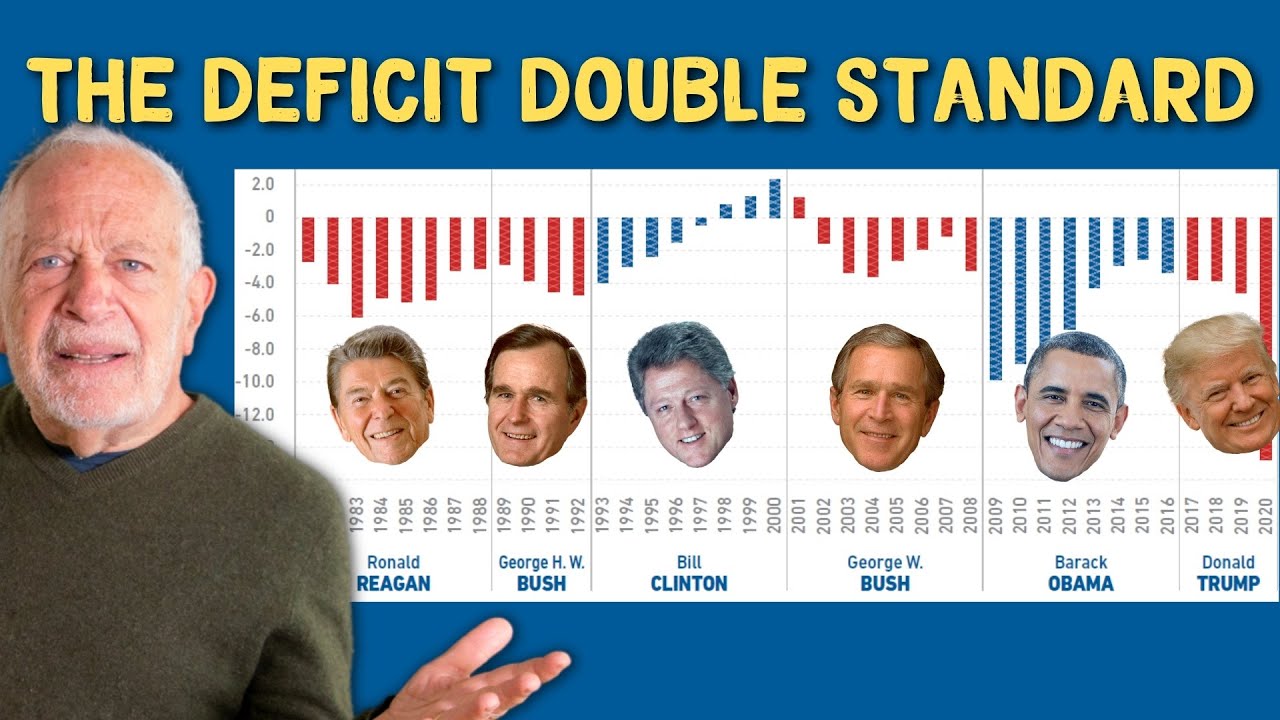
one thing that I think it's really important for all of us to be rethinking right now is the concept of the government's deficit and the reason is that governments around the world are increasing their deficit spending right now and that has the potential to make a lot of people nervous and we don't want that and it's important that we're able to breathe through this moment and to start to think about and look at government deficits in a new way [Music] deficits do matter but they don't matter in the way that we've been taught to believe
they don't matter in the sense that they are a sign of fiscal recklessness the national debt is nothing more than a historical record of all of the past instances where the government's deposited more dollars into the economy by spending than it with truth by taxing so if you think about the deficit as the government adding more than its subtracting you can actually begin to see the deficit as a surplus or a financial contribution that is made to the non-government part of the economy the biggest mistake we make is in thinking about that a government's budget
the way we would think of our own personal household budget households and businesses can and do go broke because when they borrow they're taking on debt in a currency that they can't issue they've got to find a way to earn it in order to pay those debts back the federal government is different the key principle behind modern monetary theory is recognizing that governments that issue their own sovereign currency a government like the United States or Japan or the UK can never run out of money they can never have bills coming due that they can't afford
to pay they can never be forced into bankruptcy and importantly they never need to tax or borrow in order to finance their spending a lot of people worry that somehow the federal government is going to have to eventually pay back the debt and that the burden is going to be borne by future generations and if you think about that the way that we've dealt with it in the past for example during World War two the government massively increased its spending and deficits got very big and the national debt accumulated but future generations enjoyed the greatest
period of peacetime prosperity in history of the United States of America we are misled when we're told that the government's debt is somehow our personal debt that we're on the hook for part of it that it's really our liability that's not right we've been taught to think of our tax payments to the government as the way the government pays its bills and it's not so the government actually does not use and in fact can't use the money that it collects from the rest of us to pay its bills taxes do something very different by taxing
some dollars away from the rest of us as it spends the government makes room for its own spending so that we can have more public services without inflationary pressure in fact the government has the same spending capacity with zero dollars in its bank account as it has with a trillion dollars in its bank account all government spending is paid for with new money creation by crediting bank accounts with new digital dollars there is a constraint though and the relevant constraint is inflation what modern monetary Theory does is to actually Center inflation in the budgeting process
so that we are all better protected against inflation risk sometimes governments think that after their deficits have increased and the debt has increased that they have to start down a path toward austerity it means contracting budgets withholding resources starving public services all of the kinds of investments that could be made in our economy could be withheld for fear of budget deficits and that's costly to all of us the goal isn't a balanced budget the goal should be a balanced economy and if the government is constantly using its budget to deliver a good economy the number
that falls out of the budget box at the end of each fiscal year is of no material consequence what matters is whether budget is being used to deliver a healthy economy that's equitable and provides prosperity for the vast majority of people