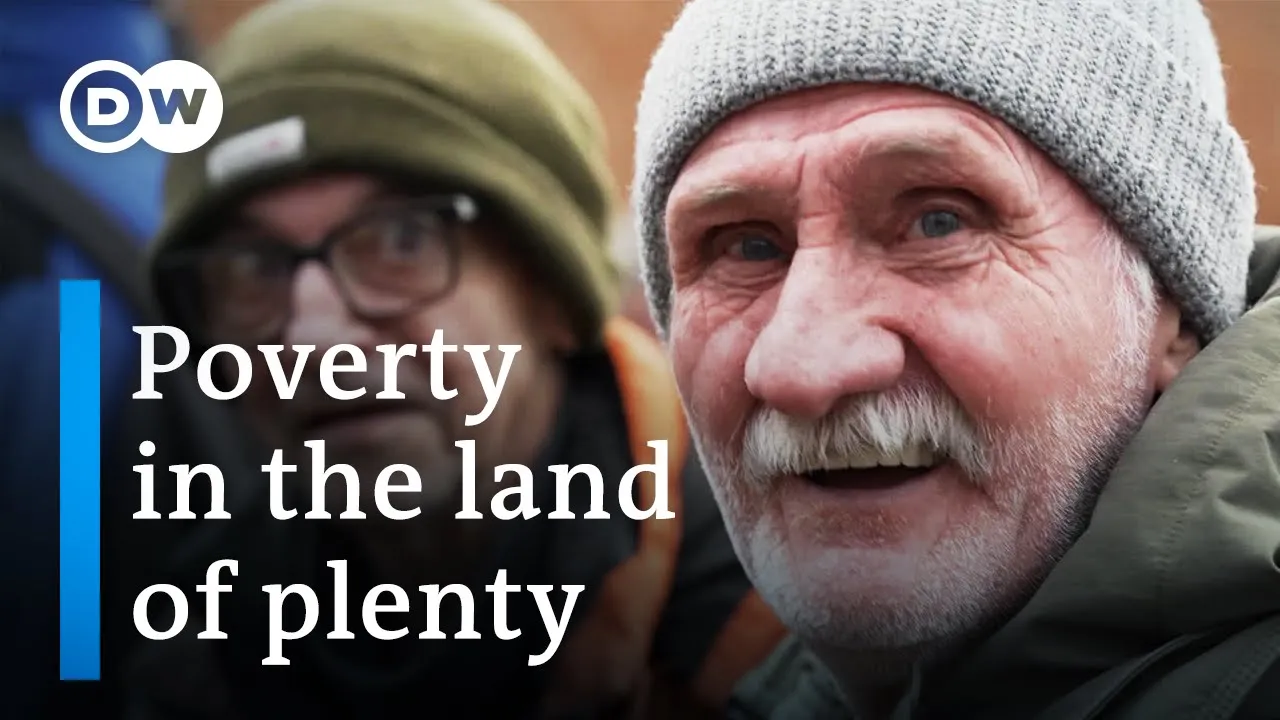
Who sleeps where? Me and others. We've never had this many people before.
. . I feel like Don Quijote, fighting windmills.
This is where I cook. Alexandra Oxacelay looks after people living on the margins of society. I hear a lot of people say they feel bothered by the sight of beggars.
How is that possible? What bothers me is that we allow this — people sleeping outside in sub-zero temperatures. Luxembourg: A financial hub, and home to countless shell companies along with the European Court of Justice.
In the Grand Duchy, every 1 in 15 residents. . .
is a millionaire. In the shadows of the fancy stores and office buildings, lies the home of Stephan and Ferenc. Alexandra has spent the past 25 years looking after homeless people like Stephan and Ferenc.
Homelessness is so visible now. What's also new are the tensions with Roma — the organized begging. We never had that before.
I'll sometimes get a call from a shop owner asking me to come over and take in a homeless person near their business. It still feels like people are trying to sweep the issue under the rug. Alexandra runs a charity association called "Stëmm vun der Strooss" or "voice of the street".
It’s an extremely high-pressure job. Outside, dozens of people in need are waiting for a hot meal. In the office, Alexandra and her colleagues have to organize everything for their end-of-year party in two weeks’ time — with hundreds of homeless people.
Now — like many others — he's falling through the cracks. Poverty in Luxembourg is becoming increasingly visible. At the same time: the country tops the European GDP rankings.
In 2022 Luxembourgers earned an average of 119,230 euros. In Germany the figure was 46,150. And in France: 38,590.
Yannick Wirtz is a painter and decorator in a similar situation to José. He's out of work. To qualify for welfare, residents have to be 25.
He's 22. It's getting difficult to find anything these days. There are more and more foreigners coming in.
And they get everything blown up their a**. Luxembourgers are left to get by on their own. Since becoming unemployed, Yannick — like the two Hungarians Stephan and Ferenc — has been making his way to Alexandra's soup kitchen every lunchtime, where he can get a hot meal for 50 cents.
And one floor up in the same building. . .
. . .
the Voice of the Street's very own newspaper team are working on their next edition. . .
another little enterprise designed to give people like Serge Kappler a path back to work. Serge and his colleague Marylène Fautsch are both welfare recipients. They know from personal experience what it means to be poor in the Grand Duchy of Luxembourg.
It is tough when you don't have any money. People who do have money can afford everything they want. But if you don't, it's difficult to get by.
In 2022, 19. 4% of the population faced poverty or social exclusion. Serge believes the most pressing issue is the housing market crisis.
He himself has chronic inflammatory back pain and is no longer fully fit to work — and he is also suffering from the aftermath of a failed marriage. I was married for 16 years. And when we got divorced, I had to leave our apartment.
The law here says that the husband has to go. At the same time: Serge's neighborhood has become increasingly hip — and. .
. increasingly expensive. They want to turn this into a luxury neighborhood.
There are apartments being built where you'll soon be paying 800,000 euros for a 35-square-meter two-room flat. It's far too expensive here. This tiny room is Serge’s home.
As you can see: it's pretty humble. For Alexandra, the housing shortage is an explosive issue that could divide Luxembourg society even more. .
. but she's determined to do something about it. For years, sociologists have been comparing it to a ticking time bomb — a situation that politicians have been ignoring for far too long, says Antoine Paccoud, an expert on the housing market in Luxembourg.
. . .
Over the last 8 years, property prices have soared by 74%. And rents by 41%. Recently, the government has started to build affordable social housing.
It’s a policy change that's come far too late, says Antoine Paccoud. So, at the moment in Luxembourg, only 2% of the housing in the country is affordable housing. So this is extremely low for standards of Europe, Yannick and José spared the consequences of outdated policy.
Patrick Clement can also speak from experience. He spent five years on the streets - an apartment was a luxury he couldn't afford. But Patrick got lucky.
He pays a relatively modest 580 euros a month for an apartment including a kitchen, bathroom and basement. Patrick's been clean for 14 years — and now spends his afternoons working for "Voice of the Street". Without them, I'd still be on the street.
Or rather: I wouldn’t be here. And I'm grateful for their help. Voice of the Street also runs this laundry — and has a working arrangement with a major supermarket chain.
We pick up fruit and vegetables — everything — and bring it here. And once we've checked it, we distribute it among various groups. It’s located in the wealthy business district of the capital's Kirchberg area.
He collects food right before it expires — with the help of volunteers. I'm retired and used to be in charge of environmental issues at this store. I care about sustainability and social issues.
We can't allow food to end up in the trash. It’s better to donate it to people in need. Voice of the Street is largely funded by taxpayers.
. . .
but donations are also important. A group of managers from a big retail company has just arrived for a visit. Focus, people!
And. . .
let's go! . .
. These visitors have donated a vacuum sealing machine — and are thinking about becoming more involved. The next day Alexandra has a couple of very high-profile visitors arriving for the Voice of the Street's end-of-year celebration.
The Grand Duke and his wife. The head of state, face to face with people who are unemployed, living in poverty and with addiction — for Alexandra: it’s the most important and symbolic moment of the year. 400 people in need have gathered here — more than any previous year.


![[The Doctor Beyond Borders – A Moving Story of Life’s Resilience]](https://i.ytimg.com/vi/x8Iaz_9Fu6g/mqdefault.jpg)