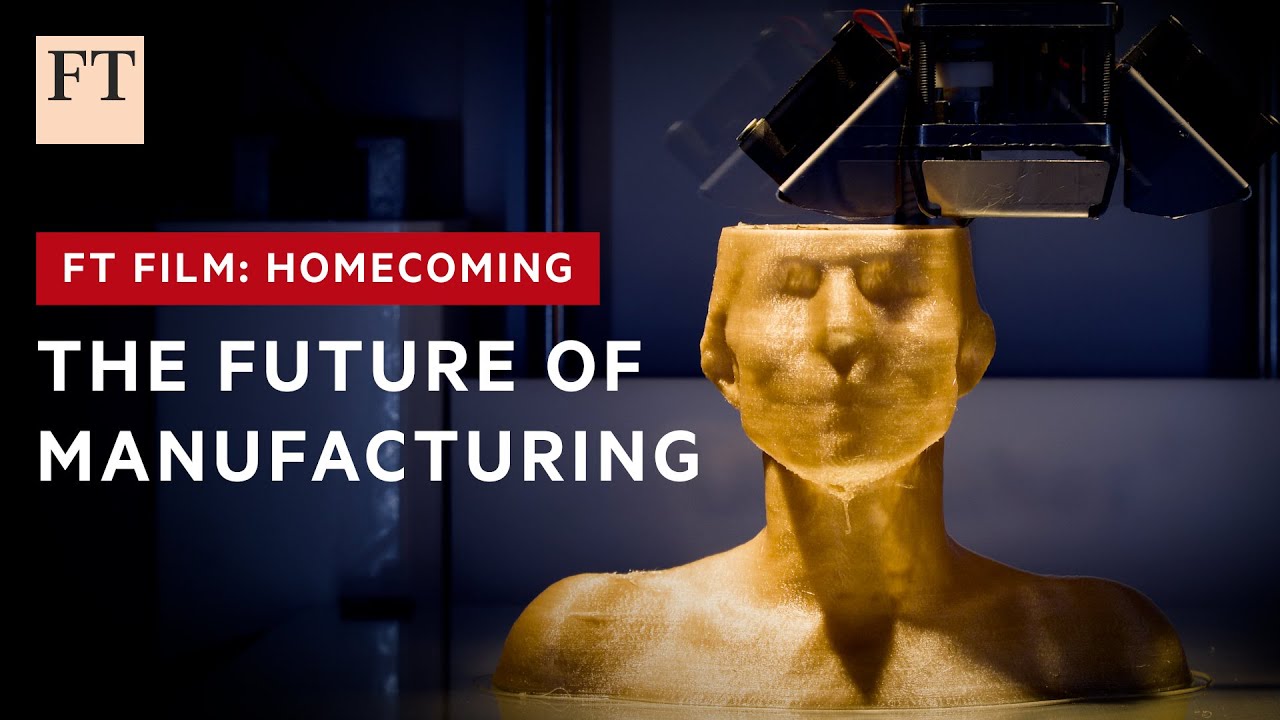
there was a time when futurists were predicting that the Advent of 3D printing was going to change our lives that each of our houses would have a 3D printer to make whatever items we need what virtually no unpredicted though was that there might soon be 3D printers that could construct almost the entire house but that's just what a six-year-old Austin Texas company called icon is doing 3 printing buildings and if you believe icon's mission-driven young founder 3D printing could revolutionize how we build help create affordable housing even allow us to wait for it colonize the
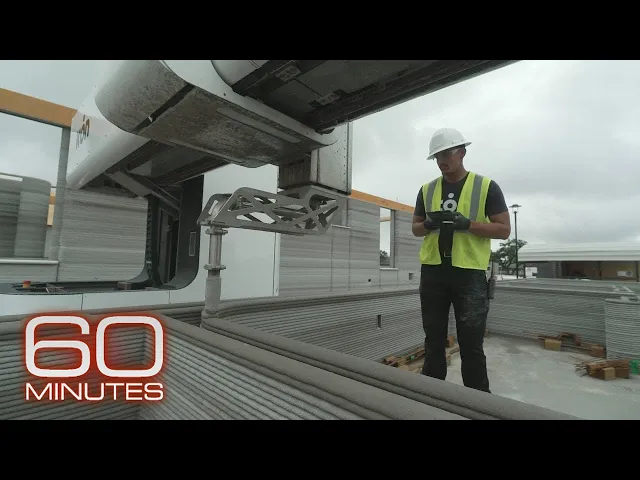
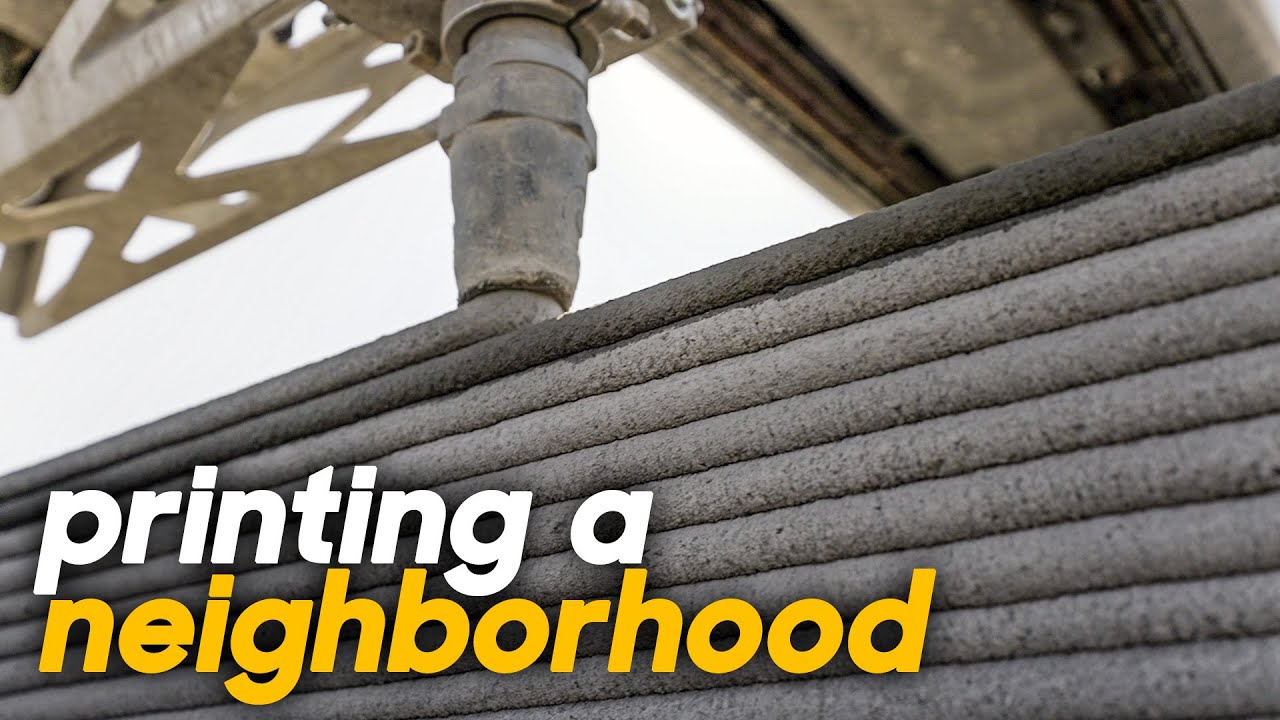
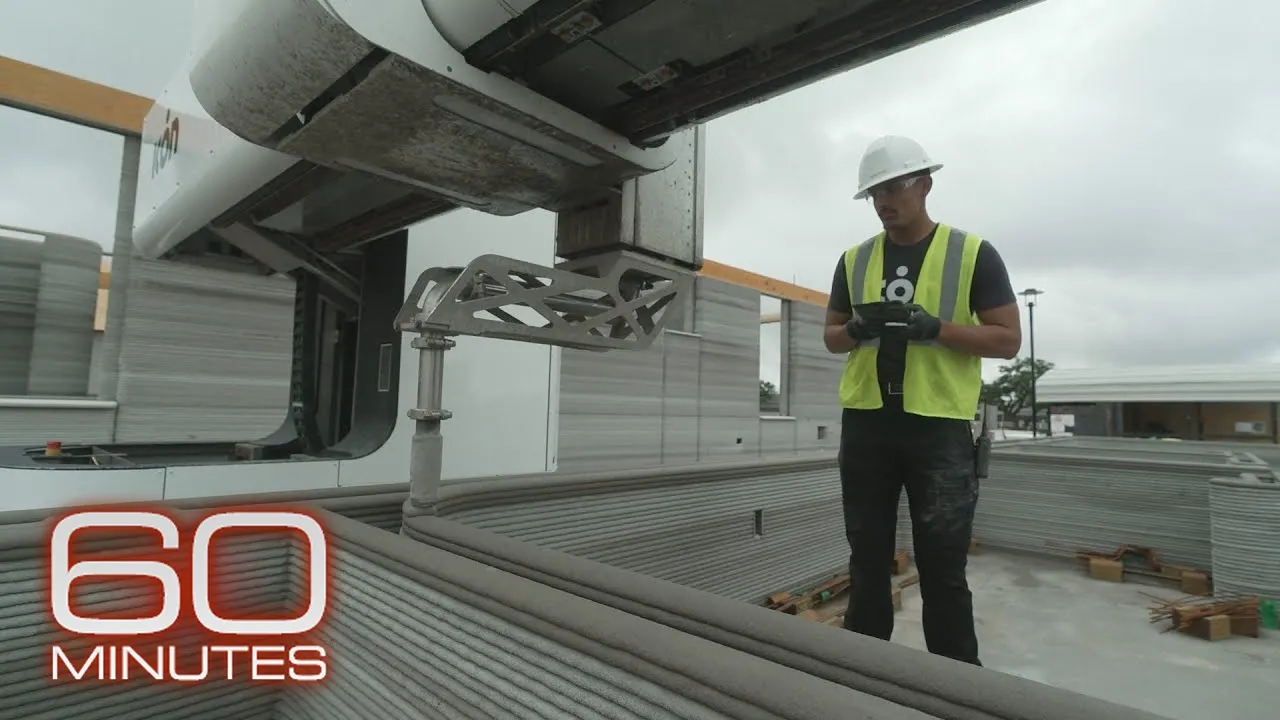
moon sound out of this world take a look the story will continue in a moment what you're watching is the building actually the printing of a four-bedroom home on this construction site there is no hammering or sawing just a nozzle squirting out concrete kind of like an oversized soft serve ice cream dispenser laying down the walls of a house one layer at a time it's the brainchild of a 41-year-old Texan who's rarely without his cowboy hat Jason Ballard 3D printing a house yes ma'am people are going to hear that and say no we're sitting inside
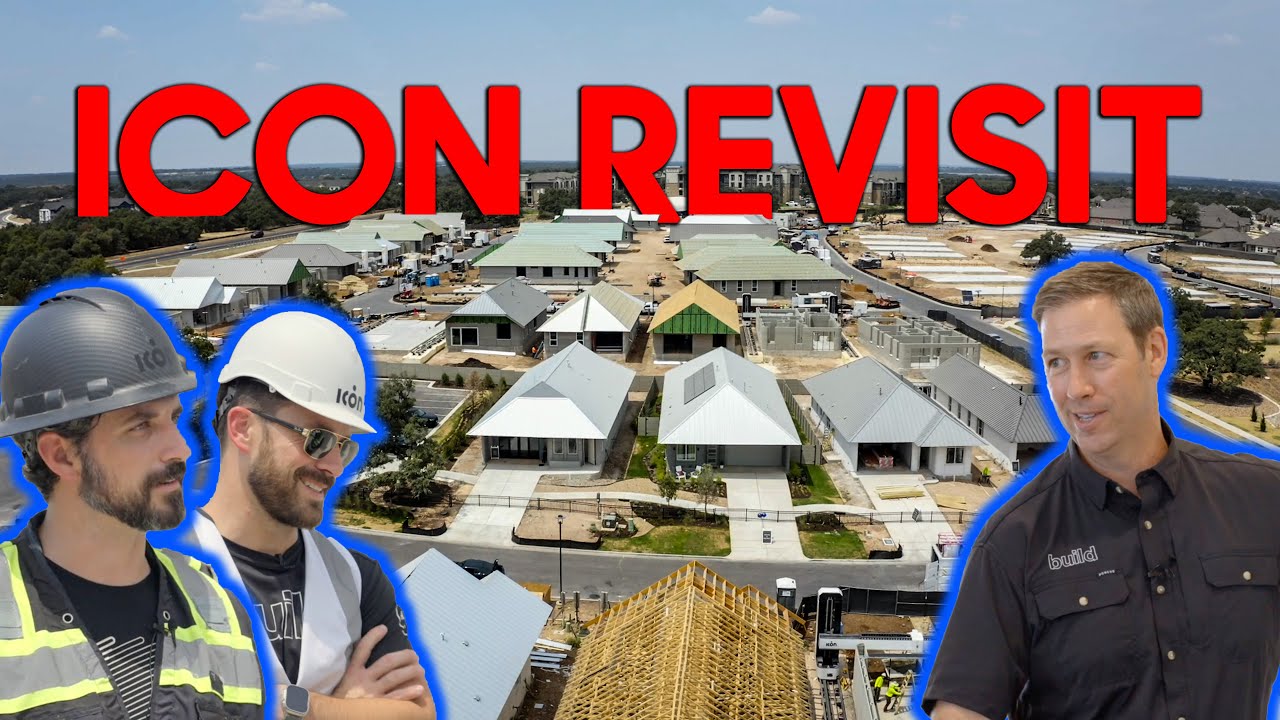
one right now this house was printed yes ma'am wow here you are look at this welcome and so was this one does a concrete home printed by a robot have to look cold and Industrial maybe not I like the curved wall Ballard gave us a Peak at the first completed model home and what will soon be the world's first large community of 3D printed houses a hundred of them part of a huge new development north of Austin they'll start in the high $400,000 range how exactly does 3D printing a house Work Well it starts with
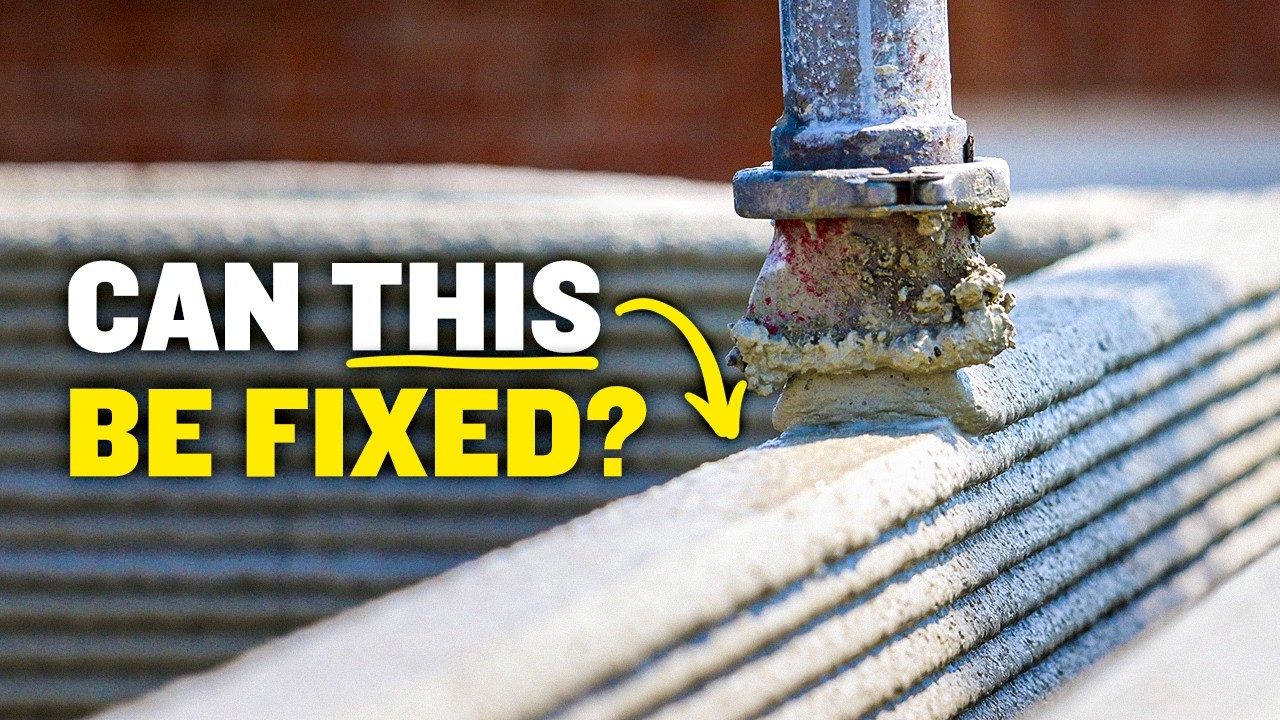
this 1 and 1/2 ton sack of dry concrete powder which gets mixed with water sand and additives and is then pumped to the robotic printer now you are looking at how we control the beat size Connor Jenkins icon's manager of construction here explained that the printer completes one layer called a bead every 30 minutes by which time it's hardened enough to be ready for the next beat steel is added every 10th layer for strength the amount of change you're making is Tiny it takes about 2 weeks to print the full 160 beat house Jenkins gave
me the controls an iPad so look Leslie that's a little skinny will you press the plus one real quick aren you worri you just increased the bead size incrementally I'd be worried if I were you but turns out the path is entirely pre-programmed I couldn't mess it up if I tried don't tell the people I think that's the most gorgeous beat I've ever seen I think this will be the highest selling house for now as Jason Ballard showed us icon is only 3D printing walls with cutouts for plumbing and electricity roofs windows and insulation are
added the old-fashioned way by construction workers he calls it a paradig shift it really is like a right Brothers moment for airplanes in how we construct our housing but why do we need a big shift like that cuz right now it is too expensive it falls over in a hurricane it burns up in a fire it gets eaten by termites the way you try to make it affordable is you trim quality on materials you trim quality on labor the result is these cookie cutter developments and like yeah this is not the world like we are
not succeeding it's something we have to get right on top of that it's an ecological disaster and I would certainly say it is existentially urgent that we shelter ourselves without ruining the planet we have to live on fire resistant flood resistant wind Ballard showed us a sample of a 3D printed wall beside a conventionally built one you say it's faster more efficient yes why do you say that what you've got let's count the materials siding one moisture barrier two sheathing three uh stud four drywall five and then float tape and texture you can count that
either as one or three but you've got at least half a dozen novel steps that have to take place to deliver an American stick frame wall system by comparison we need a single material supply chain delivered by a robot let's talk about waste yes ma'am over here at the end of constructing a home with these materials there are truckloads and truckloads of waste left over the studs are going to have offcuts that go into a waste pile same with siding same with drial all whereas with 3D printing he says you only print what you need
so in short like if an alien came down to planet Earth and saw these two ways of building and said from first principles which is better the alien would go Stronger Faster termite resistant fire resistant like by a mile this is the best way to build though old school construction workers May disagree if Ballard sounds a little like a re up salesman or a preacher there's a reason for that he grew up in East Texas a studious outdoorsy spiritual kid first in his family to graduate from college you were thinking about becoming an Episcopal priest
yeah I was almost an Episcopal priest but along the way I started just like getting this like itch about housing not being right so I studied conservation biology I got involved in Sustainable Building and I worked at the local homeless shelter and so now I'm thinking about homelessness and I'm working in Sustainable Building along the way my hometown gets destroyed by a hurricane and I have to go help my family pull drywall of their house I feel like uh life is just putting housing in front of me right as I've been like approved to go
to Seminary and so I go to my Bishop the bishop of Texas Andy Doyle he's still the bishop of Texas and uh I said what do I do and at the end he said Jason I want you to pursue this housing thing like this is your priesthood this is your vocation and if doesn't work out the church has been here for a long time we'll still be here but that must have turned the switch for you it did it made it more than a hobby or a business right it sort of became a mission he
began pursuing that mission with Evan Lumis a buddy from Texas A&M who had gone into Finance as we looked at it like nobody had Incorporated kind of the Holy Trinity of innovation to housing which was robotics Advanced Materials and software so in a borrowed Warehouse on nights and weekends and having read everything they could find about the mechanics of 3D printing they tried to design a 3D printer that could make a building how big was it it was 10 ft by 10 ft by 10 ft so it would have it would have printed if we
had ever got into work which we did not uh it would have printed like a 100 foot like demonstration building they didn't get it to work but enter Alex Laro a recent Bor Engineering Graduate who was tinkering with a similar idea did you ever actually build anything yeah I did what was it they printed shed sh doesn't sound too cool but it was a big milestone it's a real structure the three co-founded icon in 2017 and soon got funding to print a small house to unveil at Austin's South by Southwest Festival the following spring they
built a new larger printer that worked and we got really excited okay Jason where are we right now we are printing the world's uh first permited 3D printed house but the Kinks hadn't quite been worked out so at one point we ran the printer into the print to explain that it's supposed to go up and it went down and then drove into the house like pushed a bunch of layers off funny now but not so much at the time some Engineers folks who were like helping us sat us down and said guys it's been a
great effort but you're not going to get there so like why don't you guys get some rest and we were basically like get out of here like that's true anyone who wants to to finish this home may stay everyone else needs to leave and the three of you all agreed on that yeah we knew that we were on to something and like we this was like our shot and we weren't going to miss it Alex they worked around the clock and made the festival deadline by just hours any words for the victory lot never never
never never give up I stand by those words yeah sure never give up he showed us the 350 square foot finished house it's a small little house but it's kind of elegant well I'll be that's not so bad I mean I think that's kind of how people felt about it like better than they expected and it was easy to believe well they'll get better that small little house one icon a lot of attention an innovation award investors meetings with the military and with another Austin innovator Alan Graham who created a village called Community First that
provide small homes to several hundred of the formally homeless our goal was really the most despised Outcast lost and forgotten of our community wow average time on the streets is 9 years average age of death is 59 it's an absolute Miracle out there and so when uh we were ready to start building homes uh one of the first organizations we reached out to was Alan Graham so icon 3D printed a welcome center and then six small houses for Village residents that's how 73-year-old Tim Shay who battled heroin addiction for decades in 2020 became the first
person in this country to live in a 3D printed home before I saw these houses in my mind I thought it must be cold you're shaking cuz you don't think that no just the opposite you feel embraced or you know enveloped people that live that are in the economic Strat of the men and women that we serve are going to be the last people on the planet that are going to benefit out of new technology and he wanted to make sure that they were the first the first person in North America to live in a
3D printed house was homeless yeah I isn't that so the years since have seen tremendous growth for Icon a new Factory to build more printers and improve the quality of its concrete and a facility called printland to experiment with new designs icon has printed small homes in rural Mexico vehicle hide structures for the Marine Corps huge Barracks for the Army and Air Force and a deluxe showcase home featuring wavy walls and curves that would be prohibitively expensive if built traditionally but not when programmed into a 3D printer so in your minds is your customer a
homeless person or is your customer me there's a trick here because what our heart wants to do is to serve the very poor and it's often been like confusing for people to understand it's like I thought you guys were helping homelessness why are you building that fancy house yeah I would resign if I was only allowed to build luxury homes and we would go bankrupt right now if all we built was 3% margin homes for homeless people but once this technology arrives in its full force um I think it fundamentally transforms the way we build
and not just on the earth 3D printing on the moon when we come back it has been a staple of Science Fiction forever humans living and working on the moon but for NASA that dream is almost within reach their new Artemis program plans to return American astronauts to the moon for the first time in more than 50 years this time not just to visit but eventually to stay and even use the moon as a base for exploring Mars and Beyond but staying on the moon requires infrastructure landing pads roads housing and you can't exactly bring
2x4s and sheetrock on a spacecraft that's where 3D printing comes in NASA is partnering with Jason Ballard's company icon to Pioneer 3D printing on the moon the story will continue in a moment 3 2 1 and liftoff of emis one last fall NASA launched the first in a series of Artemis missions the next with crew on board is scheduled for next fall and by the end of the decade an icon printer is supposed to fly to the moon to test print part of a landing pad Jason Ballard who once applied to be an astronaut but
was rejected can't wait if the schedule holds or even approximately holds the first object ever built on another world will be built with icon Hardware he wants icon to be the first company to make something on another world so do we at Marshall space flight center in Huntsville Alabama NASA scientists Jennifer Edmonson and corki Clinton run a program called impact spelled mm p a c Moon tomorrows planet are autonomous Construction Technologies who you people at Nasa you come up with these very very long names that's why we call it impact the key word there is
autonomous we want to be able to make structures that we need without having to be tended by astronauts if you're going to have a truly sustainable presence on the lunar surface you have to be as Earth independent as possible NASA was interested in 3D printing having looked at an early version almost 20 years ago so when they heard about the progress icon had made with their first houses in Austin corki Clinton traveled there to take a look being an engineer I spent a lot of my time going around and looking at the size of the
beads and how they went around the corners and I'll tell you I was really impressed with what they had accomplished impressed enough that NASA gave icon development money in 2020 and then last fall a 50 7 million contract welcome to space lab lesie this is where we figure out how to build on other worlds Ballard and Evan Jensen who leads the project explained the fundamental challenge to bring an object roughly this size from Earth to the Moon surface would be $1 million and think of how many sort of brick-sized things we would need to do
Launchpad landing pads roads habitats so we have to learn to live off the land you have to learn to build it there and use materials from this that's right but that's no easy feet it means using what's called lunar regolith which covers the moon surface rather than concrete and water as a building material regali is made up of rock that has been pummeled over billions of years from asteroids comets and things is it like sand it's actually finer than sand icon has a big tub full of simulated Moon regolith and they have invented and built
a robotic system to 3D print with it you're going to build all those roads and buildings out of this that's correct to the robots will this is actually the mission that we are scheduled to fly as he pointed out in this rendering our robotic arm with our laser system they've created a whole new way to 3D print with lasers instead of a nozzle squirting out soft concrete a high-intensity laser beam will melt melt the powdery regolith to transform it into a hard strong Building Material they're running experiments Now using the laser to create a small
sample once that red light is on we're hot oh lots of power here we go here we go we watched on monitors as the arm got into position there's the laser oh that white thing's the laser so it's melting right now it's going up to say 1500° Celsius it's going to complete its second pass you can see it emerging there see the dark object on the screen that's the object we just made with the laser they can add more regolith and Laser again and again to build in layers to go as high as they want
which will be done remotely from Earth it takes hours to cool so they showed me a sample they'd made days earlier this is pretty darn hard that's our Landing Pad you're holding it yeah I'm holding The Landing Pad that's exactly right it's pretty cool that's a scientific term icon sends them to NASA where they're blasted with this special plasma torch the torch will be about 4,000 de to see if they can take the heat a landing pad would have to withstand see there oh there it is the torch is so bright you have to watch
on a monitor that was it a few minutes later out it came oh it's just a little bit warm it looks good to me I don't see any loss of material I don't see any cratering it survived the test pass the test with flying colors the next test will be operating the entire robotic arm and Laser we put in a large scale simulant Bed inside NASA's giant ther vacuum chamber which mimics the moon's extreme cold heat and vacuum conditions this is sort of like a Ballard's idea is to eventually send mobile 3D printers to the
moon so this moves the printer around with a longer robotic arm sticking out of the top to print whatever is needed and then they would build the road and then they would build those habitats right it's and it wouldn't stop there if we can do it on the moon we can do it on Mars and the Moon is actually harder it's harder Mars is uh almost in every way easier except for it so far away easier they agree because for one thing Mars doesn't have extreme temperature swings still in my mind it's science fiction but
in your minds it's absolutely in the palm of your hand it's going to happen we can see the steps in the technology to get us there now that's thrilling it's exciting quality can't go backwards in Block four icon says trying to 3D print on the moon and Mars is helping with their work here on Earth they are formulating new mixes to reduce the carbon footprint of their concrete we think we'll be there by end of year and they're trying out more radical architecture quite complex shapes and geometri almost looks like ripples on the surface of
water patterned walls it's very subtle oh look at this yeah it almost looks impossible and next year as in these renderings they'll be printing round hotel rooms in Marfa Texas and futuristic looking designer homes you see a bedroom on that end with a shower and a bedroom here and here's some renderings of the Interior wow right it gets you going doesn't it we're living at a time right now where a lot of CEOs have been caught over promising hyping um thinking of Theos you're absolutely right and it it it's it's it's a tougher thing than
you know because part of the job is to get your investors get your team and in our case the world um to believe the things you are saying except the things you are saying don't exist yet uh you need you need to get them to believe so it's hard to know like even in this interview I actually haven't yet told you all the things I believe we're going to do because I'm like measuring myself give us one example something wild I mean in the future I think most buildings will be designed by AI most projects
will be run by software and almost everything will be built by robots and I don't think that's that far away I at my age find that very depressing but I'm sure young people that world housing will be more abundant more affordable more beautiful it will make this version of housing look depressing by example you know that expression if it seems too good to be true it is or I do know that expression uh but cars and airplanes and moon landing seem too good to be true for a moment as well and so like maybe the
only proof I can give you is like I'm betting my life on it like I have this one precious Life to Live and I'm using it to do this and if I could think of a better way I'd be doing that instead or I'd go fishing like this is so hard and you like fishing and I love fishing