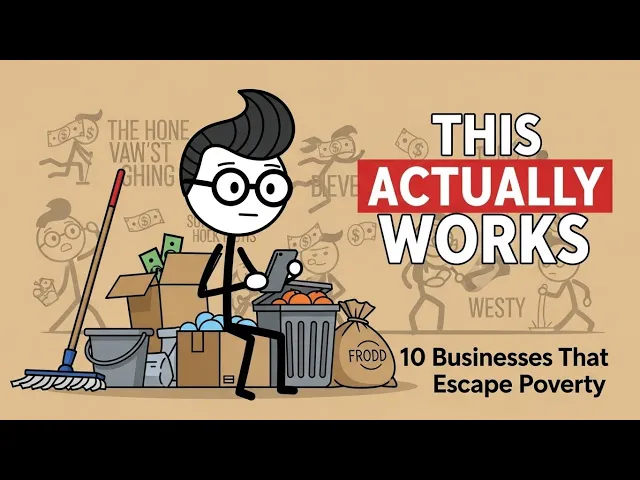
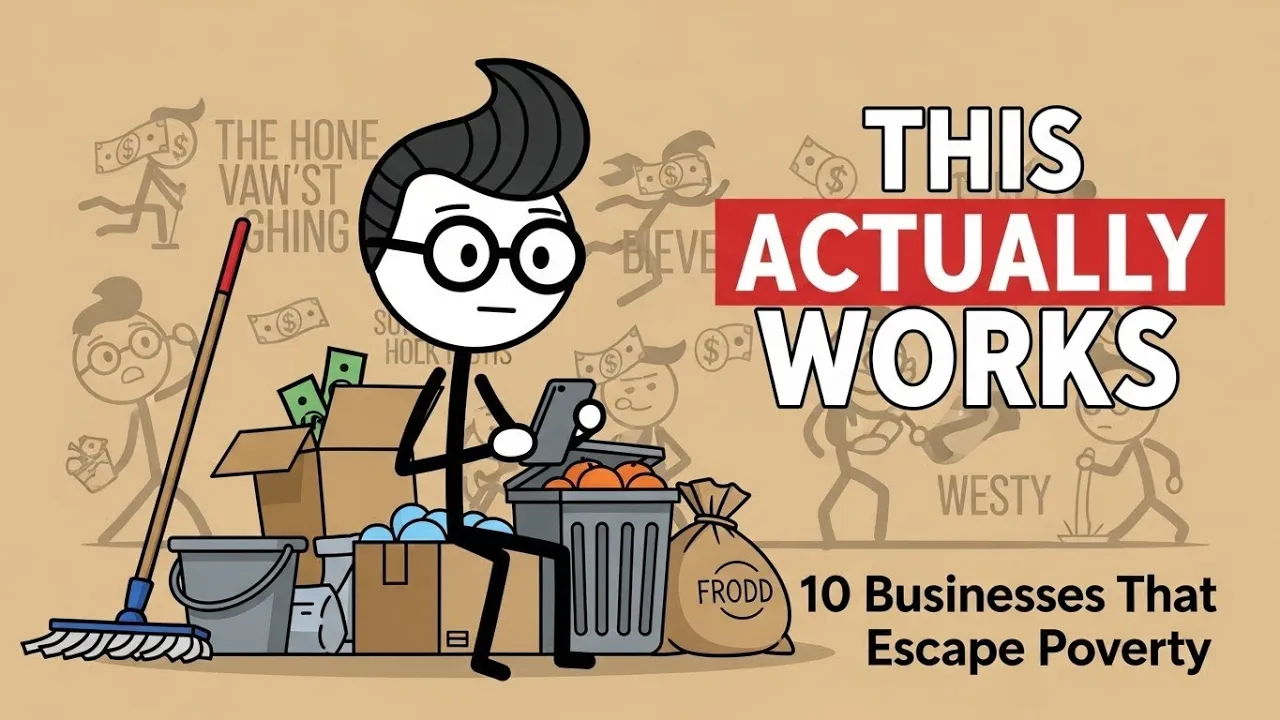
Let's be honest, most people don't escape poverty because they're lazy. They stay stuck because nobody ever explains the real path out. Not motivation, not hype, not Instagram quotes, just reality.
Poverty is not a lack of dreams. It's a lack of cash flow. And cash flow comes from solving problems people already pay for.
Today, I'm not here to inspire you. I'm here to expose you. Expose the kinds of businesses that actually make money.
The ones nobody brags about, the ones nobody flexes online, but the ones quietly paying bills, building assets, and changing bloodlines. This is the story of Stixs. Not a genius, not lucky, just realistic.
He didn't start rich. He didn't wait for passion. He started with what was needed.
and every business he built led naturally into the next. Let's start. Sticks started with cleaning because dirt doesn't care about the economy.
Every single day, no matter what is happening in the world, places get dirty. Offices need cleaning so workers can function. Shops need cleaning so customers feel comfortable buying.
Event centers need cleaning before and after people gather. That's why cleaning is powerful. It is not optional.
It is not seasonal. And it does not depend on trends. The startup cost was low.
Basic tools, basic supplies, and one important thing, reliability. Stixs didn't try to look big. He didn't print fancy flyers.
He simply showed up. He charged monthly instead of per job. Monthly billing meant predictable income.
Predictable income meant stability. And consistency taught him something important. People will always pay to avoid inconvenience.
That realization opened the door to the next business. Business two. Laundry pickup and delivery.
While cleaning offices, Stixs noticed a pattern. People were not complaining about money. They were complaining about time.
Laundry wasn't hard. It was just annoying. and people pay quickly to remove annoyance.
Instead of buying machines, renting a shop, or hiring staff, Stixs partnered with existingries. He focused only on pickup and delivery. That decision reduced startup cost, reduced risk, and removed technical complexity.
Customers already trusted him from cleaning, so they handed over their clothes without fear. Laundry worked because it was recurring. Weekly demand, predictable schedules, consistent cash flow.
This business trains sticks to think in roots, timing, and reliability. Once you master predictable movement, distribution becomes obvious. Business three, water distribution.
Water is survival. People cancel subscriptions. They reduce entertainment, but nobody reduces water.
Sticks focused on one thing, availability. Same delivery times, same roots, no excuses. Margins were small, but volume was constant.
Daily cash flow taught him volume thinking, root optimization, fuel control. Once you understand routes, you see inefficiencies and inefficiency is where opportunity lives. That awareness pushed him toward waste management.
Business for waste collection. Trash is inevitable. People tolerate many problems, but not waste.
Sticks offered simple weekly pickups, then converted customers to monthly contracts. Contracts changed everything. No daily selling, no begging for payment.
Predictable income replaced hustle. This business taught Stixs long-term thinking, and long-term thinking leads to service expansion. Business five, mobile car wash.
Stixs didn't randomly choose car washing. He chose it because it stacked perfectly on what he already had. Same neighborhoods, same customers, same trust.
Cars get dirty whether the owner is rich or broke. Dust, rain, long commutes, bad roads. It never stops.
Instead of renting a space, sticks went mobile. That single choice removed rent, long-term leases, and heavy staffing. Mobile meant flexibility.
It meant speed. It meant higher margins. The real money wasn't just washing.
It was upselling. Interior detailing, waxing, engine cleaning, monthly subscriptions. Subscriptions changed everything.
People paid before the dirt showed up. This business taught sticks a powerful rule. If you already have customers, selling them more is cheaper than finding new ones.
That mindset pushed him toward higher trust services. Business six, security services. While working with offices, homes, and properties, Stixs noticed something deeper than dirt or logistics.
Fear. People don't argue much about safety. They just want peace of mind.
Security is emotional, and emotional problems are expensive. Stixs didn't carry a weapon. He didn't stand at gates.
He built a management layer. He hired trained guards, created schedules, handled payroll, ensured reliability. This business was different.
Missed cleaning is annoying. Missed security is dangerous. So contracts were longer.
Payments were more consistent. Security forced sticks to learn people management. Conflict resolution, accountability.
Once you can manage people under pressure, you can manage assets. Business seven storage and many warehousing. After managing people and properties, Stixs noticed another silent problem.
People had more things than space. Businesses needed storage. Homes were overcrowded.
Stixs didn't build warehouses. He started small. He rented unused space, partitioned it, rented it monthly.
Storage is powerful because it's boring. No daily service, no constant labor, just space and access control. Customers stay long.
Moving out is stressful. This business taught Stixs a new level of income. Money that comes in without daily presence.
That shifted his mindset from labor to assets. Business 8, real estate rentals. With stable cash flow from services and storage, Stixs moved into real estate.
Not luxury, not flashy, affordable housing, places people actually need. This wasn't about fast money. It was about predictability.
Rent teaches patience, late payments, repairs, tenant management, but it also teaches long-term vision. Every month builds equity. Every year increases control.
Real estate showed sticks the power of time, and time naturally pushes you toward essentials. Business nine, bulk food trading. Food is survival.
People may change phones, they may change houses, but they eat everyday. Sticks entered bulk food trading quietly, supplying retailers, supplying restaurants, supplying homes. Margins were thin, but volume was massive.
This business sharpened his negotiation skills, supplier relationships, credit terms. Food also taught discipline, spoilage, timing, cash rotation. And once you move food consistently, you understand transportation deeply.
Business 10. Logistics and delivery. Logistics wasn't a new idea.
It was a natural result. Once you understand roots, timing, and reliability, you can move anything. Documents, packages, food, goods.
Logistics created daily cash flow. Businesses paid for speed. Corporations paid for trust.
This business tied everything together. Roots from water. Contracts from waste.
Discipline from food. Operations scaled, systems formed. And scale is how poverty is truly escaped.
This is the real path. Not motivation, not luck. But stacking boring necessary businesses.
Most people fail not because the ideas are bad, but because they quit too early. In the next video, I'll explain why most people fail at business and how to avoid it completely.