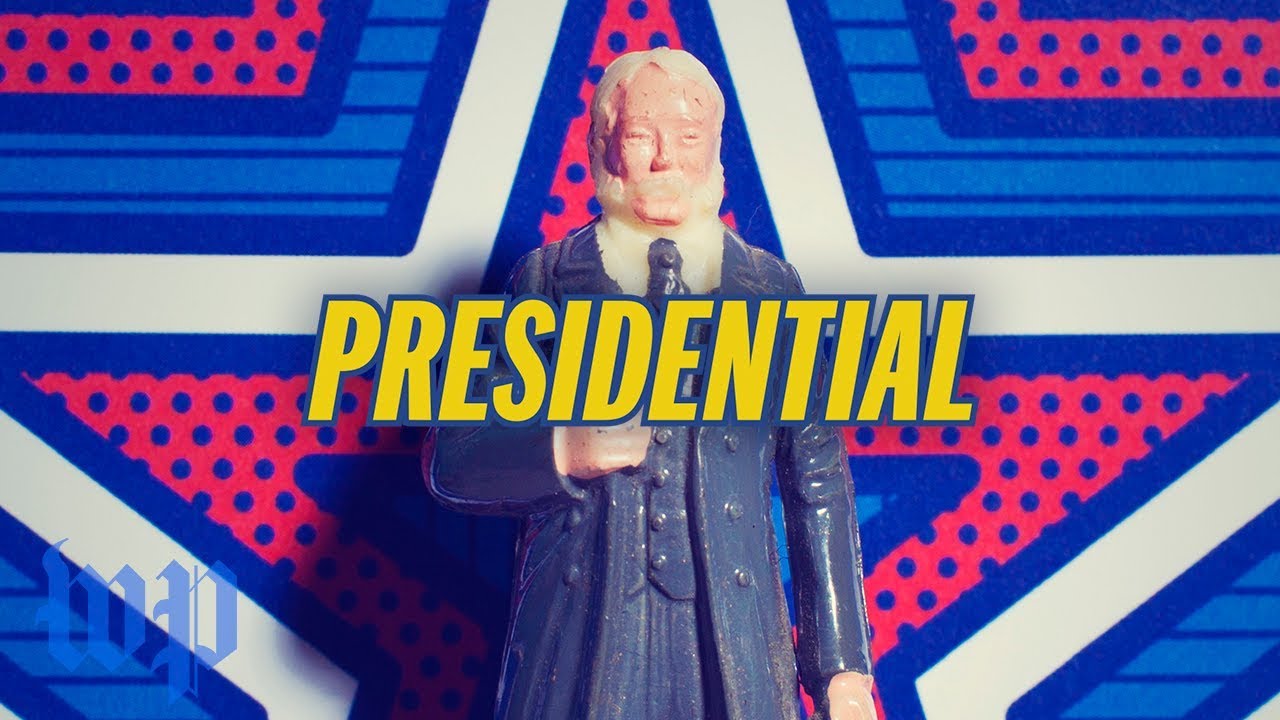
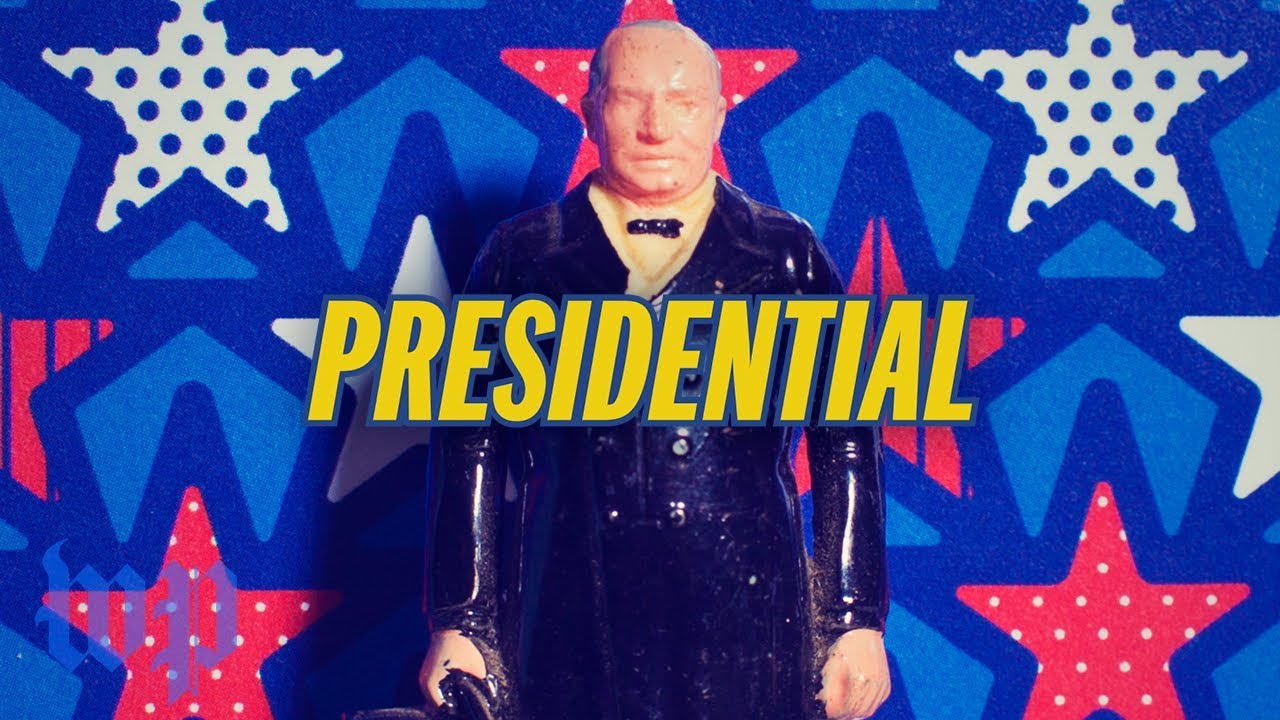
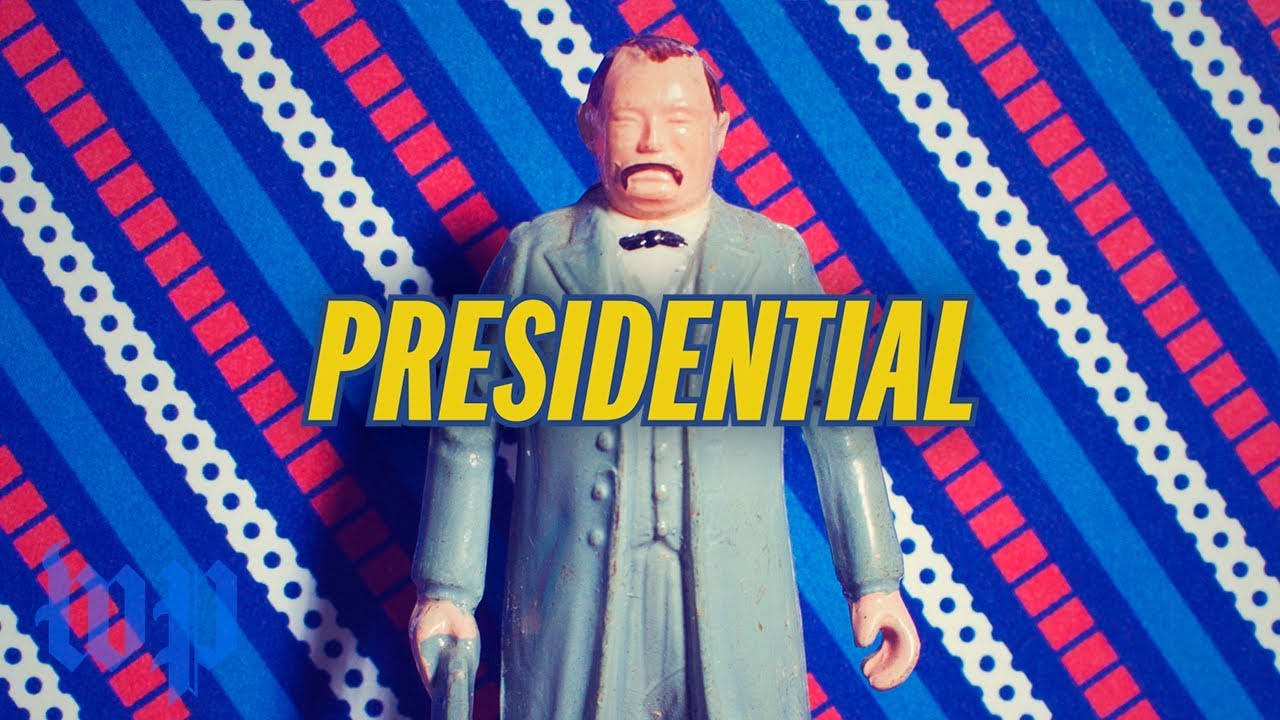
[Music] We're up to William Howard Taft this week, and nope, we are not going to talk at all about Taft's getting stuck in a bathtub. [Music] I am Lillian Cunningham, and this is the 26th episode of Presidential [Music] in gentlemen. [Music] I've got a bunch of wonderful guests for this episode: biographer Doris Kearns Goodwin is back, and also my Washington Post colleague Robert Barnes will be joining us, and we have Michelle Crawl from the Library of Congress, but this is her very last episode with us after a marathon of helping out with these presidential episodes.
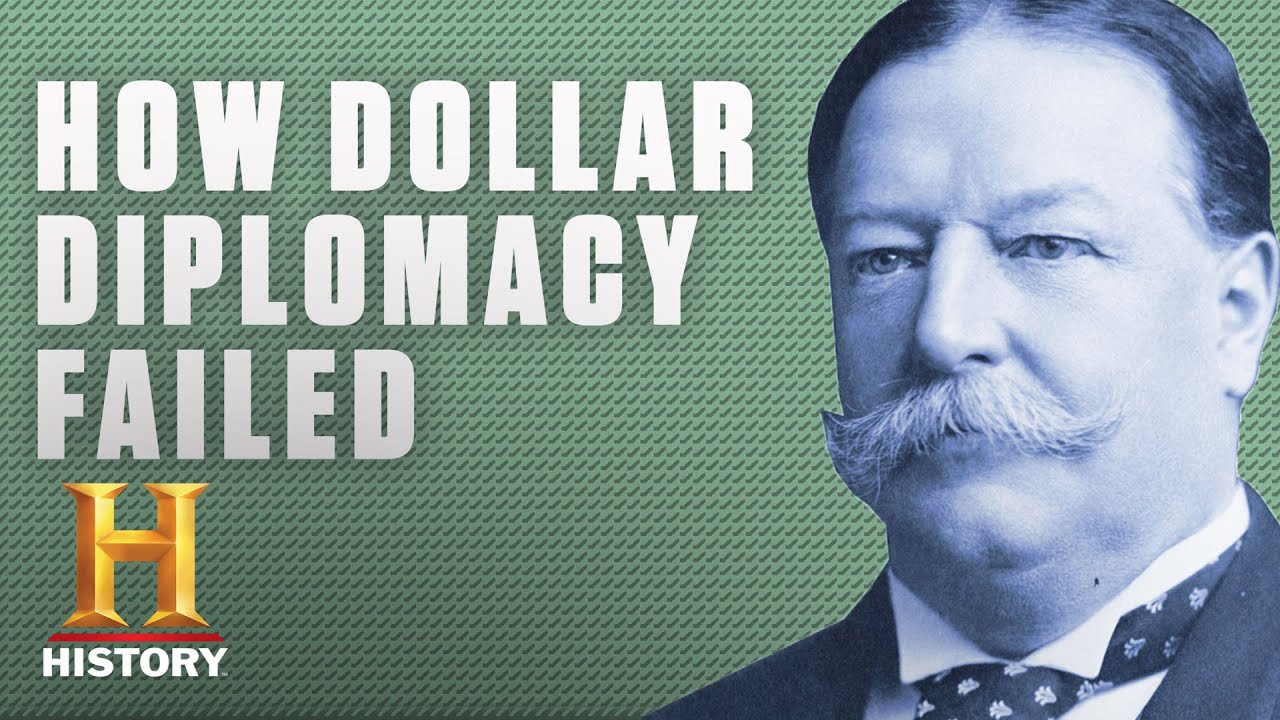
So, we are going to send her out in style by having her kick off the William Howard Taft episode. He was born in Cincinnati, Ohio, in 1857, and he was president for one term, after Theodore Roosevelt, from 1909 to 1913. I think the key thing that propels him to the presidency is the family that he's born into.
He's the favorite child; his father had a couple of sons by his first wife who died, and then he remarried to William Howard Taft's mother and had four more children with her. But of all of them, Will — his nickname was Will — was the favorite child. You know, all the other brothers and sisters just adored him; his parents adored him.
I think that created in him an expectation that he needed to please people, that he needed to live up to family reputations. His father had served in Ulysses S. Grant's administration and was a very respected man in Cincinnati.
All of his, you know, his father had gone to Yale, and his two older brothers had gone to Yale, and they'd all been, you know, successful and very bright. That seems to be a theme throughout his life; you know, he does have an idea of what would make him happy, but other people, you know, propel him in two directions that either he's not comfortable with going or wouldn't have done that on his own. So, I think he's ambitious in some ways, but he's not as ambitious as some of the other men that we've encountered, particularly when it involves the presidency and higher office.
So, on a blind date with him, would he just do whatever I wanted us to do? Would I set the date? You know, with Will Taft, you probably would.
From all accounts, everybody loved him; he was very genial. He's, you know, a very, very good-natured person. He was always popular personally with people, so I think he would be a fun date, but I think he would be very amenable to doing what you wanted to do.
So, if you suggested something, he would probably go along with it. And that's where he ended up with his wife. The woman that he ended up marrying was someone who had ideas and had ambitions, and she was a very untraditional woman for her time.
If the Tafts had been living today, she would have been running for office, and he would have been a judge all the way along. You know, he was happy being a judge, whether it was back in Cincinnati or, you know, on a higher plane. But that didn't match with her ambitions and where she thought that he should go.
So, he doesn't have great ambition, but she will push him along, you know, partially, I think, to satisfy some of her own ambitions. In addition to that, he has a wife who is sort of steering him toward higher and higher political office. What else is kind of helping him rise?
Well, it's not just his wife; his elder brother Charlie is very involved in his life and is making it possible for him to be a public servant. As Taft goes into these judgeships or various positions higher up in the government, he never feels like he's making enough money to be able to support his family or do the entertaining that he should. In all cases, when his family, and particularly his brother Charlie, feels that this is a good opportunity for him, then they supplement his income, and they do it lovingly.
They all feel that he has greatness in him and will do great things. So, it's usually Charlie who says, "Oh, and you know, in celebration of this, we're gonna give you X number of shares of stock," or "You know, I'm happy to give you a quarter of my income. " So, it's sort of a family honor that Taft brings to them of all of these things that he's able to accomplish.
And what's interesting is at various times when Taft is having to decide, "Okay, do I continue doing what I'm doing, or do I take this other job? " it's not necessarily just having an internal conversation with himself about "Is this what I want to do? Is this best for me?
" or even having a conversation just with his wife Nellie. It's often almost having a family council: "Okay, what does everybody think about this? " And if enough people say, "Yes, you should do this," then he does it.
And then, of course, when he gets higher up into the government, then TR is pushing him into positions too. [Music] Taft was an assistant prosecutor in Ohio early in his career, then he was a judge of the Cincinnati Superior Court, then he was U. S.
Solicitor General, and then a judge of the 6th U. S. Circuit Court of Appeals.
He loved all of these judicial jobs, but his wife and his family kept egging him on toward more political roles. So, when President McKinley offers Taft the position as first civilian governor of the Philippines — and remember the Philippines had just come under. .
. U. S.
control in the Spanish-American War: when he's offered this, Taft feels pressured to say yes, so he accepts it. But it's worth noting that even though he gets kind of pushed into the role, once he's in it, he's very dedicated. His predecessor had been the military governor, and they had been very standoffish with the local population; they weren't very interested in having the Filipinos actually participate in their own government.
But when Taft comes in, he shakes that up a bit. You know, he and his family are going to learn Spanish, and they invite people into the governor's house for receptions, which is something that hadn't been done before. I think that's also a trait with him: even if he doesn't go after these jobs because he has a burning passion for it, he does try to make the best of it and do the best job that he can, being as independent as he can within the confines of what the administration says he can do or what he feels like he can legally do.
Because that's one thing to always remember about Taft as we talk about leadership or how he operates: he is a judge at heart. If he does have a burning ambition for his own career, he wants to be Chief Justice of the Supreme Court of the United States; that is his dream job. His temperament is judicial; he goes along with the law, he weighs things, whereas Theodore Roosevelt may push the envelope just to the edge of the law and kind of dab a toe over.
Taft is more of the "What does the law say we can do? " rather than "How far can we push things? " Taft was actually offered seats on the Supreme Court twice by Theodore Roosevelt while TR was president.
You know, it’s a job that he would have really enjoyed, but he says no because the Philippine work is important to him. Plus, he also has his wife and his brothers saying, “Well, you know, if you get stuck on the bench when you're this young, you're not gonna advance your career; it might take a long time to become Chief Justice. ” So not only does he feel this pull of duty towards the Filipinos, he also has other people saying, “This is not the right thing for you to do.
” So instead he stays in the Philippines for a while longer, but then Theodore Roosevelt makes Taft his Secretary of War, which brings Taft back to Washington and kind of turns him into Roosevelt's right-hand man. So then, when Roosevelt decides that he's not going to run for a third term in 1908, he basically picks Taft to be his successor and goes out on the campaign trail, rallying support for Taft. Again, it's a situation where Taft isn't thrilled about being President.
Now we're going back to those previous presidents. One thing about Taft is that he is his own harshest critic. He will always say, “Oh, my speeches aren't very good,” but he doesn't seem to realize that he is who he is in 1908 while he's running for office.
You know, somebody had suggested that he wasn't aggressive enough in his speeches, and he says, “I am sorry, but I cannot be more aggressive than my nature makes me. That is the advantage and the disadvantage of having been on the bench. I can't call names, and I can't use adjectives when I don't think the case calls for them.
So you'll have to get along with that kind of candidate. ” He says, “If the people don't like that kind of a man, then they've got to take another. ” He recognized that the bench was a more appropriate place for him, as opposed to the rough and tumble of politics.
He doesn’t really want to be President and almost has to be talked into it. Again, here's his brother wanting him to be President, his wife wanting him to be President, TR wanting him to be President, so, you know, then he will do that. Unfortunately, it doesn't quite work out.
Taft enters the White House in 1909, but not long into his presidency, his wife Nellie has a severe stroke. Not only does Taft end up spending time caring for her, but he's also left feeling somewhat alone without the active support of the person who basically wanted him to be President and who, in many ways, had been his closest political adviser. Nellie does start to recover as his time in the White House goes on, and just as a little aside, it's Nellie Taft who ends up orchestrating the planting of cherry blossoms around the Tidal Basin, and year after year, people still come to D.
C. in the spring to see them bloom. Anyway, Taft's time in the White House quickly starts to confirm that he is not just a second Theodore Roosevelt.
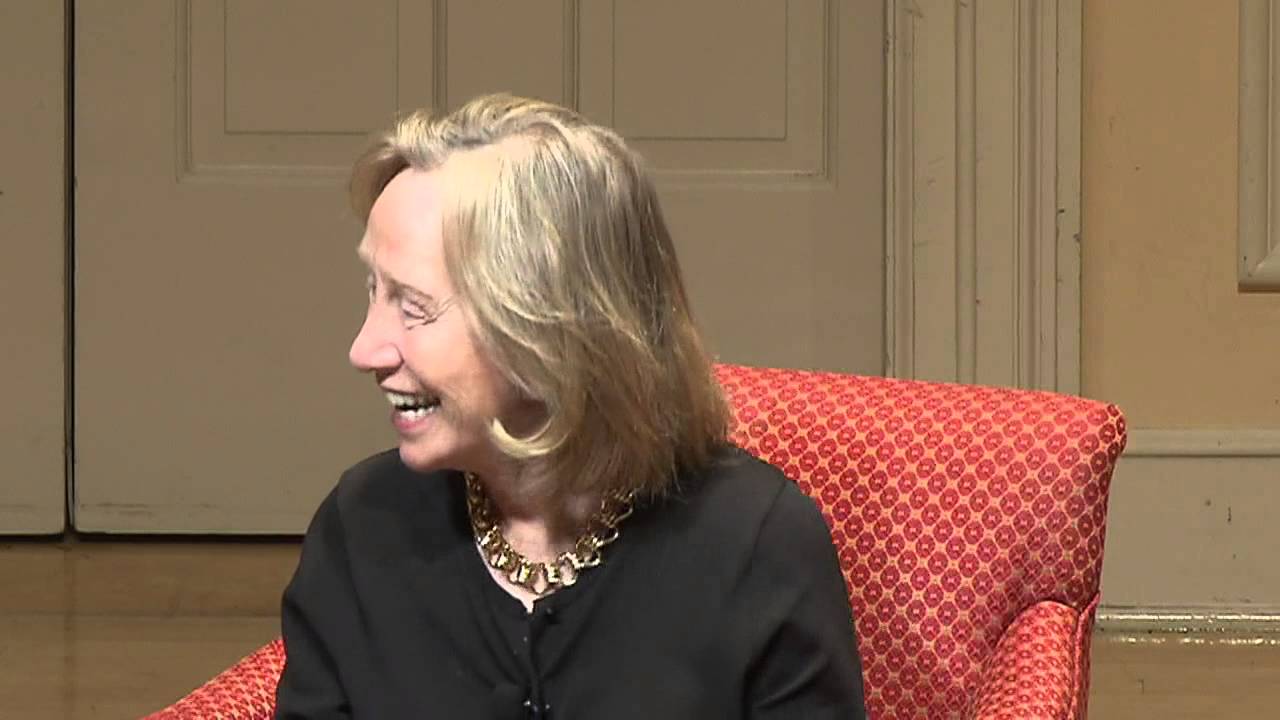
I spoke to biographer Doris Kearns Goodwin on the phone about how this relationship between Roosevelt and Taft affected Taft's presidency. Doris's book, "The Bully Pulpit," is basically all about their intertwined presidential stories, but their friendship actually started all the way back during the 1890s. Well, the relationship had been built on a friendship that had begun when they were in their early 30s.
So, as young men, they had both shared their dreams with one another. Interestingly, those dreams would later show the problems because Kenny always thought when they passed the White House, that’s where he’d like to be. When they walked together, Taft would point.
To the Supreme Court and thinking that's where he would like to be, but when he brought him into his cabinet in 1904, Taft really became his number one closest advisor in the cabinet, even though he was purportedly Secretary of War. I think what Teddy loved about Taft was that Taft could make anybody like him upon first meeting, and Teddy would say it takes a little longer for them to get used to me. Whereas Taft admired Teddy's fighting spirit, you know, and his ability to just speak out on any issue.
So it was a very close and very, very good loyal workable relationship during Teddy's presidency. So, once Taft ends up President himself, how would you describe his leadership style in the White House and some of the notable differences between how he approached presidential leadership and how Teddy did? I think part of the problem was that, and it should have been a signal earlier, that he really had never loved politics per se.
He loved executing public policy, but that's different from loving politics and different from even wanting to be number one. When Taft was Solicitor General and Teddy was in the Navy Department, they had very different ways of dealing with things. When the Attorney General was away and ill for some time, and Taft had to become Attorney General, he wrote in a letter that he couldn't wait until the guy was back—until the Attorney General was back—so he could slip back into his Solicitor General role.
When Teddy was at the Navy and his boss was away, he kept telling him to stay away. "Very hot summer; you don't really want to come back—90 degrees here and everything's fine," because he loved being in the center of attention. So, that was part of the differences.
This big tariff bill was going through Congress, and Taft tried to do the right thing on it; he took courage, which Teddy didn't. He knew that the tariff could break the Republican Party in two, and he did make some progress, but the conservatives in Congress really controlled the issue more than he did. When the bill passed, it wasn't what Taft originally even hoped, and the progressives were furious.
The other part of it was that Taft never really was comfortable as a public leader. He was used to being a judge where you make a decision, and that decision speaks for itself. When he becomes President, he had to defend not only the power of the decision but other decisions he made, and he was not comfortable with the bully pulpit, at which Teddy was, of course, brilliantly able to have those short phrases and sound bites that could explain and fight for what he was arguing for.
Right, you know, if you were to ask both of them what good leadership requires and looks like, do you think that they both would have defined it the same way, but just Taft couldn't execute on it the way that Teddy could? Or do you think Taft also had just a different definition of what leadership is? That's a really good question.
No, I think, you know, Taft himself later was able to say that one of his defects was not being able to take hold of the public leadership dimension of the presidency. And it was interesting because when he was Secretary of War, he was open and friendly with the press, so it wasn't personality-wise; he was very much of an extrovert. But once he got into the presidency, you know, there was just this sense that he had to worry about what he was going to say.
He just wasn't at ease informally with the press, and he didn't know how to give the kind of rousing speeches that would mobilize the public. I think he wished he had that capacity, but he knew he didn't, and he recognized that failure but wasn't able to remedy it during that period of time. He believed that, you know, if he made the right decisions, that over time the people would see that they were the right positions.
He believed in the debate; he believed he had made the tariff better. He had passed a series of executive orders on conservation, and he thought they should be made into laws, so he was getting Congress to make legal these executive orders or make them more legal. But in the interim, the executive orders were not operating, and there was some feeling that he had gone back on conservation and that private enterprise was going to take over in that gap between when the law came.
So he was a man who believed in the law; Teddy was a man who believed that you should do everything in the presidency you can short of something illegal. He was willing to stretch the law and use executive orders and use the powers of the presidency and the bully pulpit to get done what needed to be done. Taft, because he came from that judicial background, wasn't so much more conservative on the actual issues per se, but on the way you could deal with the problems in society.
It had to be people, and it had to be laws, and you needed Congress to pass those laws. So it meant it took longer time for him to get things done, but Teddy could do it more quickly. And to some extent, perhaps not quite understanding that once you make a decision, there's still all the time you need to spend selling it rather than just that a decision speaks for itself.
No, that's exactly right. You know, when Teddy was presenting something to Congress, for example, he would present a long. .
. Message to them really outlining, even before they would be arguing about the law that needed to be passed, what this law was about. When Taft sent his message up, for example, on the tariff, it was 22 words long or something, you know, and he figured they would work it out.
So he had a different sense of the relationship between the president and Congress, whereas I think Teddy had a much more intimate sense that he could shape Congress's thinking. I mean, Taft was such a good and decent man, but maybe his temperament wasn't fitted to be that person in the eye of the storm—the person who would have to mobilize the bully pulpit, the person who wanted to make the central decisions. What then ends up being at the root of why the relationship between the two of them disintegrates is, I think, what happens after Teddy goes to Africa to get himself faced.
I mean, at that time, there was still that sense of Teddy knowing that he just wanted to have his own room when he went away. While he was in Africa, he hears from his progressive friends that some of the things he cared about were not being taken care of in the right way by Taft, and that had to do with the tariff bill and conservation. He comes home, and there were already some suspicions about whether Taft had really followed his legacy or not.
Taft did put as many of Teddy's people into the cabinet as Teddy thought he was going to; probably, it was fine from Taft's point of view—he needed his "old man" because he was already being so obscured in parts of the press for just being Teddy's guy. But Taft had thought they were going to stay there, and they had thought they were going to stay there, so that was part of the root of the struggle. But then, once Teddy gets home and he's greeted by a million people in New York who want him back in the presidency, it fires up his own desire to be in the center of things again.
He also believed that his progressive goals were not being carried out well enough by Taft, and it was clear that the country had moved even further left. So Teddy moved with that country, and Taft sort of was where Teddy had been four years earlier. So in 1912, Roosevelt decides that he is going to run for president again, even though Taft is the incumbent and Taft is running for a second term.
It's heartbreaking for Taft; I mean, that really did mean, obviously, a big rupture in their friendship. But Teddy knows that the only way he’s going to have any chance, because Taft has the party delegate—and that has ominous overtones for this election now—is to get the primaries. So he institutes a call for creating primaries, which had not really been on the presidential level before that.
I think there are like 11 states that do agree to help with primaries, and he wins the overwhelming majority of those states. Taft has all the patronage, all the power, and so they go into the convention pretty equal in terms of delegates. But before that, when they're fighting for the primaries and the big convention, it's such a messy fight, even worse than what we're seeing today.
I mean, the supporters try to keep the other ones out of the hall with bats and balls, and when Teddy’s supporter puts a gun to the head of a Taft supporter, the New York Times writes an editorial saying if this is the first presidential primary, we sincerely hope it's the last. This is not a rational way to choose the president. What must the people overseas think?
This is a mob! Then, when they get to the convention, police spend time surrounding the hall. The delegations from either side are fighting each other in the hotel lobbies, and the first decision is which delegates have really won from which state.
Most of the decisions go to the Taft delegates. Historians would probably say he did have the majority of the votes, but nonetheless, Teddy felt that it was rigged. So he comes out to Chicago and he leads his people out of the convention into what becomes the third party—the Bull Moose Party.
Then, of course, even though Teddy and Taft together get a majority of votes, they split the Republican Party, and Woodrow Wilson wins. If Roosevelt hadn't run, or even if Roosevelt had just waited until 1916 and then run with the party's full backing as a progressive Republican, it's possible that the Democrats and Republicans today might look very different. Progressivism might have actually stayed and strengthened within the Republican Party, but when TR led progressives out the door from the Republican convention that year, it set off a party realignment that would play out over the next several years and reshape our concept of what makes a Democrat or a Republican.
As Doris said, the Republican Party split that happened because of Taft and TR running at the same time—that's what allowed the Democrat candidate Woodrow Wilson to win the election. That means that Taft, after just one term in the White House, was out. But Taft's story actually has a happy ending for him.
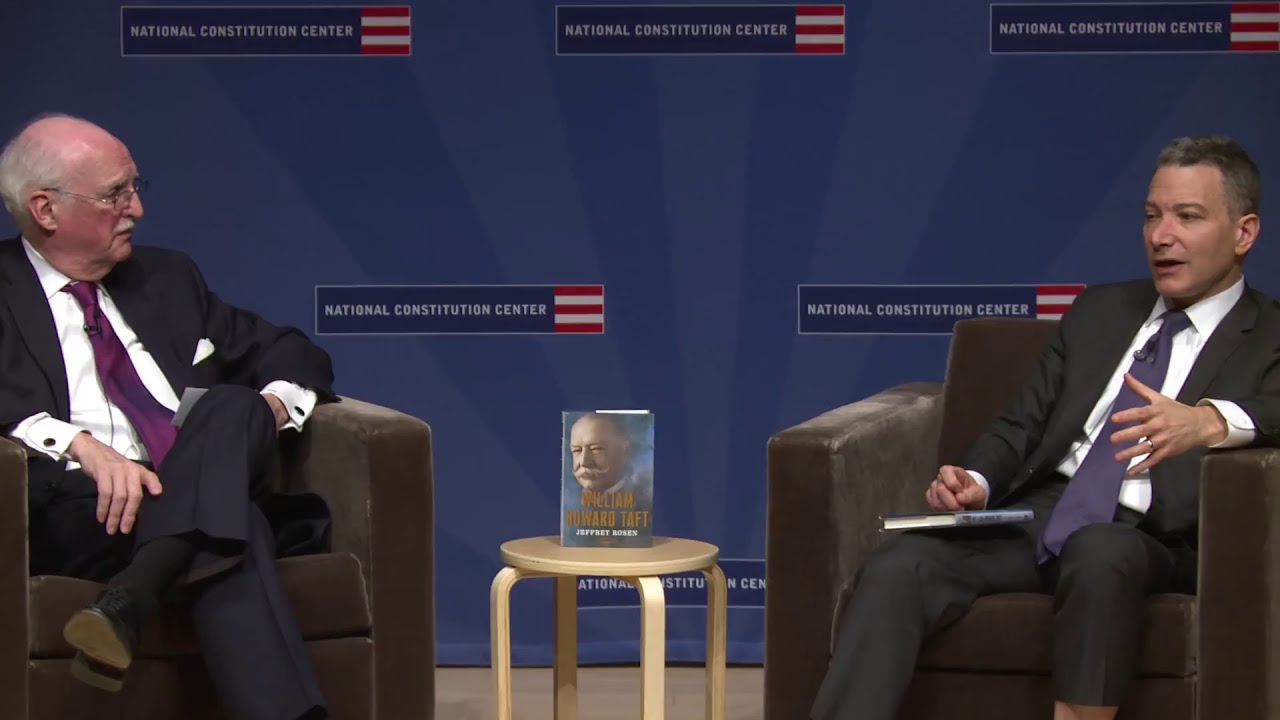
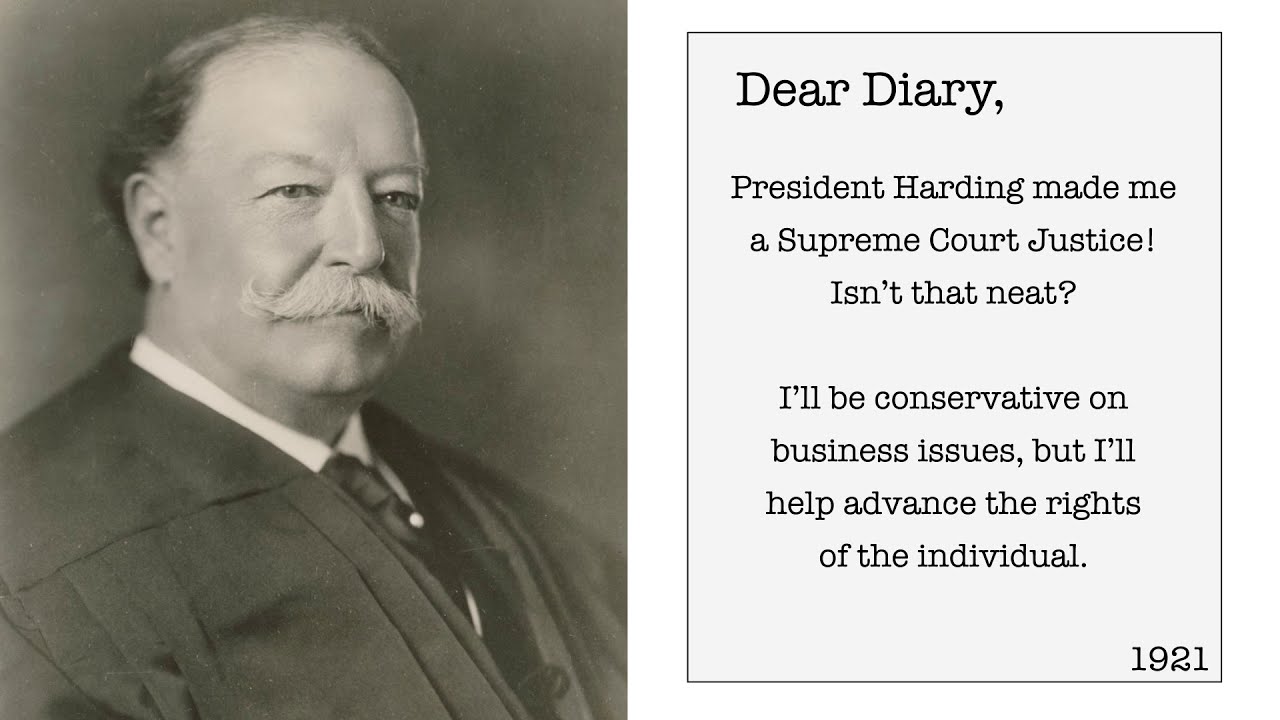
After leaving the White House and then teaching law for several years at Yale, Taft was offered the position of Chief Justice of the United States. He was offered it by President Warren Harding, he eagerly said yes, and he spent the rest of his life in the job he had always really wanted. The studio, my colleague Robert Barnes, who is The Washington Post's Supreme Court reporter, and I are really grateful that you're taking some time today to do this.
I'm glad to be here! Oh yeah, thanks for being here. Um, well, when I first talked with you about doing something on Taft, you mentioned that you've actually heard Chief Justice Roberts reference him with some frequency over the years you've been covering the Court.
All right, so let's listen to one clip from a speech that Roberts gave in 2010. It may not seem important at first blush, but it matters greatly where the Court sits. You've seen the beautiful building.
Do you really think that the Supreme Court would occupy the position it does today as a co-equal branch of government if it still met in the basement of the Capitol? Architecture is its subsidy, and it took a president who appreciated that—Chief Justice Taft—to know that the Court needed a building of its own if it was to be independent. You have that view in the public consciousness.
All right, Bob, what do you think originally was behind Taft's vision or desire for the Court to have its own building? And why, a hundred years later, would a Chief Justice of the Supreme Court still be thinking about that? I think in many ways, everyone says—and the historians say—that the Supreme Court was what Taft really wanted to do.
So I think the Court was very important to him in a way that perhaps it wasn't to other presidents. In a way, what the current Chief Justice talks about is the way that Taft brought the Court into sort of the modern era and also made it more independent and more of an equal branch of government. You know, the marble palace, as they call it on 1st Street, is an imposing Greek temple-looking place, and it serves as the sort of seat of the third branch of government in a way that makes it a symbol that it wasn't before.
Taft also said some other things to bring the Court in. He really lived up to the idea that the title is Chief Justice of the United States—not of the Supreme Court. He was responsible for lower courts, helped with their budgeting, and helped establish them with Congress as a more independent group.
He really took control over the regional courts of appeals in a way that hadn't been done before and sort of set up the framework of the modern judicial system. And so, I mean, the building wasn't actually completed during his lifetime, by this way, but he's there—he's on the building. If you look at the entrance in the pediment above, there are a lot of sculpted figures, and one of them—perhaps because he was so big as a grown man—is of Taft as a young boy.
Since, up until this point in the podcast, we have unfortunately not really talked about the Supreme Court very much, I thought it could be useful if you could give the highlights reel of some of the most notable justices and decisions up until, you know, this point in the presidency that we've reached. So, Taft's appointed in 1921, right? Well, I think really two cases stand out—one for good and one for bad.
The good was Chief Justice Marshall, who led the Court for 34 years, and in Marbury v. Madison, he established the notion that the Court had the authority to say what the law meant—that the Court could decide whether an act of Congress was unconstitutional. So he really sort of set the stage for what the Supreme Court's role should be.
The unfortunate decision, the one that everyone says was the Court's worst decision, was the Drd Scott decision, which decided that slaves and former slaves—people of African descent—could never be citizens, and said that the territories could not abolish slavery, thus ruling that the Missouri Compromise was unlawful. It was a decision that a lot of people—including our current Chief Justice—will say involved the Court trying to resolve a political quandary for the country and failing terribly. It was a precursor of the Civil War, so those who talk about judicial restraint often point to the Drd Scott decision as not just being morally wrong, but also a terrible decision involving the separation of powers.
So when Taft becomes Chief Justice, what sort of a justice is he? And aside from some of the procedural changes, mm-hmm. Well, he was there for nine years, and it was a time in which regulatory decisions came often before the Court.
It was mostly a conservative Court that he headed, and they often would strike laws of Congress. Now, one important one was a minimum wage for women that the Court struck down, but in that case, Taft was in dissent—one of the few cases in which he was in dissent. One thing that was interesting about Taft on the Court is he was an advisor to President Harding and let him know before the election that he was very interested in being on the Supreme Court, but only if he could be Chief Justice.
He said that he had appointed some members of the Court, and it would be odd for him to join them, so the only position he wanted was Chief Justice. One thing that we heard about a bit earlier in the episode was how Taft, you know, not only had this interest from a younger age in being a justice, but also how temperamentally he may have been better suited to that than to the White House. So from your experience covering.
. . The Supreme Court: What does a Supreme Court temperament look like, and are there traits that strike you that would, you know, make someone a good chief justice but not a great president?
Well, you know, it's interesting that we tend to lump all public officials together and think that they are politicians. You can be interested in politics and not be a very good politician, and I think that's probably where Supreme Court justices come in. There, for instance, on the current court, there's not a single member who's ever run for public office.
The last to serve who had was Justice O'Connor, who had been a legislator in Arizona. These justices are lawyers, and you often hear the Supreme Court described not so much as a group of nine that work together, but as nine separate law firms—nine separate lawyers who go about their own work and then vote to see which side is going to come out. I don't think they're particularly good at taking criticism sometimes, the way politicians would.
They don't sort of mix it up; it's a very different set of skills. I think you often hear, for instance, that former presidents who are lawyers might be good on the Supreme Court. You know, it was said about Bill Clinton, maybe he wants to be on the Supreme Court.
It was said about President Obama over and over that his next step should be the Supreme Court, and they both said that's not what they like to do. Obama has said that he doesn't think he's ready for the kind of solitary life that a justice often leads. Yeah, well, I was wondering actually if there were, I don't know, any takeaways or interesting questions to ask about the fact that Taft has been the only president who went on to make this Supreme Court his post-presidency.
Hmm, I think it goes back to the idea that this was his dream job to start with, and I don't think that's true of most presidents; they want to be president—that's their dream job. So, any particular cases that you would highlight that profoundly shaped or recast the powers of the presidency? I think that that's a question that's ongoing, and we see practically every court and every president engaged in that kind of back-and-forth.
We certainly saw the role of the president and Congress front and center when the court debated the Affordable Care Act, also known as Obamacare. You know, during the Bush administration, we saw a number of cases that were about the president's power in war and in fighting terrorism. We saw the court unanimously tell President Nixon he had to turn over the tapes.
We saw the court unanimously tell President Clinton that yes, he could be sued while he was in office. And so, in many ways, the court sort of takes it as a badge of honor and also their job to stand up to the president and his administration. [Music] Taft retired from the Supreme Court on February 3rd, 1930, and the day after his retirement, he received a letter from Cass Gilbert, who was the architect designing the new Supreme Court building.
The letter said, quote, "I have felt it to be a great honor to be selected by you as the architect of the new Supreme Court building, and I have endeavored to make a design which shall be worthy of its great purpose and of your ideal. I shall always think of you as the real author of the project and the one to whose vision we shall owe a suitable housing for the Supreme Court of the United States. It will, in fact, be a monument to your honored name.
" [Music] Many thanks to this week's guests, Bob Barnes, Doris Kearns Goodwin, and a very special thanks to Michelle Crowl. It makes me so sad to say that this is the last president in her portfolio, so I just have to take an extra moment here to thank her for all her help and to thank the Library of Congress for being such an incredible resource. That, you know, just as a reminder to everyone listening, everyone can take advantage of the Library of Congress—it's a resource for everyone, and they are wonderful.
So, here just to end the episode is the little exchange of the hard goodbyes. I know you've done so much work and spent so much time preparing to talk to me for each of these episodes, so thank you just so much, Michelle. You're very welcome.
It's actually been a lot of fun, and I've learned a lot too. Probably by now your listeners are sick of hearing from me. You know, I don't know.
It's been very fun, and I can honestly say I would have never thought about dating Chester Arthur, and now it turns out you actually kind of liked it. I did for a while. I think all of my friends were totally sick of hearing me talk about Chester Arthur, and some of them would say, "So, who are you dating this week?
" It feels like, um, I don't know, like in The Karate Kid or something, where you're like, "Go off, grasshopper! Take what you've learned, and I hope you do okay in your own right for the rest of the 20th century.