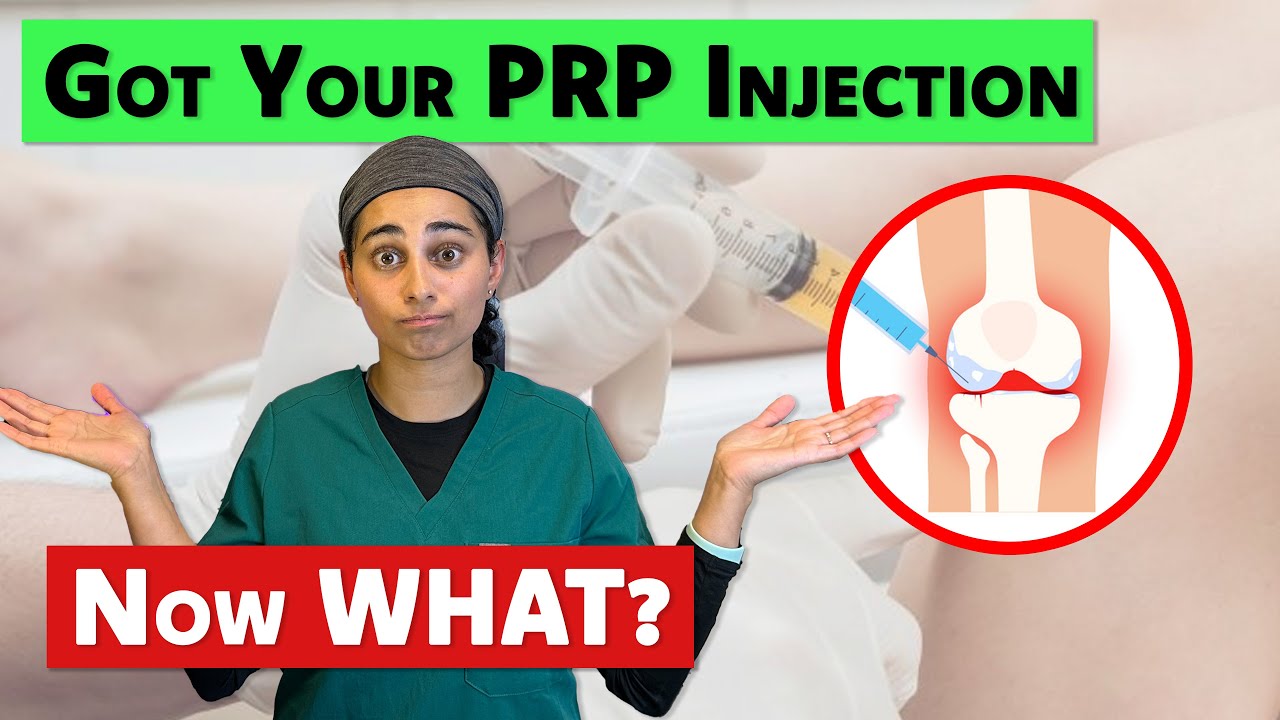
did you know what you do after your PRP injection will significantly impact your outcomes that's why I'm going to review my PRP Aftercare and Recovery protocol it's designed to optimize for the best results hey everyone Dr Jeff ping here this video is going to be divided into three main sections number one is the post injection Aftercare this is what I recommend my patients do and what to watch out for in the first few days after an injection number two is the post injection recovery and Rehabilitation protocol this is how you advance your activity in a
stepwise fashion to initially protect the area and then get progressively stronger number three is expectations this means what to expect in terms of improvements as well as when you might want to discuss with your health care provider about repeating an injection okay so part one is the post injection Aftercare what can you expect after you get a PRP injection what's really important to understand is that some soreness or pain at the site of the the injection is normal and expected however some people will get worse before things get better a small fraction of people will
have a local inflammatory reaction after getting a PRP injection this is a normal process and is due to your body responding to the platelets and release of growth factors this resolves on its own after a few days but here's the key thing you cannot take any anti-platelet medications to help reduce the pain common medications are the NZ class of drugs which include aspirin ibuprofen and naproxen these medications work by inhibiting platelets and they can blunt the effects of your PRP this study found that NSAIDs taken after a PRP injection resulted in significantly worse outcomes when
compared to no NSAIDs you'll want to avoid all these medications for at least two weeks after the injection and if you can up to six weeks post-injection okay so what are you supposed to do if you have some post-injection pain but you can't take NSAIDs can you take acetamine minifin or Tylenol Tylenol works by relieving pain through a different mechanism which should not affect platelet function however some studies like this one do suggest that even acetaminophen can potentially affect platelet function just to a significantly less degree than NSAIDs whether this affects outcomes or not is
still not known so as of right now I currently tell my patients that if they have discomfort after their injection they can take one or two extra string Tylenol to help ease the pain now if you want to be really careful and avoid all medications post-injection there are some other options applying heat to the affected area can really help reduce post procedural soreness I recommend doing this for 10 minutes three times a day for the first three days heat will do two main things number one it will help improve blood flow to the area which
can then dissipate post-injection soreness number two he also helps increase cell to cell signaling So in theory applying heat will increase platelet granulation and growth factor release both of these would be very beneficial after a PRP treatment okay now let's move on to part two and talk about recovery and Rehabilitation this is an extremely active area of research I'm going to present a general guideline which most people can use but sometimes it does need to be individualized this is definitely an area where discussing with your physician or physical therapist can be incredibly beneficial so I
like to break down the post PRP injection rehab protocol into three main phases the first phase is the post injection phase and lasts from Day Zero which is the day of the injection through the end of day three the goal of the first phase is to protect the site of the injection and protecting the site of injection can mean a lot of different things it could mean just taking it easy or it could mean complete immobilization PRP treatments for arthritis generally do not require strict immobilization but PRP treatments for soft tissues can be different some
tendons may require partial weight bearing or even crutches or a walking boot this is something that needs to be discussed with your health care provider for those of you who do not need immobilization I tell my patients to just take it easy in Phase One this means no moderate and especially no strenuous activity I want my patients to avoid any repetitive activity and definitely no heavy lifting or no loading the area the reason for this is we really want to allow the platelets to do their thing any type of overuse or excessive loading can physically
damage the platelets this would result in worse outcomes so we really want to spend the first three days protecting the area after phase one we move on into phase two and phase two runs from Days 4 to 14. the goal of phase two is to discontinue any immobilization devices and then slowly increase load around days four to seven I recommend working on gentle stretching and range of motion activities do do this for three to five minutes about three times a day this is really just to work on mobility and to prevent stiffness on Days 7
to 14 I like to add light strengthening and cardiovascular exercises these are not meant to be intense exercises the goal here is to start putting just a little stress on the area to promote the body's natural healing mechanisms you'll want to start with simple body weight exercises or extremely light weights do these strengthening exercises every other day as tolerated by pain you can check out my other videos or my website for some sample Rehabilitation programs for common Orthopedic conditions now in addition to the strengthening exercises I also encourage all of my patients to participate in
aerobic exercises such as walking or easy pedaling on a stationary bike endurance exercises help reduce inflammatory markers that circulate in the body light cardiovascular exercise will kick start these benefits without adding too much stress on the body you can do the aerobic exercise sizes daily and advances tolerated by pain after day 14 we move on into phase 3 and phase 3 runs from week three to week six the goal here is to restore as much range of motion as possible and to improve strength and endurance this is where we also try to get athletes to
work on proprioception balance training and sports specific movements you'll want to slowly add more weights and add more resistance every week with the goal of building muscle continue to do the strengthening exercises every other day again as tolerated by pain now we also want to slowly Advance our aerobic exercises as well this can mean different things for different people and really depends on your previous Baseline physical activity but the goal is to at least get you doing some type of low resistance cardio such as a brisk walk cycling or swimming and then as you get
more strength we advance you back to jogging and then running of course all of this is with the caveat that your pain is controllable and it's mild if at any point pain gets worse back offer few days and then gradually restart typically after the six week Mark all restrictions are lifted and we want to get you back to your previous Baseline activity if you need a repeat PRP treatment during this time no big deal you would then go back to phase one now before we move on to the last part of this video if you
found this information helpful please click the like button so the video can spread to more people and help them too thanks for doing that so the last part of this video is expectations when can you expect to feel symptom Improvement let's talk about joints first when can we expect improvements after aprp injection to treat arthritis most people will experience a noticeable Improvement in symptoms by four to six weeks now it's important to point out that you will still have your good days and you will still have your bad days but as long as you are
having many more good days than bad days then I'm okay with that as long as the general trend is towards Improvement that's what we want if you're starting to have multiple bad days in a row and things are not improving that's when we need to re-evaluate the four to six week time period is also where I discuss with my patients if they would benefit from an additional injection especially if they continue to have lingering symptoms and what about tendons tendons take a lot longer to notice Improvement again you will have your good days and you
will have your bad days but the time period is different tendons can take up to three months to respond and if at three months you still have residual or lingering symptoms that's when we decide if we need to proceed with repeat treatment the last thing I want to say is that our understanding of PRP and our protocols and preparation techniques are constantly improving we are always learning about different variables that could affect outcomes so in this next video I go over things that you can do and things that you can change to further optimize for
the best PRP outcomes thanks for watching