There's a strange kind of betrayal that doesn't come from others. It comes from within. You've been given a map to freedom, a step-by-step guide to the life you dream of.
And yet, every time you're close to walking that path, your hands crumple the map. Your feet walk the opposite way, and you convince yourself the destination isn't worth it anyway. That's self-sabotage.
It's the slow, quiet war we wage on our own potential. Not because we're lazy, not because we're broken, but because something inside of us doesn't believe we deserve to win. Self-sabotage doesn't look like failure at first glance.
It often wears the mask of procrastination, perfectionism, or even logic. It's not the right time. I'm not ready yet.
What if I fail? But beneath all those clever excuses is one truth. You're afraid.
You're afraid. Afraid of success. Afraid of change.
Afraid of being seen. The roots of the sabotur within. No one is born self-sabotaging.
It's a learned behavior, a protective mechanism built in childhood, often forged in environments where love was conditional, where success was punished or where failure became familiar comfort. Imagine growing up in a household where achievements were ignored or worse, mocked. Or maybe you learned early that standing out made you a target.
Maybe love only came when you were quiet, agreeable, and invisible. So what happens? You learn that safety comes from staying small.
That attention leads to pain. That failure is predictable and familiar, but success is uncertain and terrifying. So as an adult, you find yourself ruining relationships that feel too good.
Quitting jobs right before the promotion. breaking your own heart because joy feels like a threat to your identity. The paradox of wanting and resisting.
Here's the paradox. You want success. You want love.
You want peace. But another part of you is deeply committed to ensuring you never get it. That's the twisted genius of self-sabotage.
It operates from a belief that it's protecting you. It says, "Better to ruin it now than be surprised when it falls apart later. " It whispers, "If you never try, you never fail.
" And worst of all, it convinces you that your current state, your pain, your struggle is normal. Because in many ways, your inner sabotur is just trying to keep you safe. Safe from disappointment, from vulnerability, from change.
But safe doesn't mean alive. Self-sabotage is not laziness. It's misdirected energy.
When people label themselves lazy, they often misunderstand what's actually happening. You're not lazy. You're overwhelmed.
You're afraid. You're trapped in a cycle of expectations and pressure that your nervous system can't handle. So, you freeze, you scroll, you distract, you sleep too much.
You never begin. Self-sabotage is not a lack of discipline. It's a coping mechanism to avoid pain.
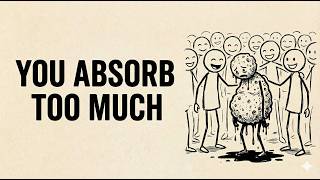
It's energy turned inward like a storm breaking inside you. The same energy that could build an empire is now used to build walls. The fear of being seen.
There's a raw vulnerability in showing the world who you really are, especially when you've spent years hiding behind masks of politeness, productivity, or perfection. Self-sabotage often appears right at the edge of exposure. When the job is going well, when the relationship starts getting deep, when your art is seen, that's when the fear spikes.
Because being seen, truly seen, and is risky. What if they judge you? What if they leave?
What if you're not enough? So, what do you do? You pull back.
You ghost. You miss deadlines. You numb.
Better to disappear than to risk rejection. But here's the tragedy. In trying to avoid pain, you end up creating it.
The comfort of familiar pain. People don't sabotage themselves because they love suffering. They sabotage themselves because suffering is familiar.
We cling to the pain we know rather than face the unknown joy that might hurt us more. It's like living in a prison cell where the door is wide open, but you're too afraid to walk out because freedom is unfamiliar. At least the cell is predictable.
At least you know the walls. The brain doesn't seek happiness. It seeks familiarity.
It seeks safety. And if pain is all you've ever known, pain becomes home. Perfectionism is a trap.
One of the sneakiest forms of self-sabotage is perfectionism. I'll start when it's perfect. I'll launch when it's flawless.
I'll speak up when I'm 100% ready. But that day never comes. Perfection is the illusion that keeps you frozen.
It's the excuse that looks virtuous on the outside but destroys your momentum from the inside. Perfectionism isn't about high standards. It's about fear of shame.
Fear of being seen as flawed. And that fear is the chain that keeps you from ever starting. How self-sabotage disguises itself.
Self-sabotage wears many clever disguises. Procrastination. I'll do it tomorrow.
But tomorrow never comes. Busyness. I'm too busy.
Yet your schedule is full of everything except what matters. Comparison. They're better than me.
So why try? Overthinking. What if?
What if? What if? Until the moment's gone.
Toxic relationships. choosing partners or friends who confirm your deepest belief that you're not worthy. These patterns feel rational in the moment, but with distance, you'll see the pattern.
Every time you're close to growth, something pulls you back, and often that something is you. Awareness is the first step. The first battle is awareness.
You can't change what you won't admit. If you've ever wondered why your life feels like an endless loop, why you keep repeating the same mistakes, attracting the same people, abandoning the same dreams, it's likely because self-sabotage is running the show. But when you name the pattern, when you recognize it in real time, you begin to break its power.
The sabotur thrives in silence, in the dark, shine a light, and it begins to shrink. But what if the enemy is not outside us, but within? Self-sabotage is not loud.
It's subtle. It doesn't break the door down. It whispers.
It's the quiet voice that tells you to delay that phone call, postpone that project, skip that opportunity. It wears the disguise of fear, perfectionism, procrastination, distraction, or even kindness to others. But make no mistake, its purpose is destruction.
Not in one swift blow, but in inches, moments, hesitations. One of the most common forms of self-sabotage is imposter syndrome. You work hard, you strive, and yet a voice inside says, "You're not good enough.
You don't deserve this. " And instead of stepping into your potential, you pull back. You lower your voice.
You play small. You wait for someone else to give you permission to be great. But that permission, it never comes.
Where does this self-doubt come from? It often originates from childhood experiences, environments where love was conditional, where perfection was praised more than effort, or where failure was punished instead of being treated as a stepping stone. Over time, a child learns if I fail, I lose love.
And so, to avoid the pain of rejection, they avoid the chance of success. Others sabotage themselves in relationships. They chase unavailable partners.
They pick fights. They ghost people who actually care. Why?
Because on a subconscious level, they don't believe they are worthy of love. So they prove it by ruining any chance they get. It's not that they want to be alone.
It's that loneliness feels familiar, safe, predictable. Some sabotage their careers. They miss deadlines, show up late, or avoid asking for raises or promotions.
Not because they're lazy, but because success feels foreign. And failure, at least that feels like home. Here's the bitter irony.
Many people spend their entire lives trying to escape pain, and in doing so, they recreate it again and again. There's a concept in psychology called cognitive dissonance. It's the discomfort we feel when our actions and beliefs don't align.
For example, if you believe deep down that you're worthless, but the world begins to praise your work, your subconscious might try to fix that contradiction by destroying your progress. Because being seen, being valued, it contradicts the belief you've held on to for so long. And beliefs, even harmful ones, are comfortable, familiar, hard to let go.
So, how do we escape this trap? The first step is not action. It's awareness.
You have to observe your own patterns. Watch how you behave when things start to go well. Do you self-destruct?
Do you get sick right before something important? Do you push people away when they get too close? That's not coincidence.
That's programming. That's self-sabotage showing its face. Once you see the pattern, you can challenge it.
But here's the truth. You will never fully defeat self-sabotage by fighting it. You have to understand it.
Self-sabotage is not a villain. It's a wounded protector. It's a part of you that learned to cope, survive, and shield you from pain.
Maybe it helped you once, but now it's outdated, like an armor you've outgrown. To move forward, you need to talk to that part of yourself with compassion, not judgment. Say to it, "I see you.
I know you're trying to protect me, but I'm not that scared child anymore. I don't need you to destroy my chances to keep me safe. I can handle failure.
I can survive rejection. I can live with being seen. " Because that's the truth.
You are not fragile. You've just been told you are. The second step is rewriting your beliefs.
If you believe you're undeserving, you'll unconsciously find ways to make that true. So, you must confront those beliefs head on. Where did they come from?
Who taught you that success was dangerous? Who made you feel small? Ask these questions, then break the spell.
Rewrite the story. I am allowed to be happy. I am not a fraud.
I am capable even when I'm scared. I am worthy of love and success even when I'm not perfect. Repetition is key because just like any program, your subconscious needs time to rewire.
But words aren't enough. You must take small aligned actions that contradict your old identity. Send that email.
Ask that question. Show up even when you feel inadequate. Not to prove your worth, but to remind yourself, I'm allowed to show up messy and still deserve good things.
Every act of courage chips away at self-sabotage, not because fear disappears, but because you learn to move forward despite it. Also, understand this. Self-sabotage thrives in isolation.
The more you keep your pain to yourself, the more power it has over you. Find people who understand. Share your journey.
Let others mirror back your strength when you can't see it in yourself. And perhaps the most important tool of all, self forgiveness. Because once you realize how much damage you've caused yourself, it's easy to fall into another trap, shame.
But shame is just another form of sabotage. It keeps you stuck. So forgive yourself for the missed opportunities, the broken relationships, the years spent hiding.
You did what you could with what you had. And now you're doing better. Every moment is a new choice, a new door, a new possibility.
Your past was written in stone. But your future, that's still wet ink. You get to decide how this story ends.
And when you feel yourself pulling back, hesitating, retreating into old patterns, pause, breathe, and remember, self-sabotage is not a sign that you're broken. It's a sign that you're ready to grow. Because only people on the verge of transformation feel this kind of resistance.
It's not a wall. It's a threshold. Walk through it and tell yourself, "I am not my fears.
I am not my past. I am not my sabotage. I am becoming.
And becoming is messy, but it's worth it.