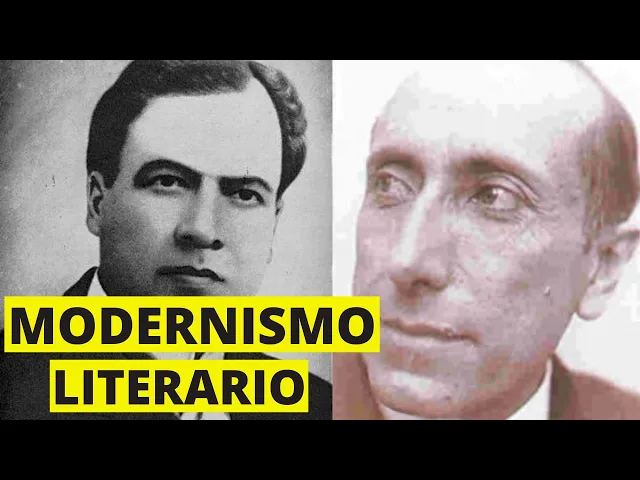
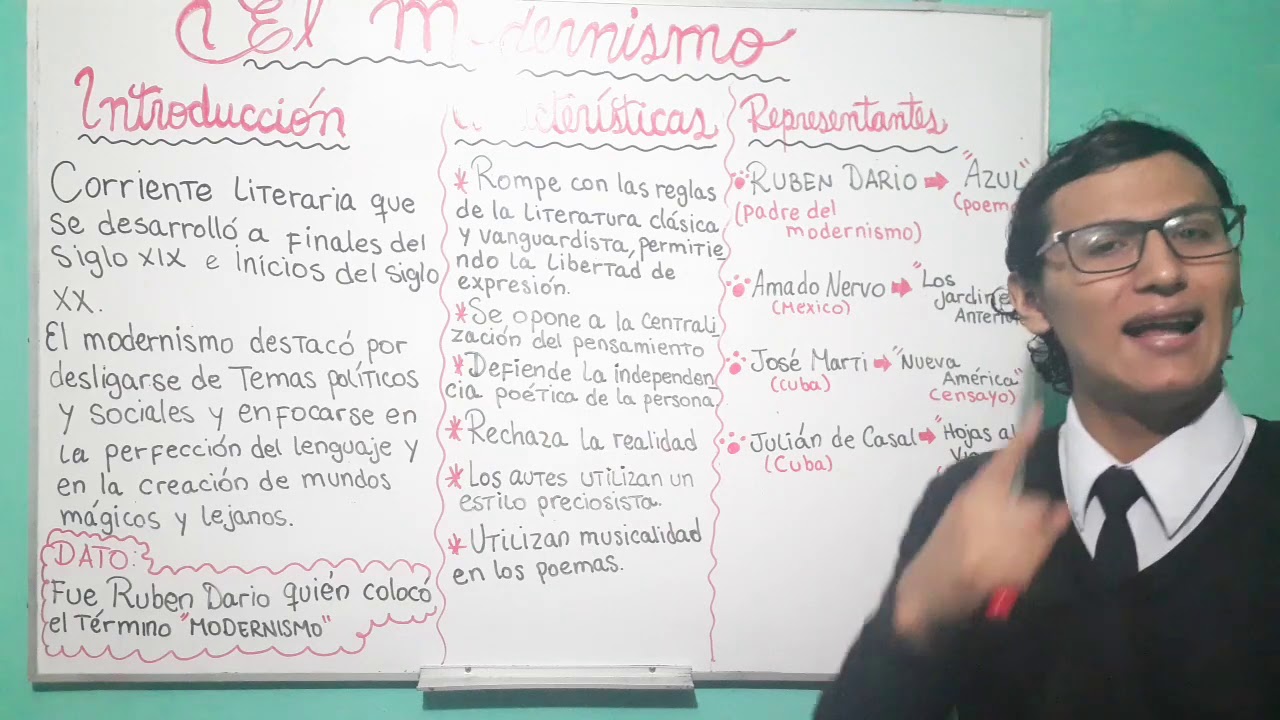
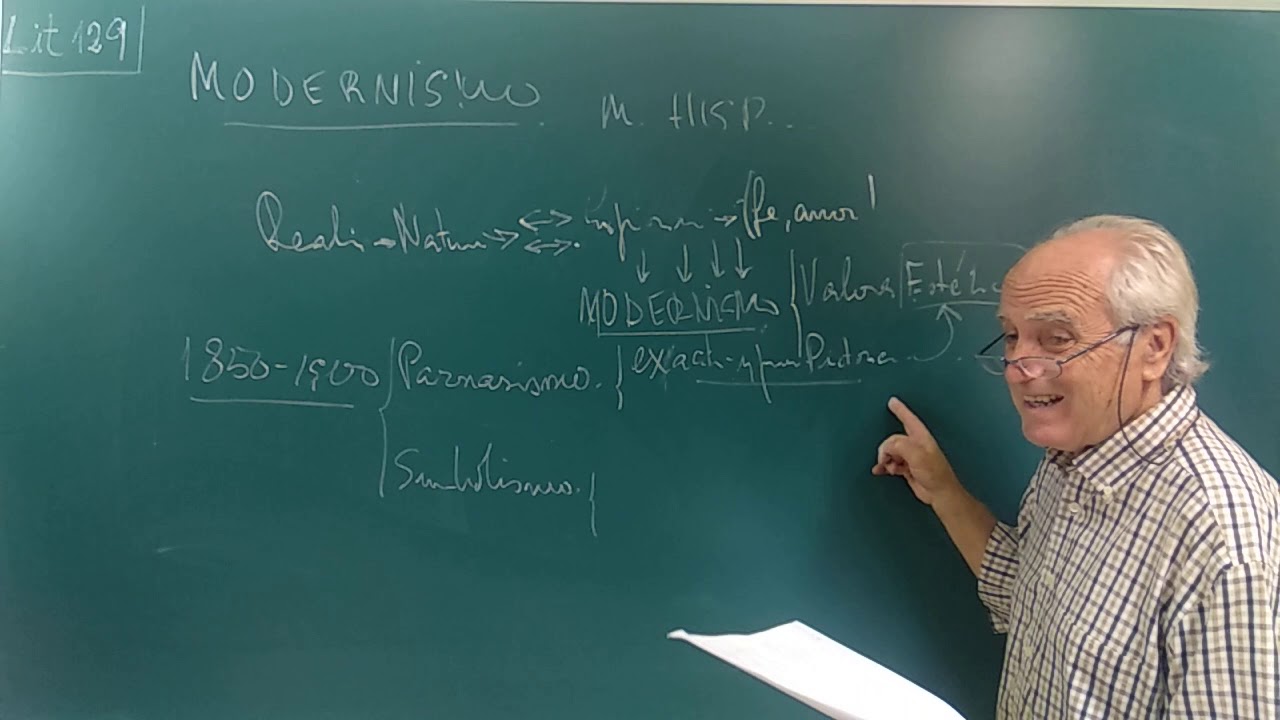
Literary modernism was a literary current that developed in the late nineteenth and early twentieth centuries. It was characterized by its precious aesthetics, the exaltation and refinement of the senses and the use of exotic images and places. In addition, the modernist movement was noted for avoiding political and social themes in its works, focusing mainly on the perfection of language and the creation of magical and distant worlds.
Likewise, human feelings and passions were also a topic of interest for the writers of this literary phenomenon. Some authors consider that modernism was born with the publication of the book of poems Azul (1888) by the author Rubén Darío. This work was chosen due to the impact it caused in its time; the collection of poems inspired other great authors of the time such as Amado Nervo and Manuel Díaz Rodríguez.
Literary modernism was born as a consequence of the dominant positivism of the time, a way of thinking whose scientific and mercantilist approach rejected subjective manifestations. In other words, modernist literature arose as a rejection of this philosophical current because artists felt suffocated by the industrial processes and excessive pragmatism of the time. In general terms, modernism meant a change in the way of perceiving language, beauty and metrics.
It was an aesthetic renewal that significantly permeated Ibero-American culture. This literary current was so important in the history of literature that many critics are still dedicated to studying and analyzing it. In addition, it constitutes a fundamental part of the topics taught on literature in schools and universities.
Historical context of literary modernism According to renowned writers such as Octavio Paz, the modernist style was born as a response to positivism; the latter consisted of a philosophical position that defended scientific, useful and verifiable knowledge above any other method or discipline. Faced with this rigor, several artists decided to create a style that would recover the sensitive and subjective manifestations of man; the purpose of modernism was simply to create beauty and shock the reader through words, eliminating any utilitarian sense. Modernism emerged at a historical moment when the Hispanic American nations were building their identity.
However, unlike other aesthetic currents, the modernist style detached itself from the political and social approach to dedicate itself to the creation of a magical, sensitive and bucolic atmosphere (that is, related to nature and the countryside). In addition, this current was inspired by the French style to develop its own; This turned modernism into a strange phenomenon within the Spanish language, since the usual thing at the time was for literature in Spanish to be dedicated to representing the realities of America or the Iberian Peninsula. For example, from a similar period was the famous Generation of '98, made up of a group of writers and essayists who were mainly characterized by their concern for the Spanish social and political reality.
For this reason, it is affirmed that modernism was a strange movement that, instead of representing social and political crises in its works, preferred evasion as an ideological approach. Modernist writers, disillusioned with their reality, chose to create a space full of distant places and exotic nature. In addition, in his texts there is also a search for preciousness (a literary trend that seeks to refine and embellish expressions) and human feelings accompanied by certain erotic nuances.
Characteristics of literary modernism Literary modernism was characterized by the following: - Break with previous rules Literary modernism came to break with the stereotypes of rhyme and meter that had prevailed for so long, after the Spanish colonization. This gives an air of freedom and emancipation to the lyrics, allowing greater expressiveness and giving rise to what would later be known as "anti-poetry". - Opposes the centralization of thought Opens to the world, openly opposing regionalism.
He considers the poet a "citizen of the world", therefore every theme has a place, every culture, there is no tie to a particular custom. This feature earned him the opprobrium of many conservatives of the time. - Advocates for the poetic independence of the individual Each poet has his unique style, being a language of the human soul.
Each individual has his opportune sound, his suitable letter. If there is something that unites the representatives of this literary movement, it is the passion with which they approach their themes: either they are very pessimistic (the clear case of Rubén Darío), or they are very cheerful (like Martí), and so on. There are no middle terms, but a resounding dedication to feeling.
- Reject reality As mentioned above, modernist writers preferred to evade the social and political events of their time. Consequently, their poems or writings generally do not refer to the historical context or the reality they were facing. - Use a precious style The modernists were inspired by the French precious to develop their style; This current was focused on the search for beauty and the refinement of shapes and images.
This can be seen in the following example: "(. . .
) He no longer wants the palace, nor the silver spinning wheel, Neither the enchanted falcon, nor the scarlet jester, Nor the unanimous swans on the azure lake (. . .
)" (Sonatina, Ruben Dario). - Introduce musicality in poems and other writings The modernist aesthetic was characterized by its musical phrases; the writers achieved this effect from very marked rhythms and other resources such as alliteration (repetition of sounds) and synesthesia (joining two sensations or images from very different meanings. For example: "Sounding loneliness").
The musicality can be seen in the following verses by Rubén Darío: “Youth, divine treasure, you left never to return! When I want to cry, I don't cry and sometimes I cry without meaning to. ” - Use exotic places and images Modernist texts are mainly inspired by exotic places and ancient cultures; For this reason, it is common to find landscapes that describe regions of the East (such as India), jungles full of exuberant nature, mythological places, among others.
- Compete with Romanticism The representatives of modernism showed a continuous competition with Romanticism. They considered romantic poetry as an overloaded manifestation of logic and reason, aspects that imprisoned the imagination and the poet himself. Romanticism was considered a tie to the true feeling of the poet.
- Religious syncretization Modernist poets took what they considered the best of each world religion: Hinduism, Christianity, Buddhism, and united it in a kind of perfect treaty of coexistence of beings. Literary modernism sought to unite men through letters, focused on those common and related things. It sought to unify the criteria and give rise to true coexistence.
Themes of literary modernism The most recurrent themes within modernist aesthetics were the following: - Loneliness and melancholy The search for beauty and escape did not prevent modernist writers from adding a sad, melancholic and lonely nuance to their works. This demonstrated the disappointment of these artists in the face of reality and the society of their time. This can be seen in the following poem by Amado Nervo: “Look at the moon: tearing the veil of darkness, it begins to shine.
This is how the funeral star of sadness rose above my sky. (Black Pearls V) - Mythological stories Modernism was characterized by implementing references to stories and mythological narratives. For this reason, it is common to find characters drawn from the Greco-Latin culture.
This is seen in the poem Venus by Rubén Darío, which refers to the goddess of love. - Love and eroticism Love and eroticism were recurring themes in modernist texts. These elements were generally manifested through the image of women.
These elements can be found, for example, in the aforementioned poem: Venus, by Rubén Darío. They are also found in the poem I dreamed that you were taking me, by Antonio Machado. - Exotic and distant places Nature and strange places were also recurring elements for modernist writers.
Therefore, it is usual to find references to oriental civilizations, luxurious palaces, princesses, sultans, among others. - Exuberant nature and indigenous themes In general, the images of nature were inspired by American fauna and flora. This can be visualized, for example, in the poem Estival by Rubén Darío.
Likewise, although the modernist current was influenced by the French style, modernist writers had a preference for local landscapes and pre-Hispanic civilizations. In fact, on many occasions they defended and vindicated the figure of the indigenous native of America. Authors and representative works The modernist style was used by many writers throughout history.
However, some of the most outstanding were: - Rubén Darío (1867-1916) Considered by critics as the father of modernism. In addition to his emblematic work Azul (where there are not only poems, but also short stories), the Nicaraguan writer was also acclaimed for his collection of poems Songs of life and hope, the cinemas and other poems (1905) and for his book The rare (1896). ), where he made a compilation of his favorite authors.
- Amado Nervo (1870-1919) The Mexican Amado Nervo was one of the most important modernist representatives. Nervo not only wrote poetry; He also wrote novels and essays. Among his most famous works, The Interior Gardens (1905) stands out, where the author uses precious language and many elements related to nature.
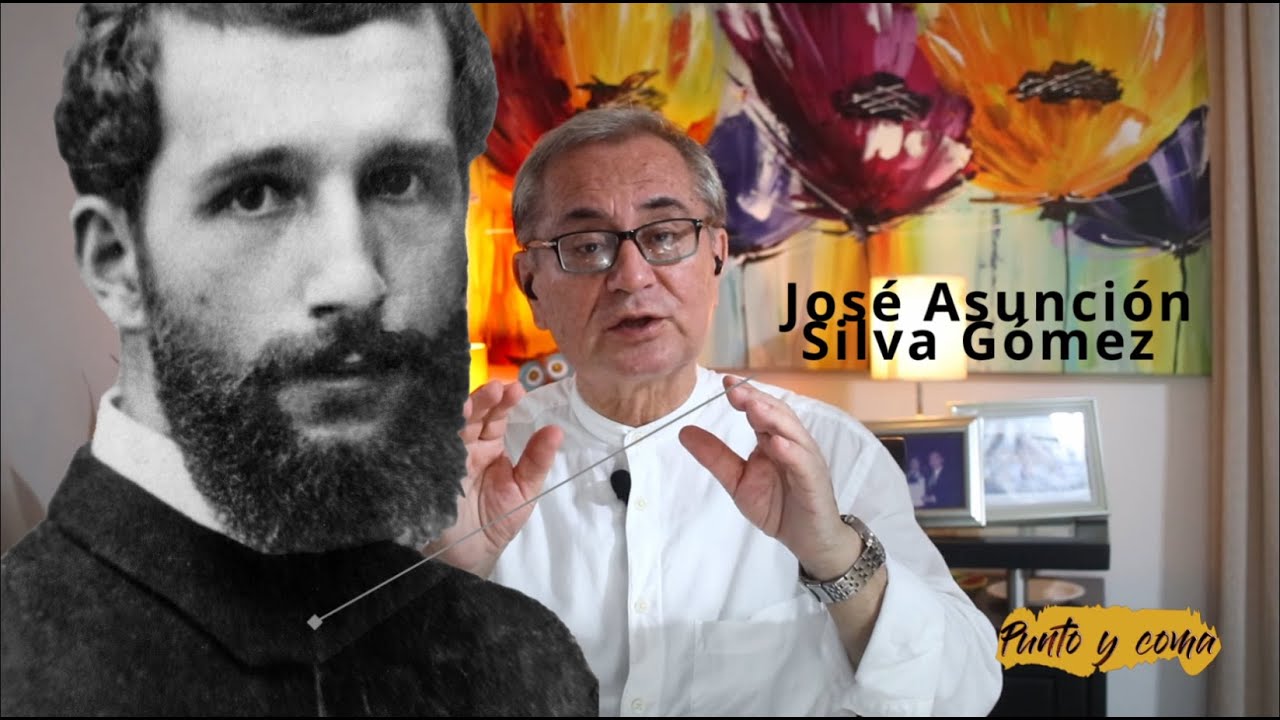
- Manuel Díaz Rodríguez (1871-1927) was a Venezuelan writer, who clearly sympathized with the modernist style. This can be seen in his work Broken Idols (1901) where the author poses the problem faced by the intellectuals and artists of the time in the face of an increasingly capitalist and superficial society. - José Asunción Silva (1865-1896) was a Colombian poet, remembered for having been a forerunner of the modernist movement.
In fact, he was part of the first generation of poets who dedicated themselves to this literary movement. His most famous text is The Book of Verses, precious but melancholic and gloomy. This is seen in the verses: "in a narrow cold grave, far from the world and crazy life, in a black coffin with four plates, with a heap of earth between the mouth" - Antonio Machado (1875-1939) Actually, Spanish poet Antonio Machado was a member of the Generation of '98, so many of his poems were related to the Spanish reality.
However, some of his texts were influenced by the modernist style; This can be seen in his collection of poems Soledades (1903), a work imbued with serenity and nostalgia. - José Martí (1853-1895) was a Cuban journalist, poet and thinker, also considered by critics as one of the forerunners of modernism. One of his most acclaimed texts is the essay entitled Our America (1891), in which the author reflects on the problems of the continent.
Although Martí did not practice escaping reality in this essay, the way he used language and images has a modernist undertone. - Julián del Casal (1863-1893) He was a poet of Cuban nationality, remembered for being one of the most emblematic figures of modernism. In fact, he maintained a close friendship with Rubén Darío.
One of his most outstanding works was the collection of poems Hojas al viento (1890), where the poet refers to love, melancholy and exotic places.