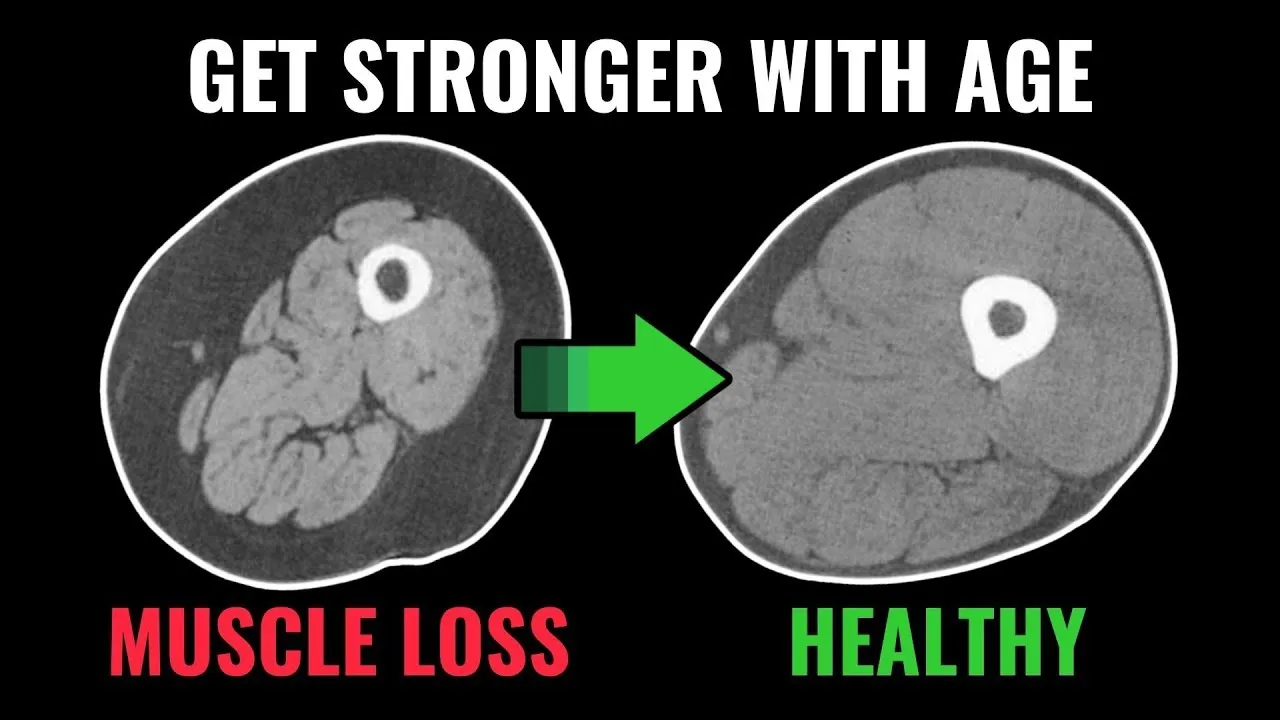
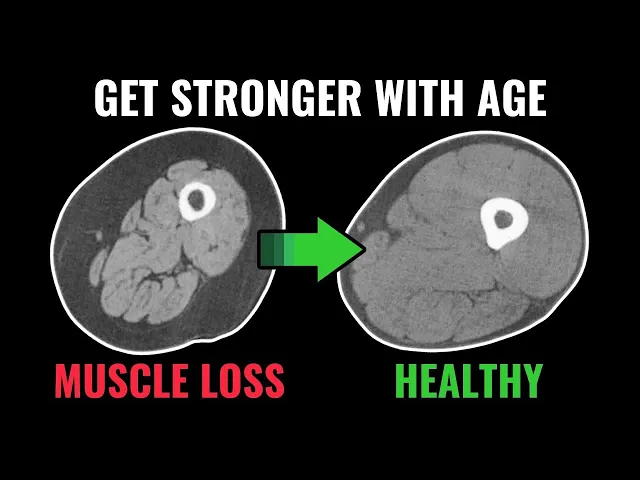
building muscle and maintaining strength becomes increasingly challenging as we age even more concerning is that with every passing decade we naturally lose muscle mass this is called sarcopenia and the best way to understand sarcopenia is to see it here you can see side by side MRI images of a cross-section of the leg of a healthy 30-year-old next to it is the MRI of a leg of a 70-year-old with sarcopenia notice that the muscle mass of the 30-year-old takes up the entirety of the thigh in contrast the muscle mass in the 70-year-old is dramatically reduced and
the bone is surrounded by atopos or fatty tissue hey everyone Dr Jeff Pang here this loss of muscle is not just a cosmetic issue it has serious health and quality of life consequences those with sarcopenia have higher risks of Falls loss of Independence and difficulties in performing daily AC activities this loss of muscle mass is also linked to worse Health outcomes including higher risk of chronic conditions such as type 2 diabetes cardiovascular disease weakened immune function and an overall increased risk of mortality given these severe consequences it's crucial to understand how we can combat age
related muscle loss I'm going to share three critically important strategies that everyone should consider to maintain and even improve muscle mass and strength as we age the first key part of increasing muscle strength is to perform resistance training and strength training exercises these include weightlifting resistance band workouts and body weight exercises like push-ups and squats over time it's important to progressively overload the muscles by gradually increasing the weight frequency or number of sets and repetitions in your strength training routine this gradual increase and Progressive overload are what stimulate muscle growth and improves muscle strength over
time a meta analysis examining the most effective interventions for the treatment of sarcopenia found that mixed exercise which includes both aerobic and resistance exercise was by far the most effective intervention in increasing muscle mass as well as improving muscle strength and physical performance most people will see the greatest benefit with strength training done two to three times per week but for those who are strapped for time it's important to understand that the goal is simply to just start strength training regardless of the frequency there are many studies that have shown that even just 15 minutes
of strength training once a week can lead to significant strength increases in individuals age 50 to 60 years old the other important thing to note is that strength gains can occur no matter what your age is one study compared muscle mass and strength gains following resistance exercise training in adults 65 to 75 years old as well as those above 85 years old it found that progressive resistance training led to significant strength and functional improvements regardless of age the takeaway from all of these studies is that it is never too late to start resistance exercises and
this last point is really important important remember that the goal of strength training is not just about building muscle yes that is important but the more important thing is that it helps improve your overall quality of life resistance training helps you build a greater strength Reserve this means you have more physical capability to draw upon in times of need that can mean lifting a heavy object participating in physical activities or even just recovering from an illness more importantly you will gain improved physical function and maintain your Independence everyday activities such as climbing stairs carrying groceries
or playing with your grandchildren become easier having a robust strength Reserve ensures that your body can handle the demands placed upon it especially as we age now in addition to improving your strength Reserve regular strength training has numerous health benefits including better metabolic function improved cardiovascular health and enhanced immune response research has shown a strong correlation between muscle strength and Longevity individuals with greater muscle strength tend to live longer healthier lives strength training not only builds muscle but also improves bone density joint health and balance all of which are crucial for preventing Falls and injuries
if you are looking for a sample or beginner strength train program check out this video where I demonstrate a beginner Body Weight Workout that can be done in just 5 minutes this is an excellent starting point for anyone regardless of age to begin their strength training Journey the second strategy to increase muscle strength as we age is to address nutrition specifically to evaluate your protein intake the reality is that many people are not getting enough protein in their diets studies suggest that older adults with sarcopenia consume significantly less protein than their peers without sarcopenia inadequate
protein intake might be associated with developing sarcopenia in older adults other Studies have found that higher protein intake is significantly associated with better functional abilities such as faster walking speed greater lower limb strength greater hand grip strength and better balance the current average recommended goal for protein intake is about 0.8 to 1 G per kilogram of body weight however to increase muscle mass and improve muscle strength over time especially if you're doing resistance training you need even more protein than that aim for 1.5 to 2 G per kilogram of body weight this comes out to
about 1 g of protein per pound of body weight many studies suggest that protein should be spaced evenly throughout the day approximately every 4 hours or divided with meals however Recent research is starting to question this thinking in my opinion don't get too caught up in the timing of your protein intake this is more critical for competitive athletes or bodybuilders for the vast majority of the population just reaching one gram of protein per pound of body weight is already challenging enough the bigger problem is that to achieve high levels of protein intake many people end
up snacking throughout the day which can to consuming too many calories from other sources this results in fat gain instead of lean muscle mass which is counterproductive to avoid this problem focus on lean protein sources like chicken breast or fish other clean Meats such as organic grass-fed steaks are also excellent sources of quality protein for reference here are some examples of protein content in common foods so the first two strategies resistance training and adequate protein intake are by far the most important for improving muscle mass and muscle strength as we age however for those who
want to further optimize their health a third strategy can be extremely beneficial and that's taking nutritional supplements specifically creatine monohydrate and whey protein creatine monohydrate is a common supplement among athletes but it has also been extensively studied for sarcopenia and age related muscle loss meta analyses have demonstrated that creatine supplementation significantly increases lean muscle mass and improves upper and lower body strength compared to Placebo and this effect is seen even in the Aging population evidence suggests that creatine supplementation has the potential to increase aging muscle mass muscle performance and decrease the risk of Falls and
possibly attenuate inflammation and loss of bone mineral other Studies have found that combining creatine supplementation with resistance training can decrease body fat percentage remember that copia is caused by the gradual decline in muscle mass and strength as people age one of the Hallmarks of sarcopenia is that the muscle tissue is replaced by fatty tissue and this contributes to decrease muscle function and increase physical Frailty creatine supplementation combined with resistance training has been shown to improve muscle mass and decrease body fat percentage over time now in addition to creatine whey protein is another supplement that can
significantly support muscle growth and overall health whey protein is a high quality protein derived from milk during the cheese making process it is rich in essential amino acids and popular among athletes for boosting protein intake and supporting muscle growth a recent systematic review and metaanalysis found that compared to Placebo whey protein significantly increase skeletal muscle mass as well as gate speed in older adults with sarcopenia additionally whey protein resulted in improvements to biomarkers such as reduced interlukin six and improved insulin like growth factor 1 it also enhanced scores for activities of daily living without increasing
BMI or weight the one thing that I want to point out is that the supplement industry is not regulated by the FDA and impurities are often found in supplement samples so when you are looking for a supplement to purchase make sure that the brand you are purchasing is third-party tested I recommend finding a supplement that is USP certified or NSF certified I've included examples in the video descriptions of supplements that meet these criteria in addition if you have medical comorbidities it's essential to discuss creatine and whey protein supplementation with your healthare provider in general both
of these supplements are considered very safe for aging individuals multiple Studies have found creatine supplementation to be safe in frail aging adults and those with medical conditions such as type 2 diabetes heart disease and neurodegenerative diseases remember maintaining and increasing muscle mass and strength as we age is critical for overall health and quality of life we've discussed the importance of resistance training proper nutrition and appropriate supplementation to combat sarcopenia and its Associated risks now if you're ready to start incorporating these strategies into your routine I have a great next step for you check out this
video where I walk you through a beginner body weight exercise program that can be done in just 5 minutes it's a fantastic way to Kickstart your strength training Journey and build a solid foundation for your health









![When Is "TOO OLD" To Add Muscle? Answer: NEVER! [2024]](https://img.youtube.com/vi/2G4arrouEk8/maxresdefault.jpg)