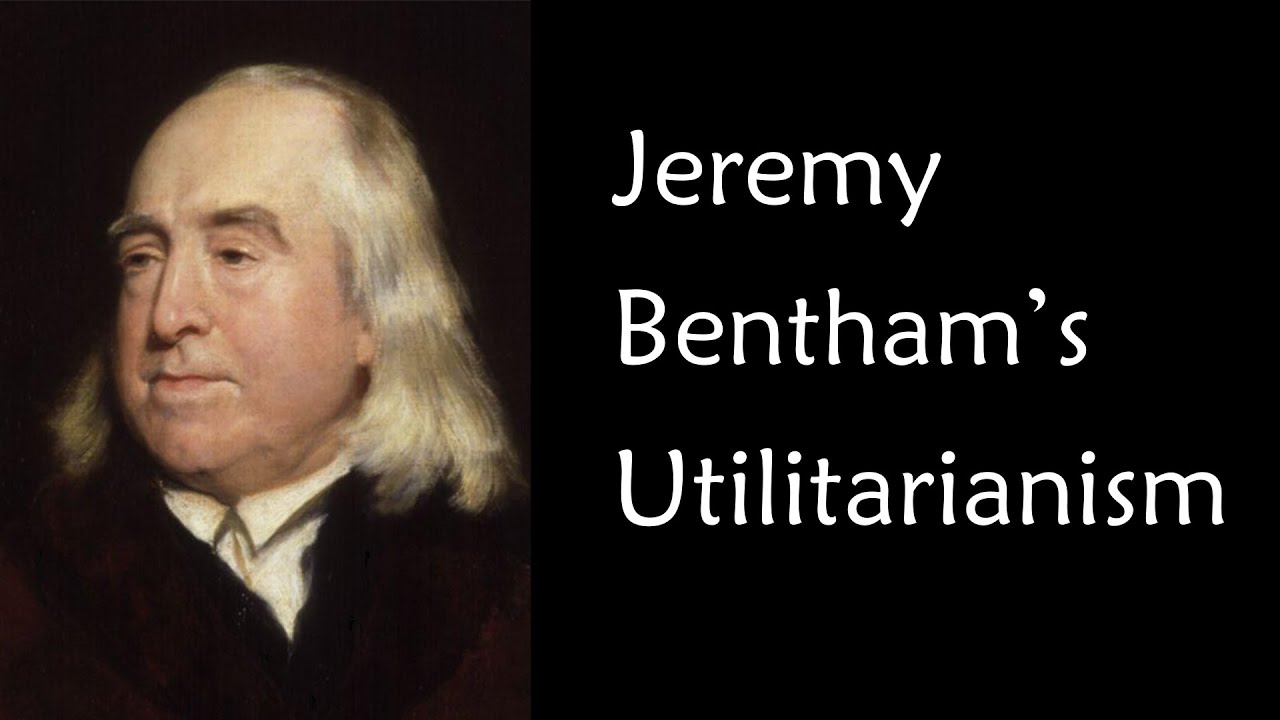
[Music] welcome back to a little bit of philosophy this is philosophy 101 unit 4 lecture 4 jeremy bentham and utilitarianism you recall in academic philosophy we divide the subdivision of axiology called ethics into two main branches normative ethics and metaethics normative ethics is the part of ethical theory that focuses on the many competing moral theories which organize for convenience under the headings of teleological deontological and virtue theories now remember that teleological theories or consequentialism holds that the goodness of an action is determined by the consequences of the action while deontological theories hold that goodness is
determined by some intrinsic feature of the action or perhaps the will of the moral agent while virtue theories like aristotle's which we've looked at hold that moral development of character is the central feature of a normative moral theory in this video we'll be focusing on consequentialism teleological or consequentialist moral theories all hold that the good is properly defined as some consequential feature of our action for example hedonism defines the good as pleasure so actions will be right insofar as they maximize individual pleasure and minimize pain egoism defines the good as happiness for the individual so
an action will be right if it brings about more happiness and wrong if it produces more unhappiness for the individual utilitarianism is the theory we'll be examining in this video and it defines the good as happiness for the greatest number of people so actions are right if they promote general happiness and wrong if they detract from the general happiness of course defining precisely what pleasure and happiness mean can lead to a blurring of the lines between these general categories and of course when we examine the views of individual philosophers there can be disagreement about exactly
where we should place them but these general categories are a nice rule of thumb for helping us to distinguish between the various approaches to morality that we encounter in the western philosophical tradition in the history of philosophy we usually associate utilitarianism with the 18th century but of course no philosophical movement or moral theory for that matter arises in a vacuum so we should briefly note a few major intellectual developments that set the stage for the emergence of utilitarianism the entire project of modern philosophy is built on the social transformation that began in the renaissance in
terms of moral philosophy the revival of humanism associated with the social revolution of the renaissance is particularly important for nearly a thousand years the medieval worldview had discounted or at least de-emphasized the importance of human experience in the world to oversimplify things a bit for the point of emphasis the augustinian philosophical and theological framework held that this life was merely a temporary stop on the way to an internal existence in heaven or hell so focusing on one's earthly existence was futile not only because it was temporary but also because it had the potential to distract
you from making the necessary preparations for your eternal destination the renaissance would see a shift back toward the value of temporal existence and with it renewed attention on literacy art and medicine as well as other activities that are rooted in the belief that this life is valuable in itself the second major intellectual development that would help set the stage for the modern period was the scientific revolution which would culminate in a mechanical model of the universe and undermine the religious centered view of the natural world and even if most people continued to believe that the
rules that govern the universe were created by god the fact was those rules were objective and open to human investigation and knowledge and the more we understand about the rules that govern the natural world the more we can use those rules to improve our lives the scientific revolution began as we've noted in other videos with astronomy and the rise of the new physics the behavior of objects in the world whether terrestrial or celestial were governed by the same universal laws which were open to discovery by those who wish to understand why things move the way
they do the universe was neither magical nor mysterious but rather a place filled with objects obeying universal laws which allowed accurate predictions about natural phenomena by the end of the modern period the same world view would come to dominate our understanding of the self-animating phenomenon we call life darwin helped us to understand how modern forms of life came from earlier and perhaps simpler life forms whose ghosts could be seen in fossilized form all over the world and mendel laid out the foundations of what would grow into the science of genetics which continues to expand and
explain the mechanisms of biodiversity and provides the underpinning of almost all modern medicine little by little the world around us was becoming less mysterious and our knowledge was increasing exponentially and that leads us to the next important foundation of the utilitarian moral theory the debate about exactly how human knowledge works are we born with a set of innate ideas already recorded in our memory like a pre-formatted hard drive or do we acquire all our ideas through the process of experience in the world now the debate may seem trivial but the victory of empiricism over rationalism
would provide a theoretical framework for the new experimental method in natural philosophy or science as we call it today and would cause an exponential explosion in the amount and scope of human knowledge that victory of empiricism over rationalism during the enlightenment would inevitably lead to a reassessment of moral and political ideology after all if we're not born knowing good and bad right and wrong it must be the case that such ideas are developed through our experiences in the world if concepts like right and wrong aren't innate then it makes no sense whatsoever to punish children
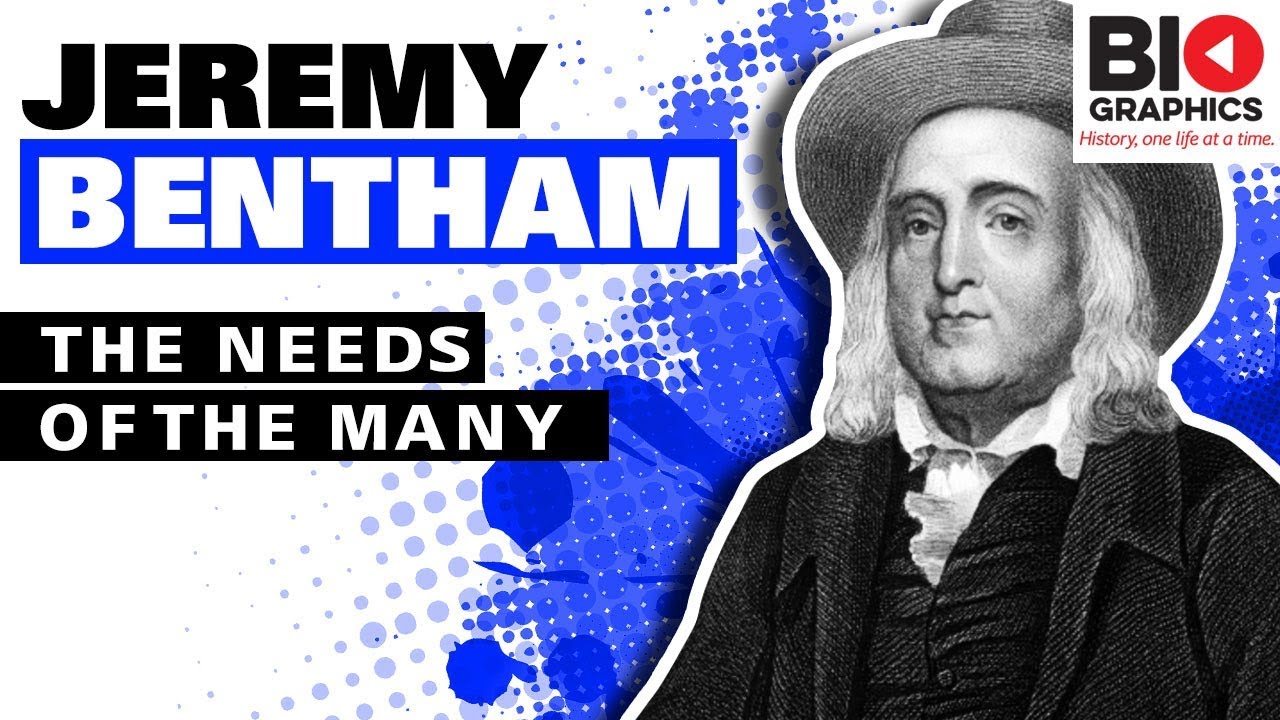
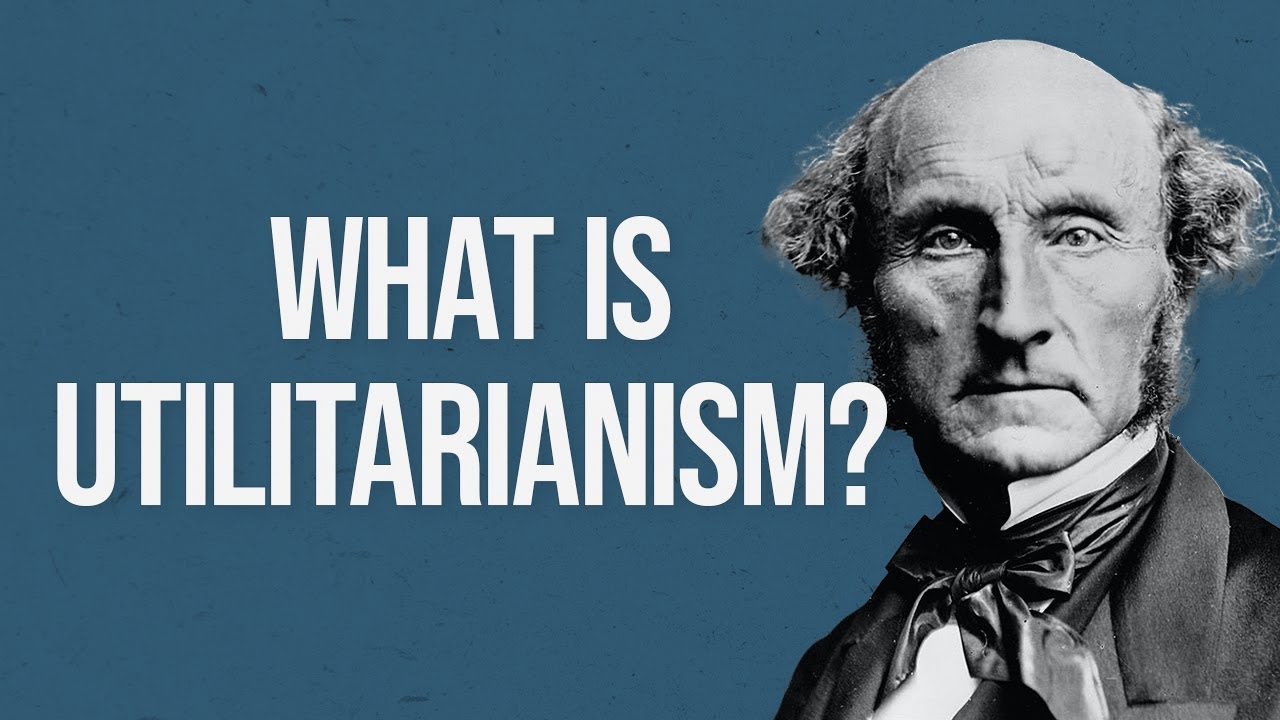
with the same severity as adults which was common practice at the time if our normative conceptions are learned then the social and economic circumstances of one's life will have a direct bearing on their understanding of what they should and shouldn't do from this starting point we can see that education becomes a public good not a private interest reserved for the wealthy and privileged members of society this is the intellectual starting point for jeremy bentham in the 18th century and the radical reforms he advocated across all normative social systems rests firmly upon this empirical basis now
while we're going to focus on bentham's application of empiricism to morality we should quickly note some of the other areas of reform that he advocated in the field of law bentham argued for what he called a pan-nomian a universal civil code rooted in the basic idea that the purpose of government and social organization was to secure the happiness of its citizens the laws and policies of a properly formed legislative body should seek to establish in descending order the security of its citizens the ability to look after themselves the ability to improve themselves beyond mere subsistence
and ultimately to strive for the equality of citizens if this reminds you of maslow's hierarchy of needs you're not wrong it's actually very similar nothing can be achieved without the security of one's own existence and one can't achieve abundance without first achieving subsistence and of course one cannot achieve equality without all of these others in place but what about the balance of power between the government and the governed couldn't a benevolent dictatorship follow this same rule to achieve happiness for its citizens bentham while he disliked the idea that power comes from the people thought that
the government should be held in check by the governed through what he called the public opinion tribunal this is not a formal body but rather the right of the governed to criticize and shame public officials who failed in their duty to act on behalf of the citizens or who placed their own self-interest above the goal of achieving maximum happiness for the general citizenry this in turn requires a free press and transparency in government decisions and bureaucracy and for those citizens who refuse to abide by the law who place their own self-interest above that of their
fellow citizens bentham argued for a utilitarian approach to punishment incarceration with the primary goal of deterring future criminal behavior was far superior to the death penalty which was handed out at the time for minor infractions of the law the panopticon was his vision for a detention center run by private citizens who would oversee inmates in detention at a minimal cost of the state inmates would be required to work and learn skills that could be applied in the workforce at the end of their sentence for bentham civil punishments were not to be considered retributive it's not
about getting revenge on those who have done his harm but rather deterrent to future uncivil behavior but education was also central to this project given that most uncivil behavior derived either from a lack of useful skills and therefore gainful employment or an ignorance of how bad behavior was contrary to the general happiness of society at large and as for religion well bentham had very little use for it at all religion from his point of view was exclusionary and promoted divisions and unhappiness in society there's perhaps no better example of his rejection of the religious mores
of the 18th century than his view of human bodies upon his death he willed that his body should not be buried to await some mysterious revivification in the future but rather publicly displayed to help displace religious notions of some future existence we live and then we die the sooner we come to embrace that fact the easier it will be for people to understand that living a life committed to the goal of achieving maximum happiness was the best possible goal for everyone now the philosophical underpinnings of all of bentham's reform agenda was utilitarianism and this consequentialist
moral theory begins with an empirical analysis of human nature if the fundamental question of morality is how should we live our lives then we must understand what it means to be human and for bentham that meant recognizing the reality of pleasure and pain as the primary motivating factors in human action when we ask why do people act the way they do we find that they act in ways that minimize pain and maximize pleasure these are the goals of human action getting pleasure while also avoiding pain if in fact that's our goal then we can evaluate
different actions by the degree to which they help us achieve that and that goal that tell us this is the utility of an action and of course this is where his theory becomes more nuanced because it's not binary i can have a range of actions before me that produce a range of pleasures and a range of pains we need some system that allows us to determine the degree of utility of a particular action but before we can get to the calculation problem we can now more clearly articulate two essential principles of utilitarianism first is the
utility principle which gives us our definition of goodness the utility principle is a non-normative assertion about how to apply the word good in other words actions are good insofar as they promote pleasure and bad insofar as they promote playing pain from this we can derive the utilitarian principle which is normative it tells us what we should do what we ought to do since pleasure is good and pain is bad then i should act in ways that foster pleasure and i should avoid actions that do the opposite and since others are bound by the same masters
of pleasure and pain i should seek pleasure not just for myself but for as many people as possible this is because in many ways my pleasure is dependent on the pleasure of others if i promote my own pleasure at the expense of others then i can expect that they will probably do the same and that would be contrary to my ability to achieve as much pleasure as i possibly can for bentham it is essential to understand that community is central to happiness and by raising the overall level of happiness in my community i will also
be contributing to my own happiness but how do we actually measure the utility of a particular action in order to measure the relative utility of a particular action bentham lays out seven criteria to shape a moral algorithm the hedonic calculation or pleasure calculator as we noted a few moments ago pleasure and pain are not binary but rather form a continuum with extreme pain on one end and extreme pleasure on the other so the first criteria to consider when evaluating a potential action is the likely intensity of the pleasure we will experience as a result of
the action but of course as we all know as intensity tends to increase duration tends to decrease so it would be self-defeating if we only aim to produce the most intense pleasure possible we have to balance intensity and duration if we're going to achieve a greater overall level of satisfaction but since we're evaluating an action we haven't yet performed we must also consider the certainty of achieving the desired level of intensity for the desired duration we're not always guaranteed an outcome so we must be cognizant of the likelihood that we will actually achieve our goal
now beyond intensity duration and certainty we must also keep in mind that some actions will result in immediate consequences while others may only pay off in the long run so the proximity of the result to the action should thus also factor in to our consideration there can be many immediate pleasures that result in greater long-term pain and vice versa so we can't just look to the first three criteria we can't overlook the nearness criterion making our calculation even more complex is the fact that some actions will result in singular experiences of pleasure while others are
more focused producing multiple future pleasures like the idea of compounding interest in economics some investments will produce greater future yields because they multiply themselves the greater the potential for compounding future pleasures outweighs less fertile opportunities further still we find that many actions yield a mixture of pleasures and pains like exercising for example determining the purity of the pleasure in a given action could tip the balance one way or the other now up to this point these six criteria would all be aimed at the self and therefore we'd have a purely egoistic or hedonistic moral system
but remember that we live in community so we must also factor in the extent of the pleasure that would be produced by the actions we perform how many people will be affected by the actions i perform and will that effect be more on the side of their pleasures or their pain this is the criterion that makes the calculation utilitarian we should also note as indeed bentham does that this entire calculation would be inclusive of all creatures capable of suffering the effects of our actions since many animals experience pleasure and pain a full utilitarian calculation would
also have to be cognizant of the effects of our actions on them as well now unfortunately bentham doesn't give us an actual algorithm that includes all seven criteria and it's an interesting problem to try to incorporate each of them into some sort of coherent formula that we could test against our moral intuitions but even if we could short of an automated system it's not clear that such an algorithm would be applicable in many of the moral situations we face this is especially true the more broadly we construe the scope of the moral sphere how do
i calculate the effect of my actions on people that i might not have any direct interaction with or even knowledge of for that matter what about the impact of my actions on people who don't even yet live future generations undoubtedly an individual's actions can have effects with a global impact but is it reasonable to expect such an individual to be able to accurately calculate those effects into the future and does the utilitarian emphasis on suffering somehow diminish human dignity given that many animal species have the capacity to experience suffering how do we alter our ordinary
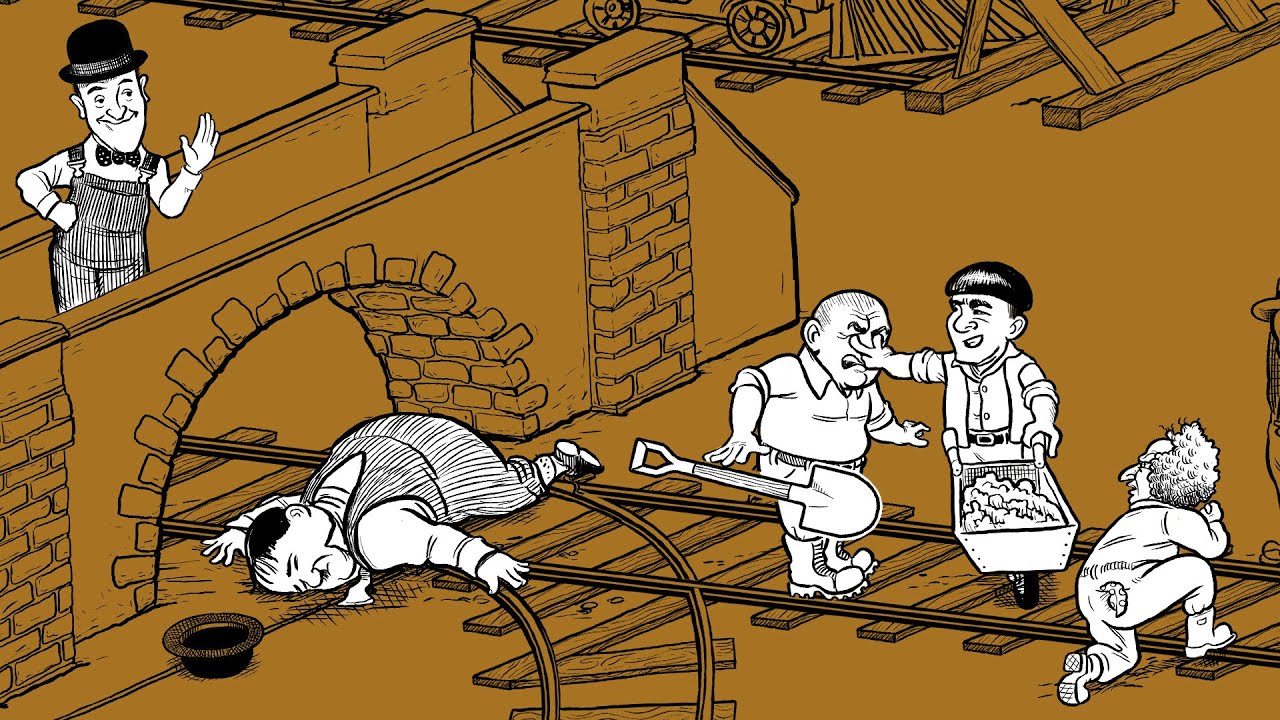
moral calculations to include animals it's one thing to hold that we should not inflict unnecessary suffering on a creature capable of suffering but does that make animals moral agents or merely the beneficiaries of our moral awareness there's also what's been labeled the trolley problem this is a thought experiment first conceived by judith jarvis thompson in a now classic article killing letting die and the trolley problem published in 1976. suppose there were a group of people loitering along the tracks of the city trolley line there are five on the main line and one on the alternate
track when the trolley comes rolling down the line the switchman can either allow the trolley to continue on course where it will kill five people or pull the lever to divert the car onto the alternative line killing only one person what should the switchman do according to the standard utilitarian calculation it seems clear that the switchman should divert the car killing only one person instead of letting it kill the other five because that choice would maximize the greatest happiness for the greatest number of people sure it's a moral tragedy both ways but a greater happiness
would be achieved by killing one person versus killing five so the utilitarian principle tells the switchman to pull the lever but do the needs of the many really outweigh the needs of the few is it really the right thing to do is the switchman obligated to pull the switch and would we condemn him if he did not thompson's thought experiment forces us to confront what seems like a conflict between the greatest happiness principle of the utilitarian and our moral intuition that condemning any innocent person to suffering is wrong and what if it was the child
that was on the alternate track would that make a difference again for the utilitarian the answer would be no the greatest happiness should always prevail in guiding our actions in the world let's quickly summarize what we've covered in this very brief video utilitarianism is labeled a consequentialist moral theory because it identifies the good with the consequences of our actions specifically it identifies the ability to experience pleasure and pain as the core of moral consideration the utility principle tells us that the good is pleasure and that the bad is pain hence the utilitarian principle tells us
that it is right and therefore obligatory to always act in ways that promote the greatest amount of happiness for the greatest number of people now bentham's emphasis on pleasure and pain as you might imagine was the focal point of much of the early criticism of utilitarianism many people objected to the hedonistic tone of his views claiming that it essentially put humans on the same level as pigs but bentham's younger contemporary and protege jon stewart mill pointed out that this is not as base or contrary to the so-called dignity of humanity since humans are capable of
experiencing more than mere physical pleasure and that the higher psychological pleasures we can experience are of greater value than physical stimulation but perhaps the greatest objection to utilitarianism and indeed consequentialism in general would come from immanuel kant who would argue that pleasure or happiness cannot properly be considered the focus of moral consideration it is kant's deontological moral theory that we will consider in our next short video so be sure to come back again as we continue to explore a little bit of philosophy