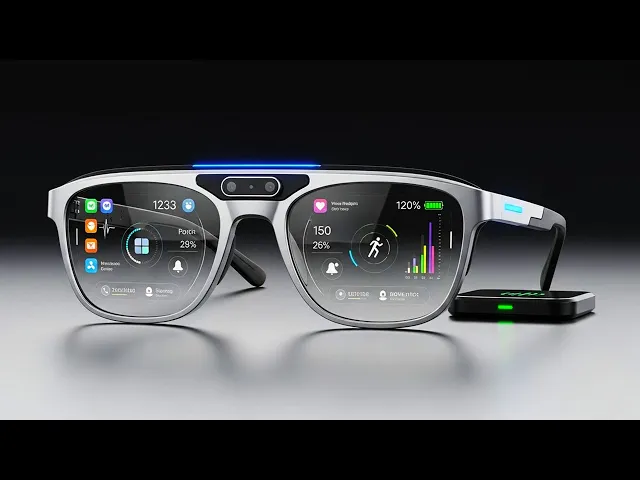
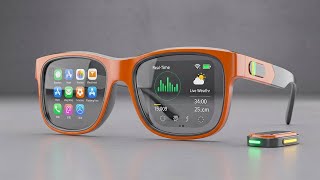
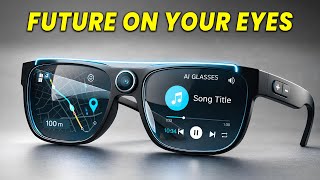
AI glasses are no longer a futuristic concept. They are quickly becoming everyday tools that blend artificial intelligence, augmented reality, and stylish eyewear into one powerful wearable. As we move into 2026, smart glasses have evolved beyond basic notifications and cameras, offering realtime translation, hands-free AI assistance, navigation overlays, and immersive displays that fit naturally into daily life.
From sleek AR viewers designed for productivity and entertainment to AI powered companions that enhance how we work, travel, and communicate, this new generation of glasses is redefining personal technology. In this video, we explore the top 10 best AI glasses for 2026, highlighting the most advanced, practical, and innovative models that are shaping the future of wearable AI, and showing just how close we are to living in a truly connected world. Vetere Luma Ultra.
The Viter Luma Ultra is a standout in the evolving world of AI enhanced AR glasses. Designed for enthusiasts and professionals seeking immersive spatial computing without the bulk of traditional headsets, it delivers a crisp virtual display up to 152 in at 120 hertz with 1,200p resolution and peak brightness around 1,250 to 1,500 nits. Backed by Sony micro OLED panels that make visuals vibrant and sharp.
The glasses support six DOF tracking, hand gesture control, and dual depth cameras for richer AR interactions, while HMA N tuned spatial audio enhances media and productivity use cases. Performance comes with a price around $600, reflecting its premium positioning. However, while hardware impresses, early user reports indicate that tracking reliability and software experience can be inconsistent, which makes them more compelling for power users than casual buyers.
Raino X3 Pro. The Raino X3 Pro stands out as one of the most ambitious AI enhanced AR glasses entering the market. Blending cuttingedge microLEDD optics, real-time AI assistance and spatial computing into a surprisingly lightweight form factor.
Powered by Qualcomm's Snapdragon AR1 Gen1 chipset and integrated with Google's Gemini AI, the X3 Pro delivers a transparent microLEDD display equivalent to a 43in virtual screen with up to 6,000 nits peak brightness and dual cameras for depth sensing and environment mapping. Its realtime features like in view translation, navigation overlays, and contextual AI responses show promise for productivity and travel use cases. Price typically starts around $1,999 to $1,299, reflecting its flagship positioning, though early bird promotions and trade-in programs can bring that lower.
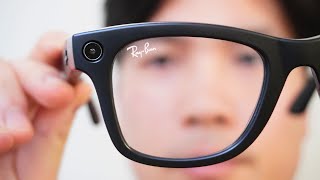
However, battery life and design aesthetics have drawn mixed reactions, making this device more compelling for early adopters than mainstream users. Meta Rayban display smart glasses. The Meta Ray-B band display smart glasses mark a significant step forward in mainstream wearable AI tech by blending classic Rayban style with a built-in transparent display and advanced AI functionality.
Priced around $799 approximately 250,000 Pakistani rupees including the meta neural band wrist controller. This pair delivers a 600x 600 pixel 20 degree field of view display inside the right lens, letting you view messages, maps, captions, and live translations without reaching for your phone. They include a 12 megapixel camera, openear speakers, and gesture control via the neural band.
While battery life runs about 6 hours per charge with additional casebased topups, users appreciate the seamless heads up notifications and voice-driven AI, but note that field of view limitations and early software maturity make this feel like a compelling first generation device rather than a fully polished AR experience. XRL 1 Pro. The XR Real 1 Pro delivers one of the most compelling augmented reality display experiences available today.
Striking a thoughtful balance between immersive visuals and wearable comfort. At around $649, it sits firmly in the premium segment. But you get a 57 degree field of view with Sony Micro OLED 1080p high displays at up to 120 hertz that can project a virtual screen up to roughly 130 to 191 in depending on viewing distance, making movies, games, and productivity apps feel larger than life.
The built-in Bose tuned speakers offer solid audio without headphones, and the new flat prism optics reduce edge blurriness, improving overall clarity. While the glasses require a connected device via USBC and lack true standalone AI processing, they excel as a portable display solution for work and entertainment. Some users note that battery and software comfort could improve, but for many early adopters, the One Pro feels like a meaningful step toward practical AI wear.
HTC Vive Eagle. The HTC Vive Eagle marks HTC's confident entry into the AI smart glasses segment, blending practical functionality with everyday wearable comfort. These glasses are powered by a Qualcomm Snapdragon AR1 Gen1 chipset with 4 GB RAM and 32 GB storage, and they rely on a 12 megapixel ultrawide camera for capturing photos and short videos via voice commands.
Their integrated AI assistant supports both Google Gemini and Open AI GPT, allowing real-time tasks such as translation in up to 13 languages, reminders, and searches without pulling out your phone. The Vive Eagle's openear stereo speakers and lightweight design under 49 g make them comfortable for long wear, while connectivity includes Wi-Fi 6E, Bluetooth 5. 3, and IP54 splash resistance.
The 235 milliamp hour battery delivers up to 36 hours of standby and about 4. 5 hours of continuous music playback with fast charging bringing 50% in around 10 minutes. Priced at roughly 15,600 new Taiwan dollars, approximately $520 in Taiwan with pre-orders offering 2 years of Vive AI Plus service.
The Eagle feels like a versatile choice for users who want voice ccentric AI assistance without an augmented display. Even Reality's G2. The Even Realities G.
Two smart glasses take a refreshingly different approach to AI wearables by offering a privacy forward headsup display that feels more like everyday eyewear than a tech gadget. At about $599, the G2 uses a dual layer microLEDD display with a significantly larger visual area than its predecessor, delivering crisp notifications, navigation, translation, and contextual overlays without cameras or external speakers, which some users appreciate for reducing digital distraction. Its lightweight 36 g frame and IP67 water dust resistance make them comfortable for prolonged wear and battery life of over 2 days plus a charging case that supports multiple top-ups adds practical convenience.
A standout is the new conversate AI feature which listens with permission and offers context follow-ups and summaries to support realorld conversations. The optional R1 smart ring enhances control and wellness tracking, but adds to the overall cost. While this privacycentric design and smooth everyday use are appealing, some early users note software and connectivity quirks that may require patience from early adopters.
Ino Air3 AR Plus. The Inmo Air3 AR Plus glasses represent one of the most talked about all-in-one augmented reality wearables of 2025 to 2026. Blending hands-free smart features with a vibrant 1080p Sony micro OLED wavegu display and a 36° field of view that's roughly like watching a large virtual screen up close.
They run on a capable Qualcomm Snapdragonbased platform with Android 14, support access to the Google Play ecosystem, and offer flexible interaction through a smart ring, touchpad, and voice gesture controls for intuitive use. Early pricing during the Kickstarter launch was around $800 to $900 with a full retail MSRP near $1,100. While the concept is compelling, early user feedback highlights mixed experiences with comfort.
Display brightness in bright conditions and short battery life, making them intriguing for tech enthusiasts, but potentially uneven for everyday wear. Mazu StarV. The MSU Starv series brings a refreshingly practical angle to [snorts] AI enabled AR glasses, blending lightweight comfort with smart features at an accessible price point.
Among the lineup, models like the StarV Snap offer a 12 megapixel ultrawide camera, Qualcomm Snapdragon AR1 processor, and AI tools including real-time translation, object recognition, and voice activated contextual assistance. All starting around 1,999 Chinese UN, about $280 with ergonomic design and long standby time. Its 183 milliamp hour battery supports reasonable daily use with recharges from the included case and integrated speakers plus noise reduction mics enhance hands-free interaction.
There are other variants like Air2 and Vue with larger AR displays and broader functionality. Though availability and global support vary which can affect the experience outside primary markets. Overall, StarVee glasses deliver compelling everyday AI features at a friendly price, though software and ecosystem maturity still lag flagship competitors.
Holiday AI smart glasses. The Holiday AI smart glasses bring an ambitious new take to wearable AI eyewear with an ultra lightweight retro inpired frame and a hidden digi window display that projects essential information discreetly into your field of view without bulky AR optics. Designed to pair with your smartphone via Bluetooth, these glasses offer realtime language translation in up to 40 languages, navigation prompts, voicetoext notes, meeting summaries, quick replies, and synchronized lyrics while keeping the main visual field clear.
At around $400 to $500 depending on model and early bird pricing, they include voice controls, touchpad frame input, and an optional smart ring for interface interaction. While the concept feels stylish and practical, some early user reports note that the display placement and software responsiveness can be less intuitive than expected, and a subscription model for advanced AI features may influence long-term value. Rokid Max 2.
The Rokit Max 2 [snorts] AR glasses offer an impressive introduction to augmented reality on a budget, combining solid visuals with practical everyday use. They project a virtual screen up to roughly 215 in at 1080p resolution per eye with a 50° field of view and a 120 Hz refresh rate, making movies, games, and productivity apps feel immersive without bulky hardware strapped to your head. Weighing around 75 g and featuring myopia adjustment from 0.
00 to minus 6. 00D, 00D. They are surprisingly comfortable for extended use and include directional audio and noise cancelling mics for hands-free interaction.
At full retail pricing around $530, the Max 2 delivers solid value, though its lack of advanced spatial tracking and occasional software quirks keep it from feeling completely polished. Overall, they're a compelling choice for first generation AR experiences that balance price and performance.