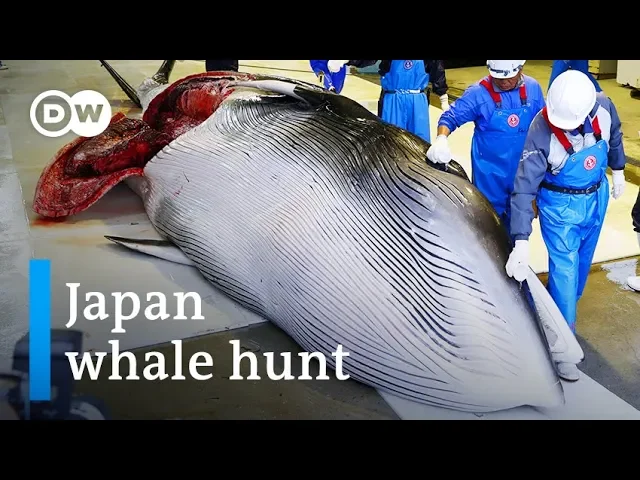
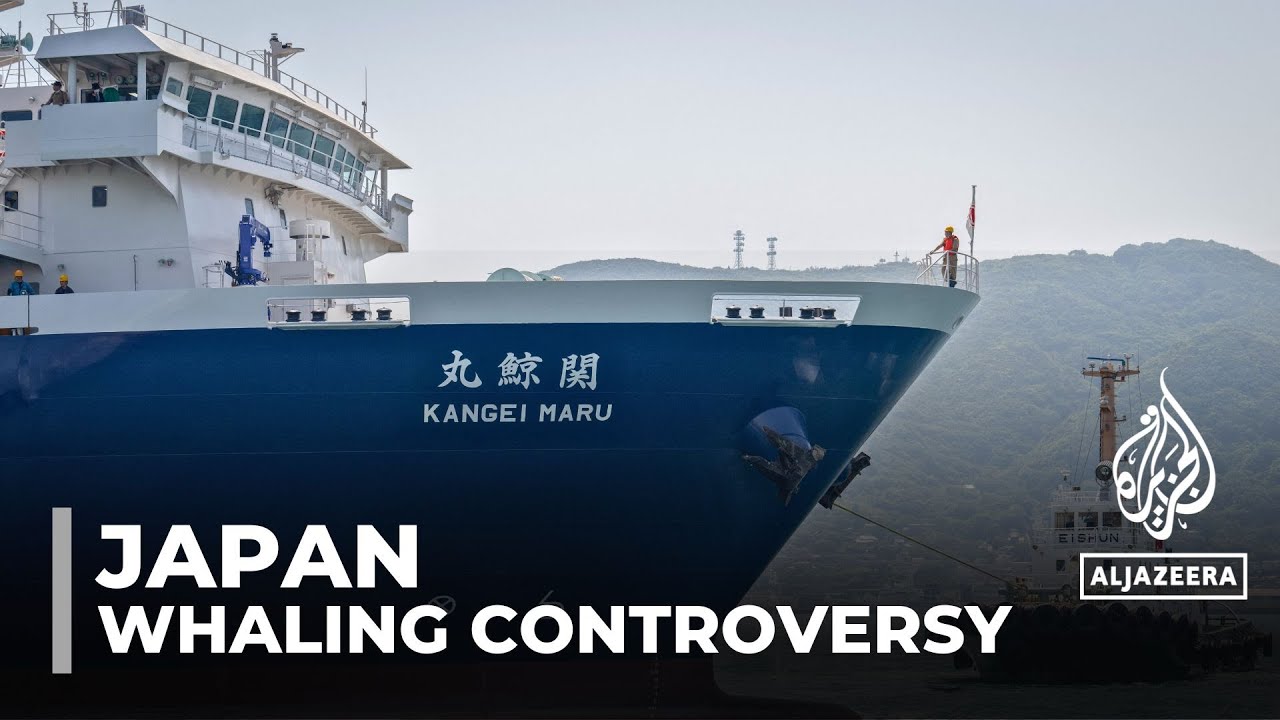
it was all hands on deck before setting sail on a hunt that's been three decades coming these are the men that will bring fresh local whales back to japan harpoons are ready and so are the crew bigger and fatter whales means better meat we'll transport it as fresh as possible so that old people can taste it and remember the old days communities like kushiro stand ready to cash in as japan defy's international outcry and pushes ahead with the practice to send off commercial whaling ships for the first time in 31 years is very emotional for
those of us who've been working for the resumption i'm happy from the bottom of my heart in recent years japan has got its fill of whale meat through scientific hunts but locals say it never produced enough many traditionalists in japan say whaling is more of culture than conservation though not everyone agrees i've never eaten whale before i don't know if it tastes good so i'm wondering if i should buy them or not i don't really need to eat whale at another major whaling town this time in prime minister shinzo abe's own constituency there were celebrations
as the crew set off in a bid to help revive japan's controversial love affair with whale meat let's bring in nicholas entrap from ocean care a marine conservation organization in vienna nicholas thank you for joining us we should mention that japan has still been wailing over the last few decades but officially for scientific purposes so what does today really change okay first of all the name of the wayland changed from scientific to commercial because actually the vessels they are using are the same vessels they have been using however there is a huge significant difference now
is japan has left the international whaling commission they've left the institution that is responsible to regulate whaling and that that has decided in 1982 whale species should no longer be hunted for commercial purposes japan hasn't got what it wanted over the years so it left this institution and is now wailing outside the international body that should regulate it so that's quite a devastating situation what has happened over the last 30 years did the whale population recover sufficiently in that time it's a very good question because some whale species and some whale populations did recover actually
but not those we are talking about in japan i give an example the most abundant whale species in those waters is the minky whale in the northwest pacific however science tells us that the minky whale is divided in certain populations and one population is highly endangered so when a whaler approaches a minky whale on the water and kills it it cannot differentiate is this an endangered whale or is this a non-endangered whale it's death and you finally will will find out about the genetics so very often you find endangered whales or whales from endangered populations
on the market and that's quite an appalling situation nicholas the japanese perspective here is that this is a long-running tradition a part of their culture can you understand that perspective no i don't because actually i think i think it's it's kind of a a pr rhetoric because the whaling we see today is kind of a product of the second world war when there was an a need in terms of of providing protein to the people but what we've seen over the past decades has been a significant decrease in interest in demand etc so what what
the the whaling um the the pro whalers are facing is a non-existing market and what will happen now is that the government will spend lots of money to create an artificial demand you know they will promote whale products in schools etc and i think that's really the wrong way to go what we would like to see is face out of that of that activity but nicholas why would the japanese government want to do that create an artificial market where there isn't one well it's it's very simple because they've told the people for 30 years that
this is what they want and this is you know and they gave it a kind of an artificial cultural identity which we believe doesn't really exist in that respect you know ask the young people that the the lungs the young citizens in japan you will not see much support for it and i think the big question is on one hand will the japanese public you know give a blind eye to whale products and i really hope so but the other thing is japan has left the international negotiation table and that's a really boring trend the
us left the paris agreement japan leaves the whaling commission what's next all right nicholas enter from ocean care in vienna thank you very much for your analysis okay i thank you for the invitation ciao