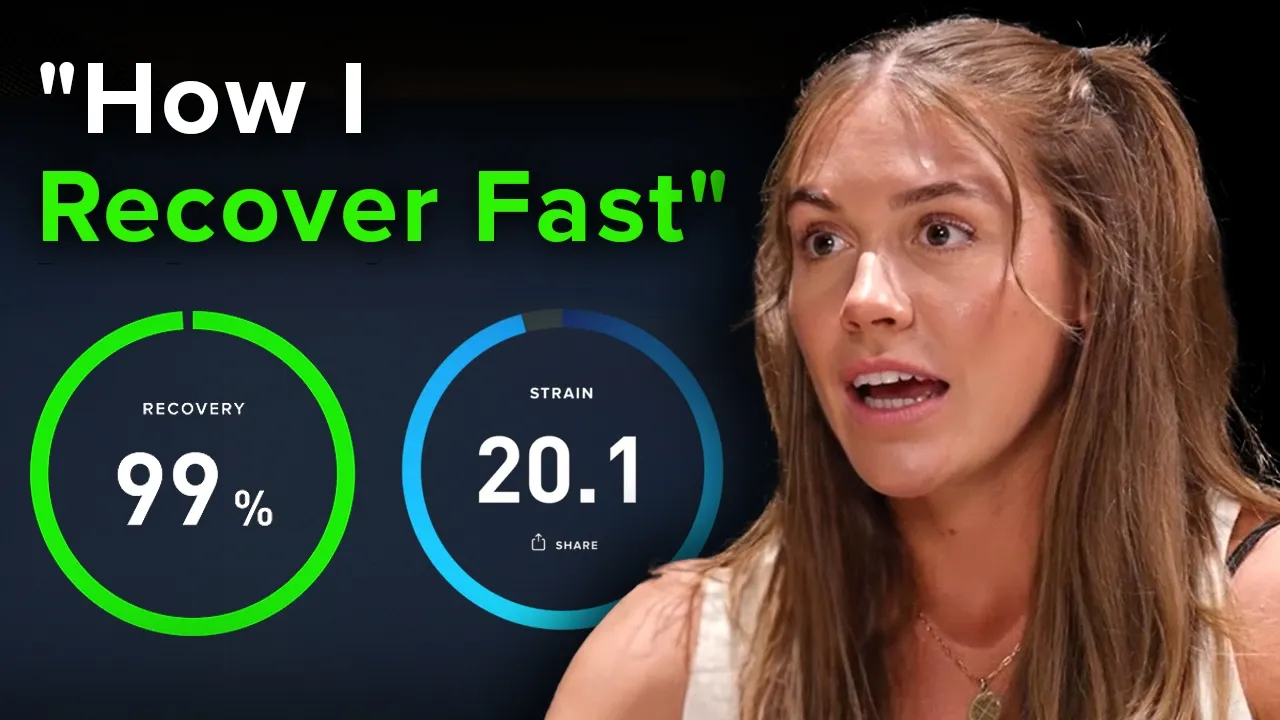
If I've said I'm going to do it, I'm going to do it. 3 weeks ago, I ran 106.9 miles and I was sassed, I did Hierox Worlds. The whole kind of recovery lifestyle is literally been a feature of your entire life. It's something I think about every day. I have never really understood the ins and outs properly of how I can recover so fast. I can see the data and the trends from my woop. Talk about how your life has kind of set you up to have the platform that you have today. I was swimming.
There was a lot of pressure on like young athletes and I had an eating disorder after I started swimming and I didn't understand the feelings of anxiety. I started posting on socials because I didn't have anyone to look up to. It was almost recovery for myself. It could be starting running or it could be running 100 miles. I want women to know that they're capable of more. I just want to support them in a way that you can be strong and still feminine. Lucy, I'm so excited. I'm actually so excited to be here. Well, I'm
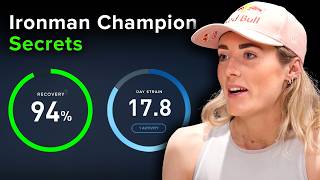
so excited. So excited to talk to you. I I think it's very rare to have someone who really practices what they preach. And it sounds so cliche, but you know, the whole kind of recovery lifestyle has literally been a feature of your entire life. Honestly, I've wanted to speak about it so much and it's it's very difficult to depict all on social media in a singular post. Um, that's why I love podcasts so much. I definitely seem to have a very rapid recovery and having seen your data >> is >> the amount of strain you
put on your body. I mean, you're averaging 18 strength a day >> and your ability to recover and rebound from that is >> so when you think about the load that you put on your body, okay, over the course of a day, you're training sometimes four hours a day. Mhm. >> So, in order to rebound in the way that you are, your other 20 hours of the day literally have to be perfection. I've always been the sporty kid. Like in high school, in primary school, university, I was the sporty kid. So, I used to swim
from a really young age. We kind of did all the sports, me and my sister, and we chose swimming, but it was competitive. So, nine times a week, four or five hours a day in the pool, land work, all of that. I did that till I was about 18. For a really long period of my life growing up, I was very much into fitness, health and fitness. So low resting heart rate. I understood it from a young age. We were very clued up. This wasn't the plan. I love what I do now, but it was
never I never thought, oh, this is going to be what I want to do. So now my life's more shared on social media. People like, "Oh, how do you recover so fast?" From 3 weeks ago, I ran 106.9 miles and I was s I did Hierox Worlds. And I have never really understood the ins and outs properly of how I can recover so fast. But I know genetically there is something there from when I've been 3 or 4 years old where I have been able to recover. But I'm also I'm obsessed with stats. I love
the data, but I actually use it. I think there's a slight difference with sometimes you can kind of look at it but then not use it. I actually use it. So yeah, the sleep and what I can work on stress levels, but that's the only thing like interestingly what you said before like yeah, 4 hours of training a day. I'm actually stressed a lot of the time which is which is crazy to me. Like I can kind of feel it or I think I'm stressed but I'm actually probably not. I deal with things relatively well,
really good with time management, everything like that. And I think that's just how I'm how I'm recovering. And I'm just like very happy. And I think that that's one of the things like I'm very happy. I'm very positive. So even though I'm training so hard and I can feel it, it's like, oh, but no, no, I'm I'm good. Like I'm okay. We have some interesting data around that actually. So you might actually just be while you're stressed and stress monitor might indicate that you're stressed and your strain is high. You're viewing what you're doing as
a challenge. So it has a very different kind of physiological impact than if you're in a state of threat. So we see that in the data. So I think you're probably in a state of challenge, you know, where you're excited about things that you're doing >> it. And I and I do and I can recognize like maybe the difference between challenge and actual stress. Like when there's stresses with the businesses or work, I can internally feel it sometimes. Like I used to have quite bad anxiety like growing up and I could feel the heart palpitations
like I get like the physical effects. So I kind of recognize those now and I know the difference between no this is manageable stress and this is something I can deal with and I can calm myself down and there's a difference to how it used to feel. But I think that is it. It's like oh it's a challenge and I I get my teeth stuck into that and that's what I enjoy. That's not my favorite thing to do. Do you feel like it's you know when you were a kid was it is it more of
like you know what I you just weren't able to control it so it felt so then that anxiety >> it was I didn't I didn't understand what it was I with swimming there was a lot of pressure on like young athletes and I had an eating disorder after I stopped swimming and there was a lot that went on and I didn't understand the feelings of anxiety we we didn't you don't learn about that like we're going back don't you know, 14 years ago, you don't really learn about mental health. So, I was like, what? Why
do I feel this way? Whereas now, there's so much more information and we can understand it better and I know how to control it. Like, I've had therapy in the past and you learn to understand how it affects your body in different ways. So, that is a huge difference. And I think that's why even talking about things like this on a podcast, it's like it is really helpful for people to be like, you can control it and you can learn it and understand it and why you feel the way you do and sit with it
and move past it in different ways. >> I love that. All right, we have a lot of data. I know you're a data girl. So, um, we're going to do a quick rapid fire where I'm going to ask you five questions. >> It's going to be either a yes or no or true or false. >> Okay. >> Okay. Your average day strain is nearly 40% higher than the average 28-year-old woman on Whoop. >> True. >> Yes. >> Me. Okay. >> Yep. >> This is fun cuz I don't know what you're about to say. >> I
know. So, our average is 9.9 for someone your age. Yours is 14.8. >> Love that for me. You can feel that. >> Yeah. That's a high strength. Okay. This is yes or no. Do you get more sleep than the average female Whoop user? >> I'm going to say no. >> Correct. Yeah, Lucy sleeps 6.9 hours and peer averages 7.3. That's not a bad thing though necessarily. >> It's been bad recently. >> Do you feel like it's >> it's been really bad recently? >> Bad in that you don't feel as good and that your recovery is
not as as good. >> Just I think the past month like I had my training was so intense for the 100 mileer. Didn't sleep the whole way through that and then went into high rocks worlds. It's just my sleep has just been but I'm really aware of it and I've been trying to make it better. So I I kind of would guess that's not as >> well. You know what's interesting? I don't know if it's a bad thing. I mean if you feel like your training isn't as good or you're not you don't feel as
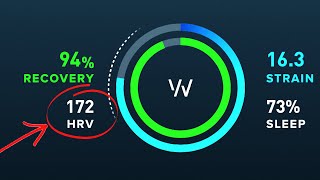
good objectively your sleep efficiency is good. All of your data is trending in a better direction and your sleep consistency is above the average which drives the quality. So, while you're sleeping slightly less, your sleep is really efficient. >> Yeah. >> And looks like it's good sleep. >> I do. I do feel that. I'm getting into it more. But like like last night, I had the best night's sleep and everything was kind of back where it is supposed to be. Like HRV 120, resting heart rate 38. And I woke up and I thought, I'm back.
>> Like I just there my stats that I know I'm >> really optimal and that's good for me. And I slept about seven and a half hours. >> Okay. So that's probably your sweet spot. >> Yeah. Mine's seven hours and 24 minutes to be exact. I used to I know I used to be seven hours and 42 minutes for a long time and then I get more efficient. Whenever my sleep consistency increases like I my sleep duration decreases just a little bit. Yeah. Okay. True or false? You woke up with 93% recovery on the first
day of your March Hyrox competition in Washington DC. >> False. >> True. >> Was it? >> Yes. >> Oh, look at me. Yep. >> Brilliant. >> I know. And that was uh verified on 329. >> I love that. Okay. >> Okay. Yes or no? Have you logged more than one workout per day on average since February? >> Ooh, yes. >> Yes. 1.5 a day, actually. >> Oh, goodness me. Yeah, that's like that's so legit. Yeah. >> Yeah. That's amazing. True or false? Your V2 max of 58 puts you in the top 1% of your age
and gender group. >> True. Yes. 99th percentile for women aged 28. That's a really good V2 max. Have you done a V2 max test? I have. All right. So, let's talk a little bit about your resting heart HRV. You are able to maintain those numbers and you obviously have a a really intense training load. You know, the volume and intense that you're putting your body is like pretty is consistently pretty high. So, what are the some of the things that you do to kind of keep your HRV and resting heart rate kind of going in
the same direction? Because I mean a lot of folks training in the way that you would I think would would get overloaded. >> Yeah. >> How do you manage that? >> It's really interesting and I honestly get asked it all the time. My mom, dad, and my sister, we all have a Whoop group together. My dad's resting heart rate is 36. My sister's 39, my mom's is 40. Mine's like 38. I think genetically there's we're a very fit family. I do think genetically there's there's something there. And the fact I've been in sport my whole
life and I'm a pretty good I am a pretty good sleeper. Like the efficiency as you said is there. And there's loads of things that I do to make sure I have good sleep. No phone before bed. I read. I get off my phone. I put candles on. Like there's things that are specific to me because I know my resting heart rate will go through the roof if I don't get a good sleep or I'm up in the night or if I'm too hot for example. There's small things that you can do that'll help that
for me to sleep and just be really restful. But then also my general fitness level. I don't just do anorobic work. I don't just do aerobic work. I'm in zone one to zone 5 pretty much every day. There's a variety because I do train twice a day a lot of the time. Zone two run in the morning. intense high rock session at night. Same with HRV. I don't just sit in one category. I make sure I'm across the board aerobically. And I think that's one of the biggest things that has helped. And I can see
the data and the trends from my Whoop from doing that. When I just used to focus on I kind of did a little bit of bodybuilding for a while really poor. Like it it just what my HV was I think it was like 50 50 56. This morning it was 120. I train a lot of different variables and I know a lot of people do, but I do it consistently and we can see that from Feb. There's like 1.5 workouts or something. >> So, I think the fact that I'm doing so much, but my body's
become very adaptable to that, like that's my new norm. That's Lucy Davis's baseline. >> So, I don't feel like I'm overreaching all the time. Some people would look at that and be like, "Oh god, that that's a lot of training." It's why I say don't compare to other people online. It's like really important. I've been in sports since I was about 3 years old. And I just think my body as I've started running more, as I've started doing high rocks and all these things, it adapts every single week to what I'm doing. But there's so
much variety in my training, I can kind of understand why it's doing that. When you want to get fitter, how do you change up your training? >> Cuz there we'd expect to see a suppression in your HRV and a little bit of increase in your resting heart rate as you're really pushing, you know, your thresholds. So, interestingly for me, I have to add in more zone two, zone one, like bike work, like aerobic just build, build build, and then the spikes of really intense fast engine sprint work as in like polar opposites. >> My running
heart rate is very, very low. It just naturally is. So, I have to put myself into a really uncomfortable position to spike my heart rate anorobically, but then also jump on the bike when my heart rate is literally 80. And it's getting those differences, but I was sitting on the bike for 2 hours and then the sprints could be 20 minutes. So, it's completely different styles of training, but that's what we've realized over the past couple of months. That is how I'm getting fitter. And it's just consistently doing it. It's not just doing it for
a month. I have to add it in and be consistent with it >> in order to see the improvements. >> To see the improvements. Um, and also taking rest. I used to not be very good at actually taking rest. I used to really struggle with it. I think that's quite normal for a female athlete. You know, there's a lot of your body dysmorphia and things like that. And it's it's quite it's quite difficult. I know when my body needs to rest. Like I just took the whole weekend off and it was glorious. Just walked around
because I needed it after High Rocks. I could have jumped back in for sure, but I've just ran 100 miles. I was like, I need to not do that, Lucy. And it's learning yourself. I know it was awful. It's learning yourself and your body. How is that broken up the 100 miles? So it was 4.2 miles every hour on the hour and you just keep going until you can't go anymore. So I did 106.9. Yeah. 3 weeks ago. But then I trained 3 days later and I don't know how. I actually don't know how. It
was incredible. So is your training typically harder than racing? because some of your data would suggest that that's the case >> for sure and that's purposeful. We make the high rock sessions like with my coach horrific like sometimes you just can't fathom it. Same as the running things that are so uncomfortable I think is important. So when you do get to competition it's not a complete shock. Still pretty pretty really hard and tough but it's not a complete shock. My body's been there. My heart rate's been there. I know how the the lactate feels. So,
it's putting myself into an uncomfortable environment before. >> I mean, that's kind of like the number one principle when you think about like you want to overload your training sessions so the game feels easier, you know? Yeah. I love it. Your whoop age is >> I love >> you're like less than like you're 18 I think, right? So, less than that probably >> 18 and I'm 28. So, I thought I really wanted it to be when that I love that feature. I think that's just so fun. I'm quite competitive. >> Yeah. Yeah. >> And I
think I was speaking to Sam and he was like, "I think you're at the lowest." And I was like, "If I wasn't, I would have absolutely put myself in that position." Yeah. Below below 18. >> Yeah. That's that's crazy. Um, and just for folks listening, this is the our personalized metric that reflects basically Lucy's uh body's physiological age based on her kind of sleep and activity and fitness data. So, it's uh really impressive. your pace of aging as you can imagine is um yeah 0.5 times slower. >> I'm so happy >> on average. Yeah. >>
Like thank goodness. >> Yeah. And that's a dynamic measure indicating how your whoop age is obviously changing over time. So it gives you kind of a nice little >> It is a really nice metric. >> Yeah. Yeah. Super fun. In terms of other data, your six months average for sleep consistency is 71% which is better. I I know we do a lot of research. Uh my team does a lot of research. What we see is like super consistency is one of the biggest predictors of both physiological and psychological functioning and resilience. Yours is 71%. Our
average member I think is 65%. I think the travel like going back and forth and jet lag and you know just being generally a busy person I sometimes find it hard to switch off >> is that I'm led in bed and it's just my brain's working. I actually had to like recently put a journal by my bed and just like scribble and it's really helped me sleep. I put a journal because your brain is working out and I started sleeping a little bit better. So I think it used to be 85. It was my sleep
was incredible and then I went through like quite a lot last year and my head just fell off and I'm getting back. I just had so much going on like so much change back and forth >> travel which usually I'm I'm okay with but it is it's jet lag back and forth racing. I've done backto-back races since November intense. >> Yeah. There's a lot of good evidence just like this it's this concept called scheduling your worries you know and you just couple hours before bed an hour before bed you just write down all your worries.
>> That's what it is. And then you can just like dream and just sleep. >> Yeah, I think it's quite smart. >> Getting into that restful state. I mean, it's one thing to be like, I want to improve my sleep consistency is another thing. Actually falling asleep sometimes not easy, but it sounds like you're doing everything that you can. Steps per day. I mean, this is insane. Your six month six month average is 18,78 steps. I'll tell you. >> Yeah. This is wild. My daughter was at >> crazy camp last week. It's a summer leadership
experience at West Point. It's it's like a high rocks like for you know 7 days where they're you know just like so much training. Yeah. And her her average steps were 22,000 just like last week. Yeah. Which is crazy. But 18,000 steps like your six months average. That is kind of mind-blowing to me. >> That actually is to me as well cuz I I don't always look at steps. I kind of focus on like the performance of the training. But I'm always on my feet always. Like I'm just always moving around doing different things whether
it is travel or training or >> I'm I'm impressed by that. >> And heart rate zones. you you talked that you spend kind of time in all of the zones. Um your 6 months average is 513 minutes and this is reducing your Whoop age by 2.9 years. So that's like a pretty that's a big one. >> I'm going to live forever. >> You're you're literally going to live forever forever. >> I know time in in zones four to five. Um your 30-day average is about 18 minutes. That's a lot. I It's hard. It's hard for
me to get into like those upper zones. I can get in zone four, but it's hard to get in zone five. I do struggle actually to get into zone five as in that's >> I could be there for maybe 30 seconds. I know it does improve my fitness but pushing to that like I have to be on the track or short intervals sprints. >> I cannot get there on a bike. >> Yeah. >> Can you get there on a bike? >> No. Oh zone two on a bike. >> All right. That makes me feel better.
You have to like run. Yeah. >> You have to do something really >> like super intense. Yeah. I've been doing like the the 20 seconds on, 10 seconds off, and just repeating that for as many times as I can. And that will get me into to zone >> five. Yeah. For like the first >> Yeah. for 10 seconds. >> 12 reps. Yeah. But it, you know, it kind of adds up, but it not Yeah. Probably not enough. Yeah. It's an ongoing challenge for me. It's like super annoying. I'm like, strength training time, you're logging some
serious minutes and it's decreasing your age by 1.6 years. Talk to me about strength training. What's your relationship with it? So the strength training one I used to very much just strength train like solely just went to the gym. When I quit swimming it was just gym like bodybuilding style like arm day, leg day. I was like that kind of person. >> Were you competing as a bodybuilder? No. And just kind of >> Yeah. It's not something that interests me too much. I kind of think I think it's great if people do it but I
think when people step on stage they look incredible but they're least healthiest. I've never, not that I don't agree with it, it's just something I wouldn't I don't think psychologically I think that would be the best for me >> because you have to really cut >> you have to restrict things pretty much and I kind of promote the opposite for women, you know, hormonally how you feel, how you perform, you're fueling for performance. >> So I did strength train for a while. I got very strong, loved it. And then it was during co that I
actually started running more. >> I was like, "Oh, I like this running thing. This is great." And then I founded Hy Rocks. So they're the very like hybrid approach to how I train. I love doing iron man because I have a swimming background and all these different modalities. It's like my favorite thing to do. So the strength training that I do now is very much based to facilitate the high rocks training. So I'll do heavy squats for the sled or I'll do specific push press for walls. So it always has like a purpose around it.
Okay. But it's very much split running, hierox kind of like probably 60 70% running and then the rest is high rocks training which is still strength in a way but it's more functional fitness. >> Hierrox I think would be a good fit for me. >> I'm definitely like a runner. >> I just love running. >> You love it so much. I think that's why I do enjoy it. Has the running element. It's the same format so you can improve on it and I I I enjoy that. It's like doing 10k. you can improve on your
10k time because it's the distance is what it is. So, it doesn't change. The course changes a little bit. So, sometimes like the runs are shorter or longer, but the stations are the same and it's pretty much okay. >> You know, consistent throughout, which I love. >> So, we talked a little bit about your recovery being just really stable. Um, and I I think we were maybe chatting off camera about uh just your recovery modalities, you know, and kind of how you think about your downtime. you know, you have a lot of people who follow
you, who look up to you, who aspire to be like you, and it's just very clear that you're kind of living and breathing the things that you are appreciating. And I I find that really refreshing. Um, and it's really clear in your data. One of the things that you talk about a lot is journaling. You know, what other type of kind of recovery modalities like really ground you and bring you peace and allow you to rebound in the way that you do from your training? And I think that's also really important to even like talk
about because it isn't always like just sleep or nutrition or sauna cold plunge. Like there's things that I do like as an athlete that aren't always accessible to everyone. I had realized that as well. I pick up on a few things. One of the things that like definitely helped me like I recently went through like having like loads of therapy and it was incredible. It just made me feel so relaxed and so calm and that's where I started journaling more. Like I've tried meditation. and it wasn't the best for me. Like I'm quite busy and
I just couldn't I just personally just couldn't grasp it. So journaling, writing things down every single morning. I'd love to know how long I've done it for like the whoop journal when it pops up every morning. I've probably done that since like like 3 years and it's I I love doing that. It's it's the trends. It's the consistency. Okay. One of the things that I do that isn't necessarily I think it does help me recover cuz it lowers my stress like FaceTiming my mom, FaceTiming my sister, speaking to my friends, going out on a little
walk, listening to a podcast, listening to my favorite songs, dancing around as I'm getting ready. I'm a very very smiley person. And I just even think sometimes just like smiling and I don't let myself have like bad days. I recognize when I have like a bad moment and it could be really horrific and there's loads going on and I really recognize it now and I'm like okay we're just going to feel that out you know 10 minutes 20 30 minutes sit with it understand it and move past it Lucy and I have a lot of
downward gratitude I could be very happy just sitting there with a coffee and I think about other things that have happened or experiences and I just it really grounds me so my stress just drops because then when you think about the bigger picture, you're like, well, the worst case scenario, is it even that bad? Like, you're going to be absolutely fine. So, it is it's the sleep and everything. And but for me, share, it's being happy, being optimistic, being smiley, therapy, journaling, the things that just work really well for me. And it's you just got
to take a bit of time to find those. Like I have an album on my phone called the like the happy album. Sometimes I just go on that, scroll through it, and I'm like, "Wow." like in it could be like me and my sister or me and my mates or a picture of I don't know like this morning I was running around Boston and I was like oh my goodness this is so nice and it just it grounds me and I I think I need that as like quite a busy I'm like organized chaos in
all the best ways. So it helps. >> I love that. Yeah. I think there's actually data uh that when you hear your mother's voice it lowers cortisol. So there's something really true and honestly I feel that >> I know I know I you know some folks might not have great relationship with their mom it might do the opposite but I think for a lot of folks u yeah hearing mom's voice is going to find that person feel could be a friend be anyone >> some like some of my best friends I speak to them and
it's like oh gosh and like me being here in America on my own it's important that I am doing that >> cuz sometimes I get homesick and it's like oh I'll FaceTime someone and it's nice feels to regain that connection. >> Mhm. >> You mentioned journaling, too. I I'm the same. I do I do think for athletes, for high-end elite athletes. Yeah, meditation can be it can be hard to kind of drop into a state where you feel like you're really getting something out of meditation. >> Yeah, I hear that. I hear that a lot.
>> Yeah. And I did I did I really tried with it. I was like, I'm just going to try something else because it's 5 minutes and my brain would just go into overdrive and I tried and tried and tried and I thought, you know what, I'll just journal instead and that works a treat. >> So, it's like I may as well do what works rather than trying to force something that's clearly just not >> I'm just not as suited to that style. >> I'm the journaling is magical for me. >> Yeah. >> I think it's
one of my best ideas. >> I think too I don't love like sitting. >> Yeah. you know, so I I do a lot of mindful walking which has been >> has been really good. >> That is great. You're so creative at the optic flow when you're walking. >> Yeah. Just the landscape and the panoramic vision, you know, lowers cortisol and, you know, especially if like you can be out in nature just in the, >> you know, along the Charles, you know, in Boston. Yeah, that's great. I love it. You talked about gratitude as well. That's
another, I think, big one. And you said downward gratitude. I love that. >> Yeah. So more of just like being present and can you say a bit more about that? >> Yeah, I I say down with gratitude. I um two years ago I did Everest base camp so I took a trip to the Himalayas. It was the people that I met on that track like the women and the children. >> The happiest people I ever met in my life and they don't have a lot. I got like the one of the mountains tattooed here so
I do remember every day >> of like they're so happy and they're so grateful for what they have and meeting when me and my sister went and we give all the kids like pencils and sweets. So, if I'm back home and the Wi-Fi is not working or I'm stressed, I'm like, "Whoa, Lucy, stop immediately." And it's I cut like down with gratitude because I am I'm grateful for everything that I have. And I do think about that trip all the time. And I'm like, "No, no, let's not. I'm not we're not complaining." Like, I'm like,
"Whatever you're going through, you'll get through it." Like those people that I met were so happy. I think that's why I'm always baseline very happy because I just I have a way now. It's taken ages to kind of get to this like stage, but like pulling myself to oh, you're good. Like remember just remember all the things like pull it back. So yeah, I call it like down with gratitude. >> I love it. I think you're anchoring you know yourself too in like actions that you you do you know like it is easy for I
think for all of us to like you know feel bad for ourselves for you know or like kind of wallow in self-pity. And I love what you said that you let yourself go there for a second. >> Yeah. And then you kind of pull yourself back and and you also said you get curious and that's another I think amazing strategy for that is really helps with positive psychological functioning you know is getting curious about how you're feeling you know good or bad or indifferent like being less judgmental >> just get curious try to understand it
>> get inside the journal a little bit and then end with gratitude and that that's what it is it's >> it's not I am sad and I get upset and I get frustrated and I don't ignore the feelings I I let them in. I cry, whatever. I sit with them. I let the stress in. But I now understand it. And I don't just push it aside. I really try and understand and feel the way that I do. And it's helped like massively. But again, I'm saying all this, it's like I'm probably like the best mentally
I've been in a really long time. So this is like a perfect like podcasting like I can really reflect >> Yeah. >> on that. So when I'm speaking I'm like, "Oh, I've actually come pretty far." So that's nice. >> Amazing. you you spoke a little bit about therapy, you know, was was it more on kind of the performance side or just, you know, just generally? Like >> just generally, people always joke and they say, "Oh, you're the busiest person we've ever met." And I'm like, "Yeah, I am." Like, I've got like businesses all around and
I'm a full-time athlete now and a content creator and I prioritize friends and family so much and I I am busy. So it was more so speaking to like a third party person where I can just I'm very like protective of like my friends and family and I want to be strong all the time and it got to the stage where I was like oh I need to just be a bit vulnerable with someone else who doesn't necessarily know me and I feel I can do that so I can be there for other people and
it was just it's great. I I I think it's been fantastic for me. I love that a lot of folks are hesitant, you know, to seek therapy, but I think that's a great framework that might resonate with with folks because I think sometimes, yeah, like feeling like you're burdening, you know, a loved one or you're kind of going back to them with the same problem over and over again, you know, having someone neutral. >> It is it was that powerful. >> It has been powerful for me. >> Well, thanks for sharing that. I guess like
from a psychological standpoint like how do you think about like you're going into the competition and you know these are really grueling events physically mentally emotionally you know how do you kind of think about preparing for that like do you have something obviously there's the training right but there's also the the psychological piece too >> I can pitch myself doing the race and it's not only I pitch myself doing it I pitch myself finishing always and And I do it like a week out. And it's something that I did when I swam. Even last man
standing. It had no end point. But I still envision myself going over the line at whatever mileage I'd hit. High rocks. I really didn't think I'd even get to compete in Chicago cuz I thought I'd be so banged up after the ultra. And as soon as I knew I was like, "No, no, you're fit enough to compete." I just I didn't picture the just the race. It was finishing. So it's like I already know I'm going to finish. And it doesn't always look that clear, but I know I'm going to finish and it relaxes me.
I'm like, >> so you don't care about the details? >> Not massively. >> That's great. >> I I just I know I'm going to finish these things. Like I'm very much if I've said I'm going to do it, I'm going to do it. Like I just I I don't quit. I think it's I try not to anyway. It's like very it sits within me. So when I'm almost like envisioning these races, I don't know how the race is exactly going to go. I've trained for it. I'm going to perform. >> You have confidence. I've got
confidence in my training. >> It's knowing that I'm going to go over the line. Like, and every time I envision it, I'm always smiling and it's like my favorite thing. So, I think it just calms me down before I compete. It gives me a bit of like a bit of confidence boost before going into it. And I think that's why I always like I wake up pretty recovered. I sleep okay before events. >> It's great. >> Yeah. Which is a Yeah. Pretty unusual. >> It is. Yeah. Yeah, I mean most elite athletes really struggle, you
know, the the day or two even before a competition, you know, with anxiety and >> performance anxiety. But yeah, it sounds like I mean clearly I think this is the one of one of the reasons why you can repeat events with such limited time in between competitive events because you're managing >> again you know these others. >> Yeah. Yeah. It's wonderful. What would you say like when you when you kind of zoom out how many how many high rocks competitions have you done so far? funnily enough, not like loads and loads and loads. I've done
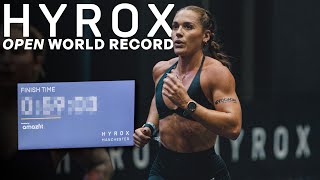
five solos. >> Okay. >> And maybe about six or seven doubles with my sister, but I did my first solos last November. >> Okay. >> Just really wanted to give it a go. Got a world record, which was so rogue. So, it was actually it was actually hiling so much and it got broken since, but yeah, my first sol got a world record and then it was my fourth one just gone. Can you walk through what the what the events what the events were in the one that you got the world record? >> Yeah. So,
high rocks I did the open weight. I now do pro, but the first one I was like, I'm just going to give it a go. It's going to be exciting. >> Okay. Same like format. You have 1k runs between eight different stations. >> So, you've got ski, sled push, sled pull, burpee, broad jumps, row, farmers, sandbag lunges, war balls. So they are your stations with a K run in between >> sandbag over the shoulders. >> Over the shoulders >> rested on this shoulders. >> How much how much weight is that? >> 20 kg. I don't
know what it is in pounds. I Yeah, but same format. So you know what you're going into. So that's slight difference with I guess like CrossFit which changes up all the time. Hierrox is very specific. So you can kind of train your weaknesses as well as your strengths which I love. I love that. Yeah. It's uh it's humbling >> with Hy Rocks. >> What has been your favorite event so far and why? >> I think that that first >> one pretty epic. >> It was so epic. It was it was hilarious. It was my first
one. >> I just got back from Texas. Like everyone's there. It was also on my birthday. So I competed on my birthday. What's your birthday? >> At 10th November. >> Oh, okay. So you're a Scorpio. >> Scorpio. That a girl. I have all my best friends are Scorpios. >> Yeah, it's like I am a Scorpio as well. Like I can feel that. Um, yeah, that was my favorite. And because it was in Manchester, it was like home crowd for me. So, like my parents were there, my sister was there. Pretty special. >> Very cool. And
people descend from all over the world. >> Yeah. Yeah. It's a complete worldwide. >> How many people are in these events? >> So, that Manchester one had 12,000. It was so busy. >> Yeah. It was so >> That's unreal. >> It's It's kind of exploded, but it's like just exploding in the States. >> That must have been >> Yeah. >> Amazing. >> Incredible. It's It's the best. I feel like people listening will have definitely either competed or want to compete, but it's like gold was trying to even get tickets now. It's just which is why
they're doing more events because it is so chaotic. It's crazy to see. It's like Google search I think it's increased like over the six months like 287%. Like just the growth for Hierrox is just like >> what is Hyrox? How do I do >> Exactly. No, I mean I have myself like looked into it. I was like thinking about doing the one in Houston and like mid March, but I couldn't do it because of my travel schedule. Not to mention I had not, you know, had I mean I I train and you know but I
it would have been a disaster. So thankfully there were no spots. So >> we'll definitely do one. >> I get the bug for it. You do one. It's like ah >> it's great. I think it's you've got like the elites of the elites then you've got >> complete beginners. It's so wonderful that there's now a sport >> that's in like completely inclusive. Like I could do one with like my dad if I wanted to and that's so special. Or I could go for Elite 15s with Jake. The difference is is great and I think that's
why they're also doing so well. I love that so much. Lucy, you are super passionate about women's health. You know, when you think about your own, you know, kind of body awareness and body image issues that you might have had in the past, like you you mentioned you had an eating disorder and just talk about how your life has kind of set you up to have the platform that you have today. >> Okay. The way to describe myself as a person is what you see is what you get. Like I'm very authentically me and I
think I always have been. So I started posting on socials because I had the eating disorder. I didn't share but it it was almost recovery for myself. Like I prop up my phone and I'd look at like putting weight back on and like I was bulimic for about 6 years after I quit swimming. Very common with female athletes. you come out of something so intense where you're weighed and you're penalized and you're judged and my body fats were done. It really happens to a lot of athletes and I kind of started posting on socials because
I didn't have anyone to look up to. I didn't expect this to happen but I think I'm very passionate about I want women to know that they're capable of more and it looks different for everyone. It could be starting running or it could be running 100 miles or getting into high rocks or the gym. I don't care what it is. I just want to support them in a way that you can be strong and still feminine. Like I have all like there's been loads of people like, "Oh, like you're very freakish. You look this." I'm
like, "Yeah, I'm okay about it." And I want to support other girls to feel the way that I do because training and performance and getting over an eating disorder and having a better relationship with food changed my life. So, if I can change other people's and hopefully be that role model. Now, it's something I think about every day. I'm like, "Okay, what can I do today to like help women, you know, give the correct information, educate them, but do it in a way that's like positive and smiley and be vulnerable and honestly, it's like innately
just who I am." And like I just found I found that calling. The other question I wanted to ask you like just thinking about like you know we talked a little bit about hormonal shifts and like um you know bodybuilding for example like how you know you'll often lose your period right how do you you know with all the training that you're doing you know you are maintaining a healthy cycle like that is not easy right you know just talk a little bit how you how you think about your you know what you eat during
a day and like you know you're obviously you know balancing your training really effectively and you're getting your sleep and we talked about the recovery modalities you know Maybe talk a little bit about your fueling strategies cuz that's got to play a huge role. >> It's it's absolutely huge for females like hormonally like your fats, your carbs, your proteins, like making sure you're getting a very broad diet and a variety. And I know when I do fuel correctly, I do perform better. And that's how I associate it now cuz I struggled for so long with
food. And it was a real I don't want to eat that cuz I feel a certain way. >> And I couldn't perform. And my period was completely messed up. it was really inconsistent. Whereas now I have a really regular cycle as actually one thing I love about the new Whoop is I generally like the cycle tracker I say to everyone you should be tracking because you perform differently when you're on your period when you're not and things like that. I eat a lot like I do have over like 3,000 calories a day and it's just
because of how much I'm training and I know what makes me feel good. to like nutritionally dense food makes me feel good. And it's not that I don't have like chocolate and ice cream and things like that or like red wine or I do. It's just in moderation. I don't have that every single day because it doesn't make me feel great and I can't perform the best of it. Um, interestingly with my cycle, this is the first time this has happened. So I did last man standing and I came my period like a week later
because I think my body was really like really bad after last man standing. >> Yeah. >> And then I was off for 2 weeks and I came on the morning of Hierrox Worlds. So I had like three periods within like a month. >> Wow. >> Or like in within 5 weeks. >> Wow. >> Doesn't usually happen but that was my body telling me signal. >> So slow down a bit Lucy. Like it's got a lot going on. When I woke up the morning of High Rocks Worlds and I came on, I thought >> that's not
I should it was I was just annoying. It's a bit annoying, >> but I'm very in tune with my cycle. I know the phases. I know how I feel. And that is very very helpful for girls to know. I think you should I think you absolutely should know how you feel because if I'm in PMS, I'm moody >> and I need to know that. So, I'm not taking anyone else when I'm in PMS. Don't don't be offended by what I say. >> And I know I'm more hungry. So, I'll eat more. >> Yeah. >> And
I respect my body for for what it wants. And I think girls definitely need like that sort of education with >> their cycles. For sure. Makes sense. >> What kind of um I guess feedback and you know, what are some of the direct messages you get from women who follow you? >> There's there's something recently that's really like blown up as like a viral like trend. Um, and there's like two different things. It says Lucy Davis wouldn't quit and the Lucy Davis effect. >> I love that. >> And it's blown up. It's gone viral. Those
people at Hierrocks, a girl got Lucy Davis wouldn't quit tattooed on her and I was like, "Wow, that is >> wow. That's intense. >> That's intense." I was like, "Oh my goodness." It's just a lot of people just say like the inspiration I and the meshing the way that I approach things is just is very authentic. I'm not lying to anyone. It's I am who I am and I show you can go through really tough times and you can come out the other side or you can challenge yourself as a woman and you can be
strong and like I'm very pro men and pro women like I'm completely both of them but it is proving to girls that you know you can be tough and vulnerable at the same time and you can care and you can do this as the they're the kind of meshes that I get and like the inspiration. Yeah, it's still shocking. >> WWLD bracelets. What would Lucy do? >> But that's that's the thing. People have like um you get them like printed on you can put them on Whoops and things like that. Loose Davis wouldn't quit like
shop started selling them and I was like this is blowing right like it makes I still can't like on my run this morning there was like three girls who came up to me and I was like like it just it yeah it means a lot. I'm still not used to it. I don't think you ever get used to that. Um but it's >> but just knowing that you're like impacting people you know I mean that's like that's so special. I know at Whoop, we're really honored to to have you be a part of our >>
honor of it. It is. It's It's incredible. >> We're very lucky. >> Oh, thank you. >> Thank you.







![[EXCLUSIVE] 2-Time US Open Champion Aryna Sabalenka: Habits & Mindset That Helped Her Win](https://img.youtube.com/vi/oXpsJF2E77Y/mqdefault.jpg)