No, I’m not supposed to say “got it. ” Well, um, today we’re going to discuss and consider the arguments in Plato’s dialogue called "Gorgias. " I have to admit, it’s been 15 or 20 years since I re-read this, and, uh, one of the nice things about revisiting the Platonic dialogues is that once you become familiar with them, they become something like old friends, or perhaps music that you know and love but haven't heard in a bit.
Like the Beethoven symphonies—once you get to know them, they’re deeply consoling because they gesture at something universal and perfect. Now, "Gorgias" begins with the phrase “war” in battle. So what it is, is a series of verbal contests, like the, uh, the battle between Achilles and Hector.
All right, these are two titans of intellectual verbal warfare, and, uh, Socrates is going to take on all comers. A couple of things you need to know: Gorgias is probably the greatest of the Sophists, and what we have here, Paulus and Callicles, are two students of his—one early in the study of rhetoric and sophistry, and the second, Callicles, well advanced to the point where he takes positions more radical even than Gorgias himself, and that’s not easy to do. Gorgias is often described as the first nihilist, but you never really know how much of what he says to take seriously, um, and how much of it is just for show.
Gorgias is famous for his "Encomium on Helen," which is a speech of praise on behalf of Helen of Troy, who is the Greek image of the wicked woman that causes thousands of deaths in the destruction of an entire city. Gorgias says, “I can get her off the hook and give you a good speech in defense of her. ” His point is not that Helen is guilty or even innocent, but rather that he can make the guilty appear innocent and vice versa; he can make the weaker argument appear the stronger.
And if he can do that for Helen of Troy, he can do that for anybody. So, rhetoric is persuasive, and it creates persuasion, but it does not create conviction or knowledge. So you sway people on the basis of their emotions or on their inability to be critical of the rhetoric they hear—not on the basis of knowledge, which, of course, for Socrates and Plato is the same thing as virtue.
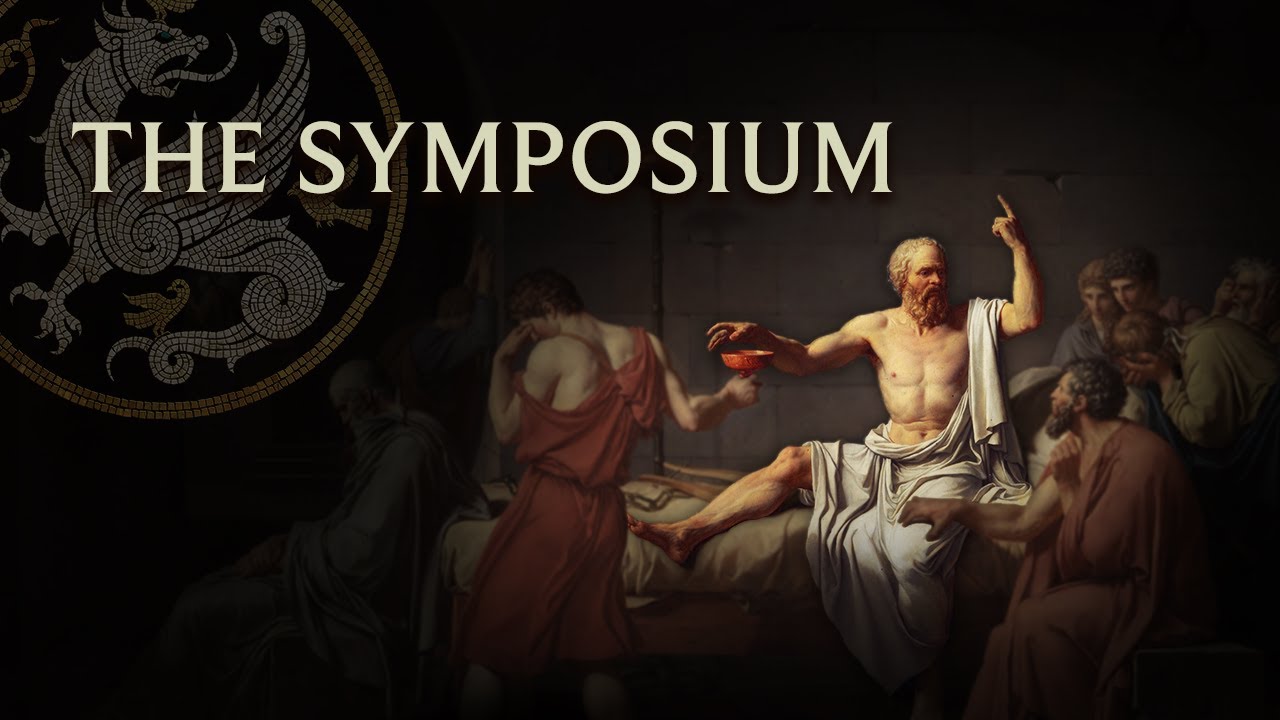
All right, Socrates and his friend—Socrates’ friends or his students—his friend Chaerephon arrives late, and in this respect, it’s a bit like the beginning of the "Symposium. " Socrates and a friend, uh, arrive late to the banquet. Uh, this dialogue, "Gorgias," on the other hand, is full of Homeric references and references to Greek poetry, and that will prove important to us.
Uh, the second thing you need to know is that, uh, the structure of this is very much like the beginning of the "Republic. " In the 19th century, some German readers thought that this was perhaps an extrapolation of and a reinforcement of the, uh, conflict between Socrates and Thrasymachus in Book One. So, uh, this is a series of verbal battles, and the topic that they discuss is, uh, remarkable.
It’s the question of what is rhetoric? Should it be studied? And if so, studied for what purpose?
Studied for what goal? And, uh, what’s the proper use of rhetoric, if indeed it has any proper use at all? Now, one of the most important themes that we’re going to see again and again here is, uh, the claim made by Gorgias when he’s talking to Socrates that he has a brother named Herodicus.
Often he has helped Herodicus persuade fearful patients that they should submit to the doctor’s orders because the doctor will actually make them better off. So remember that they don’t have the kind of anesthesia we do. So when they have to do something like, uh, surgery—minor surgery—you get cut directly with the knife.
If they think they have to bleed you, they will open a vein directly. Um, for people who are afraid of pain, the, uh, the idea is that, uh, um, [Music] the renovation can persuade them because they’re not smart enough or wise enough or knowledgeable enough to simply submit to the painful treatment of the doctor because that’s actually in their best interest. That’s what’s really going to bring them health.
Okay, so there’s a distinction Socrates makes here between, uh, a techne, which is an art that knows that is rational and has a logical structure and also has a comprehensible goal, versus what he calls a routine or a knack. He compares medicine to cookery. There, the argument is this: medicine is a genuine technique because it tries to achieve health and it uses both pleasant and unpleasant means to achieve that because, well, medicine isn’t about gratifying your desires, but rather about achieving health, which is a greater desire—not an immediate impulse towards pleasure.
So, uh, um, [Music] Socrates is going to be, in this dialogue, the doctor, but not a doctor of bodies—a doctor of souls. And when he quiets Gorgias down and has to take on the fearsome sophists, uh, Callicles, what happens is that, uh, when Callicles walks and doesn’t want to take his medicine, so to speak, and refuses to answer, and tries to end the discussion, Gorgias breaks in and says, “Ah, Callicles, please! We all want to see the outcome of this discussion, so don’t stop answering.
Please, uh, continue talking to Socrates. ” So what he does is turn Gorgias into the doctor’s helper, but not the physical doctor—the soul doctor, which is what Socrates is. So doctoring and the proper use of rhetoric, um, are connected.
So rhetoric is good insofar as it gets people without knowledge to behave like people that do have knowledge. All right, so if you know that bitter medicine is good for you, you take it not because you enjoy the bitter medicine, but because you know it's necessary to your health. On the other hand, a child or a fool tasting the medicine may well say, "I don't want that," and that's where cookery comes in.
It is a pseudo-art, a knack, which doesn't serve a rational purpose, but rather tries to deliver the maximum amount of pleasure to the people that get it, even if that pleasure is unwholesome and dangerous, or perhaps lethal. So Socrates is the real doctor; rhetoricians are cooks that try to persuade people to eat things that taste good but are, in fact, poisonous to them and bad for them. The poisonous rhetoric and the poisonous ideas built into sophistry not only endanger the people that learn them, but they endanger everyone around them in their city.
Why? Because Socrates thinks most people are fools. He thinks he's, currently in Athens, the only person who practices the true political art, because he says, "Look, I'm a doctor, and I'm coming here to tell you some bad news.
You're going to have to take some bitter medicine in order to cure yourself of your evils. " The people mostly don't want to hear that; instead, what they want to hear is that "Here's a pleasant, enjoyable thing, and you should stay away from bitter medicine because it doesn't taste good. " So Socrates is going to deny that pleasure and the good are the same thing, and that makes a lot of sense, actually.
There are pleasant things which can kill you; there are medicines which perhaps taste bad or bitter, and you know I can guarantee that that's true. So the question is, do you want pleasure or do you want health? Do you want persuasion or do you want conviction?
Do you want belief or do you want knowledge? And that ultimately amounts to the question: Do you want advice from a rhetorician or from a philosopher? So the philosopher is the true doctor.
Now, Socrates asks Gorgias who he is, which is a great idea. That's a question everybody should ask themselves. Gorgias doesn't understand the question initially.
Socrates clarifies. He says, "Look, you're a teacher of rhetoric; you're a sophist. What do you teach?
" And he says, "Well, we teach people how to win arguments and how to prevail in politics. " Socrates says, "Well, when you do that, do you teach them justice? And if not, shouldn't that part be part of rhetoric, so you don't deploy your verbal tricks improperly?
" Eventually, Gorgias is forced to admit that there is a conflict, because some of his students do behave badly. The problem that the rhetoricians have is they claim to teach justice and human excellence in the sense of the Greek term aretē, but when Socrates examines them, he says, "Well, why do you find fault with your students then? Some of them don't pay you; some of them behave badly; some of them tell lies about you.
If you were teaching them justice, well then they wouldn't do that. And if you're not teaching them justice, then you're a fraud and you don't deserve to get paid. " Here's an important thought: the difference between a philosopher and a sophist, between say Callicles and Socrates, is that Callicles teaches you for his benefit, which is why he charges a large sum of money.
Socrates teaches you for your benefit, which is why he does it for free. So the difference between Socrates and Callicles is very instructive here, because Callicles has taken the ideas of sophistry and some of the ideas of Homeric poetry and taken them as far as he can in his praise of the tyrant. In other words, Callicles is convinced that the best-off man will be a man who has huge desires, huge impulses, and can gratify them continuously.
So he has a desire for food or wine or alcohol or drugs or sex or political power, whatever it is. Callicles says you want to maximize those desires and maximize the satisfaction of them. As the desires get bigger and bigger, you move onward to greater and greater satisfactions.
The idea here is that the best kind of life would be something like the emperor of Persia because he would have been their idea of the most powerful of all potentates. Socrates points out that this is an illusion. The argument that Socrates makes is this: it turns out that moderation is a virtue, and Socrates insists that there's such a thing as enough.
Now, that's an interesting question: is there such a thing as enough, and how do you know when you have it? What is a moderate amount of food, of drink, of money, of anything? Socrates is going to say that a moderate amount of anything is the amount that doesn't cause you to become excessive.
There's a special Greek term for this; it's pleonexia. By not becoming excessive, you hold yourself within moderate restraints, and these restraints are self-imposed. So what Socrates says is that a wise man restrains himself, and he restrains himself on the basis of his knowledge of how much is enough.
Okay, Callicles, on the other hand, says no; enough or moderation is for wimps, for inferior people. Real men demand as much as they can because that's what natural virtue is. He accuses Socrates of winning his arguments by jumping from nomos, which is convention, to phusis, which is nature, and he.
. . Calculates says, "Look, morality is just conventional, all right?
" And real morality—the morality that he argues for—is the idea that big fish eat little fish, and that hawks eat sparrows, and that those who can get away with being human predators are happy when they do so because they get an extra-large share of everything. And Socrates says, "Well, look, is that really wise? " In other words, if you get an extra-large share of food, will you be better off, or will your body be worse off?
If you get an extra-large share of alcohol, will you have alcohol as a refreshment and a minor pleasure, or will you become an alcoholic and enslaved to it? So, buried here are a couple of important thoughts that you might want to work out on your own. The first is, how much is enough?
Is there such a thing as enough? There are multiple answers to that question. Callicles' view is that there's no such thing as enough—that you want to desire and desire and desire ever more—and gratifying these extremely vast pleasures is, in fact, what's best for human beings.
Now, this actually is very much like the Freudian conception of human happiness: you have a desire, you satisfy it; restraining your desires causes repression, and that causes various psychic problems for you. Foucault, as well, also holds the view that the best kind of human life is one that maximizes desires and the satisfaction of those desires. Now, Socrates says, "No, there's such a thing as enough, and there's such a thing as a proper amount," and that this is accessible purely through reason.
So, buried under Socrates' thinking here is the idea that there exists a natural moral law accessible to those who are capable of reasoning about it and who have orderly souls, where their base desires—their desires and appetites—do not rule, but reason rules. So, there's an idea here that Socrates is implicitly invoking, which is that of natural moral law. Callicles insists, "No, moral law is intrinsically conventional," all right?
And that means that it can be broken with impunity by those strong enough to do it. He sounds very much like Nietzsche, and if you look closely at the speeches of Callicles, you will find that much is congruent with the Nietzschean view of ethics. Now, if pleasure is the good, then maximizing pleasure without any constraint may make sense, but Socrates points out that pleasure isn't the good; that there are unpleasant things which are good for you.
Say, a doctor's treatment is often painful and unpleasant, but it is good for you, and the wise man accepts that. He doesn't contradict the doctor and bring in a quack who says, "Look, what you need is pleasant-tasting poison, and you must stay away from that bitter medicine. " So, Socrates and Callicles are operating on two diametrically opposed ideas of human excellence.
If you've read the "Cities," you know the "Millian dialogue" where the Athenians just say, "Look, we're more powerful than you are; that means whatever we do is right! " And that means that we're entitled to murder all of you if you do not submit to us. This is the same idea in practical political life.
Now, connected with these two ideas of good are two different conceptions of freedom, and that's something we should think about. These two opposed conceptions of freedom are liberty as freedom and autonomy as freedom. Now, Callicles is arguing for freedom as liberty; in other words, it's the ability to do whatever you want, whenever you want.
As Callicles says, "No man can be happy if he has any kind of restraint on him at all. " So, it would be a life of pure liberty, which would be a licentious life and would also be a life that does not pursue or value virtue; instead, what it pursues is pleasure and the maximal satisfaction of those pleasures. Ironically, this leads to an incurable state of moral evil but also an incurably unhappy state because Socrates says that view of human nature—freedom as liberty—is like having a bucket with a hole in the bottom.
You try to fill it up, but since nothing will ever satisfy, you're never going to fill the bucket. Socrates says a wise man doesn't choose liberty or doesn't choose liberty as his idea of freedom; rather, he chooses autonomy. Now, he doesn't use the word, but here's the idea: it comes from Greek, it's composed of "auto" and "nomos.
" What it means is making rules for yourself and abiding by them conscientiously. Autonomy is what is necessary for a well-ordered soul and also what is necessary for a well-ordered city. Think about liberty as opposed to autonomy when we look up at the social level, which is one of the ideas that Socrates introduces in "The Republic.
" When is a city happy? When everyone is at liberty to do whatever they want? That would be anarchy, and if you've ever looked at a city that has lost its electric power so it can't effectively police its population, what you'll see is all manner of violence and murder and theft and arson breaking out.
That is the result of maximal liberty. On the other hand, consider a city that is autonomous and what that means: it creates rules for itself, which are called laws, and then it conscientiously enforces those rules. Well, a city that's autonomous is a city that's free in Socrates' sense.
And a human being that's autonomous—this will go back eventually and show up in Kant. A big way a human being that's autonomous is a human being that is truly free. Let me give you a different example to show the differences between freedom as liberty and freedom as autonomy.
Imagine someone who's addicted to narcotics, and through great pain and great luck, they succeed in kicking the narcotics habit. They stop using narcotics—stop injecting that poison into their veins—and let's say they stay away from the stuff for a year. So now they can actually have a normal and non-drug-dependent life.
Now we'll go to that person and say, "Here, here's a pile of narcotics; here's a hypodermic needle. You get to decide whether you want to use this or not. " What that amounts to is forcing our ex-addict to decide what kind of freedom he wants.
Freedom as liberty means you are obedient only to your libido, and if he still has a desire to use narcotics, freedom as liberty would say, "Absolutely, shoot that into your vein, because that's how you are free. " Freedom is the liberty to do whatever you want. The alternative view, freedom as autonomy, would say, "Look, I saw what my life was like when I was addicted to narcotics, and it was very hard to kick that habit.
I saw what it was like to be clean and sober, and I made rules for myself—I legislated for myself—and I freely chose not to do that anymore. I'm not going to shoot that into my veins. " So these two conceptions of freedom have important practical consequences.
One, the conception of freedom as liberty, amounts to complete slavery to your libido. Everything that pops into your head, you do or you get to do, and the best possible situation would be to have no one interfere with whatever it is you choose to do. On the other hand, freedom as autonomy means that I am going to regulate myself, and I'm going to keep my drug use within the bounds of moderation.
Moderation requires that I absolutely stop using narcotics. So here's my question: Which of these people is genuinely free? The ex-addict who relapses and shoots up, or the ex-addict who says, "No, thank God, I'm free of that, and I intend to remain free of that by restraining my own libido"?
That's freedom in the Socratic and Kantian sense. In the utilitarian sense, I think we have freedom as liberty, and I think there are other examples of that. Freud would be one; Foucault would be another.
What they do is have an extended discussion; actually, it breaks down because Callicles is unwilling to take Socrates seriously. Even though he can't hold his own in dialectic, Socrates is unable to persuade him. Callicles is rather like Thrasymachus in the first book of the Republic.
He gets silenced but not completely convinced. On the other hand, what Socrates does is give a very powerful, impassioned set of speeches. He shows himself to be more than capable as a rhetorician.
When Callicles refuses to answer the usual Socratic question-and-answer sort of discussion, what happens is that Socrates shows that he is a rhetorician. However, because he is a philosopher, he is only willing to deploy rhetoric in such a way as to help recalcitrant patients in taking their medicine. He says, "Look, stop me anytime you want, but since I can't get a dialogue with Callicles, I'm going to try and show you why it is that the tyrant is wretched, why it is that the man of virtue is the only happy man, and that he's happy regardless of what other things happen to him.
So if he is ill-treated, if he is beaten up, if he is put to death," Socrates says, "it is better to be a virtuous man being put to death by evil men than to join these evil men and live an evil life. " Now, those who know the Republic will remember that Glaucon and Adeimantus make an argument very much like this in the beginning of the second book of the Republic, where they demand that Socrates show them that justice itself is good independent of any advantage that it gets you, and that the just man is happy even if he does get killed, ill-treated, and abused. Now, it's also important to keep in mind that Socrates is making veiled references here, and so is Callicles, to the actual way in which Socrates dies.
If you know the Apology and you know the Phaedo, Socrates is accused by a young man who really knows nothing, and he's being put up to this by wicked men, politicians, poets, and sophists in the city of Athens. Callicles foretells that if you are not a rhetorician and you're not willing to lie in the process of speaking in public, then you're going to lose, and people are going to punish you and harm you. Socrates says, "I am better off being an honest, virtuous man and suffering whatever punishment comes than living as a sophist, and as a liar, and as a pander to public opinion.
" So Socrates holds that rhetoric panders to the opinions, not the knowledge, of ignorant people and makes those ignorant people more ignorant than they were to begin with. Since Socrates thinks that knowledge is virtue, he says, "I'm the only one practicing the true political art. I'm the only doctor in town.
I've been trying to tell you to take your bitter medicine, but you. . .
" A cook who wants to defend his art of cookery, which makes evil appear good and makes poison appear wholesome, finds that Socrates is the sole doctor. He gets help from Gorgeous, who actually seems to have been improved by his discussion with Socrates, egging Callicles on to continue the discussion. But ultimately, Callicles will not take the medicine, and the best that Socrates can do at this point is to create a myth that is very similar to the Myth of Er at the end of the Republic.
He says that there is a future state of rewards and punishments, and that this future state is presided over by perfectly just, perfectly accurate, infallible judges. They are stripped naked, and the souls that come before them are also stripped naked. Imprinted on everyone's soul are the sins and evils that they chose to commit, and those with evil souls will be sent to Tartarus, which is a place of punishment, misery, and harm.
There are two kinds of souls: those that can be cured of their illness and those that cannot. Remember, Socrates believes in reincarnation, so those that are cured of their illness will get a chance to be brought back to life. Perhaps they will do better, because Socrates thinks that punishing people and preventing them from living a life of evil is actually beneficial to them, even though they don't think so.
In the same way that no drug addict thinks that going cold turkey, stopping the drug, and going through withdrawal is good for them, it turns out that it is. The other half that is sent to Tartarus consists of those who cannot be helped, thinking here of Gorgeous but also of very unjust rulers. There they stay as an example to scare others.
In other words, this sounds like something from Dante's Inferno: those who are incapable of being improved, even by punishment, are tortured in public view to show everyone else the bad fate of those who become incurably evil. On the other hand, those souls who are judged in the afterlife and turn out to be good souls are led to the Isles of the Blessed, where they live in happiness and contentment. This is their reward for living a virtuous life.
In an extended sense, what Socrates is doing here is trying to provide a myth, which is the next best thing to real knowledge. In other words, he is not convinced that his auditors have accepted his very unusual and peculiar, counter-intuitive claims about what a good human life is. He says, "Look, maybe I can't convince you because I haven't had enough time to show you that philosophy is a unified whole.
It never changes what it teaches; it's perfect and eternal. But because I don't have time to do that, and also there are limitations to the intellectual abilities of my auditors—they have been corrupted by bad teaching, at least in the case of Callicles—I will tell you a myth. " The myth is this story about the afterlife.
The point here is that the next best thing to genuine knowledge is a belief in myths that prompt you to behave in the same way you would if you actually had real knowledge. This is a suitable myth because it tells people that if they continue to pursue pleasure and freedom, as liberty is understood here in this world, they will suffer great misery in the afterlife. Why is this useful?
Because they will, hopefully, if they are rational at all, do the necessary calculations and say, "Look, life is short, but eternity is very long. I would very much like to avoid Tartarus, so I will do the best I can now to live well. " This is a myth that's the next best thing to knowledge.
Socrates thinks that it's not clear, certainly during the time this argument is made, that he can convince them. So he tries to persuade them using rhetoric, but using rhetoric for good purposes. He is trying to persuade them to take the bitter medicine here in this world, and if he needs to scare them with a story about the afterlife, then that will be acceptable.
That's what Platonic poetry is supposed to do. It is the next best thing to genuine philosophical knowledge. The difference between Platonic poetry and Homeric poetry is that Homeric poetry is indifferent to the idea of justice.
Many of the heroes engage in horribly unjust acts. On the other hand, Platonic poetry is always a disguised exhortation to virtue, but it is wrapped in a mythic package that makes it digestible for those who cannot follow the genuine philosophical argument. What we have here, then, is not so much a victory for Socrates as a standoff, where he has the better of things.
Socrates proves himself to be an expert in rhetoric, but most importantly, he proves himself to be an expert in dialectic. There are several characters here, both Gorgeous and Callicles, who are rhetorical experts, but neither of them is capable of sustaining the dialectic, and Socrates is. He proves himself to be the superior speaker, and that means that Socrates is the exemplar of autonomous freedom, rational freedom, freedom under law; because Socrates says that only.
. . A wicked man, a sophist, or a tyrant will ignore law altogether and engage in all kinds of evil.
Socrates' teaching is intended to improve the hearer, but also to improve everyone around the hearer. The teachings of calculus are intended to improve their hearers and harm the people that are around them because they will learn to make the weaker argument appear the stronger. So, Socrates says, "What is it?
What is going to be your ruling faculty: your rational understanding of what's good for you or your desire for pleasure? " It is a critical choice—either/or. You must make a decision one way or another; it will determine your conception of human freedom and also of human happiness.
I have to admit this is one of the most moving and beautiful of the Platonic dialogues because it asks the question: How much is enough? One possible answer is, "No, there's no amount that's enough. " The other possible answer is, "Enough is enough.
" We will rationally inquire, for example, how much we should eat and how much we should drink. Should we drink the entire case of vodka, or should we have two cocktails? More is not always better; excess is actually harmful.
What Socrates is doing is trying to show people that they need a sense of proportion and right measure. If they fail to develop a sense of proportion and right measure—which is generally described as the virtue of moderation—the result will be that they will make a mess of their lives and the lives of the people around them. This is a very beautiful, very moving, very powerful dialogue.
If you ever get a chance, you want to see some of the contemporary and impactful, moving examples of exactly this question. There's a movie, made in 1987, called "Wall Street," and it's about the seduction of a young man—not by sex, but by money. The older man, Gordon Gekko, is the teacher, and he teaches him how to make money illegally and unjustly.
They work together to steal, essentially, and eventually the young man has qualms of conscience and says, "No, I'm not doing this. " He confronts Gordon Gekko, the great teacher of selfishness, self-interest, and a lack of moderation, and he says, "Gordon, how many boats can you water ski behind? How much do you need?
How much is enough? " Gordon Gekko looks and says, "You don't understand; there's no such thing as enough. " This is not merely an ancient problem.
There are people for whom there is no such thing as enough. Think of, say, a comic character like the late Hugh Hefner. At 85 years old, or 80 years old, he still hasn't had enough of sex, so his favorite activity is bedding 20-year-old women.
He continues it all his life, and he clearly thinks that's the best kind of life. But there comes a certain point at which we lay down childish things and move toward a more restrained and moderate life. The idea that you cannot be happy except by overloading and overburdening yourself with pleasures you don't need is a permanent human temptation.
It can be about sex, money, alcohol, narcotics, political power, or the applause of an audience. There are many things that can seduce a person away from virtue, and Socrates is leaving us a beautiful monument to the integrity of virtue and to the importance of self-control. Here’s the big message that you should take away from this: No one is fit to govern other people until he learns to govern himself.
Do I get half an hour there? I can't hear you. Sorry.