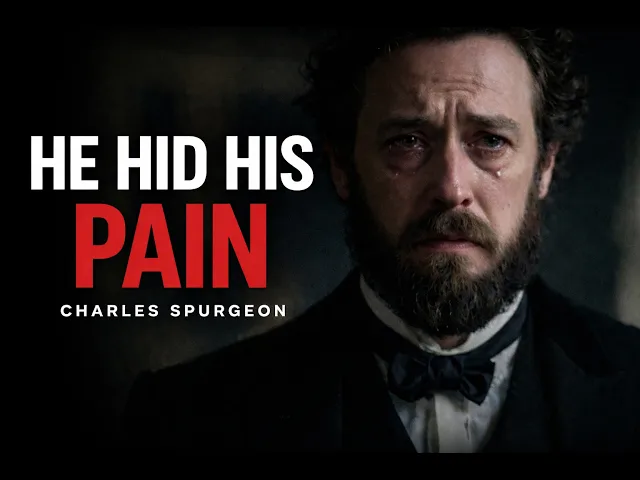
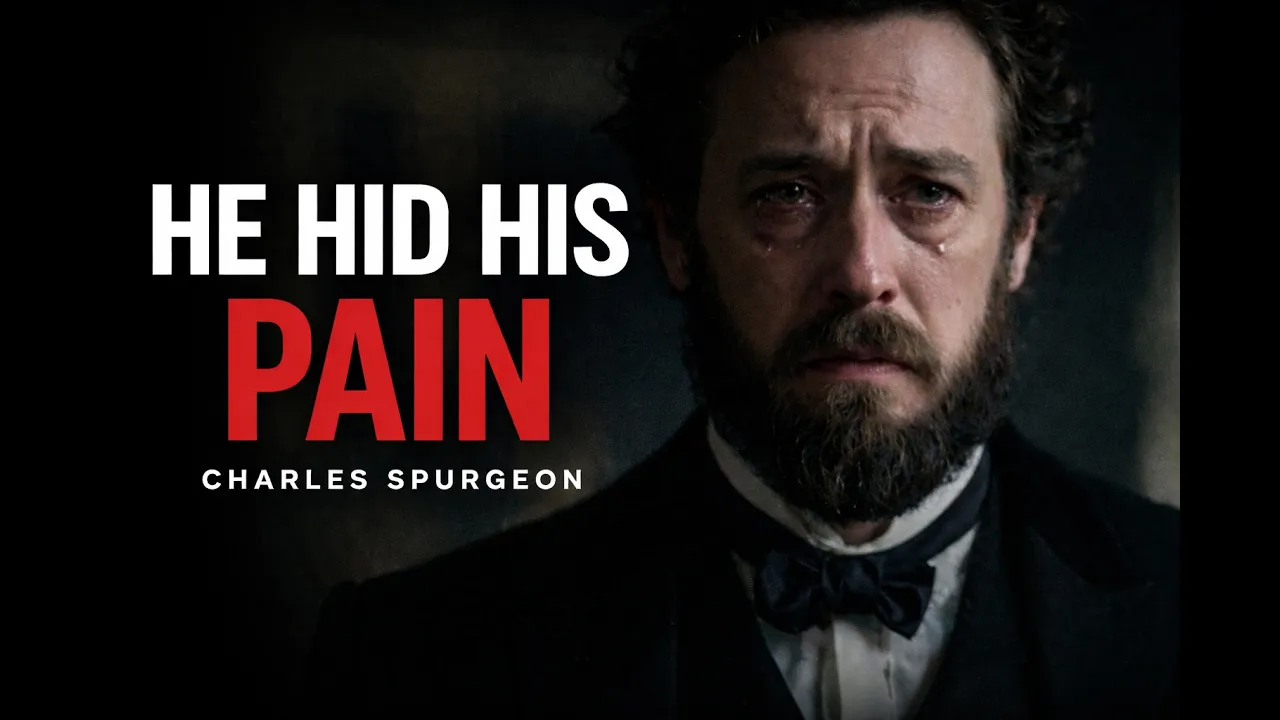
Charles Spurgeon was not only one of the greatest preachers of the 19th century, he was a man who knew the weight of his own mind. While thousands listened to him speak about hope, he fought silent battles within himself. While crowds were comforted by his words, he faced days when comfort seemed far away.
And even so, he never abandoned the pulpit. He never abandoned his faith. He never abandoned his calling and perhaps that is exactly what makes his story so powerful.
Spurgeon was only 19 years old when he became pastor of New Park Street Chapel in London. London was the beating heart of the British Empire. Intense, noisy, industrial, filled with poverty, social contrasts, and spiritual tension.
It was not an easy field for a young preacher. Yet something uncommon happened when he spoke. His voice was firm, his language simple yet profound, his mind remarkably brilliant.
He preached without notes, with an astonishing memory, quoting scripture with precision. Crowds began to grow. First hundreds, then thousands.
Within a few years, the original church became too small. Larger halls were rented. Eventually, the Metropolitan Tabernacle was built one of the largest churches of its time.
Spurgeon became famous very early and early spiritual fame is a burdened few carry. Well, imagine being responsible for thousands of souls every week. Imagine waking each morning knowing your words will be printed and distributed throughout England.
Imagine bearing constant criticism from the secular press and even religious leaders who accused you of being too emotional or too popular. Spurgeon did not only preach. He wrote, counseledled, managed a massive church, led a pastoral college, and supervised charitable works.
He lived under constant pressure and sensitive people as he was absorbed pressure deeply. October 19th, 1856. Suriri Gardens music hall.
Thousands gathered. In the middle of the service, someone shouted fire. There was no fire.
But the panic was real. screams, chaos, people crushed, seven dead, dozens injured. Spurgeon was carried out nearly unconscious.
In the days that followed, he suffered emotional collapse. He relived the sin repeatedly. He felt guilt, shame, responsibility.
Though rationally he knew he was not to blame, emotionally he carried the weight. This event left permanent marks. It was here that the most severe episodes of depression began.
Spurgeon was unable to preach for weeks. He described that period as an overwhelming darkness. It was not merely sadness.
It was something deeper, a sense of uselessness, a sense of failure. He wrote that it felt as though he walked beneath a permanently gray sky. Yet something happened during that season.
He plunged into the Psalms, into David's lament, into the words of men who had also cried, "Why, my soul, are you downcast? " Spurgeon realized that sorrow is not a modern invention. Men of faith have always walked through valleys.
What is most surprising is that this was not an isolated episode. depression returned in cycles without warning. Sometimes after seasons of great ministry success, sometimes after extreme exhaustion, sometimes with no apparent cause.
He described days when he awoke beneath a black cloud, no energy, no joy, no visible hope. And still Sunday came. On Sunday, he preached about hope, about God's faithfulness, about grace, and people were deeply touched.
But during the week, he could be wrestling with dark thoughts. This tension is uncomfortable for many, but it is real. He was not a hypocrite.
He was human. He understood that God's truth does not depend on the emotional state of the preacher. Spurgeon suffered from severe gout inflamed joints, painful attacks that sometimes left him unable to walk.
He also struggled with chronic kidney disease, constant physical pain wears down the mind. Today, we understand the connection between chronic pain and depression. Spurgeon endured this in the 19th century without modern medical support.
At times he had to retreat to Menntan in the south of France, seeking a gentler climate to relieve symptoms. But he always returned, always resumed the ministry. Spurgeon did not hide his struggle.
He wrote to fellow pastors, warning that deep sorrow can visit even the most faithful leaders. He said that some of God's greatest servants have walked through deeper emotional valleys than others. This freed leaders who believed sadness meant spiritual failure.
He taught that the body influences the mind. Exhaustion creates vulnerability. Rest is necessary and faith does not eliminate humanity.
Spurgeon did not conquer depression because he never felt sadness again. He conquered because he never allowed sadness to define his faithfulness. He believed deeply in the sovereignty of God.
Even when he felt no comfort, even when he sensed no presence, Hywins wrote, "When I cannot trace God's hand, I trust his heart. " That is mature faith. During his lifetime, more than 3,600 sermons published, 60 volumes edited.
A pastoral college founded an orphanage established global influence, all while fighting internal battles. This destroys the myth that we must be emotionally perfect to be used by God. Spurgeon learned something crucial.
Faith is not constant enthusiasm. Faith is constant decision. He continued praying when he did not feel like it, studying when he was tired, preaching when he was weak, writing when he was in pain.
He understood that discipline sustains when emotion fails. In his later years, his health declined. He preached less, traveled less, but he continued writing, continued counseling, continued trusting.
He died in 1892 at the age of 57. Relatively young yet spiritually immense. It was not only his eloquence, it was his perseverance.
He proved that you can serve while wounded, led while exhausted. Preach while sorrowful. Trust even when you do not feel.
We live in a generation that often equates spirituality with emotional intensity. But Spurgeon proves that spiritual maturity is not an emotional peak. It is quiet consistency.
Perhaps you are walking through a dark season. Perhaps you feel nothing. Perhaps you are tired.
Continuing forward even when enthusiasm fades. Spurgeon's story reveals something liberating. You do not need to feel in order to continue.
You do not need emotional ecstasy to remain faithful. You only need to decide to remain. If this message is strengthening you, if you want to learn from heroes who faced real struggles, if you desire to grow in deep and mature faith, then subscribe to the channel, turn on notifications, and share this video with someone who needs to hear this message.
Here at Faith Over Feelings, we do not romanticize faith. We deepen it. We learn from men and women who walked through darkness and remained steadfast.
And in the next video, we will explore another giant who faced fierce opposition and still remained faithful. Because true faith does not depend on what you feel. It depends on whom you choose to trust.