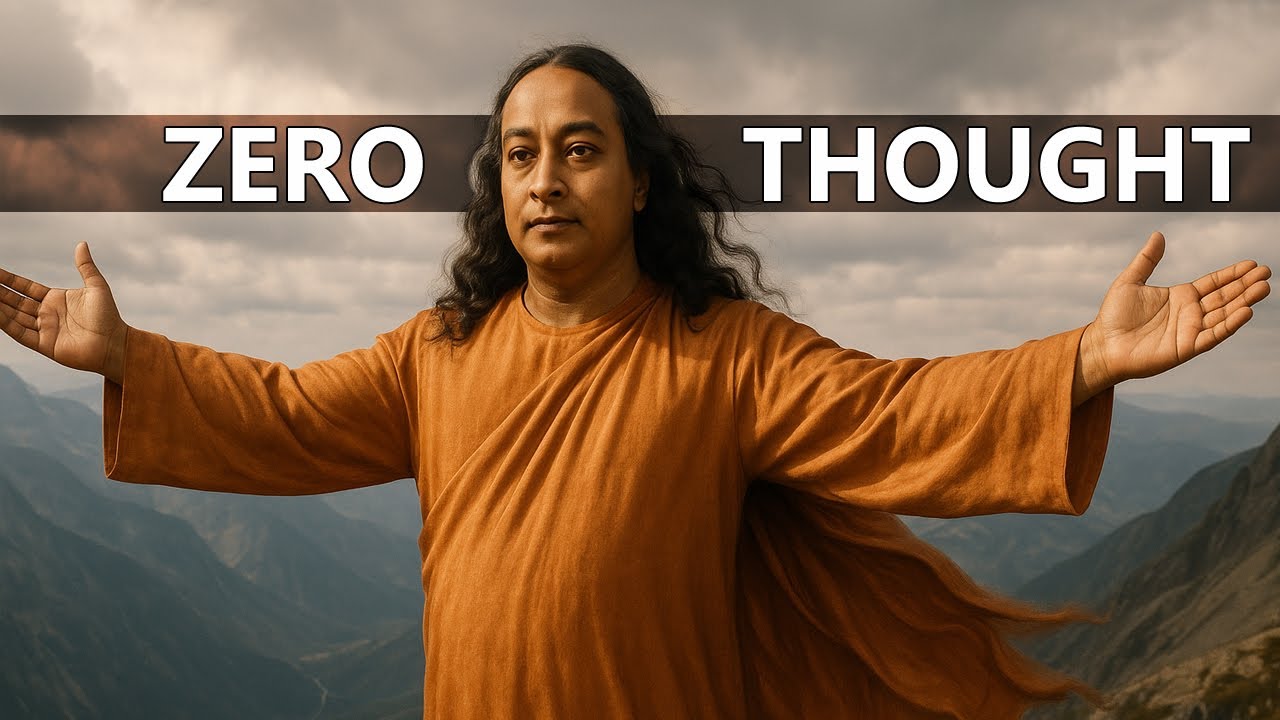
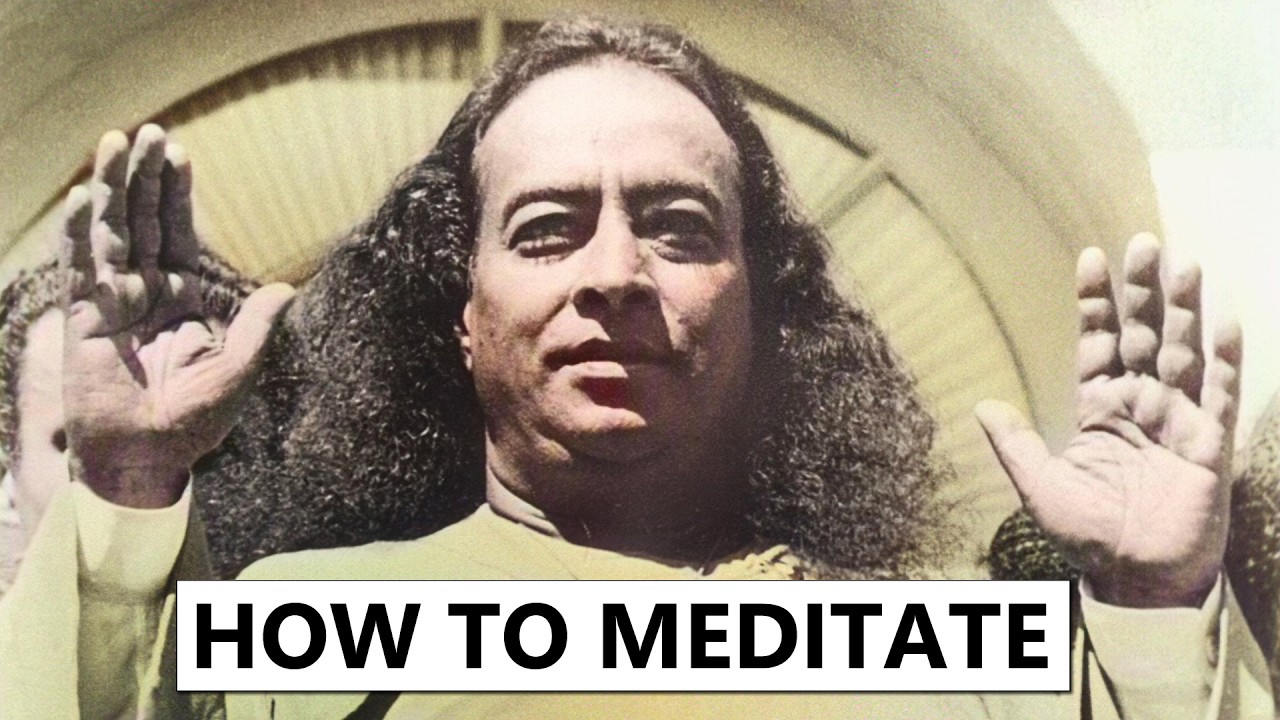
It's 1935 and a young Indian monk named Paramahamsa Yogananda sits cross-legged in a quiet room in Los Angeles. He's absorbed in meditation, his gazed fixed between his eyebrows, a spot he calls the spiritual eye. Suddenly, something shifts.
A great light blazed before me, he later wrote in autobiography of a yogi. It wasn't just light. It was like the whole universe opened up inside it.
For Yoga Nandanda, this wasn't a random flicker. It was a doorway to something vast. A moment where he felt connected to everything.
He knew this was the third eye awakening. That mysterious center where the supreme rests. That's our focus today.
The story of the pineal gland, the little organ some call the third eye's physical home. [Music] Let's start at the beginning in the weathered pages of India's oldest spiritual texts. The third eye isn't a modern concept.
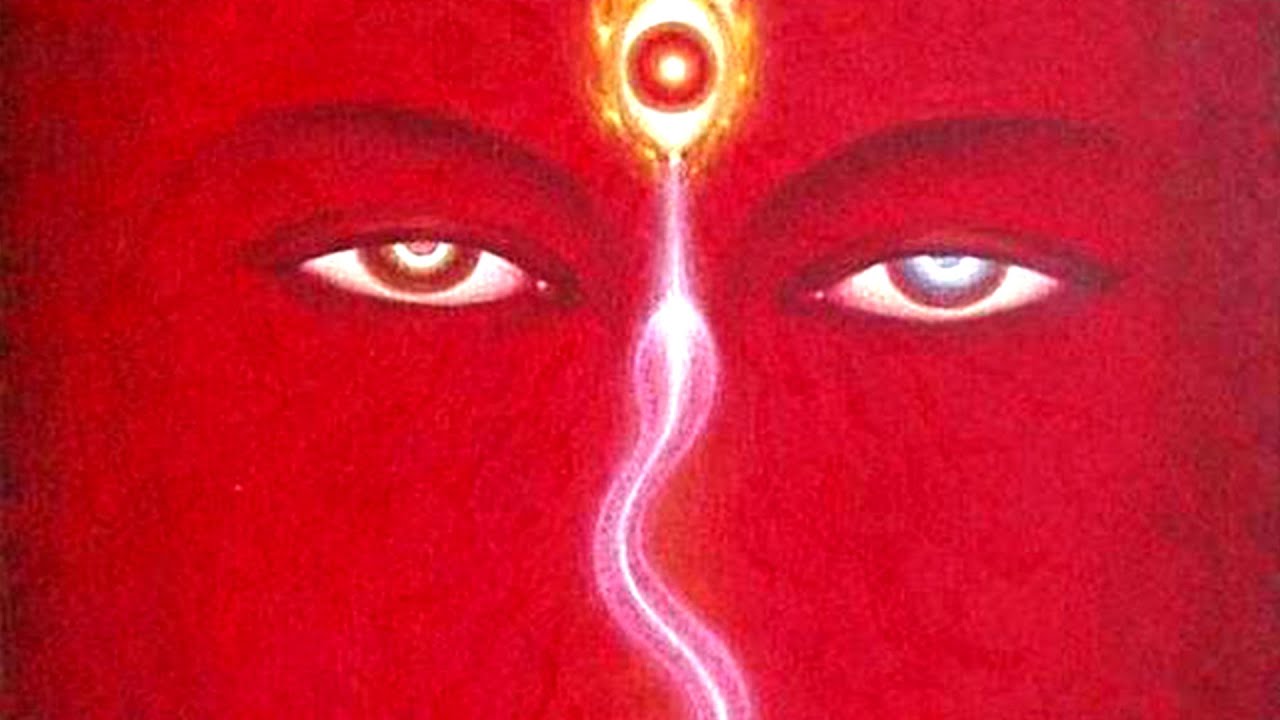
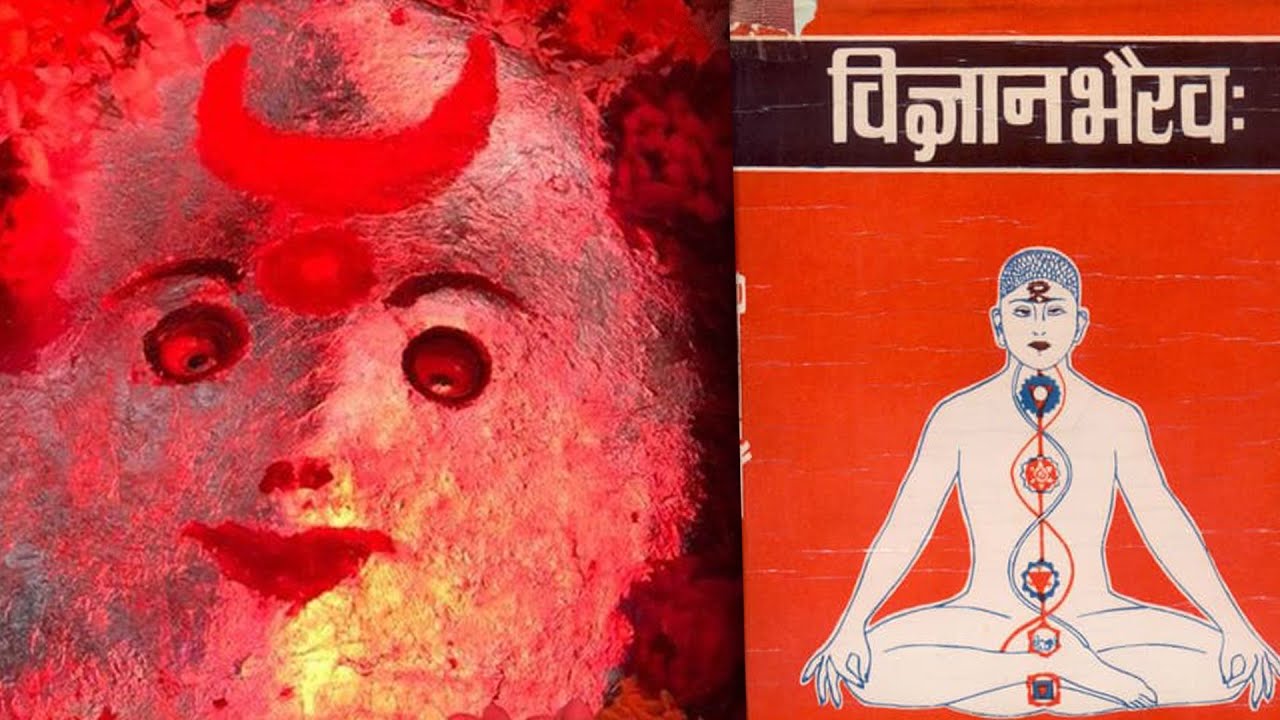
It's the Ajna chakra, a swirling center of energy located right between your eyebrows. The Shiva Samita, an ancient yogic guide speaks clearly about it. Between the eyebrows and that secret place shines the aja chakra a tiny flame like a lamp's glow.
When the mind stills there free of all chatter it merges with the supreme spirit. The chandogi upanisha goes further. It says when the eye turns inward when the mind sinks into the inner self the acha chakra awakens and the light of the soul shines forth.
This is an abstract poetry. It's a road map. Focus there.
Quiet the mind and you'll see something yourself perhaps, but larger, brighter. The Arinyak Banishad adds, "The light that shines above the heavens beyond all worlds. That light dwells in the hearts of men.
" That's the third eye's promise. Not some distant star, but a fire already burning within. What many don't realize is how specific the upads are about this experience.
The miter upanishad describes the third eye as the gateway to Brahman where Brahman is understood as the ultimate reality. It explains when one perceives through the aja time itself seems to slow and the boundaries between observer and observed begin to blur. Ancient yogis weren't just speaking poetically.
They were documenting real perceptual shifts that happen when your consciousness centers here. The yoga vishta offers an even more striking description. When awareness rests in the space between the brows, the mind becomes capable of witnessing its own machinery.
It's as though you're standing outside a clock, seeing all its gears and wheels rather than being caught inside its movement. This level of meta awareness, watching the mind from outside the mind, is precisely what modern consciousness researchers struggle to explain. Yogis took this seriously.
They didn't just read about it, they lived it. And their stories are the real treasure here. Yoga didn't just see a spark that day in 1935.
It was a flood. He wrote, "A blazing light like a thousand suns burst upon my inner vision. I felt myself stretching out, becoming one with the cosmos.
This wasn't a one-time experience. He kept returning to that spot in meditation, teaching his students to do the same. Look into the spiritual eye, he'd say, describing it like a cosmic bullseye.
A golden ring around a blue sphere with a white star blazing in the middle. For him, it was the key to discovering your true self beyond the body, beyond life struggles. What's less commonly known is that Yogananda could induce this vision in others through direct transmission.
Several of his close disciples reported that when he touched their foreheads during initiation, they immediately saw the blue pearl with the golden ring. Even those with no prior meditation experience. One disciple James Lynn later Rajari Janikananda saw the spiritual eyes so clearly in his first meeting with the yoga nandanda that he abandoned his business empire to follow the path of kria yoga.
Then there's Swami Muktananda, a 20th century yogi who followed the condalini path. In his book, Play of Consciousness, he describes a meditation that transformed everything. A brilliant flash lit up my eyes.
And there it was, the blue pearl, a pinpoint of light. It grew, pulling me in until I was swimming in an ocean of consciousness. This tiny spark, he said, was his soul's true form.
and seeing it changed everything. He wasn't just a person anymore. He was boundless, free, immersed in bliss.
Mktaandanda spent years guiding others to that same light, insisting it's not reserved for the special few, but a birthright for anyone willing to look. Mktananda's experiences went beyond simple visions. He documented how the blue pearl would sometimes multiply, creating patterns and geometries that matched ancient yantra diagrams.
He noticed that these patterns weren't random hallucinations, but orderly manifestations that corresponded to specific states of consciousness. Each pattern related to a particular emotional release or insight, suggesting that what we see through the third eye isn't arbitrary but structured according to universal principles. Swami Vivacananda, the passionate monk who awakened western interest in the 1890s had his own encounter with the third eye.
As a young seeker, he was restless, full of questions. His guru Sri Raak Krishna told him to meditate on the Ajna chakra. One day it happened.
A veil lifted. He later wrote, I saw everything connected, one endless thread. That moment didn't just resolve his doubts.
It launched him into a life of teaching. Spreading the idea that divinity isn't out there. It's right here waiting to be discovered.
An overlooked detail from Vivaandanda's writings reveals something fascinating. Before his awakening, he experienced what he called the thunderbolt. Intense pressure and occasional pain between his eyebrows.
This phenomena, which lasted for months, was followed by spontaneous visions during sleep. In his private journals, he noted, "The pressure builds until unbearable. Then sleep comes.
" In sleep, I see what cannot be seen awake. Entire civilizations rising and falling. Time compressed into moments.
These pre-awwakening symptoms match what many contemporary spiritual seekers report. Discomfort preceding expansion. India is not alone in recognizing these phenomena.
In ancient Egypt, the eye of Horus watched from tombs and temples, an allseeing symbol of insight. Some believe it represents the pineal gland hidden in the brain like a precious gem. In Greece, Plato spoke of a light of the mind that cuts through illusions remarkably similar to the Ajin chakra's glow.
Alchemists in their quest for the philosopher stone viewed the third eye as the secret to transforming ignorance into wisdom. Even the rosacrruian with their mysterious symbols place the allseeing eye at the center a call to awaken and look more closely. The Sufis Islamic mystics whose practices often parallel those of yogis speak of the eye of the heart.
Arabi the 12th century Sufi master wrote extensively about what he called the eye of imagination. not imagination as we commonly understand it, but a faculty of true perception that sees beyond physical form. He described practices involving concentration between the eyebrows that would open inner visions of what he called the world of similitudes, a realm between the physical and purely spiritual worlds.
Perhaps most surprising is the presence of third eye symbolism in early Christian mysticism. The Gospel of Thomas discovered at Nagamandi in 1945 contains Jesus's saying, "When you make the two one and when you make the inside like the outside and the outside like the inside, then you will enter the kingdom. " Some Christian mystics interpreted this as instructions for unifying dual vision, two eyes, into single vision, one eye.
Meister Echard, the 13th century Christian mystic, spoke of the eye of the soul that perceives God directly without images or concepts. It seems the whole world in its own way has been circling the same truth. There's a vision beyond our physical eyes and it has been calling to us throughout history.
Science offers its own perspective. The pineal gland is a p-sized organ in your brain that produces melatonin to regulate sleep when darkness falls. It contains light sensitive cells similar to a third eye in physical form, which is why some refer to it that way.
Research suggests meditation might prevent calcium deposits from forming as we age. And there's speculation about it possibly producing DMT, a compound associated with profound visions. That's the gist.
Science sees a gland. Mystics see a gateway. Perhaps both perspectives hold true.
More recent scientific investigations have found something fascinating. The pineal gland contains actual retinal tissue, the same light sensitive cells found in our eyes. Dr David Klene, a researcher at the National Institute of Child Health and Human Development, confirmed that the pineal gland contains cells that respond directly to light, just like our retinas.
Even more intriguing, studies conducted at the University of Michigan found that the pineal gland might respond to light that penetrates through the skull. Faint to be sure, but present. What about the gland's connection to visionary states?
Dr Rick Strawman's controversial research at the University of New Mexico in the 1990s suggested that the pineal gland might produce small amounts of DMT, dimethylrypamine, especially during dream states, birth, and death. While still debated in scientific circles, his work opened doors to understanding how a physical organ might generate mystical [Music] experiences. When yogis speak of the third eye, it's more than just lights.
It's a transformation. People who have had near-death experiences describe bright tunnels or peace beyond words. Some theorize the pineal gland releases DMT in those moments.
Meditators feel it too. A vibration, a glow, a sensation of floating freely. One person described it as the walls of the world dissolve and you're just everywhere.
Ancient texts confirm this. The Briha Daranyaka calls it the light of the self shining exactly where you are. In the tradition of tantric Buddhism, practitioners speak of attaining rainbow body, a phenomena where the physical body dissolves into light, leaving only hair and nails behind.
While this might sound like legend, cases have been documented as recently as the 1990s. Llama Auk of Eastern Tibet was reported to have achieved rain body in 1998 with witnesses describing his body shrinking and emanating rainbow colored light for days after his death. Check out our rainbow body video for more details.
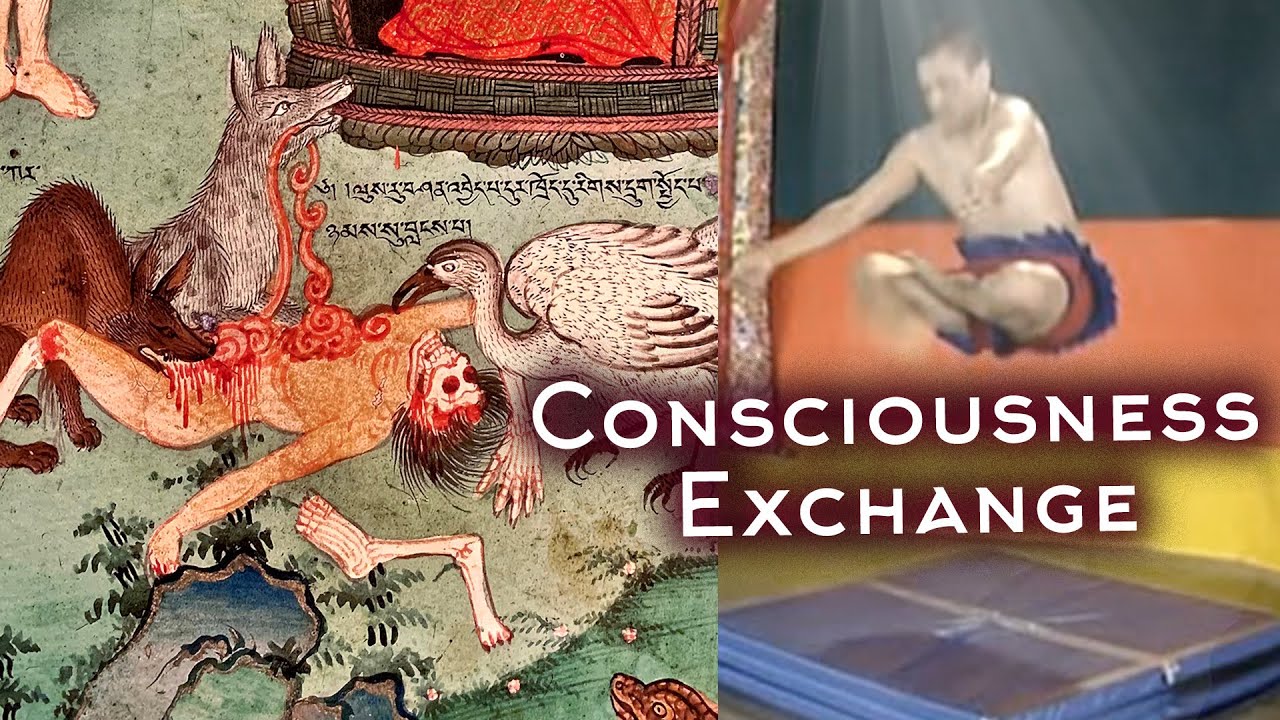
The bone tradition of Tibet, which predates Buddhism in that region, preserved techniques for what they call light transference. A practitioner named Tapiitsa, who lived around the 8th century, left detailed instructions. Fix awareness unwavering at the point between the brows.
When the light appears, neither grasp it nor flee from it. Allow it to expand naturally until it encompasses all experience. His followers claimed this practice allowed consciousness to transfer from body to body without the usual process of death and rebirth, a kind of conscious reincarnation facilitated by the third eye.
So here we are from yogaandanda's radiant vision to that quiet flame the scriptures promise. The pineal gland, the third eye, whatever name you give it, it's a bridge. Yogis didn't just observe light.
They recognize what's real, what's always been inside. That light in your heart tells us that's you. For those ready to go beyond basic practice, consider these traditional approaches that few teachers share openly.
The trataka method involves gazing softly at a candle flame placed at eye level, then closing your eyes and holding the after image at the third eye center. Scriptures claim this practice purifies the optical nerves and strengthens the connection between physical and subtle vision. Check out our previous video on thratika to know more.
A simple but profound practice comes from Kashmir shyism. With eyes closed, gently roll your eyeballs upward towards the third eye while keeping your face relaxed. The subtle strain creates a friction that stimulates the ajuna chakra.
Abini Navag Gupta the 10th century Kashmiri master wrote that this technique ignites the dormant fire between the brows revealing what has always been present but unseen. People who've stuck with these practices don't just talk about lights and visions. They describe profound changes.
One becomes less reactive. Things that used to throw us off balance just don't anymore. We see them coming and can choose how to respond.
The mental chatter quiets down. We can hear ourselves think. are real thoughts, not just the nervous ones.
A woman who practiced third eye meditation for over 30 years shared something remarkable. After consistent practice, I began experiencing what I can only call previews. Brief glimpses of events before they happened.
Not dramatic prophecies, just ordinary moments that would occur hours or days later. It was as though time became slightly more fluid around. Her experience matches what the yogic texts call a level of perception where time's rigid boundaries soften.
Will you see blazing lights at yogaandanda? Maybe, maybe not. But something will happen.
Something real and personal to you. That little flame is already there waiting. It's been there all along through all your joys and sorrows, your triumphs and struggles.
It's witnessed everything patiently holding the truth of who you really are. Remember the words of the katha ubanad. There is an eye that opens inward.
This eye has been waiting for you to notice it, to acknowledge it, to use it. It doesn't demand grand gestures or complex rituals. Just your sincere attention.
Give it that gift and watch as it gives back to you a 100fold. Light is waiting for you. It always has been.