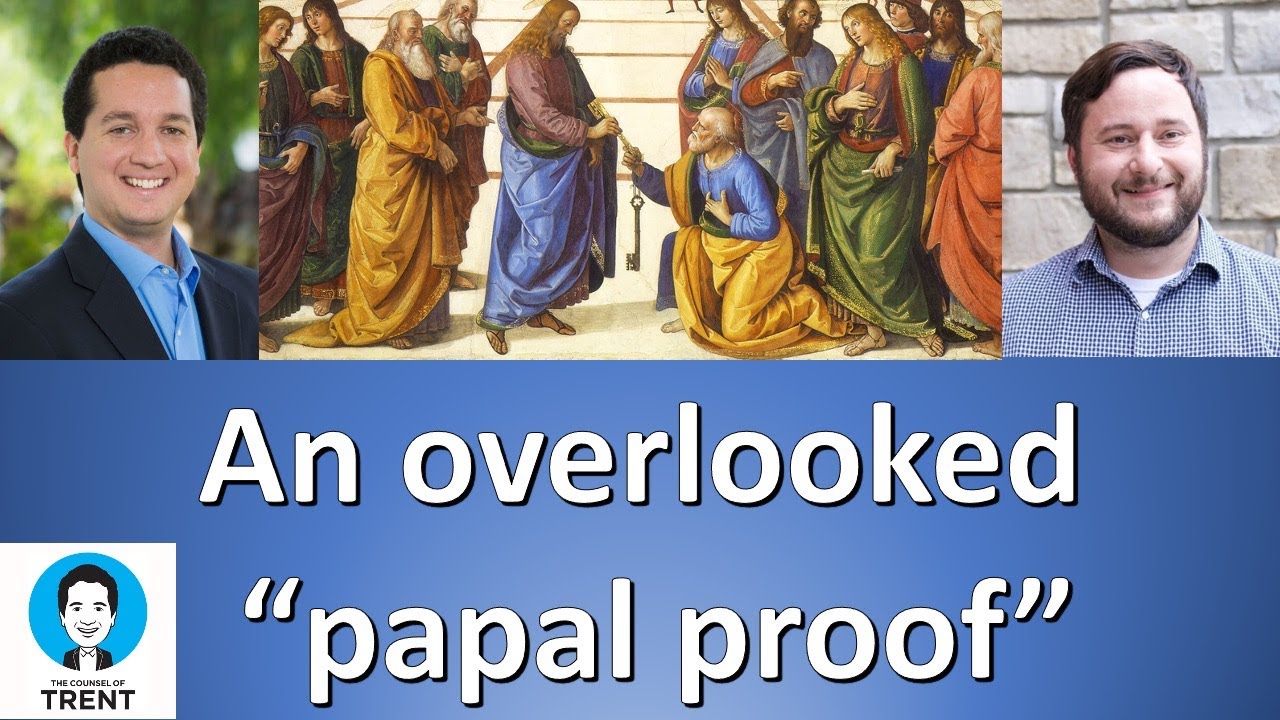
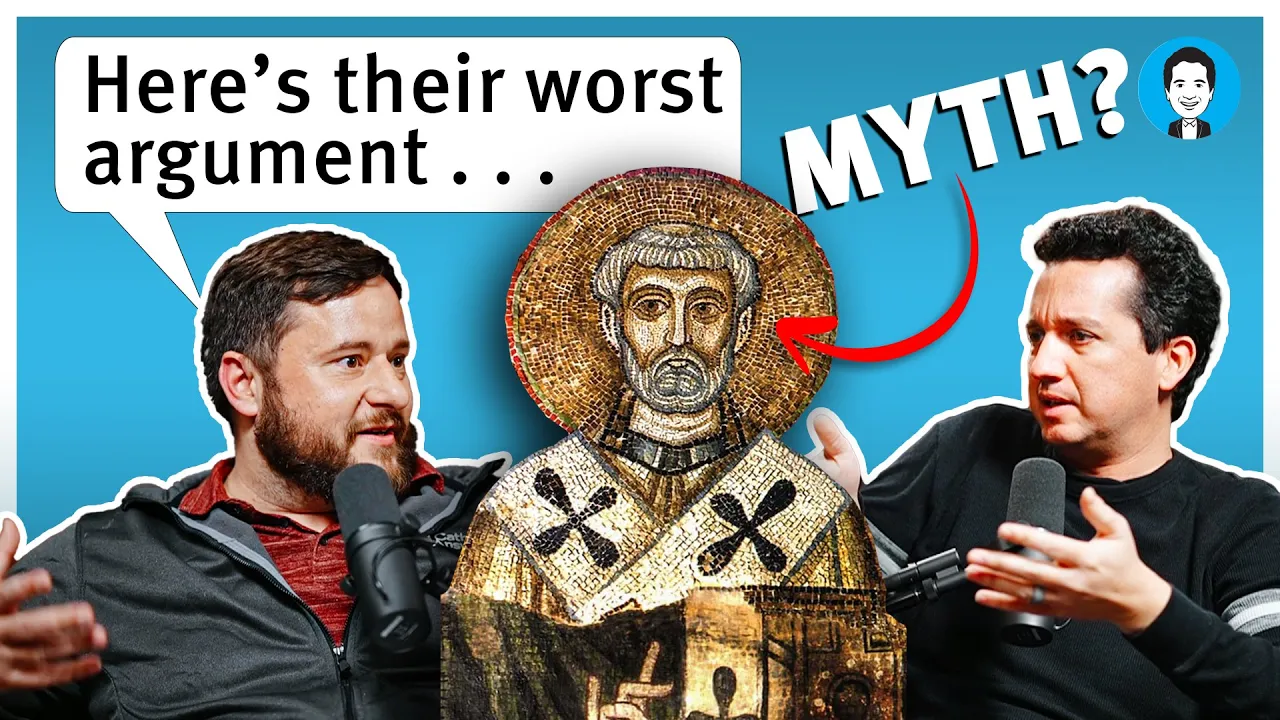
hey everyone welcome to the council trent podcast i'm your host catholic anthony's apologist and speaker trent horn fancy digs today we are in the catholic answers studio i get to sit in a comfy chair i got a nice boom mic here and i have fellow apologist mr joe heschmeyer joe welcome to the program thanks for having me on it feels a lot like being at work right this is where we are now i'm a little bit jealous of you because you uh have got i'm visiting the catholic answer studio only for like two days right but you get to be out here for a month getting a month break from midwest weather to be here in california so yeah i very conveniently scheduled video stuff during the coldest part of the midwestern year and then it has been in the 60s 70s or low 80s every single day since we've been here with uh not a cloud in the sky it's i say good for you my friend you know oscar wilde said that the shame of youth is that it is wasted on the young and it's tempting to feel the same way about california right the weather's wasted here other people would use it better what i wanted to talk today is well actually it was funny i told joe hey i'm going to be in the studio tomorrow let's talk and i just want to talk about whatever you're just jazzed about something you're just really excited to talk about and i just got an advanced copy of your new book well it's out now and the book has a wonderful self-explanatory title the early church was the catholic church so it's a mystery what could this book happen what could the thesis of the book be so i love it that we have something because a lot of people including many protestants are more interested in learning about christian history i think many people find their way into the catholic church this happened for me that i looked at all the christian denominations and thought all right well what do the first christians believe what did they believe i would like to be close to what they believe and so there are many more protestants who are interested in that it leads them to catholicism and i think there are protestant apologists who step forward and say oh wait wait not so fast the early church is not the catholic church we might think of and one of the arguments that they raise relates to the papacy they might say okay you'll find some similarities here but when you think catholic what's the first thing that pops into your mind the pope right right the catholic pope but then they'll say look when you go back into the early church you go back to the first century they'll say well there there wasn't a pope we don't see anyone talking about a first century bishop of rome so and this is a thesis that is common not just among some protestant apologists but even among some catholic scholars yeah father eno you've got emon duffy who's a very well respected medieval catholic scholar uh you know there are jp meyer raymond brown you plenty of catholic scholars who who yeah claim that there was not just not a pope in the first and second century or first in you know up to the early 60s yeah but that there wasn't even a bishop of rome at all not even a debate about what was his authority what was his jurisdiction but just he didn't exist is their claim which is a really radical claim right so that there was just a council of priests who was overseeing the church at rome and then the office of bishop emerged slowly after that with the office of the papacy merging even further after that which would make one doubt whether the papacy is even a part of the deposit of faith at all so that is what i want to talk about today this idea that in academic-y terms we would say the the debate over the the mono episcopacy was there was the early church and i think many protestants have tried to argue for this it's just a confederacy of believers little house churches was there in every uh region or every city where there's a church was there a single bishop presiding over the church in that region number one and then number two was that the case for the church in rome because as catholics it's not just any bishop that's most important it's the bishop of rome like was there one in the first century and i think my view would be very similar to yours this is a issue that i've addressed before on the channel it was actually something that i addressed in one of my previous videos if you look online i have a rebuttal to the strongest argument against catholicism offered by a protestant author jerry walls yes and he went on cameron bertuzzi's podcast and he talked about this very issue and so i went through that offered a lot of insights but you've done even more research on this than i have so i am your jazz talk about this i'm jazzed to talk to you one yeah i actually i i mentioned jerry walls in in this chapter it's like it's very much like in the common discourse right now among protestants and among catholics alike so yeah so what would be your your basic thesis let's just people understand that you'll have some protestants even some catholic scholars saying well there wasn't really a single bishop of rome that emerged in a very delayed way that that kind of accrued over time and you're saying no that the the office of the episcopal the bishop is something we can trace back to the new testament and it's something we can find continuity from the new testament through the first century and the early second century yeah the positive case would look something like this that the three-fold structure that there's one bishop accompanied by priests or presbyters and deacons is something that goes back to the time of the apostles goes back to the apostles goes back ultimately then to christ and that it was something that was viewed as an inheritance from judaism that judaism has this three-tiered structure of high priest priest and levite and that very very early on we see these connections being made implicitly but pretty obviously in first clement's letter in 96 a. d uh more explicitly in the early 200s and one of the ordination rights for a bishop in which he's compared to the high priest those kind of connections are on people's minds and that this was something that was understood as saint ignatius of antioch says if you don't have this three-tiered structure you don't have the catholic church you don't have a church and i think that this is this is huge like for me i did another video a while back called the church father that protestants fear the most and i asked you i said joe take a guess you said oh saying nations of antioch because he's very very early we can date him to early second early seconds entry like 110 107. so we're talking now um within one to two generations of the crucifixion within a generation of the apostles themselves and what he discusses that he's very clear that the authority the authority structure within the church it's not the bible no no discussion about any kind of a fixed or closed candidate scripture that serves as the authority rather he says things like follow the bishop as jesus follows the father yeah you know so and you're right i think it's literally you do nothing without the bishop you know there's a very strong kind of i want to say it's uh language magnesians magnesiums where he says that if you do not have bishop priests and deacon you don't have a church exactly that's that's not the cast and he uses the phrase the catholic church now to pardon going back what you said about the new testament though how would you look at the idea that and this is something the view that i've always held is that it seems in the new testament that the offices of bishop priests and deacon can seem somewhat interchangeable in how the terms are applied like paul refers to himself at with the title as a deacon peter refers himself as a fellow priest that bishop greek episcopoy overseer the english word priest that if you're reading in the new testament letters is where the title elder might be found is the greek word presbyteroy the press boudiroy and then the diaconoys where we get the word deacon so deacon priest bishop or diaconoy presbyteroy episcopae it seems like in the time of the new testament these are at least much more interchangeable than by the time of ignatius yeah that's certainly true partly because terminologically there's they're kind of being set still in the same way that you know uh there was an incident when president biden was vice president he presided at a gay marriage and in english saying the vice president presided we have no trouble with that right but someone reading that in translation is going to be very confused like how could the vice president be the one preaching because if you read it literally it would be the vice president preside was the brain presider exactly they would trip over them with this in greek you have overseer elder servant those are what bishop priest deacon or bishop presbyter deacon mean and so people are confused by that because the greek sometimes is being used in an official technical more specific context but more often is used in a much looser context so to give you an example if you look at the uh do a word study on diakonoi you know of servant or servants that we call deacon today exactly it is literally the root of deacon and it's sometimes translated as deacon in the new testament other times translated as servant and bizarrely it's used to describe phoebe it's used to describe jesus used to describe the 12 apostles it's used to describe saint paul it's used to describe all sorts of people who weren't deacons or weren't only deacons in the case of the ordained uh and then it's not used in acts six to describe the first seven deacons and so yeah that's interesting you know you just can't make the word based argument it's not a very strong argument and the reason is is really simple by the time the new testament documents are being written the first documents are probably saint paul's letters well we know they're saint paul's letters to churches right meaning the church predates the new testament so you don't have some new testament instruction guide on how to build the church from scratch right because they weren't building churches from scratch the church has already existed and so it's only by the time we have the first new testament document we'll call let's say first thessalonians the church has existed for 20 years right for 20 years that's the church has gone through one generation before you have the first canonical document in the new testament so i mean 20 years is a long time to have a leadership structure in place yeah and so in first timothy 3 talks about the bishop singular and then talks about deacons and it doesn't mention elders but then in first timothy 5 elders are mentioned so people are left saying okay well does he think elders is just another term for the bishop or for deacons or is he describing three offices and i think someone going just off the text alone wouldn't be able to conclusively arrive at a conclusion and i think case in point protestantism has massively different ecclesiologies right that the structure of a protestant church varies more widely from denomination to denomination than almost any bit of theology some protestants have bishops other protestants just have a single pastor exactly some are more congregationalists right you'll have congregational presbyteral and episcopal governance and a ton of variations on that theme john calvin argued there was a four-fold structure in the church and no one takes his view and then st paul mentions all of these ministries and offices without specifying which ones are which you just from the text alone from the biblical text alone you're not able to reconstruct in the same way that if you were to just take like the speeches of george washington to try to figure out what the structure of the united states looks like you probably couldn't do it right because it's you know he might address like the governor's or something but oh are there a lot of governors per state or is he addressing all of the governors in the country you know those kinds of things because it was never meant to be used for that that's a misuse of the new testament both the new testament and we have things like the letters of saying nations of antioch and then we we go well though when we go even further unfortunately we we don't have a lot to draw from because at least in the early the because i think a lot of these critics will say i'm willing to give you by the time of pope victor the first you have the papacy right a lot of them are willing to grant yes we have a bishop of rome who has authority over other bishops or other churches and that would place us around the end of the second century right but what we look at like really our biggest witnesses are going to be the letter of clement uh who we would traditionally recognize to be the third successor of saint peter the fourth pope uh and then the let writings of stagnations of antioch because we've got other they're really more minor greek apologists like athanagaris or right tasty in the syria we don't they don't they're not talking about church governance well i think the other source we have is later in the second century but looking backwards which would be the the roman lists compiled by hegesippus and 160 and irenaeus and 180.
that they are tracing every bishop from the time of the apostle every bishop of rome from the time of the apostles down to their day with elepharius who's the 13th successor and people try to write that off like oh well saint irenaeus you know he's writing 150 years after the time of jesus but in your book which you all should pick up by the way the other church was the catholic church uh i knew my little royalty after that exactly uh you make a good connection that that's not that far you used an example of alice von hildebrand who just recently passed away the the example uh was applicable when the book came out and then for about four weeks after yeah and i i point out that the the gap in time between the death of the apostles peter and paul and the time of uh the writing of against her season 180 is like 114 years and 114 years ago the now late alice von hildebrand who is still alive her husband was in college and she has a book describing what it was like for dedrick von hildebrand at university she didn't of course know him then no but she married him and was still alive when the book came out so 114 years not that long the other example is just take the actual second century like we know the apostle john dies in about 100 he has two students we know of ignatius of antioch which we've already mentioned and then polycarp smyrna polycarp is born in 69 a. d he dies at the age of 86 and 155 a. d we know a lot of details of his martyrdom because accounts of his martyrdom are written down before 12 months is up right i mean in honor of the one year anniversary of his death an account of his martyrdom is published and he is a mentor of irenaeus so irenaeus learned christianity from a student of the apostle like it's right this is also like by the way irenaeus is the first person to tell us matthew mark luke and john are the four gospels right so protestants who say we can't trust irenaeus he's a liar he's making up details about the church of rome he's either untrustworthy because he's like a total dupe and somehow was tricked into believing a 30 year old institution was 115 years old or he's a liar by trying to somehow convince the romans that they've always had this comes up and for me it really shows the burden of proof that i think that we should push back on that i would say the burden of proof is not on us proving that there was a first century bishop of rome but why should i believe the critics i think they make a lot of dubious most of their arguments are very dubious arguments from silence and arguments from silence are dangerous i'm actually working on this in my current book comparing the arguments between protestants and atheists that atheists do the same thing or liberal protestants they'll say well if jesus was really born of a virgin why didn't paul say so right why didn't mark say so uh you know um mythicists will say well if jesus really did t have was a man who taught and not just a myth why doesn't paul quote jesus's teaching about taxes in roman 13 when he does say pay your taxes like i don't know but that doesn't take away from the evidence i do have for these things and we can even give at least a tentative response to that we can't which is that they're writing on scrolls and the writing is limitation now anyone old enough listening to this who remembers t9 phones when you had to carefully like push seven three times in order to get a t or whatever uh you know your text messages were a lot shorter than they are now because it's a lot easier to write so right now you can write a 70 000 word book because it's easy to type and correct mistakes when they come up and go back and edit and edit in chunks when you're writing by hand on a scroll word economy is enormous so the the physical writings of the first and second century are much shorter than later books and it's not shocking why they are and before the printing press writings are shorter so making an argument from silence that a guy who writes for three pages doesn't include every christian teaching right is it's a miserably weak argument yeah now let's talk about the arguments of silence that are made so one would be that there is no bishop at rome because when saying nations of antioch writes to the church of rome is letter to the romans uh he doesn't mention that there is a bishop at rome uh he doesn't discuss anything like that and i want to bring it up so we don't forget it was a great analogy we were discussing before this episode was that he he certainly does it certainly there is a single bishop of churches in his time because he refers to himself yes in bishop the letter to the bishop of rome to rome sorry in the letter to the church at rome he refers to himself as a bishop and in the other letters to the other churches in asia minor which is now modern-day turkey he addresses that it is presumed there is a single bishop in those churches so why wouldn't we just oh so the analogy you gave i'll let you explain it would be about let's say someone like dr james dobson was writing letters to seven christian churches on marriage so take a seat okay okay so just if i can just dispel a little more of the argument from sounds you're talking about father raymond brown is one of the most famous to offer this he says to explain ignatius's insistence on in defense of the threefold order one must posit that the single bishop model appeared in antioch and asia minor circa 100.
so because bish you know bishops are mentioned and ignatius has other letters therefore they must be new yeah because he's insisting that you follow the bishop this must be a new thing he has to drill into people but then later in the same book he argues that the signal failure of ignatius to mention the single bishop in his letter to the romans uh he goes on to say makes it likely that the single bishop structure did not come to rome tell circa 140 to 150. so if he mentions it or if he doesn't mention it either way that proves father brown's case of the papacy didn't exist and that's that's a terrible argument from silence it's a heads i went tails you lose argument right because here's the thing what we could ask then father brown is father brown what would ignatius have to say or not or not right for you to believe that this institution has been around for a long time because for me i mean he might say well if he said that we've received this from the apostles well what why wouldn't you you could just say he's like irenaeus and he's been duped you know you could still come up with an excuse even if you had something like that so you're right so if he does say follow the bishop ah he's so insistent it must be new and he doesn't tell the people at rome to follow their bishop oh that means there was no bishop we can't have the third alternative well it's just presumed every church has a bishop exactly i mean the one thing it proves is that bishops already exist in at least six of the seven churches you know because he's not telling him you should really put a bishop in place he's greeting their bishops by name so let's imagine james stops and writes his letters on marriage so imagine he's got six letters and to the first six families he writes obey your mom and dad and in the seventh and he you know in mentions in the letters you don't have a family without a mother and father or you know whatever and then the seventh one he just praises the family as a model family and maybe says something about the parents but doesn't go into any detail about the mother and father let's say this seventh letter he's writing to the joneses and he says right he says this is a family that i take lessons from i don't give this family lessons so let's say he's writing to seven families about what it means to have a christian marriage six of them obey your mom and dad obey there needs to be a mother and father to the joneses hey the joneses that's that is the family i take lessons from them people but he never says that the joneses have a mother and father yeah he he refers to this church ignatius when he's speaking to the romans refers to them as the church that presides and he describes him as presiding in charity he speaks to them as one that he looks up to rather than as one he feels giving uns feels like he can give unsolicited advice to right and so it's not shocking that he's not going to give unsolicited advice in the same way that if you're saying i really you know i'm writing to you this great model family that's not the time that you're probably going to launch into obey your mother and father and do this do that and it would be ridiculous to say in that example oh he wrote to the joneses they're the model family if someone said if you notice in dr dobson's letter he only uses the terms family and parents not once in the letter to the joneses does he say mother or father therefore yeah therefore the joneses were a same-sex couple right because otherwise if they were this model family you would say that makes no sense he doesn't have to say it because it's presumed in the m that they are the paradigmatic example the model just like when ignatius writes to the church at rome if there are bishops in other churches and this is the best church the one that leads the others it's going to be the same as the others and there's going to be a bishop there and ignatius mentioned as you kind of alluded to he mentions being the bishop in the singular sense right twice in his letter so he assumes they know that there's one bishop per city and and again he he holds them up as the model but more than that if you want to understand like why does the letter to the romans read differently they're really really obvious reasons yes in the case of all the other letters he's writing to churches that he knew personally from his travels through asia minor in route to his martyrdom yeah you can look on a map all of them to the traelians the smyrnians the magnesians the the ephesians when you look at them on a map you can put little pinpoint dots in and it's all within like a day's journey yeah it's all within like a day's journey of antioch and he's he's the big heavy hitter because he's the bishop of antioch and these were probably people who had personally ministered to him right as he's a prisoner because the romans didn't feed prisoners they would have other people come and take care of prisoners for background for everyone the letters of sagnes of antioch they were written while he was being escorted to rome for his martyrdom and so he is writing letters during this time and the romans you're like you say they're not going to take care of you oh you have visitors they can give you bread right and you can give them letters at that time and so that's why he's in a position where he can give them advice because he knows him he knows them intimately in the same way that if you're writing letters to friends and family you might give them advice on their current situation that you wouldn't give unsolicited to people you don't know to the romans he doesn't know them the reason he's writing to them is not to give them pastoral counsel is explicitly to ask him not to interfere in his martyrdom and not to risk their own life trying to save him from martyrdom and i would say for me another reason because people will say oh well why doesn't he mention the bishop of rome by name the fact that he doesn't mention the bishop of rome by name means there was no bishop of rome oh that's an interesting argument but ignatius doesn't mention any christian by name in the church of rome logically there must have been no christians exactly in rome he doesn't mention deacons he doesn't mention presbyters we might as well argue those didn't exist either like the argument from silence is very selective it makes sense that he's not going to mention the names of these people in the letter to the romans ignatius only mentions crocus someone who is traveling with him who is there in asia minor if this letter is intercepted he's not going to give the romans the names of the prominent christians in the city of rome so i think that yeah i think these arguments from silence um that it's we're on the wrong burden of proof here i want to see the other side make that demonstration and i think the arguments are are pretty weak so why don't you tie it together i'd like to maybe lay out the argument in the opposite direction on the argument for silence if i may yes because father mcguckian uh has a piece from 2005 in new black friars where he points out that the notion of a church excuse me the notion of a church choosing his church order is unheard of in christian tradition oh and tell us this just like chooses to change its structure right is totally unheard of and if you think about it it would be insanely disruptive and you would find a lot of evidence of that disruption if you have if you went into a baptist church and said from now on i'm the sole leader of this church people are gonna have something to say about that right or you know you just say well this was you know this nice roman democracy i'm gonna replace it with a single caesar people are gonna have something to say pro or con right or just observing the change there's zero evidence of the change that's a really remarkable lack of evidence that they're literally arguing from no evidence that a massive revolution happened it's like oh we don't have any evidence of this five-year period in french history they must have gotten rid of the government and installed a dictatorship like that'd be an insane conclusion to go to from the silence but that's what we're arguing for that these critics including some catholic scholars will argue well what happened in the early church was that it was originally a council of elders some will say council of elders some will just say it was just straight more protestants that are not as scholarly it was just democratized household churches others say well there were councils of elders and priests but not single bishops that arose much later well then there had to be a change everyone's like go to church who's this bishop we have a bishop what's going on now it's like oh well eventually it there would be this massive disruption you would think there would be people who before and against us and it would be a source of controversy but we can say well well no it it doesn't there there is no evidence of that controversy and we could take the critic's own argument from silence to say that shows there was no controversy because there was a single leadership structure prevailing the church during this time period leon morris and the evangelical dictionary of theology makes just this argument he says nowhere is there evidence of a violent struggle as would be natural if a divinely ordained congregationalism or presbyterianism were overthrown because that's an important point like if the apostles set this structure up and you just some random guy came along and scrapped it wouldn't one or two faithful christians not just the normal politics of the thing of like i was leading and you usurped my power but like you usurped jesus look at the strife that took place at the end of the second century over the quarto deciman controversy yes that is the controversy about when to celebrate passover do we use the jewish lunar calendar or do we celebrate it according to the liturgical calendar and so it always falls on a sunday you know and that was a huge deal right pope victor tried to make it uniform and people trying to celebrate it the dispute and disagreement between the two camps yet and that's just over a liturgical the dating of a liturgical feast and one that they've run this clearly been a diversity and that they knew about the second the second century christians knew that the churches established by philip and john went by the jewish calendar the other 10 apostles churches went by the roman catholic people knew about this dispute for a long time exactly we're supposed to believe there was there would have been this heavily disputed change from congregational worship or from a council of priests to a bishop and yet no one ever there's no record of anyone talking about this change ever and if they did feel free to change structures it's really remarkable that the hundreds of churches for which we have records of by the early third century by the early 200s yeah all of them have the exact same structure right like you know if every country has the ability to choose his own system of governance they don't all have the same one that's kind of weird uh that's more or less what you would expect but imagine if they all had identical structures that would make you think maybe they don't feel free to pick because they're receiving a leadership structure a hierarchy sacred order in greek hierarchy uh that is part of the deposit of faith itself that was given by the apostles and pope clement tying this back to the start of the conversation 96 describes this as something that they receive from the apostles in other words he explicitly disclaims the idea this is something they invent or create or adapt right but something they receive it's the same kind of way that irenaeus and hegesippus talk about it later the apostles established this and it comes down right not we decided you know we had a committee meeting we decided this would be the best structure for our church so these scholars are suggesting something that has no historical precedent prior to the reformation and is totally detached from lived experience in reality it's in an otherworldly kind of world they're describing in which people just say oh okay well if you want to scrap the biblical church for a new one we won't complain or write about it or notice it we'll just go on our merry way it's unreal it's it's very hard when you actually try to prove the emergent case right to find any scrap of historical evidence that couldn't be better explained in the catholic view man this was fun it's so fun to come back just hang out we're going to have to bat this around a little bit more definitely have you have you back on the show soon but before until we do that i'm going to recommend there's so much more we could have talked about and a lot more of other related subjects your book the early church was the catholic church uh where can people get a copy yeah it's on sale right now you can do bulk sales even for as cheap as like three dollars a book from shop. catholic.
com the gallagher shop you can also get it from your local catholic bookstore or amazon or wherever you buy catholic books i like it mr joe heschmeyer thank you so much for being here today everyone thank you so much for listening check out joe's book also i have a new course on the catholic answers school of apologetics school of apologetics. com a course on arguing about abortion it'll equip you to be pro-life definitely something you want to check out but thank you guys so much i hope you all have a very blessed day hey thanks for watching this video if you want to help us produce more great content like this be sure to click subscribe and go to trenthornepodcast.