In the past week, I have completely changed how I think about the algorithm. And it's all due to a friend in my private Discord explaining a new concept to me. And just to ground this in something real, I'm going to use my own channel as an example that's made over $10,000 in the past 4 months just with YouTube Shorts ad revenue.
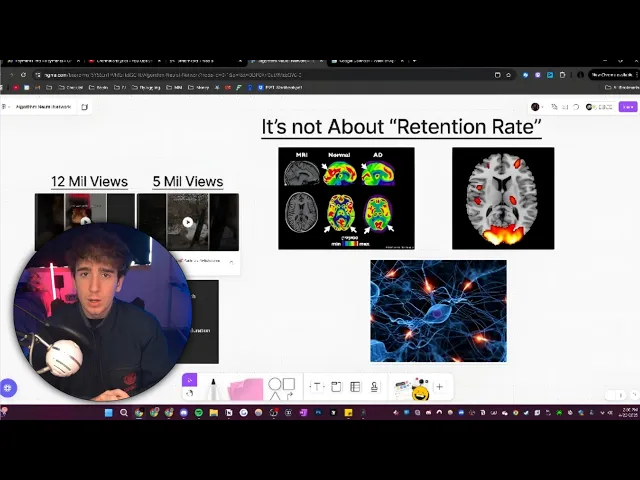
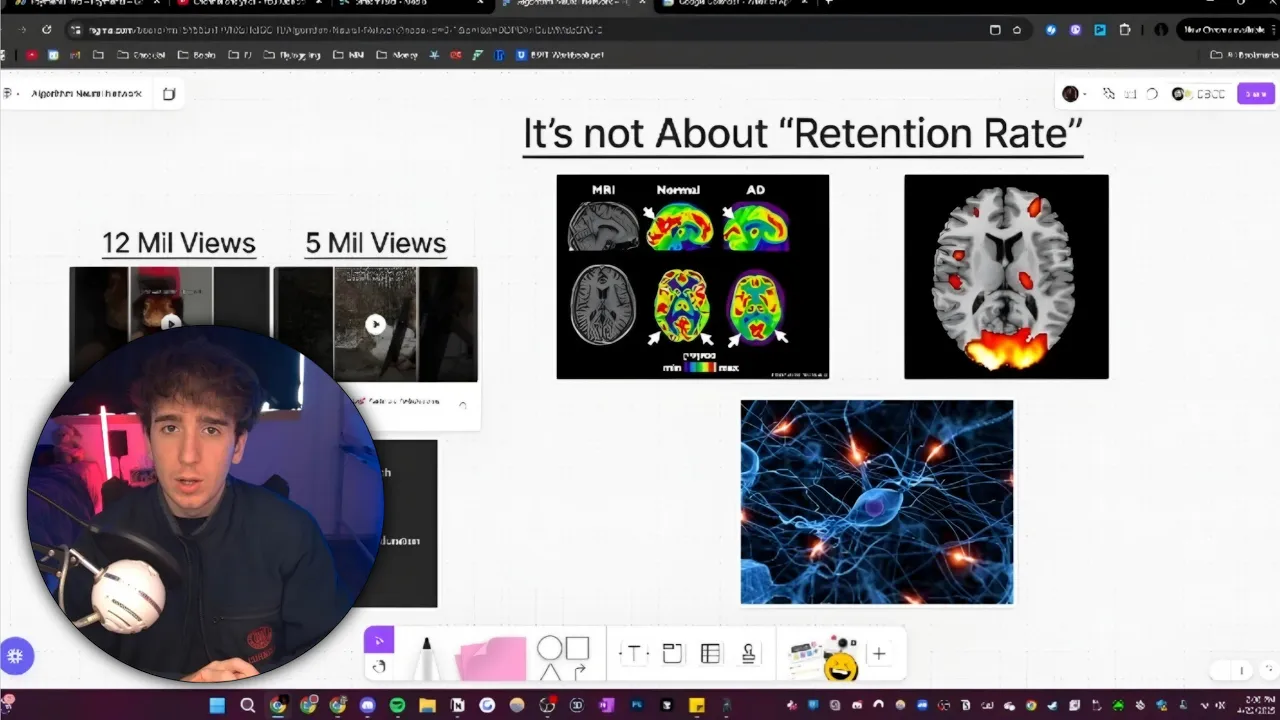
What we were talking about is how it's possible for videos that have worse retention rate and worse swipe rates to get more views. So, for example, on this channel that I talked about that I own, we have 151,000 subscribers and our most viewed video has 12 million views. But if I go to the analytics on it, you can see only 60% of people actually stayed to watch.
And then of that, we retained people for 44 seconds out of the 60 seconds of the video. So that's pretty good. But what about this video of a bobcat that got 5 million views, less than literally half of what this bigger video got?
Well, the stats on this video that got half as many views were actually better for both swipe through and retention rate. 68% stayed to watch, and they actually watched for 51 seconds instead of 44 seconds. So the question is, how is this possible?
How do videos with worse stats get more views? It goes against what everyone thinks the algorithm is like. They think, well, if I just make a video that has high retention, I'm guaranteed to go viral.
But that's not the full story. And I didn't really have the best explanation for this until I talked to my friend Elias. He actually goes to Cornell and he's pretty cool.
So, I'd recommend subbing to him. His channel will be in the description. And what I mean by that is the algorithm looks something like this.
It's a huge web with all these connections between different videos depending on how related every single video is to each other. So, for example, in this corner, you might all have dog videos, but every single one of these videos are going to differ a little bit. Like in the middle of the network, you might have something that's very enjoyable to everyone, like cute dogs.
But further on the outside of the network, you might have stuff that's a little more niche, like dog health or something like that. And then you might have other things like dog food, and that's all under this single network right here, which connects to a ton of other networks. Like for example, you might have the carnivore diet in this space on the internet over here in this network and that's connected through dog food because the algorithm might say, "Oh, if this person likes dog food, they might like other types of food.
" You get recommended some types of food here and then eventually you get pushed into different diets and then the carnivore diet. And so really what algorithms are looking for is not just a video that has a high swipe rate and a high average view duration. It's also videos that are filling a network that a lot of people are going to, but there's not that many videos of right now.
So let me give you an example. on my podcast I recently had on Dennis and he was in the ranking niche on YouTube, but his most viral video was not the video that had the highest retention or anything like that. It was actually just an Ashton Hall video.
So, if you don't know Ashton Hall, I don't know if you just haven't been on the internet or something, but this is him. He basically posts this cringe stuff and he was trending like crazy. And what happened was Dennis was able to be one of the first people on this trend.
And so, look, if I sort by most popular, his two most popular ones were Ashton Hall ranked videos. And just to be clear, these do not have better retention than his other videos. It's just that he was at the right place at the right time.
And what that actually means is he was at a section of YouTube's algorithm that had very low supply of videos in this network, but had a lot of demand. So at the time, no one else was really posting on Ashton Hall, but Ashton Hall himself was getting so many views. He literally has millions of subscribers at this point.
And so the YouTube algorithm sees so many people actually interacting with his content and they're saying, "What other types of content can I suggest that have Ashton Hall in it because they already know the viewer wants to watch this type of content? " And the only other videos that actually related to Ashton Hall in the center of the network were these ranked videos and he was pretty much the only one there. And this actually explains how you're able to capture views even when you don't have better retention rate or better swipe rate.
It's because the algorithm is really good at detecting interest. So, it knows the topic or theme of the video that you're currently watching. And it's looking to serve you videos like that in related niches or connected niche.
And so, once it finds you one video in a network, it'll look to keep serving you similar videos within that network that you'll be likely to continue engaging with. And it's not just doing this for you obviously, it's doing this on mass scale between every single person watching YouTube or any algorithm at all time. But to me, this was actually a really interesting way and honestly a better way of understanding the algorithm.
Because under the idea of, oh well, what you should try to do is just get a good retention rate, you're going to get confused when you're getting better retention rates but getting less views than other people. Because the truth is, it's not just about retention rate. It's also about what network are you in and how many videos are connected to your video?
And how likely is it that your video will be served based on the other videos that people watch in that related niche? And are there other people doing that niche? If there's a ton of demand for Ashton Hall videos, even if you make a bad Ashton Hall ranked video, it will still do good because there's so many people that want to see it that even a bad retention rate one will be connected to the main Ashton Hall videos.
And that's kind of the core concept. And once again, credit to Eli for coming up with this concept. I really think this way of picturing the algorithm as like a brain or like a neural network with like tons and tons of connections between every video is a really really interesting way of conceptualizing it.
And I just wanted to bring it to your guys' attention. And also hopefully this explains to you why you can get a video with higher watch time and still get less views on it. So with that all being said, my mission with this channel is to be fully transparent and actually give useful advice on making money online and not just gatekeep everything I know behind a course.
As you saw with my channel, I'm 100% transparent about how much it makes. But the best way to support my mission is to go to my Discord and drop your best money-making sauce. Thank you guys all so much for watching.
I'll catch you on the next video. and peace.