hello folks all right so we're going to start a new lecture series here I don't want to really call it a mentorship uh but uh we're going to do some discussions and I'm going to talk about how if I were a new student of my own work and I had recently completed my 2024 mentorship that's on this YouTube channel for free and I was able to go through a lot of the core content that was produced in 2016 2017 through my page mentorship for anyone that is always asking can I join your private mentorship uh
it's basically uploaded for free on my YouTube channel okay so um dig into it enjoy it and uh study it and take what works for you out of it not everything that I have ever taught is required to find consistently profitable trading uh as you'll see in this lecture series over to the next 20 videos which won't be very long their focus is primarily to illustrate how one might arrive at a model using the information that's been brought to light on this YouTube channel I want to kind of make it very simple I don't want
to have every possible ICT concept you know that's available on the YouTube channel I kind of like want to focus on what was discussed primarily off of the 2024 mentorship content so for folks that went through it and it was your first exposure to Smart money Concepts or my life's work if you will uh that introduction will be a little bit Amplified but again even with this lecture series I will not exhaust every possible Concepts approach or application but I will hopefully provide you a example of the executable trading plan uh it will be employed
with a live money account that's a regulated cftc regulated broker that means it's not Market Replay that means it's not demo it's not paper trading and you do have to pay taxes on the income that you make off of it so if we are to go into this with the intended goal that I have for it I want to cover basically five central tenants that anyone that goes through my content should try to consider as focal points okay there's a lots of different rabbit trails and things you can go down and study on a topical
basis on this YouTube channel but for the folks that simply want to have something to go into their back testing and look for for them to go into a tape reading Endeavor where they watch price they don't push a button whether it be demo or live and then they forward test with a demo account or paper trading account and then eventually and some of you will come to the point at which you'll discover that you feel that you have arrived at consistency in your paper trading or demo trading and when you decide not when I
decide for you not when anybody else should decide it for you it's something that you're going to come to your own decision and you're going to want to eventually move from paper trading or demo trading to a live funded your real money account when that happens happens I get lots of questions on how might that work for someone as a student I'm going to pantomime in the month of February how that might be done it is not a Panacea that means it's not the be all end all the only way it can be done it's
just to provide an example okay so that way it gives a a real world realistic approach on how to transition from demo and paper trading to then slowly rolling out the implementation of live risk with real money okay now I know there's a lot of folks in my community that use prop accounts that means these companies that allow you to trade with demo accounts and then if you're correct with them and you do all the hop skip and jump through the things that they add into the mix as a as a Trader um these rules
that they create for you that in my opinion are above and beyond what is what is necessary uh they complicate it in my opinion it's sold on the idea that it's to help you but it's really a handicap and very few people have the wherewith all to get through those rules so I'm not trying to counsel you to use prop accounts I am encouraging you to eventually if you decide to do this with real money use a small amount of money Okay now what's a small amount of money well that's kind of relative to who
you're talking to a little bit of money for me may not be a little bit of money for you and a lot of money for me may not be a lot of money to some of you that are listening so it's all subjective to you know what it is that constitutes a large amount of money but if you look at the prop firm companies if you look at what they're allowing you to lose before the the account is shut down if you started a live account with say half of what they allow for for instance
some larger known prop companies May afford you to lose a hypothetical $33,000 and then you are essentially blown out and you have to reset others are $11,000 some are, 1500 and it varies from company to company and whatever I guess plan or option you use to trade through my opinion is that if you're going to trade with live funds the very minimum the very very very minimum is $1,000 now when I say that that doesn't mean that you go out and try to trade larger than you should with a $1,000 account if you trade with
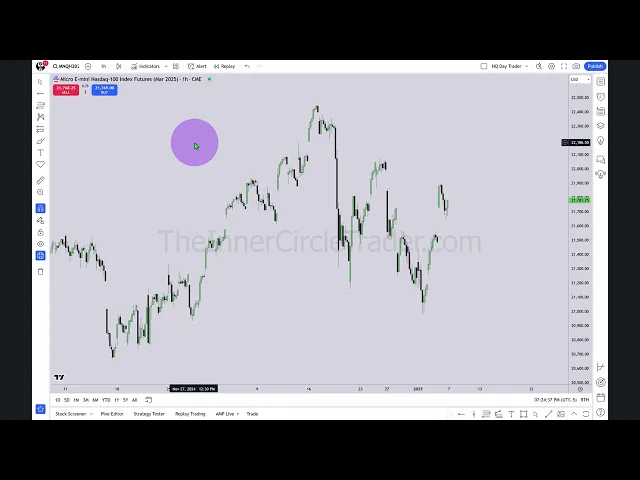
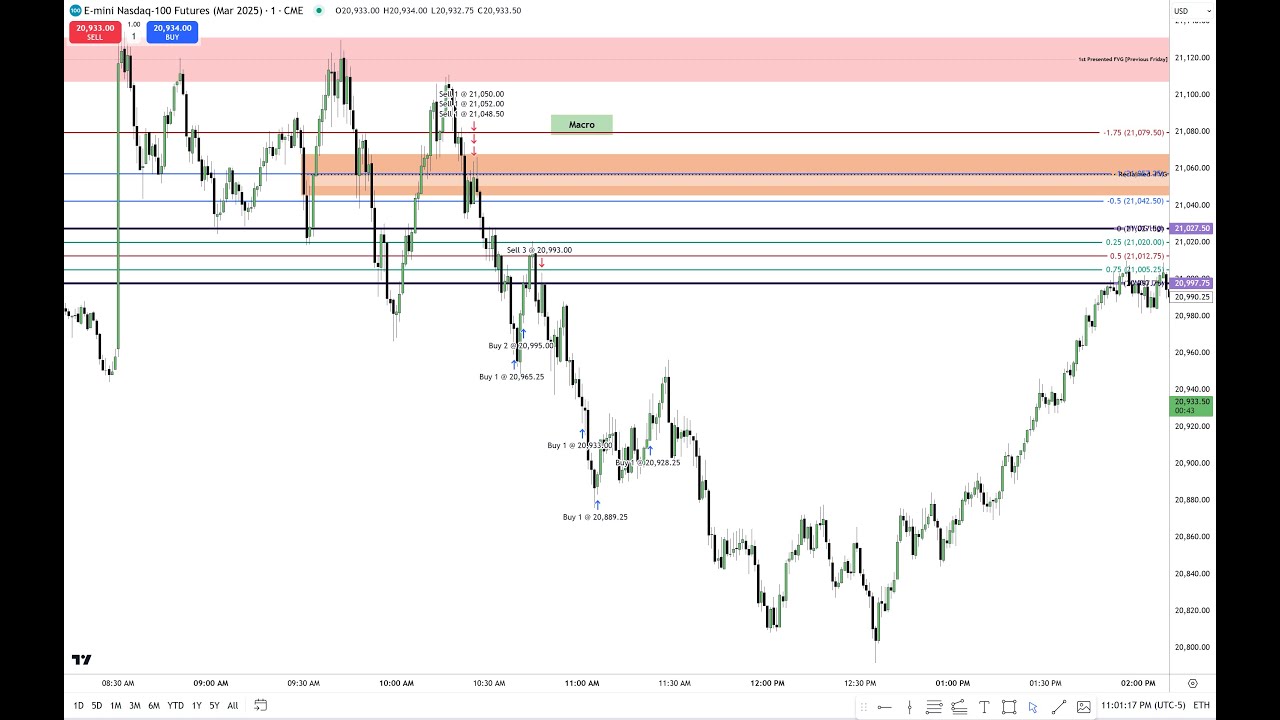
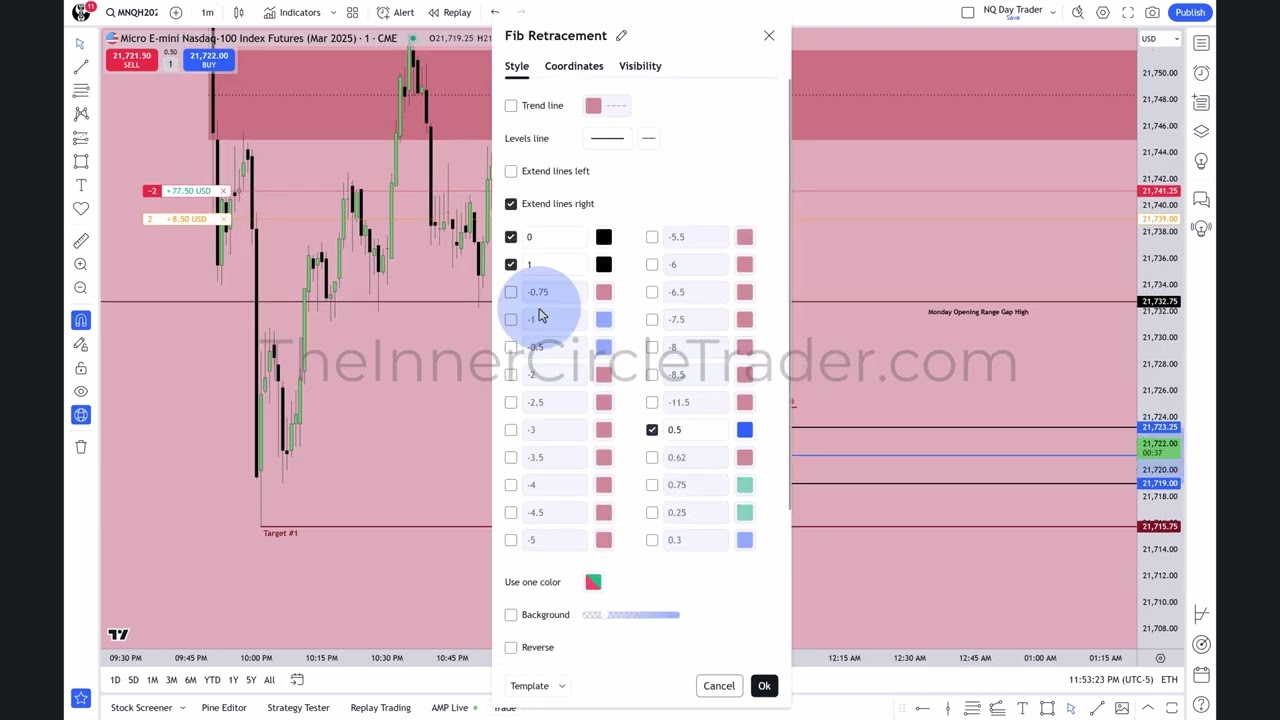
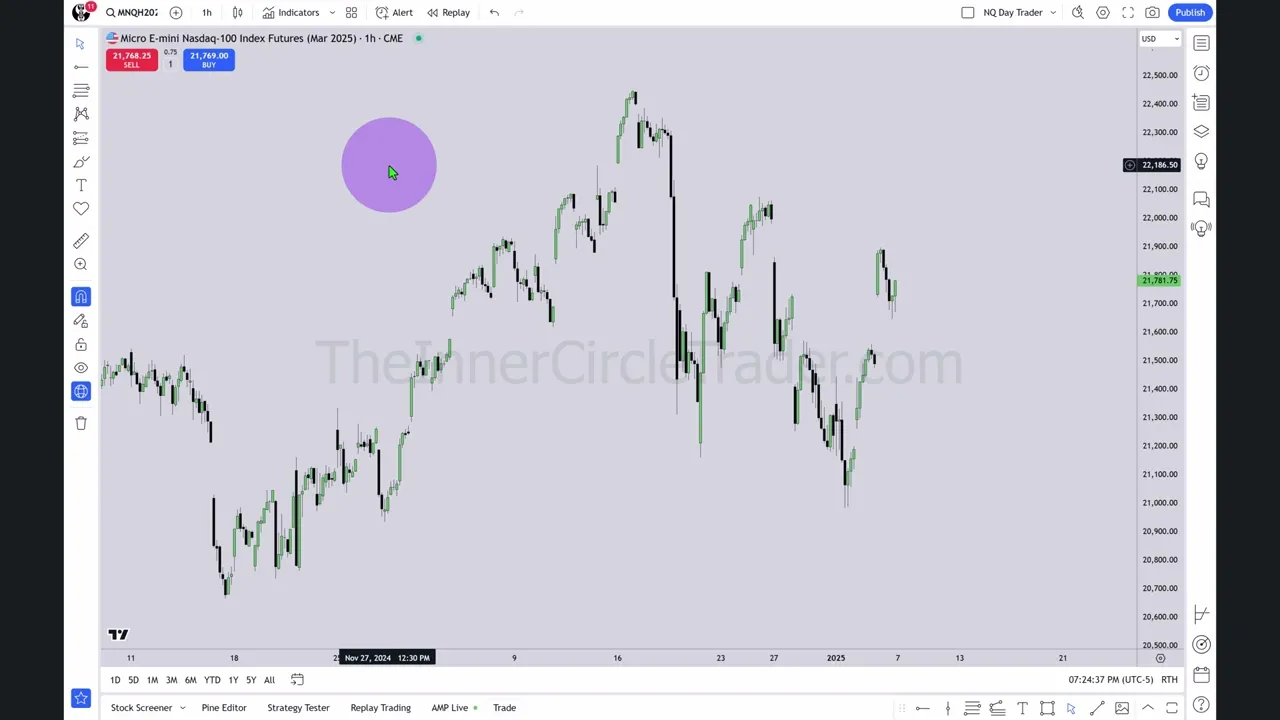
a micro account which is what you're seeing this chart here upper left hand corner you can see it says micro e mini NASDAQ 100 that means the point fluctuation that means one point higher or lower represents a $2 profit or loss per contract now a mini contract one point fluctuation higher or lower is a multiple of $20 profit or loss depending upon on the direction of the position you're holding my advice is no one that ever transitions from paper trading into live account trading and or prop should ever go right into mini contracts ever because
you're transitioning to a point at which now risk means something it doesn't mean as much when you're trading with a demo account it doesn't mean as much when you're tape reading or back testing that doesn't it doesn't cost you anything if you're wrong doesn't cost you anything in terms of Pride or ego and certainly doesn't cost you anything in terms of monetary loss so starting with the very minimum minimum that's available in terms of a Futures Trader you have to start with the smallest or least in terms of risk and that is not a disadvantage
it is extremely advantageous for you to apply this approach going into live trading so there's five central tenants I want to cover and then we'll get into the nuts of this lecture because I don't want it to be too long so making money with smart money Concepts 101 okay the premise is this you're going to settle in on one market or one asset class okay and since I'm predominantly talking about initially but we're going to talk about Forex 2 in this 2025 lecture series but I have to start here because this is predominantly where I'm
going to be focusing my actual trading the Futures Market since I like trading index Futures I have a choice I could trade the Dow futures I could trade the S&P and or the NASDAQ I prefer the NASDAQ because of its volatility it means it's a lot more wild when it moves and because of that it will afford me a lot of setups intraday okay now I could trade less than one minute I can trade one minute charts I can trade five minute charts a 15minute chart an hourly chart a daily chart a weekly chart but
for the sake of using the information that was covered in 2024 and the core content I'm going to try to focus on one minute or higher and the idea is to teach how to go into trying to find a consistent incom driven model it is not a getrich it's not a win of robins cup it's not a you know competition model all those things can be tweaked and I'll talk about that before we close the the lecture series out I don't know what what point that will be but sometime before I end it this year
I'll talk about how you can tweak that and make it so it's Olympic level but I don't want anyone to go into this with the expectation that you're going in there to try try to make the maximum amount of money you're not trying to be the the newest highest paid out ICT SMC but don't want to call yourself an ICT student record holder in terms of what you make in prop so it's meant to make your ends meet that means whatever bill that you have monthly that's a real world cost for you it might be
a insurance premium it might be a car note premium it might be your rent or mortgage pay or a percentage of it you should sit down and figure out what that is that you're going to Target as your realistic goal it doesn't mean try to make all of your bill money because that's again trying to place an Olympic level expectation on yourself as a brand new Trader transitioning from demo into real money risk with live funds so you want to have very very soft roll out of what it is that you're targeting so by settling
in on one market and I'll be using predominantly the NASDAQ futures contract I will we starting with a micro account or not account but employing the micro contract because I want you to see how even though that's a very small fluctuation in terms of monetary profit or loss it starts to build up quickly and that is unfortunately something that is overlooked by everyone because they all see people trading 30 contracts 15 contracts multiple contracts of the many and they see what the payouts can be if those are consistently done correctly but they don't understand the
power of fear and greed while holding those positions and that's why you don't see most people that trade that big size they don't hold those positions very long because it wears them out emotionally and psychologically so I want to kind of show you how to hold on to very small positions and gradually transition to being comfortable holding and letting the concepts do all the work for you but you have to grow grow in your understanding where there's now real money risk and that can't be learned from a book you can't hear me talk about it
you hear other people talk about it you have to experience it and so many of you that have tried to do this in the past or about to try to do it you're many times regretful for having done so because you're trying to do too large of risk holding too big of positions or trading too often Central tenant number two is knowing how price tends to deliver based and buy time that means by using an economic calendar and understanding time based delivery that means macros that means certain aspects of the daily range when do markets
usually run when do markets usually consolidate when do they likely reverse you know those types of things and I covered a lot of that in this YouTube channel but I'm going to show you the things that I'm pantomiming that means I'm going through the pretending aspect of a new Trader using ICT Concepts so going through this with the approach of this is what I liked in 20124 content and I'm going to apply this as the things I observed in my back testing that resonated with me it does not mean that these are the things that
you should adhere to or subscribe to this is why I'm in inviting you to go through the 2024 content you in in your own time at your own pace so that way you can subscribe to the things that mean much more to you the things that I'm going to adopt here it's not limited to this you could add more to it you can reduce it or replace some of the things but the things I'm focusing on is not the only smart money concept winning profile that's not the only model that is going to yield profitability
that's not the only thing that I can do as a Trader I can employ everything I've ever taught and things I'm never going to teach you but for the sake of stripping it down to the Brass tax of this is what you should be looking for as a simplistic approach to building a model that you can carve out and trade with the confidence that you don't have to have anything else you don't have to subscribe to a signal service you don't have to buy somebody's mentorship you don't have to make payments to get into a
Discord room you don't have to do any of those things all those things that everyone else is trying to rush to try to make money and not understand fully what it is they're doing because they're blindly following someone else I don't want you l l following me but I am going to share an approach on how you can build a smart money concept model using the 224 consent and then use a real account dillian Central tenant number three is understanding key pools of liquidity okay there it's a misnomer that you know obviously Common Sense tells
you there's a sell stop and there's a buy stop so therefore the market should do this and do that but understanding these key pools of liquidity and how they're going to be engaged by price that means why it should draw there I'm going to give you some details that have never been taught and and why I observed these things hypothetically in back testing tape reading demo trading and then finally transitioning so it's that part of that pantomiming I'm showing you some of the things that I have had emails from students all around the world give
me feedback about the things that they adopted and in those same emails they would say they were not interested in smt Divergence they would say I'm not interested in order blocks or I'm not interested in Fair Value gaps but I am interested in order blocks everybody has their own I guess adoption of the things that made sense to them in what I taught so there isn't just one way of doing it but I'm going to focus on the key pools of liquidity while building this model out Central tenant number four is identifying inefficiencies in price
that means which ones really matter to me in this model so that way it kind of helps you filter out the ones that are going to be problematic for just the average person because everyone thinks that you know inefficiencies have always been traded by everybody in in in the marketplace and that's not true it's actually a relatively new thing and an observation in price action because if you look at the oldest texts I'm talking things that are 1980 19 70s books about trading you don't see any measure of attention placed on inefficiencies in price and
you don't really see it in even the wof the Gan the uh you the old heads of technical analysis and number five finally is utilizing simple points of entry and low hanging fruit price objectives for targets and then simply wash rinse repeat over and over again doing the same thing so with those five central tenants now placed in your hands and they the central focus of this discussion I kind of like want to flesh that out and show you what that looks like over what took place today and kind of like give you a small
little sampling of what it is and how the model that I'll be fleshing out over the next 19 videos they all won't be this long but I have to have the luxury of having a little bit of introduction so that way it kind of like builds the premise of what it is we're doing it frames the whole lecture series about what it is I'm focusing on so that way you know what it is I'm doing the model that I'm teaching Works in Forex the model I'm teaching Works in currency Futures it works in just about
everything you can trade but I can't cosign crypto okay so just know that I'm not I'm not trying to sell the idea that you should apply it to that asset class but everything else Commodities the it all works there too okay but what we're looking at here is the micro e mini NASDAQ 100 index futures or said simply it's the NASDAQ micro contract meaning that every fluctuation in price is worth $2 Make It or Break It You coming out of your account so what I'm showing you here is the regular trading hours and I taught
this in the 2024 content and it was mentioned also in my paid mentorship and actually mentioned it in lectures a long time ago on Internet relay chat in 1996 when I actually started teaching when I really wasn't prepared to be teaching uh but I taught a lot of things about regular trading hours which was Globex hours and such but we're looking at regular trading hours the difference between where we settled previous day and then where we open up at 9:30 that's what this is highlighting here the benefit of having that information it gives us the
opening range Gap now I'm going to have very specific lectures on how I'm going to use the opening range Gap what sets up conditions to where it makes me interested in a trade whether bullish or bearish that's not going to be covered in this video but will be its own individual video I'm going to talk about the opening range which is the first 30 minutes of trading I don't care what anybody else says that's the only range the algorithm worries about okay then I'm going to teach you the first 60 minutes dealing range totally different
and how to use that what that means and how it can help you understand the power three or the characteristics of a daily range how I'm going to employ that consistently going back in looking for the same things all the time if those rules are not met I'm not trading on that on that basis then I have to sit still that's why we have a model that's why we have to flesh out some kind of trading plan that we're going to stick to and adhere to and that way we will have measurable progress if we
stick to rules that are based on Sound Logic then it goes without saying that it's reasonable to anticipate progress that's profitable it doesn't mean every trade is going to be a winning trade it doesn't mean that it's going to be you know a lot more wins than losing it just means that the net result should be profitable and in your first year that's what you should be aiming for it should not be to have a windfall profitable year and you'll never hear any one that's being paid as a mentor or teaching or selling books and
courses they're never going to tell you that because they want you sold on the idea that as long as you listen to what they're saying or what they're teaching or what they're selling basically is that you're going to get rich or make lots of money and I can't make that promise for you and I'm certainly not doing it in here okay so you're going to see losing trades you're going to see me lose trades because I'm going to use rules and I'm going to place myself in situations like a new student that transitions from paper
trading into live trading you'll see it you're going to see it in a broker statement you're going to see the EV and flow of equity rising and falling and you're going to see the benefits of using a micro contract initially because imagine you yourself you know yourself you're probably impatient you're in a rush to go out there and start making money don't you think that you a little unsettled scared if the first trade you put on was a losing trade you'd have a lot of regrets right right a lot of remorse and you would have
wished you would have started on a smaller contract basis instead of doing two or three minis because your prop firm or your account allowed you to do it I'm trying to give you a real practical approach on how I believe that a student that makes their decision to do this I'm not suggesting all of you should do it a lot of this should never be done by any of you because you're not prepared eventually when you are prepared and you've proven to yourself by consistently yielding results following a model most of you probably don't even
stick to the same model so I'm going to I'm going to show you how by doing that it gives you confidence that you don't have to worry about what ICT or somebody else on the internet's doing because their results my results are not something that you can benefit from you can't spend the money and you don't have to sleep on the losses that we take either so you have to have that experience in your own hands so by having regular trading hours it benefits Us by knowing where if there is a opening range Gap and
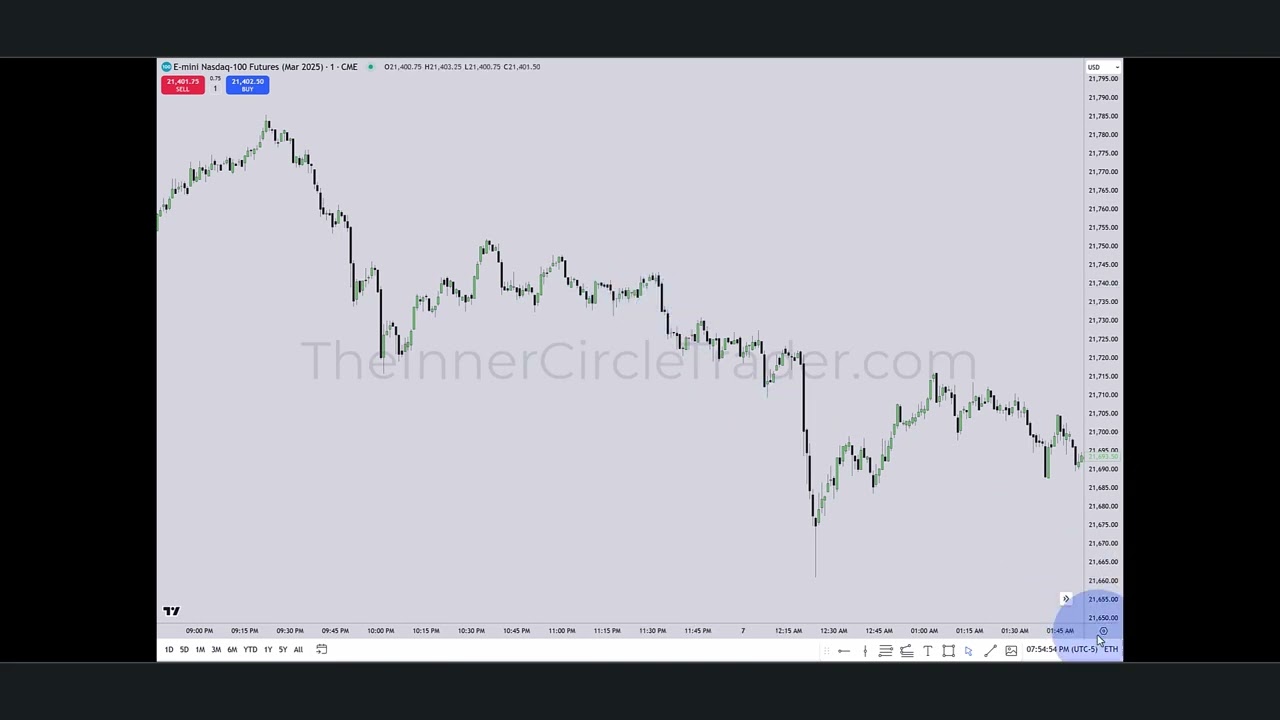
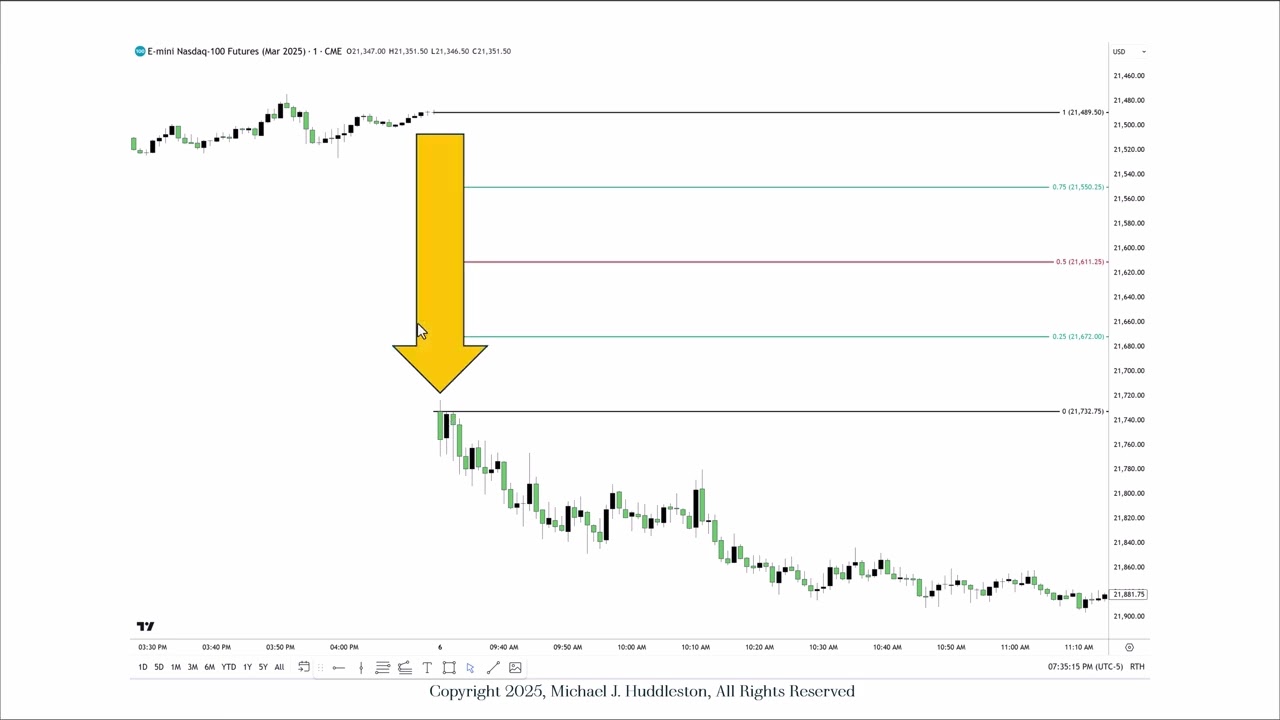
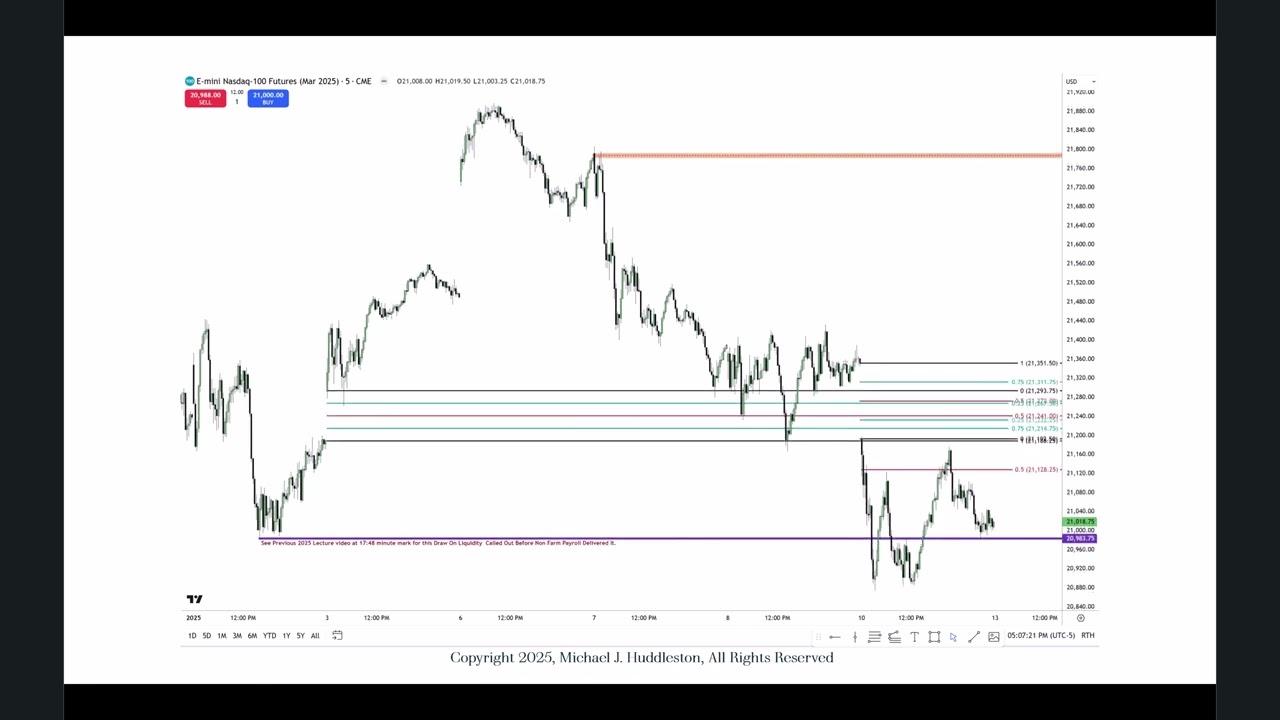
by knowing where we settled the previous day that's the benefit in it so I want you to see that for today we had Market trade higher here and we had this large gap that has traded since 9:30 this morning so that opening price there and the settlement price there that difference is the opening range Gap now I'm going to show you also by dropping into a one minute chart we're going to scrub back here and you want to do your measurements on the opening range Gap with the one minute chart in regular trading hours so
having the open and close on this here is the same price essentially and this is the beginning points of making money with smart money Concepts you have to have a frame of reference you have to know where where do you start well if you're day trading and you're trading index Futures this is where you start is there a Gap we can see that the Market opens up at 9:30 we now have what is described by me as the opening range Gap it's the regular trading hours difference between today's opening and previous days regular trading hours
close that's all it's doing now when we do that if the Gap is larger then say 20 handles you can start running your FIB across it and I'll let you see my settings I I get asked that a lot un toggle this for now these are the settings so this is the lower quadrant upper quadrant Midway point or consequent encroachment and then you can highlight zero and one which is going to give you basically the same levels that I've already highlighted here with those black lines so it would look like that okay so we have
a premium gap opening and I'm not interested in trading long on that when it's such a large gap opening like that so I'm going to let it trade higher I want to see where it could likely trade to okay remember we have to know how prices likely to deliver and by time and we know it's non-farm payroll week so we want to be trading on Monday but we have a large gap like this we have a tendency to do what keep going in the direction of the Gap but eventually in the afternoon between 10:00 and
11 o'cl we could see a a change or a shift in Market structure as we enter into that lunch hour and then we could anticip ipate a move back into that Gap being the separation between previous day settlement and the opening price so the upper quadrant that's a very important level I think that that is a high probability draw on liquidity if the market eventually can show me that it wants to trade lower so by knowing where the market May likely draw to before it can reverse and trade lower those those are important factors in
what it is I'm trying to ascertain in price action so I sit on my hands I'm not interested I'm not interested in trading this long but I'm also not trying to pick the top either I want to see how the market can produce a turn lower I don't need to pick the top in that and I want to see the market provide a time-based delivery that's a macro and I'll talk about macros in this lecture series and how I'm going to employ them with this model it is not the again it's not the Panacea it's
not the be all endall with macros this is how I arrived at a model using them you can make lots of different models I could make a model every single day using the macros 365 days and they would never be the same model okay it it provides you such a wonderful tapestry of applying this information on an individual unique basis nobody's trading model is going to be the same and it doesn't mean that you can't be profitable all of you can be profitable with the with a different model using what I've already taught in smart
money Concepts so since we have the opening range Gap here defined and we have all the gradient levels here um obviously moving half gap which would be much more significant of a move uh I don't require that what's the highest probability direction that it's likely to trade to go below this low because that's the lowest low of the day at the new start of regular trading hours that means 9:30 today and then the next quadrant is here so 21672 even to me is high probability it means it's likely to draw to this low and as
much as that level here and it could trade down to half but I'm not going to require that so what's lwh hanging fruit objective eventually trading down here what's high probability draw the upper quadrant using the opening range Gap and I'll talk more about it in its own individual video but for here it's accomplished the method so now what we're going to do is we're going to go up to a 60-minute chart and I want you to look at how we have the data that's shown here this is the opening range gap on the 60-minute
chart again regular trading hours if you look at over here we have this drop from high down to that low this is a lot of gaps in here so I'm going to remove all that mess and noise and go into electronic trading hours and we're going to clean up that range so now I can go and look at this same thing here so we have this high and this low so this was the old range okay or old dealing range if I note this like this and this low here when the market broke below this
low here there the market was bearish now obviously I know there's going to be some you know very cynical people that I'm never going to see the comment from they're going to say it's obvious it's hindsight but you have to do this stuff in back testing studying it get the information see it get used to seeing the pattern get used to seeing the order flow and then how the market runs for liquidity but we can see how was bearish here and the market creates a low lower low lower low and finally does in fact trade
below that low here so what was resting below that low it's sell side so because we are not demanding that the market created a low or long-term or IMM term low here to trade back Above This High we don't need to have that high broken so all I need to know is where is premium where's discount relative to now this High and the this low why am I referring to those two reference points now because this range was tacked and traded outside of by these two lows here and it's reasonable see the price want to
come back up take out this high with is this High form low I lower low that takes liquidity that's a high probability ICT smart money concept breaker it's a bullish breaker and you can see that's occurring right there trades higher and all of these buy side liquidity pools here here here and then this one here has the added benefit of what to the left of it an inefficiency in the form of a sell side and balance buyid an efficiency so we can take this little area here and zoom in right there so it's this candle
this candle and this candle so if we highlight that this price and we'll we'll make it um like that that ways a little bit so we have this closing price to this opening price this closing price is slightly higher than that one that's why I'm using it because this is a small little tiny volume balance if you look at the closing price which I don't show here let me add them now I apologize the closing price here is 2,695 75 and the opening price here is 21694 .75 so there's a difference of one handle but
that's enough to create a volume in Balance so that's why we're using this opening price and not the wick okay so otherwise if these two if this closing price was overlapping where this price opened or Candlestick opened there wouldn't be a volume in Balance so because there is one there is a volume in Balance we have to use this candlestick's opening otherwise if this was lower than this candles opening it would be resting on this candles Wick High same thing here this candlestick's closing price comes in at 21894 even you see that here and this
candlestick's open is what 21893 75 so it's one quarter of a point okay or one tick so there's a separation there so we have to Anchor the cell center balance B def efficiencies U labeling or overlay with the rectangle um tool on this Candlestick closing price if this candlestick's closing price was lower than this candlestick's open we would simply use this candlestick's low on the wick so that way now you understand how I'm going to use that information when I'm looking at sies and buyid balance cell efficiencies bues all of my inefficiencies are defined like
that okay by doing this you're going to get the algorithmic Precision of where consequent encroachment is and you'll see what I mean in a moment so I'm going to take this and highlight the extend to right and that way when we draw back out to this perspective everything will be clear so now we have several things in in reference now we have this inefficiency here that is inside of a premium how do I know that well we have this range low and this Range High so the market has traded between this Range High down to
this low this level here defines equilibrium and anything at that price or higher is a premium that means it's expensive it's a target for when you're bullish or it's a place at which you want to use the sell short at at this price or lower it's discount that means it's a target for anything that's short or it's a place to go long when you're want to be bullish well since the market has worked off a bullish breaker here it trades up I'm not interested in going long here why because we have a large opening range
Gap at 930 opening so I don't want to be in this market doing anything long because I want to see how it's going to trade to this inefficiency here so we have the upper quadrant which is right around what optimal trade inury would be remember the old Flagship idea that I taught on this YouTube channel so the market trades up hits that and then it starts to roll over and then when I I want to see is does the market in fact attack after 9:30 is opening does it attack that upper quadrant that's level here
which is part of the opening range Gap so now with this frame of reference we know that the market did in fact trade up into a premium we completely overlap this sell side and balance by side and efficiency so efficient delivery's been given this one single candle down what's it lacking overlapping price delivery that's on the upside in other words buy side is offered to the marketplace that means a candle or candles plural has overlapped this entire range that's highlighted in pink we see that happening here see that and then we have a small little
Wick outside of it and then we break lower and then then it does in fact trade to the upper quadrant it does not trade to the consequent encroachment or middle of the opening range gap which again is defined by these two black lines here so now we're going to drop into a one minute chart and flesh this out and you look at what we've seen today initially at 9:30 we see the market well at 916 it Dives down and does in fact trade to the upper quadrant of the opening range Gap level but we don't
know what that level is the upper quadrant yet because we have to have first the opening bell at 9:30 so that means at this Candlestick right here at 9:30 you can see that that opening price is what's it's laying on top of so that's your opening price at 930 right there okay so this upper quadrant level is not Salient at this moment here it's just so happens that it does in fact trade down in there look at the bodies respecting that level as well so I think that's a little algorithmic but that's outside the scope
of this discussion at this point here at 9:30 then we do actually do have the opening range Gap defined by that opening price down to the previous day's settlement price and then we have the lower quadrant consequent encroachment and the upper quadrant level and then the opening price at 930 so this is in in its entirety the opening range Gap so as I defined earlier I'm only interested because he has such a large opening Gap it's several hundred handles that means it could potentially keep trading higher in that direction so you got to be real
careful it's too big of a gap so I'm going to elect to not do anything by going long and chasing the direction of the Gap and I'm also not looking to sell short initially just to see it go down to the opening range Gap and trade into the opening Port portion of it I have to defer that interest until later on what constitutes that that means it we have to wait for it to trade up into that 60 Minute inbalance so it does in fact trade up into it there look at the bodies respecting it
this is a one minute chart that small little deviation outside of that Cy and we spend some time here at the high end of it and we start to roll over and you can see how trading into the lunch hour we're getting a little bit of a retracement notice the halfway point this is consequent consequent encroachment of this pink shaded 1 hour inefficiency it's in a premium relative to the large 1H hour range and now we're starting to work that level here that's that midpoint of this pink shaded area and they work through lunch like
this and then at 1:30 we start looking for the PM session trade now I have the market trading to the low end of that 1 hour Cy that's that pink shaded area here so I've already seen it trade down below the midpoint and then it traded back up to it and look at the bodies respecting it so so is it indicating at that time that the market is wanting to explore anything higher no and at 130 we're now entering algorithmically the PM session or the afternoon trading so what do we have at this point we
have the market trading up to and completing the full delivery to that 60-minute sells side and balance by an efficiency then we want to watch and see does the market does it move lower it does does it breach the midpoint of that inefficiency it does once it does that does it show a willingness these are all algorithmic signatures these are these are indications that the algorithm that's offering price it's not the buying and selling pressure that the algorithm is offering the signatures proving okay like flashing a neon sign like a billboard sign on a highway
that this thing is going to go lower don't anticipate anything in the upper range of this now because it's already been fulfilled by this run here and look how much time it's spent up there so now at 1:30 the gears have now changed to now looking for the market to move lower and now I have a trade stage where I can now engage price action but I don't want it to Simply go into it willy-nilly that means I want to go in with something that's algorithmically timed by a macro I want to Target liquidity I
want to have a very simple entry strategy and and I want to know where it's likely to draw to and then afford myself the opportunity to catch a runner if it wants to trade down to the midpoint of the gap or consequent encouragment which is that blue line here so I want to frame an idea around all those things so let's take a look at that now right so here we have the market trained in on the 250 to 310 macro time we're trading near the low of that 6 60 Minute Cy and here's that
upper quadrant level on the opening range Gap and if I scrunch this up a little bit more you'll see that the 50% level of the opening range Gap is down here so that is a wild card I don't know you don't know no one knows if it's going to trade down there but we do have a high degree of probability that it's likely to draw to the upper quadrant level so that's what I'm focusing on in the trade idea this Candlestick we opened lower here the very next one minute candle I want to be short
so when it opens I want to use that open and anything that trades back into this candlestick's body or Wick so you can look at the low of that Candlestick there it's at 2,710 and by using that as a immediate rebalance this next candle here we open we trade up a little bit the high of that candle comes in at 12.50 and I I only had basically 1 25 separation between the two there was literally no draw down at all from the entry though it trades up to it hits the uh immediate rebalance and then
delivers lower so I have immediate feedback that I'm I'm on side I'm targeting this level down here but I don't want to just simply take profits as it hits that level I want to try to get to that level and lower because I might get lucky and see it trade to half the opening range Gap so I want to trade with this and watch how it delivers and to move away from this 60-minute C's low which it does aggressively here we have a little bit of retracement back and forth in here and finally we have
a little bit of on this Candlestick when it was breaking lower I thought that we were going to have a a pretty good chance of getting to that consequent encroachment of the opening range Gap so what I did was I rolled the stop to 21,6 66.5 and you can see that it does in fact hit that it was based on being in the upper portion of this body so I felt if it did that it probably would have rounded this low out and then move back up into this area and maybe trade back up into
the 60-minute civvy and in fact that's what you see here so there's the entry I'm sorry the exit being stopped out and here's the entry point there using the immediate rebounds okay so those were Concepts that were taught in 2024 also they were taught in core content so it's all throughout this YouTube channel no you don't find that in W off or game or anything else so if and I had to toss that down you couldn't go without saying it could you no I can't I'm sorry that's just the truth okay so the difference is
that there is about 50 handles or so between the entry point here and down there now it's done with one contract notice that it's done with a micro now when you first start trading you might not look at this and think wow that's that's not a lot of money but what this does is it gives you the confidence that you can number one see the price action deliver you have some measure of precision you don't need it to be perfect you don't need to be surgical but you have something that is lending well to the
discovery of what you've seen on this YouTube channel and then put it into practice and you can make a model out of it and then we get into the last trading hour of the day in regular trading hours which is 3:00 this thing could do what it could start to draw back up into the range and as exactly what it did so watching from that point on here you can see that it does in fact trade higher and moves in consolidation and eventually trades up into higher portions of that civy and then back down and
outside of it once more hitting that upper quadrant of the opening range Gap level one more time look at the reaction off of that you don't think that's algorithmic price comes right back up trades into the settlement at 414 again in the upper portion right here almost back to consequent encouragement of that c on the 60-minute chart so knowing when to trade the morning session versus knowing when to trade the PM session when there's a very very large gap opening I'm not terribly excited about that I I kind of like want to sit and wait
and then if I know it's likely to draw into that opening range Gap and there's times where based on what the market does in the morning session the first 60 Minutes of trading which I'll have a video entirely about that it'll give me insights about whether I sit on my hands and do nothing or I wait for a reversal and then I play after the reversal is done proven itself and and kind of tips its hand I don't want to kind of convey the idea that you should be in here trying to capture the highs
and lows and back and forth up down you know that's what the 33 years of experience Michael can do um in the beginning you're not going to have that level of experience so it's not reasonable or practical for me to try of inspire you to do that if I'm teaching you and I'm telling you you shouldn't try to do that initially and then you shouldn't either because you're acting on infancy in terms of experience and that's not meant to be derogatory or talk down to you it just means that we're talking practical and if we're
going to transition from demo trading and back testing and tape reading and all that to now we're dealing with real risk and if you haven't noticed yes that's a amp Live account right there and this is actually a a trade that my son and I worked with and I walked in through it and this is what it looks like he pushed the button clearly but it was based on the logic that I shared with him so that way you understand the the mechanics of what's here so again Live account live execution real world trade trade
with real risk and going back to it you might ask yourself you know what would a trade like that require in terms of a stop loss and I don't want Caleb to have more risk than what 15 handles on this with a micro so what does that translate in terms of monetary risk it's only $30 so let me ask you a question if you were willing to risk $30 but you could make $90 or more is that a reasonable risk to reward 3 to one you're risking $1 to make $3 so you can you can
be wrong a couple times in a series of Trades and still be net profitable on the week the month or the year if you can model that eventually you want to try to do things that allow for a five to one or more but you're going to need a little bit more insight and more execution and experience before you can do those types of things so yeah I could start with one to one but I know that that's going to invite a whole lot more trading ideas for some of you that are going to try
to mimic and Par what it is I'm doing in this model and I'm not trying to inspire you to copy me so that's why none of the trades are going to be a live stream type thing because I don't want you to hurt yourself I'm not infallible you know I have a very large audience and it is basically inviting you know more liquidity to pull around a specific price level and it's very simple to reprice to that and not show any real benefit of following that idea cuz if everybody's dog piling in on the same
absolute price level if I'm live streaming and for the people that don't know how to trade or don't know how the Market's actually Book price uh this doesn't sound normal to them it sounds like an excuse but again you're seeing broker statements you're seeing a live account down here these are all things that you can't fake okay um it's actually U something that I want you to appreciate because I don't have to do these things like I I could just sail off into the sunset and be done I mean I really can but to show
you you how the actual transition should be done from back testing to logging to forward testing and demo trading and then finally making the decision to move from those risk-free environments to now allowing and affording yourself actual risk but then also managing that risk appropriately so that way you're not trying to do much more than uh that's required so basically getting in with a entry point at 71.2 your stop loss would be 71262 so that is a 15 handle stop so that is up here right there okay so you can see it didn't even have
any interest in getting out to that point okay does that mean every trade's going to be a 15 handle stop no it might be smaller but because of the nature of today we had the um election certification today we had you know all the other things that's going on so it's just reasonable it was practical for me to suggest the Kayla that he uses a 15 handle stop loss here and then to target that upper quadrant of the opening range Gap and then see if he can trade lower he could have had an exit down
here that would have been much more favorable but we discussed it and he agreed that let's just see if it can trade down into that consequent encouragement if it stops him out it doesn't matter it's still about 50 handles or so and that is a really good return it's it's a really good return for the r that was implemented and if you can try to Target trades where you're risking 3:1 or 4:1 or 5 to1 or higher um you're not going to get as many trades as you could if you were trading 10 for 10
you can do that all day long when you know what you're doing but again this lecture series is based on the the new student transitioning to live funds how might that occur and it's not an instruction manual for you to copy this I'm not telling I'm not telling you to do this and you're going to make money I'm showing you as an example nothing more just simply an example of how it could be done and how using the ideas that were taught in 24 that that mentorship I gave you a lot of wonderful practical algorithmic
truths to what price does and why it does it and again another example here with a live account it's not Market replay it's not demo okay there's real money at risk here albeit in this example it's not much money at risk but it's still money that you know if Caleb would have lost he would have felt it you he would have said you know it's not fun but when you have winds that are measurable based on the logic that sound it repeats more than it doesn't it means there is an edge there and it's based
on time based delivery and price that's not white cof that is not Gan that is not anything else it's simply what the market simply does because it's scripted and by waiting for these signatures to manifest itself in price action we can trust that the edge is now shifted potentially not guaranteed in our favor and if we follow rule-based ideas and we manage risk impeccably we stand a good chance not an absolute Panacea be all Indo profitability it just means that we have a good chance that if we manage it appropriately we can potentially yield a
positive or profitable outcome but because we're not risking a whole lot we can weather the storm of a loss a series of losing trades and work our way out of that and hopefully you'll see examples of that with real broker accounts and statements and things like that so hopefully you found this one insightful hope it was inspiring to you and I hope you stick with this lecture series it's again 19 more lectures this month they'll be complete by the the last Friday of January and only delivered on Monday through Friday on the weekends there's no
lectures there's no videos okay until I'll talk to you tomorrow evening at 800 PM eastern time be safe