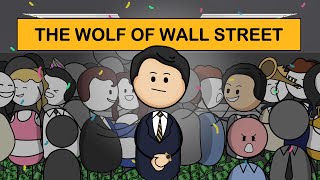
In the 80s and 90s, the stock market was a place where ambition turned into greed. There was only one rule. Make money and spend money.
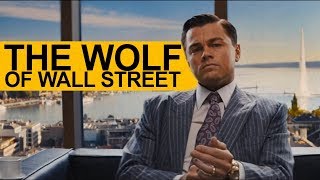
It was a world dictated by vice, fancy cars, expensive drugs, crazy parties, and lots of sex. And one name stands out, [music] Jordan Belelfford. We've all seen the movie and heard all the legends.
But there's more to the real life Wolf of Wall Street than a couple books and a movie. And we'll tell you all about it in this episode of Company Forensics. A wolf is born.
Jordan Belelfford was born in Queens, New York, and he got into selling stuff from a young age. In his book, he tells how he and one of his childhood friends sold Italian ice cream from sterrofoam coolers, managing to sell up to $20,000. He planned to use his money to enroll in the University of Maryland School of Dentistry where he lasted [music] one day.
The reason the dean told him dentistry wasn't a career to make money and money was all Belelfford wanted. So he ventured into selling meat and claims to have sold 5,000 lbs of meat in a week. This business however went bust and at age 25 he had to declare bankruptcy.
Then he took a job as a stock broker at a major firm where he found his calling. Eventually, he had enough money to buy out another investment firm called Stratton Oakland. He hired some of his childhood friends such as Andrew and Kenny Green and Daniel Porish.
[music] Even his father was in the mix. These were determined individuals who had one goal, [music] to make money, and lots of it. And they made millions.
At just 34, Belelfford had already taken more than 20 companies public and his fortune was enormous. However, not all was perfect, and we need [music] to take a pause here. Belelfford has always claimed that Stratton Oakman had the best [music] intentions in mind, but the company frequently crossed the threshold of legality with something called pump and dump.
This scheme consists of inflating or pumping the price of a [music] stock to benefit stock owners. After pumping the price, the owners sell it quickly or dump it to make huge profits. But because there was so much stock flooding the market, the prices plummet and those left with those stocks lose a lot of money.
And the stocks he bought weren't even good. The value came from his minions spreading rumors and positive statements only so that he could dump the stocks fast. Stratton Oakman's environment was [music] what's called a boiler room in which salespeople work in a higher pressure environment trying to sell securities to potential investors.
[music] One key strategy in boiler rooms is that they never used negative terms and discouraged customers from researching in other places. Hey, trust me, [music] it's a once in a-lifetime deal. The rise to the top.
A lot of people wanted to work for the fast growing Stratton Oakman firm and most of them were undereducated young men and women desperate for money. Such staff seemed like a bad hire. But for Belelfford, it was great.
He could mold his employees into the best version of what he needed and build himself an army of moneyhungry predators willing to shake up the stock market. He even had a nickname for them, the Strattonites. One of his biggest hits was taking Steve Madden's brand public.
How? Well, his partners had Madden stock at about $5. He pumped up the value to about $20 a share through his boiler room operation just after opening.
Then he called his cronies in places he affectionately knew as rat [music] holes, which I'd love a tour, to dump the stock and produce most of the profits. With this operation, he earned about $20 million in just 3 minutes. But having an army of drones and millions of dollars didn't stop Belelfford.
No, he wanted more and created other brokerage firms to have more control over the stock market. But two elements of the ecosystem were growing out of control. First, the size of the operation and then the crazy vicriven allout lifestyle.
The wolf gets hunted down. Belelfford was living large. He once had a $700,000 hotel bill.
He landed his helicopter with one eye closed because he was so high his depth perception was off. He sank a yacht. His secretary sent him drugs to London via conquered because he had consumed them all.
He has even said he took enough drugs to sedate a country. [music] But he wasn't the only one. He even wasn't the wildest member of the team.
That honor goes to Daniel Porsch. He partied to such an extreme many have described him as giving a new meaning to the term abnormal. Porsche commonly smuggled drugs in his rectum when the team went on international trips.
And legend goes that he even swallowed his employees pet goldfish [music] as a punishment for being unproductive. It's safe to say that no one in that firm flew under the radar. Add to this their shady scheme and Stratton draw a lot of attention, which of course wasn't a good thing for them.
Entities such as the SEC and the NASD had their sights on the firm as far back as 1989, intending to shut it down. In fact, after many attempts, the SEC finally managed to corner Belelfford and charge him with illegal practices. He reached a settlement in which he had to sell all of his shares of Stratton Oakland and his shares went to Porsche who ended up as president.
But this was only the first blow. Porsche did a lousy job and the firm went bust when in 1996 the NASD expelled Porsche and the firm rendering it unable to operate. The hunt had taken so long that the NASD celebrated the expulsion.
With this expulsion, we have rid the securities industry of one of its worst [music] actors, said NASDA regulation president Mary El Shapiro. Talk about having haters. But losing his firm was only the beginning.
Belelfford [music] learned through a friend that the FBI was investigating him for money laundering and fraud. Having the feds on him only increased his drug consumption, which was already plenty. He loved cocaine, meth, and quaudes, a drug popularized during the 70s and 80s that provided a euphoric [music] effect.
In many interviews, Belra has said that he took eight when an average person took one. His drug abuse was such that a blood test revealed seven different types of drugs in his system. He grew paranoid of his friends and associates, especially after authorities detained his banker in Switzerland for money laundering.
With so many drugs in his system, he once kicked his second wife, [music] Nadine, down a flight of stairs. Another time, he took his Mercedes and drove back home only to realize once he got there that he had crashed into several objects [music] and just didn't remember. He was falling off a cliff.
And then the authorities finally caught him. But when they did, he [music] decided to save himself. He cooperated with the authorities and against his former colleagues to [music] have a reduced sentence of 22 months.
Plus, he had to pay back $110 million, which might seem like a lot, but that was facing up against 30 years in prison. [music] And currently, after serving time, he gives lectures on how to bounce back. He's off drugs and says he's sorry.
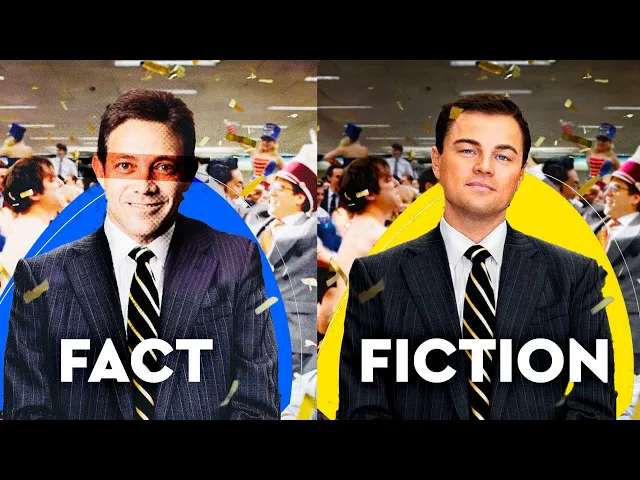
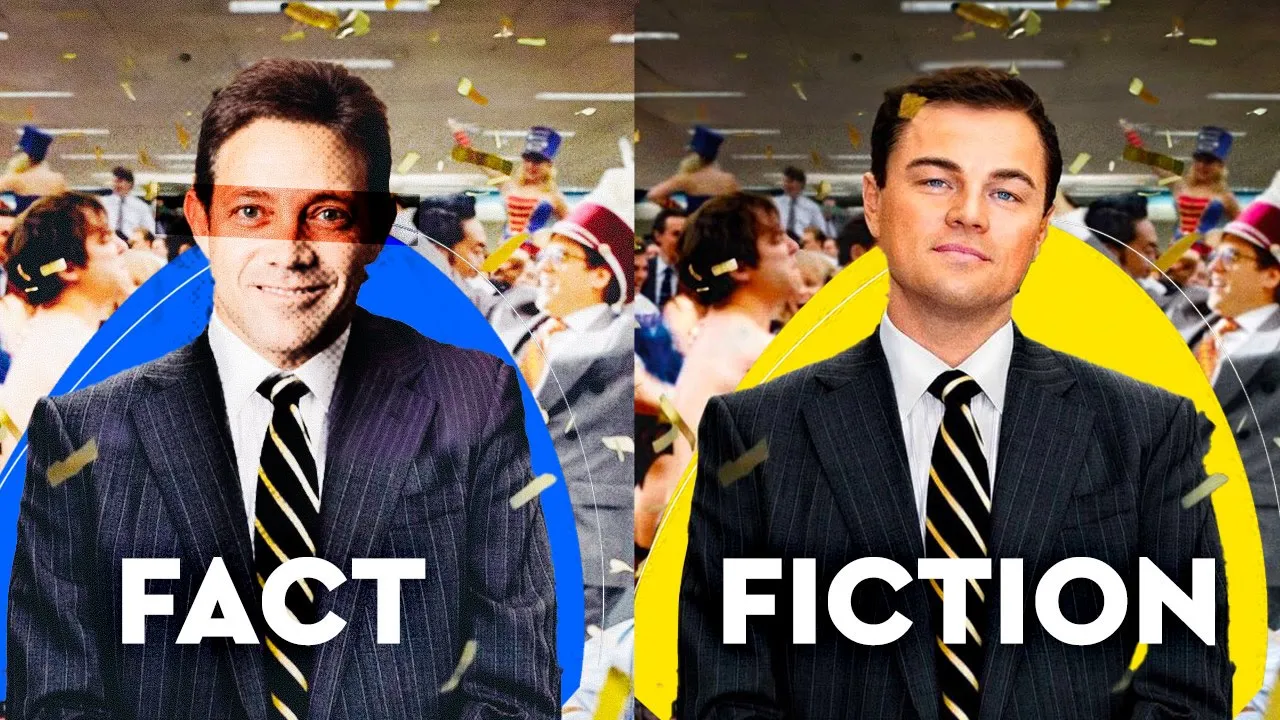
And that's where the story ends. Well, no, not quite. Fact versus fiction.
The Wolf of Wall Street was a wild ride. But there's a big flaw, and it's the narrator. Remember that Belelfford lived in a drugfueled [music] bender in those days.
not the best combination if you want to remember the past. One critic said, "The book is a distant relative of the truth and the film is a distant relative of the book. " And that critic was none other than Daniel Porsche himself.
When the book was released, Porsche's's biggest problem was the fact that Belelfford had used his name, which is why Martin Scorsesei changed the name in the movie. All he hopes with the film is that it doesn't glorify criminal behavior. With due reason, it is pretty wild.
The former co-founder of Stratton Openman has gone far to debunk certain aspects of the film. Nobody called Belelfford the Wolf of Wall Street. There was no member requesting a sex-free work environment, [music] and there was never a chimpenzee in the office.
But Porsche did swallow a goldfish, a [music] source of protein. I would suppose there's another source of criticism, but not with the books or the movie, but with Belelfford himself. Yes, he has changed, and that's what he claims.
He talks to significant companies [music] about success and business and shares his experiences about remaking his life after prison. But many [music] doubt his new holier than thou persona. In an article in the Independent, former FBI special agent Greg Coleman said of Belelfford, "I have run into individuals who were bad people doing bad things, and I've run into ones who were [music] good people who made a mistake and will never do it again.
" Belelfford was terrible. And while there's some attempt on his part to clean up and change, I think he is still a work in progress. There were a lot of victims who could ill afford to lose that kind of money.
Belelfford has repeatedly said he's sorry, but former prosecutor Joel Cohen thinks otherwise. My sense is that he's only half repentant for whatever reason, whether he thinks it sells books and movies better. He says he is sorry to his victims, but on the same token, he tells the world that only 5% of his behavior was really [music] criminal.
This company is related to the agreement after Belelfford's detention. Following his prison release, he agreed to pay 50% of his income to his defrauded investors [music] in 2009. But in 2013, the US Department claimed that he hadn't paid back.
For example, in 2011, he made $940,000 thanks to the [music] movie and book deals, but paid only $21,000. His speaking fees can be as high as $100,000, and he has multiple appearances per year. Yet, reports indicated that he has only paid 11.
6 6 million of the 110 million he owes. On the other hand, Belelfford denies this. [music] He thinks that he didn't plan to make money out of either the book or the film, which is of course not very logical.
But Belelfford doesn't come from the most ethical of places. So, we face a dilemma. How hard can we judge Belelfford's past without considering his present?
Or is it the other way around? What do you think about Belelfford?