This episode is brought to you by Gayscale, your trusted gateway to more than 30 different crypto investment products. You'll hear more about them later in the episode. Nothing said on for guidance is a recommendation to buy or sell any investments or products. This podcast is forformational purposes only and the views expressed by anyone on the show are solely their opinions, not financial advice or necessarily the Views of Blockworks. Our hosts, guests, and the Blockworks team may hold positions in the company's funds or projects discussed. All right, everybody. Welcome back to another episode of Forward Guidance.
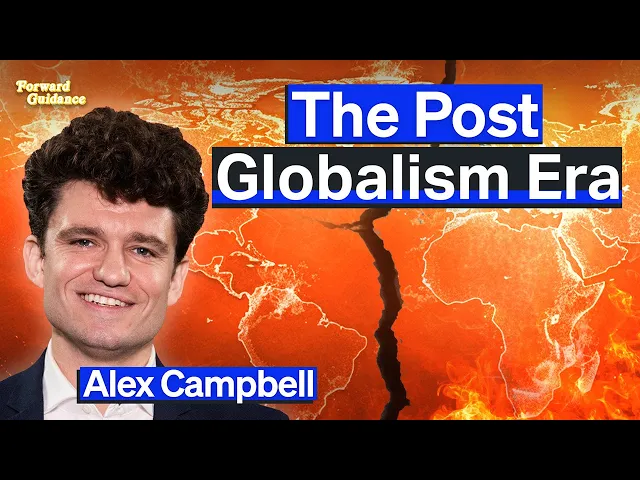
And joining me today is, I think for the third time now, Alex Campbell, founder of Rose AI, former head of commodities at Bridgewater. He's run his own global macro funds. He is uh he's a he's a Swiss Army knife. You've done a lot of Different things in your days, and I feel like you're just always on the the bleeding edge of what's what's happening in the world. You have a lot of great ways to think about it. Um, so always great to have you on, Alex. >> It's very nice of you and, uh, thank you
for having me. You know, I've been told I'm on the the far edge of what's reasonable. So, uh, it's a very good compliment you just gave me. So, thank you. Great to see you, man. >> Likewise. Um, man, it's so funny. Like, obviously the last couple months, precious metals has been the froth trait, and you've been writing about silver especially for the past year and a half. Um, so, first off, I just want to give you props for banging the drum on that trade. Um, you've been hammering the idea of of being super bullish silver.
You've been writing about it for ages since Yeah, I'm sure at least below 30, probably even lower, honestly. Um, And here we are. And I actually I shared one of the articles that you you published the other week and it just went crazy viral. And I was like, "Oh my god, like local top at least in silver." Like I've been reading your stuff for ages and it like I don't know just the fact that it just went that viral that quickly talking about silver. I was like, "Okay, there's something going on here." But anyway, I
want to give you props. I want to give you, you know, Just a an open open venue to discuss how you've been thinking about that precious metals trade, especially in relation to silver. Um, and yeah, and just kind of hear about how that evolution of that trade's been going for you. >> Thank you, sir. Yeah, and it was certainly a local top for my uh viewership. So, I appreciate that. >> You got a lot of influence, man. You're really, you know, you're you're creating the movers and shakers here. No, I'm Very appreciative. Um, you know,
I've been, we talked about this the last time and the time before, but I've been kind of both a precious bull and an AI bull. And so for me, silver was always kind of the combination of those two things. Um, you know, I'd been a a gold guy back in 1820, 20, 21, 22, mostly on the China trade, the kind of long gold, short R&B, the banking system. You know, I've written more words on that than probably anyone, including me, wants to to read. Uh and it was a couple years ago I started getting you
know started with a little bit of history of just the history of uh bimetalism and kind of actually looking at China and the opium wars and it was basically fought over silver and stuff and it got me thinking just to look at it a little bit more and so I think it was yeah about a year and a half ago where I started going deeper and you know saw that we were in a deficit uh supply demand deficit but Kind of wasn't paying too much attention to it and started digging into where the the demand
growth came from and and you It was a series of of times where you kind of have to get hit in the head a little bit with it where it was like, "Wait a second, it's going into solar panels. Like, wait a second, we're going to make a lot more solar panels. Wait a second. Like, the new solar panels use a lot more silver." And you know what's become a little bit more recently known As, "Wait a second, they're going to try to replace some of this silver with copper, but that's going to take a
little while." Um, and and then just a lot of time with, you know, chat bots, frankly, going back and forth just to check the math, right? and being like, "Okay, how many grams per watt? How many ounces per watt?" I mean, the thing about precious and commodities in general, you spend a lot of time with units that are really annoying. Like Anyone who's in that gas is like, "Oh my god, MMBTU versus metric tons versus volume versus weight. I forgot on all the units." And um you get that phenomenon right now with what's going on
in the markets where we have different silver prices in different parts of the world um because of this kind of dislocation. But but that was kind of where the the kind of love affair started. It was this notion of wait a second we need more energy and Yes most of it will come from net gas and a lot of it will come from nuclear even though that'll take some time but you know the greenest version of that energy is basically solar which means that and this is the synthesis in kind of one sentence that silver
now has a yield a positive yield and when that realization hit me that you know the the hair started going up the back of my neck I thought about starting a silver mine or finding a recycling plant or Something. Um because you know, you used to get paid a yield for your gold and silver. You'd go to the bank and you'd say, "Here's my money." And then they would pay you interest. Um and since we moved to fiat, you know, you have to pay the bank to store your stuff. But the notion that that negative
carry is actually positive and actually quite positive when you, you know, to build in capex to build a panel and a you know, all the energy infrastructure, but that You can actually get a yield out of that. And so my favorite trades and my favorite positions are always kind of positive convexity, positive yield or positive expected value if you can get that. And uh and so that's where it kind of all started. Yeah, >> that's awesome. Yeah. And then here we are. We are, you know, feels like people are trying to figure out we're we're
in the parabola. We we've had the parabola. We've had a couple pretty violent moves In both directions over the last week. And so yeah, where do you see it playing out here? And you know, is how do you see the other precious metals complex as well? Yeah. So any asset that moves at like a 5Z or 4Z you should be sus suspicious of first of all. So like that is in everyone's mind. Um, I think that also works against you as a bull sometimes because the reasons that you're long, you know, will be respect responsive
to Price, but it takes a while and also you can kind of lose confidence in feeling that kind of energy that the world is giving you of, oh, this thing's too expensive, this thing's too expensive. And the kind of slam dunk for me on silver, which happened in the spring of this year, was when I looked into supply side because obviously, yes, higher prices means less people buy jewelry, although not always because it's kind of like a bevelyn good. Um, But you know, maybe this copper substitution timelines kind of accelerate, but the big thing was
that supply can't respond. Uh, so if you look at oil or you look at a lot of these other, you know, kind of classic commodities, very high prices leads to supply in a in a short order. you get more investment, they open the taps, that kind of thing. But I think it's something like 70% of silver is is a byproduct of something else, which means That there's basically no price response of silver. That's a overstatement, but you you get what I'm saying where you can't just say, "Oh, the price is high. Let's mine a bunch
more." It's like, well, you have this big operation getting like, you know, I don't know, tin or copper. I mean, I'm not even an expert in what the byproducts are. I just learn this stuff and write it down and then it leaves my head. But like um that means you have both price and Elastic supply and price and elastic demand. And that's where we are right now. And so now you are at the classic stage where this goes from an abstraction to a reality. The west has silver. The west has decent inventories in comics. London
is kind of the halfway house. And silver's going from, you know, New York to London to Shanghai and Dubai and and and the east. basically it's going east like in the old days and that's why the prices are you know 5 10 Sometimes 15% higher that's why physical price is so high um and yes it can be a speculative mania thing but one like you know if you're a person who believes that there is an argument for precious metals in general for reserve accumulation diversification against treasuries uh households in the east that are worried about
their currencies and their balance sheets um those things are definitely not going away and those will get more intense the higher the Price goes, right? That's the kind of speculative mania. There's not that much inventory. There's only eight times as much silver as there is as gold, although it was trading at 100 times less previous to the big rally. Uh, and so I think, you know, there are bearish pressures. There's kind of meme going around about the index rebalancing. That makes sense. Um, you know, the price appreciation has been very fast, so you get speculative
speculative shorting Against it. That makes sense. And, you know, the copper substitution timeline will be pulled forward. But I don't think that these solve the fundamental demand supply imbalance in the next three to six months. So I'm still bullish on a six-month time horizon. I'm not as bullish. I I went down from a very high weight of silver early last year to kind of a very like not stupidly high to now just like a big position, I guess. But but I've shifted into options As well. So, I kind of got out of, you know, ETFs
and futures and moved into options that try to take advantage of uh wanting optionality at the current price and being willing to buy it and being willing to sell optionality way up in the money. And I've been kind of crawling up the curve as we do that. And I think that's kind of the safe way to play these extreme rallies because, you know, for example, if silver gets to 100, the world might Look different than it is when it's at 75. And right now, I'm happy to flatten out at 700, at that 100 or, you
know, lose some of my delta as we call it. But >> yeah, >> I also said that at 50, right? And I also said that at 40 and at 60. And so I try to crawl up that curve um and take advantage of the people who are willing to buy 100 strike calls at crazy levels and use that to finance my 70 strike because I actually want the Directionality and and when you have when you have I used to be a V guy, but when you have implied V this high, you don't get great value
out of buying the deep calls. >> You got to be perfect on the timing and perfect on the direction. And so I just kind of want that delta and I want to not get my face ripped off if the thing falls 40%. And if it does I'll buy. And so that's kind of where I'm at. You know, this is the nice part where, you Know, it's like you're a venture investor and you're seed company is up at the series, you know, I think data bricks is like series L, but like let's say series F. And
uh, you know, you're not going to get upset by a bad quarter, right? And so that's how I think you should think about it. >> If you're thinking about crypto investing but don't want to open a new account or manage keys and wallets, check out Grayscale. Grayscale has been Offering trusted crypto investment products for over a decade with 30 plus counting, including single asset funds like Bitcoin and Ethereum, diversified portfolios, and thematic exposure to the broader digital asset space. Many of their products are available directly through your brokerage or IRA, just like a stock or
ETF. Investing involves risks, including possible loss of principle. For more information and important disclosures, visit Gayscale.com. As always, investments and blockchain technology involve risk, terms, and conditions apply. Do your own research. Nice. I love that. I love that explanation. And yeah, it's always it's always helpful to hear how do you risk manage through the parabola phase because that's where it can get really dicey and difficult. Even though you're directionally right, the thesis is playing out. It's like how do I stay on when implied fall is where it's at and It's tough. So that was yeah
that was helpful. Um all right so I want to level up the conversation now we got the tactical stuff out of the way and you you just actually published an article today talking about the 26 trades for for 2026 and also just around some some very large thematic themes that you've been thinking about. Um, and there's three of them. And I want to start with the the first big thematic theme because that ties into what we just talked about In terms of these supply demand mismatches between commodities and also just this this resource hoarding like
you know commodities are not fungeible. There's different prices in different markets and I think that's going to be something that's very important for the next couple years to consider. So with with that in mind, I would just love to hear like what's that big first thematic theme around, you know, different hemispheres hoarding these these these Resources in this way. >> Yeah. Yeah. So the big thesis there is I'm not like super original on this but I think I I was probably you know 80th percentile early not like 100th percentile early but just like the death
of globalism which is now fully within you know the overton window but the post-war order was basically founded upon American hegemony also naval hegemony predominantly back to mayor and those Guys but the the notion that you know you don't have fight when you can trade and that means that you might not be able to get your, you know, tungsten at the cheapest price, but you can probably get it and it's not worth going to war over. And, you know, the whole PAX Americana and postw World War II kind of nuclear order was definitely supportive of
that. And the West went a 100% into this. You know, this has been back to Wilson and that kind of thing. And it Came with this little assumption that turned out to be very false, which was if you trade with people, they will inevitably turn towards you, become more positive some in their interactions and probably liberalize and eventually democratize and westernize. And that is not true. Um, and you know, ironically broke the Soviet Union by not doing that, right? By kind of playing hard ball with them. And then we turned around and played Super nice
ball to China before it decided to really decide to play ball with us on the things we really cared about. And we built what in retrospect is a, you know, manufacturing monster of our own creation. You know, Apple went out and now they know how to make iPhones better than we do. And now they know how to make drones better than we do. Now they know how to make, you know, X and Y and Z better than we do. And again, that's not a problem if it's like Germany in 2002 where they're friendly and they're
rules-based order and they, you know, participate in the institutions and stuff, but what we see is this constant, you know, and again, the other side will say that that about us, which is why the relationship is deteriorating, but this constant zero sum dynamic where it's like Lucy and the football with, you know, Charlie Brown, if you saw this growing up, you know, Charlie's going to kick the football, Lucy takes the football away, he falls on his butt, and then he goes, "Oh, that hurt." and she goes, "Ah, I won't do it this time." And then
he, you know, runs and he tries to do it again. He falls in his butt. Oh, I'll do it again. It's a recurring cartoon for 40 years. And it's felt like that with with China, right? All the way back to Hong Kong. So, um, you know, we have enough information, not total information about their intentions to know that it is at least Competitive and potentially worse. Uh, and so what does that mean? Well, it means that the underlying arguments and logic for mercantalism, you know, resource nationalism, imperialism, were mostly a function of a lack of
faith in an ability to procure the resources you need in a peaceful way. You know, and there's examples on both sides going back hundreds and thousands of years of people invading X because They wanted some sort of asset or land or claim or whatever. Um, and again, when there's this hegeimon who's super powerful and a rules-based order and you can just buy that stuff, you don't have to worry about it. But it becomes existential when you can't guarantee that supply, whether it's food or energy or chips or, you know, some random mineral on the table
you've never heard of with like 500 letters and it's not that big of a market, but it's super Important to make XYZ. And um that's what we're seeing today where you know China did a very good job in securing supply chains and going you know basic industry up. They even think of it as like first industry, second industry, third industry in their economic reports and they kind of built this you know we'll take all the the grimy stuff that you don't want to do and then create a supply chain to refine our earth or you
know manufacture steel or xyz. And now the west and and America in particular can't can't make that stuff. And so the death of globalism is is it doesn't just mean oh the the probability of conflict is higher because even if we don't get actual shooting it means that resource nationalism is is is actually a really big deal. And so you're seeing this all over the place with trade restrictions tariffs you know strategic investments scramble for various XYZ. And the hope is that it doesn't turn Into kind of imperialism of the kind that we had in
the 1800s and the 1700s and all the way back to the Egyptians or whatever where it's like oh my god I need my moldabenium or whatever. I got to go next door and get it. Um, and so we're in this kind of transition period. And I think that's what you're seeing in the metals obviously. Um, and I think that's what you're seeing in the world. Now, what's interesting is that it's not really an oil story. It's actually the Opposite. It's more of a metals and minerals and stuff story because the crude market looks relatively well
supplied. And now with Venezuela, that's probably going to get better. Now, it could get worse for a while before it gets better. And same with Iran. But you know Iran and and Venezuela together in their peak were like 30 40% of OPEC. Okay. >> So you can imagine that switching sides game over for OPEC, right? And not that OPEC really matters anymore because the US is a swing producer of oil, but it means that we might be very well supplied barring some crazy supply chos in in energy in oil in particular. And so that's really
good for miners because miners tend to consume a lot of energy, consume a lot of petroleum. If you ever watched like Gold Rush, it's a favorite vacation. >> No, I haven't. >> Zombie documentary of mine from like the History Channel, whatever. But it's like these like, you know, these groups of like two to four guys and gals who go up to Alaska and they literally just like, you know, take rocks and like shake them and like rinse them with water and then they hope the gold particles like fall into these little mats and they take
the mats out and they rinse them and that's how they get like thousands of ounces of gold or whatever. But they're using incredible amounts of energy to do this. Driving tractors around and earth moving and ripping off, you know, 40 yards of top soil and stuff. So, you know, very interesting place for miners. I'm not a mining expert, but you're seeing that in the prices. So, that's where we are in the movie. You know, I think this is a 10-year trend, not a two-year trend. Um, because it takes a long time to set up these
supply chains, but that's kind of where we are >> as a first level. And then there's the Other two that kind of interact. But yeah. >> And so I'm just like curious on your thoughts on this this era of you know just call it comparative advantage where you know we all trade and everybody lives in Kumbaya basically like when now okay now that we're in this transition phase we're looking back at the past I don't know 40 years or however long you want us you want to call that era. What are what are some of
the takeaways we Can learn from that? like was any of it actually, you know, a stable equilibrium or was it just like the the point we're at now isn't inevitable um and all it took was X Y and Z to get to this point and it was never sustainable. Um because when you hear about these these tenets of comparative advantage of globalism, you hear about how okay these are these are great things that have made the world more prosperous and better. Um but to your point, we just haven't really Acknowledged some of the secondary effects.
uh you know we saw this in COVID right where suddenly we realize oh we can't produce masks or ventilators or pharmaceuticals it's all in China um these are just like very you know longtailed issues but there still remains so yeah like what can we take away from this 40-year experiment >> I think the logic of comparative advantage is still a law at some level but it's a non ideological non Geopolitical non you know real abstraction it just says if you make apples and I make bananas and I focus on bananas and you focus on apples,
then we can trade and we'll get more apples and bananas than we would if we, you know, just made both ourselves. Um, the problem is like if my bananas turn into, you know, Titan missiles or whatever, it's like the big deal. So, um, that's the that's the kind of lens on top, which is like you should think about Free trade potentially as a club that you get access to for good behavior. And if you look at the behav like sanctions behavior of the west and the US in general over the past 20 years, 40 years,
that's kind of the modus operand we we kind of back into, which is you get sanctions if you do something bad. You know, we take we kick you out of the club. Um, now the thing I think that and I I don't want to go too into this because it gets kind of, you know, Spooky scary or whatever, but I think the thing that most people don't appreciate is, you know, how much that trade and the positive some relationships on both sides when you have a geopolitical rival leads to an inability to deal with the
problem because a lot of your elites are frankly captured. Um, and people have big, you know, positions in in China. They China holds big positions in them. um there are supply chains that are Dependent on them. Like you know, imagine you went to Tim Cook and you said, "You got to get Apple tomorrow. You gotta get Apple out of China tomorrow." He'd be like, "Well, I have 10 billion, 100 billion reasons to say no or whatever." And there's influence involved in that and it's hard to move. And that's something I think we're vulnerable to as
a kind of western capitalist society as opposed to, you know, China which says, "I don't want Daycarees anymore and there's no more daycarees or, you know, kids have to play video games and there's, you know, and we have a little bit of that. It's not 100% one versus the other, but yeah, it it definitely feels like yes, you can make more apples and I can make more bananas, but do you want to? And you know, does it make sense? And if we end up in some sort of kumbaya world in 100 years where there's some
like kooky world government that everybody actually Doesn't hate and we can mediate all these, you know, all these uh problems via that system, then you can imagine it being a global thing. But that probably requires a true like creepy global government with like space lasers and like you know you know kind of what Ilazer Yukowsky wants which is if you build too many data centers you get zapped from the sky or whatever. So we're not there yet right. >> Yeah. >> And I think what you've seen the the US and specifically do is kind of
say we were pretending that we were that for 40 50 years but we're actually not. Um and so we have to have our ambitions in line with our capabilities. >> Okay. So the second big theme you discuss is you say the acceleration is real public and private participants racing to secure supply chains of critical minerals, energy and talent that feed the hungry beast. What do you Mean there? >> Yeah, the beast is AI. This is not a new story, but you know it's very clear there's some sort of platonic platonic relationship between compute and intelligence.
And more intelligence takes more compute to train and more compute to use. And compute is about chips and energy, right? And so the energy, as we talked about before, is a big ingredient. That's hence the solar and the natural Gas and the and the nuclear. And then the chips and all the things that go into them and and the the ecosystem. And so I think, you know, we were talking about this a little bit before we got on on air, but you know, if you started to play with the more kind of forward-leaning products or
agents or, you know, coding environments where the the AI can actually take actions for you and interact with your world. >> And it's mostly happening in coding Right now because it's kind of a scoped sandbox where like you can't blow up stuff too much, but you start to get a sense of like, you know, you feel the AGI. um you know the robots are basically as smart as a human in these like scoped paths now and and faster and so that kind of logic is paying off and you can extrapolate forward your demand for compute
and you're like oh my god we're going to need more chips we're going to Need more video cards need more laptops you know I had four or five literal laptops talking to each other with agents over the break and I feel like I need to buy more computers you know it's like 2002 or whatever I need more computers and I I think that's also going to happen in a really big way in the next year or two at a local level. So, we're all kind of socialized to the cloud. Oh, the cloud's amazing. Go to
the cloud. The cloud's also a pain in The butt to use. You got to like sign into all these crazy systems. Like is not user friendly at all. Like no one who's not a developer wants to talk to the cloud. Okay. But the tools and the AI is almost at the point where if you're a quant definitely if you're an analyst at some investment bank, you can probably figure it out. Um, and that means you're going to want a a model that runs on your computer. And there's this magical feeling, and I'll get off My
soap box in a minute here, but there's a magical feeling about running a local model because you do kind of own it. It's your model. You talk to it. No one's looking at what you're saying. And so, you know, when I benchmark Chinese models versus American models, open source, nonop source, and I ask them about Taiwan, if you go to Deepseek or you go to Gwen and you ask too many questions about Taiwan or Penue or whatever, they're going to record your IP in some database, right? If you say a bunch of crazy stuff to
chatbt and then you go do a bunch of crazy stuff, like some lawyers are going to requisition those chat logs. Like, that's not the case when you're operating on a local model. And I think that that's really scary to people, but it's really I view it as very empowering because um not because of all the nefarious bits, just because of the human potential of what you can do when you can actually own Control like interact with something in that way. And so Nvida came out with a local desktop that's like a 100 gigabytes. Um it's
kind of slow, but you can kind of see it coming. you can see a world where you actually have a, you know, an agent that's pretty smart in your headphones or in your, you know, watch or in your a button that it doesn't look like crap or whatever, you know, and it doesn't go to the cloud. It just like is there. And that is a world Where we need a lot more computers, man. And so everything about that is kind of getting priced in. there's probably a little bit of a gap where the expectations and
the stories that the you know frontier labs have to sell to get the big enough compute to make the next model are kind of going faster than the actual compute. So I see kind of 28 29 is where I think it catches up and I see a gap in 27 rough math. I could be wrong but you can kind of see both Things happening. And then if you're again if you're that seed investor in open AI or anthropic who cares man you know what I mean? Like they they're in the lead. They have the future
that 28 2930 is coming and um you know Anthropic is worth 350. I'd probably buy it there. So yeah. >> Yeah. that that explanation I think was really help because that's a big thing like you know we've been talking about geopolitical game theory stuff we've Been talking about trading stuff and two very different worlds. So what you mentioned there about just the the amount of compute that we're developing right now versus the demand for it right now is a bit of a mismatch and and you mentioned how in any of these big ways of tech
adoption the the infrastructure comes first before the demand. like we build out the railroads before people start taking trains every day and then that gets the the brunt of of of that Risk gets taken on by the investor and that's why they get paid a premium to take on that risk and so yeah I would just love for you to emphasize a little bit more on that that mismatch right now between because that feels like you know you see people talk a bit about we're building so so much AI capex and you know all that
we're doing with it is AI slop and you know maybe there's going to be diminishing returns at that we won't see the demand and then suddenly the Depreciation schedules start to hit and then all these, you know, GPUs start to wear out. We have to replace them and then suddenly we're stuck in a loop of endless feeding the beast and burning money. Like that's that's the stuff that I hear from the concerned traders right now. And I'm just curious. Yeah, like explain a little bit more about how you think about that. >> Yeah, I think
there's two questions to kind of disambiguate. One is is the Trend real? Is this thing real? Um, and we have confirmation that it's super real and we're actually still pretty early. Okay. So that is the thing that everybody has in their head. Um, the second is, and I put this in the blog, but you know, if you look at the history of panics or crises or, you know, stock market meltdowns or whatever, they are almost always a result of something that was a really good idea and then you had a kind of capex cycle or
an investment Cycle where the money flowing into that good idea juices the returns for the early investors so much that it gets levered on top and people start betting more on the price appreciation than the thing itself. and the pace of the price appreciation and you know that's that's what people are saying kind of about silver too. They're like, "Oh, the price is, you know, it's too steep." And and that's, you know, not a bad argument. And so, you know, there were boom bus Cycles in railroads. There were boom bus cycles in canals. There were
boom bus cycles in turnpikes. Literally roads. We used to have road bubbles. Okay. There was, you know, I don't know, 20 emerging market South America boom bus cycles or something, right? Um, there was a there was many oil cycles. And so, you know, we have to watch that. And I think people are smarter than they were in 2000. I think uh more of this is being paid out out of Cash flow. The people doing the investing are actually these mega companies, these kind of oligopies that own the future anyway. Um you know, Cororeweave being kind
of the interesting example where it's like the debt says this thing's going bankrupt, you know, but like it could go either way. Uh and so you see people buying kind of straddles on as a result of that, which I kind of think is not a bad idea. um you know a little bit of equity Credit ar for those uh punters like me but really the leverage is what you have to watch the leverage and the cash flow and so that's why I think that I think a lot of these promises of capex aren't going to
happen because they don't have the chips or they don't have this energy or they don't have the permitting or the whatever um and that will help a little bit um won't help growth because you know that's going to peak the build but I think you're not going to see the Revenue really until back half of 27 seven. So, I think we're in the you have the potential for an air gap here between these expectations where the kind of short-term, medium-term investors who do not have three year or four year time horizons, who kind of have
quarterly time horizons or six month time horizons get over their skis. There's obviously some potential private credit problems just in general in the economy and you get a little bit of an Air gap there. Um, which is a great buying opportunity. Personally, >> if you're thinking about buying crypto, but don't want the headache of setting up wallets or new accounts, Gayscale makes it simple. For over 10 years, Grayscale has helped investors gain secure, regulated exposure to crypto without the hassle of self-custody or opening new wallets. With over 30 investment products from Bitcoin and Ethereum to
diversified and thematic Crypto baskets, Grayscale makes it easy to build a crypto allocation that fits your portfolio. Whether you're using a regular brokerage account or investing through an IRA, many of Gayscale's products are available right where you already invest. Investing involves risk, including possible loss of principle. For more information and important disclosures, visit gayscale.com. As always, investments and blockchain technology involve risk. Terms and Conditions apply. Do your own research. Yeah, it's I I saw there was actually I don't know if you read it, but there's like a BIS report that came out this week looking
at talking through like the the the financing of of this AI buildout and they're looking at how Yeah, it's quite interesting. I'll send you a link, but yeah, I mean it just seems like yes, all although we've we've swapped from these big mega corps are using all their free cash flow to fund these things and That kind of game got tapped out over the last few months and now we're shifting to to debt issuance and whether that's you know public corporate bonds or in the private credit market. that's where we are now. But overall, it
seems like, you know, we're not that levered really when you look at like like there is a lot of runway. So, I mean, maybe it's just all about the price that people paid for it. Like, if you paid an arm and a leg for an Oracle bond a Couple months ago, yeah, you're getting burned right now. But overall, like we're we're not that levered. I don't know. I don't I don't feel like the the probability of default is that high when you look at how levered these companies are and just like the market in general.
>> Yeah. I mean, and American households aren't that levered. the governments are all levered all over the place. But, you know, my network end you know honestly like when I think back on when I started This kind of wacky path of kind of being >> you know a hedge fun guy who's also an AI guy the the reasoning was actually to kind of hedge themselves. It was this notion of like I wanted to bet on AI you know I left Bridgewater to kind of start an AI company more or less. I was like the only
thing that can mess this up is China blowing up. Okay, that's my crazy brain. And I I still kind of think that in a way, which is like, you know, I don't think we're going to get a Depression or any kind of real horrible recession in the US without China really contracting. And the kind of guns to the races or whatever it's called conclusion is that they just seem totally incapable or uninterested in doing that. Just 100%. Okay, Everrand still has not been resolved. It's like five years later like is this thing you know and
that's because they had this huge wall of other debt where if they take a loss on Everrand they have to take a loss on Other stuff and the the dominoes start falling and so you know maybe the answer is just in the end everybody prints and again that then loops you back into gold and silver because you go oh my god everybody prints and globalism's dead so treasuries aren't as valuable as they were in 2005 so more people are going to buy gold more people are gonna buy gold and this is the Super Bowl case
for silver, central banks are going to come back to Silver, right? Just like they did for thousands of years because why? Well, the worst case scenario is you get a bunch of solar panels, man. Way better than gold, you know? So, like that's when I get all excited. But, but that that is definitely um you know, in terms of my market view. I'm not the best stock timer, okay? I'm usually try to run a little bit short against my fundamental views. Um there are people way better at that than I am. But uh but Yeah,
I I 100% agree with you that we're not as levered that the the big capex players are not as levered. Private credit is getting involved in data center spend, but they're not it's still we're still >> 20 30% of the way through that thing >> and a lot of things haven't even started. And that's where it gets expensive. That's where you got, you know, get the trucks and the the dirt moving and the you know, the team sure Show up or whatever. That's where it gets expensive and I don't think we're there yet uh at
the peak. >> Okay. So the last big theme you you mentioned is is the horseshoe being real. Disintegration of the neoliberal consensus playing out compounded by intergenerational and interse thinking new political realities emerging. >> Yeah. What a statement. Uh so so the the the short way of answering this question is why are young you know Caucasian White men in America so conservative is another way of thinking about this and I don't actually think they're that conservative. This is what the horseshoe is. The horseshoe is this framework of like the old left right axis is actually
a bad abstraction because you have multiple dimensions right we know we know AI we know about multiple dimensional matrices and vectors and that kind of stuff and you go well just take old versus young for a second right Boomer versus zoomer and like if you're a zoomer forget the white caucasian male thing if you're a zoomer right now and you wake up and globalism is dead and the robots are going to take your job and you're not going to get social security and you're not going to be able to buy a house and you know
mortgage rates are super high and the boomers no offense boomers I love you are clutching on to power you know harder than a walking cane or whatever I mean Generation X hasn't even come into control it's crazy okay >> and that is unsustainable 100% unsustainable and I don't I'm not deep enough to figure out how I just kind of put the label of the horseshoe is real to say this is how political realignments happen. You know, if you're Ray Dallio, you start talking about civil wars and, you know, dooming on the timeline and that kind
of stuff. I'm not that extreme. I think we figure it out. And if we don't, I think we end up with something better in the end. But I I think it makes total sense that if you're coming out of college and you spent two years paying Harvard or whatever, $80,000 a year to take a Zoom class and then you know you work to be a lawyer, you spend another $200,000 in debt to go to whatever Yale law school, they're probably fine, but and then you you know in five years like 75% of those first year
associate jobs are going to Be gone at some level. they like, you know, big law banking or whatever. What do you do? What are you gonna do with your life? Are you going to be a Twitch streamer? You know what I mean? Like, what >> what the hell? And so I think that um that's what I mean by the horseshoe is real. And then I put together all these kooky policies to be like, well, wait a second. Like what happens when Elon Musk is worth 20 trillion? It's not that far Away, right? It's a 20x
on where he is now. He's already got a 10,000x. >> I'm actually totally cool with Elon having 20 trillion dollars. He would do all kinds of I mean you know not everybody has his politics or whatever but he'd probably do some cool stuff with it like in terms of building things. What I am not cool with is his kids inheriting a trillion dollars. I just think that's stupid. I think from a capital allocation perspective, there is This notion of meritocracy which is dead kind of which which says that the if there's at least some signal
to him being the richest man on earth which there obviously is if you believe the game is not totally hosed then you want him to allocate capital more than average than the average person. So it's not bad for CargI to you know have a have a lot of money or for Gates to have a lot of money or for Zuck to have a lot of money. this is fine. Like they're Going to do things with it, right? Like look at Bezos. He's also going to the stars and he's also trying to help media institutions and
you might not like his politics, but he's at least trying. Okay. What I am not okay with is there being no test except for a birthright, right? Or genetics or whatever, which is not a strong enough signal to have trillionaires. That to me is where we get to civil war, honestly. And not because of anything to do with the Trillionaires and not to do with anything with the, you know, the poor and huddled masses or whatever they would be, you know, kind of straw manned as just in terms of stochastic dynamics of that situation. It's
just too unstable. There's not enough of a tie binding them together. And so things like national service become way better ideas when you have crazy inequality. And it doesn't have to be national service to go shoot people. Maybe it's Go pick up trash or plant trees or build a data center or, you know, make a train system that you can work and get to where you need to go where public transit doesn't suck. Like there's this huge potential for what do you do when the old consensus is dead? And and I think that that transition
will happen around some conflict because historically it tends to happen around conflict. When you look a lot of the the kind of big leap forwards in America, it Was like right around then and after the Civil War, World War I, World War II, a little bit of Vietnam, you know, intercontinental railroads. I have a little joke which is like we need a new intercontinental railroad. Like I should be able to get like whatever the hell that Chinese Shanghai train from the airport is. Great. Let's do that. You know what I mean? And go from San
Francisco to LA in an hour and a half or whatever. I want to go from San Francisco to New York in eight hours and stop in Chicago and Detroit and whatever. And there is so much economic capacity that you would unlock with just that one stupid idea, right? And then you go look at our inability to build like, you know, that classic photo of Newsome's like 20 foot length of concrete that they managed to get in like Bakersfield or whatever and they spent like $20 million. Oh my god. Like Highspeed Rail is a disaster. And
it's Like, yes, Highspeed is a disaster right now because America can't build stuff. That bridge is so broken in in Baltimore or whatever, right? like the there's still crazy potholes outside of JFK. Robots will help fix this. New social organizations will help fix this. Things like, in my opinion, consumption taxes as opposed to income taxes will help this. Inheritance taxes will help this. I'm not a big fan of just giving much money to the government, but something To kind of change that dynamic. Um, to me, it's not even a I'm advocating it. It's more it's
inevitable. It's that you just look at, you know, what I felt as a now I'm like an old millennial, I guess, but as a millennial in in like a little way just seems really really strongly felt by the next generation, men, women, you know, white, non-white, immigrants, non-immigrants. The current consensus cannot hold. And so I think that that's what the horseshoe is basically. It's Where do we go? And we hope that the coalition that emerges isn't some really radical group that has some crazy idea but manages to swing everybody because of all the other things
that you know for their good intentions the Democrats and Republicans can't kind of work out what to do. And the shutdown's an example of that, right? If we shut down again, which I don't know if we will, but I have no like information here, but like >> if we shut down again, it's an example, right? It's an example of of kind of the the the system trying to find the new equilibrium. >> Yeah. Nobody would be surprised if we shut down, I would say. >> Oh, wow. I'm in Oregon. >> Yeah. Yeah. When I put
together those three big themes, it feels like I don't know if you agree with this, but it feels like one of the big I don't know, expressions of that is What we've been seeing with the tariff policy over the last year. And and the the the idea of, you know, reassuring because look, our roads suck and we can't get anywhere and uh people are upset and we want to get jobs because there's no factory jobs anymore. Like that's one version of it. there's, you know, the the use the the trade policy and and our tariffs
as a tool to try to make sure that we win the AI race or whatever or that we just like dominate. And so there's this like us versus the east type of ideas. So I don't know, it feels like it kind of sits in all of them. So I'm curious like how do you how do you see that whole thing going on right now in in contrast to these big three themes of >> feels like a rear guard action. Um, I'm kind of of the of the view, it's not my only only person that view
that views is that we got to get saved by robots and AI. That's basically it. Like, and we Got to go as fast as possible. I'm an accelerationist when it comes to technology in that sense. Like, I don't think that by passing more laws or yelling at more legislators or packing or unpacking the Supreme Court. I don't really care. I I would prefer to just delete everyone in government and reset the whole thing. You know, same structure, just all new people. I think that's been one of my new wacky ideas, right? Where you get five
years and That's it or whatever. We give everyone two more years and we reset. Barring something like that, it's got to be robots and AI. Like you're not going to fix the pothole problem and the bridge problem in this current equilibrium. You just can't. You know, if you're a Republican, you'll say, "Oh, it's all those crazy EPA rules." You know, if you're a Democrat, you'll say we need more, you know, unskilled labor. Maybe neither are right. Maybe both are Right. Like, it's not enough. It's the current equilibrium will not stand basically. And so the tariffs
is a classic example of this horseshoe because it's something that came completely out of left field. Everyone's like, "Oh my god, everyone agrees with the neoliberal consensus and free trade. How could you possibly do this? That's so crazy." And you know, Trump's running around and saying, "Wait a second." Like, everyone's getting rich off our Market. We are the predominant, you know, center of global capital. our enemies and our our rivals tap into that system just as much as as other people do. We then enrich them and we don't even use it as a as a
source of foreign foreign policy. And so, you know, I had this little micro tweet that went microviral or whatever back in I don't know, spring, which was like I view Trump as playing what a game theorist would call a mixed strategy Equilibrium. meaning he uses chaos. He uses randomness to kind of show what the other side really believes and wants. Now, you might think that's immoral. I don't think it's necessarily immoral if you're playing a poker game like you can bluff. Um, but if you remember back to when he did the, you know, quote unquote
crazy table, brings out the tariff table and he's got some cookie formula and he's like, they're going up for everyone. Now, first of all, imagine if he came out and said, "I've done a unique study on each of these individual countries and you should be 23%, you should be 15%, you should be 40%, you should be," and everyone would just yell out about all those stuff, right? So, instead, they pick some kooky formula and they they show the formula. It's like based on inputs and output, exports and imports and then immediately start negotiating over it,
right? So, the deal Is not oneoff. It's always evolving and always a conversation. And what you saw was that the allies, the real allies in my opinion, said, "We're willing to negotiate. What can we do? You know, we'll be reasonable." And some of them got off with a slap on the wrist. Or some of them got off with a tweak in a regulation or this or that. And he goes, "Okay, you're 5% now. You're 10% now." And China's like, "Let's go to trade war immediately. Let's suit up. We're ready To go. Critical minerals, this, that,
this, that. You're getting it. You're going to get it. You know, all this negative energy." And it's it it shows you what is your opponent thinking. And if you think back to phase one 2016, 10 years ago, why is Trump picking on China? Oh my god. Blah blah blah. And like the phase one deal wasn't even important, right? It just set a a precedent that we couldn't even trust Them to buy some soybeans or whatever. >> That's it. And if you're a China watcher, that's a very classic behavior. People are going to call me, you
know, jingoistic or whatever. It's not. It's I think a strategy. It's this notion of, you know, we say we're gonna do something and then we kind of defect from what I would call the coalition and then when you claim we've defect, it's a just immediate gaslighting in your face. And I learned this when they started Working on the banking system because it's the same kind of modus operande. But you see in South China Sea, you see it with Taiwan, you see it with the, you know, like Hong Kong, man. Hong Kong's still there. We're still
in the 50 years. >> Yeah. Would anybody really claim that they haven't fundamentally changed the legal and the economic and the jurisdictional system in in Hong Kong? Like they have that now it wasn't a Treaty. Oh, it was an agreement, not a treaty. That's because you got duped 40 freaking years ago into calling it not a treaty because they knew they were going to do this. And so rather than just keep taking it, he he's saying, "Look, I'm gonna have to show you guys that we're in this like whether it's a mattresses or just a
tiff, um, you know, what are you going to do about it?" So anyway, long answer to a very good question, but sorry. No. Okay. It got The gear turning that for me when I reflect on what happened in April and those ensuing couple months. I was like, "Okay, well perhaps when I see the reactions to it, it's they want to be able to isolate China." So, they need to make sure everybody is on the same page and that we're trying to decouple and isolate China um and get everyone on the same page so that they
don't just go start rerouting to Vietnam or wherever. And I was sympathetic to that idea. But Now when you look at how it's panned out, like in reality, you know, exports from China are doing great. Um, so I'm curious like how do you like do you how do you see this going up next? Like is this idea of or Besson calls it strategic decoupling? Like do you see a runway for that happening? >> Yeah, I think we'll figure it out. And again, like because our system is not broken but kind of janky and need reform,
we tend to fix problems that are An emergency, not a chronic problem. So, oh my god, we really need this thing and we actually figure it out. We really need a COVID vaccine. We figure it out. Um, and I think that that's what I see the administration trying to do, which is communicate that it is actually that level of seriousness. And yeah, the the the the you know, the cat is out of the horse is out of the barn, the cat's out of the bag, the cat's out of the barn. I don't know if you
know, like when they Can now sell to everyone but America, you have less leverage, right? So that's an argument to be even more aggressive and extreme than you would have been before because you can't contain, right? And I think they're lying about their exports, but that's a whole another story. Uh just go look at the balance of payments errors and emissions for 2005 2020. They had about5 one2 trillion dollars of capital flight that they called errors and emissions and now they Juice their current account. They still have a huge current account surplus, but a lot
of that money leaves. Okay, I think that that is the weakness, the strategic weakness that one, Westerners don't really appreciate and two is definitely a third rail because when I talk about it, I get a million bots and 50 cent army people like screaming at me on Twitter. So like >> it's true. >> Yeah. >> Like you know, just think about for a second that there is twice I don't know the actual numbers right now, but two to three times more money in China than in America. Just think about that. If every bank account got
zeroed out in China, could they really buy the America American bank money twice? Could they buy all the bank accounts in America? No way. That's crazy. Okay. And yes, there are two to three times or four times more people. Still crazy. And yes, Doesn't mean I don't want to commercial building in Shanghai. Those are pretty cool. I'm not saying those aren't good assets, okay? I'm just saying there's too much money and it's on a house of cards. And that is our strength. Our strength is that our transparency, our accountability, our markets, our regulatory environment. There's
a reason why American capital markets are the best capital markets on Earth. And it's not a coincidence that it's a liberal Democracy. And so this is where I think we're almost like not it's like we're so money we don't even know it from that old movie. You know, it's like no man, like we're actually doing pretty well and we're not using that strength. And I think eventually we'll have to use that strength more. Last question here on on China and how it relates to metals is, you know, obviously, yeah, Trump has had the stick of
tariffs and China has had the stick of precious rare metals. How Strong is that rare metal stick? I feel like that is something that I've heard a lot of different opinions on. I'm curious your thoughts. >> So, we don't know. Okay. Where you can always get around some of these things like they're getting H100s. How are they getting those? You know, it's not that hard to get some metal. They have a lot of capital flight problems. So, it would leave. I mean, it it would matter. I think the real way it matters is if you
Can somehow imagine like a world war that doesn't have nukes in it where it's not just about like facilitating the amount of stuff that we have now, but it's like I need 20 million 155 millimeter shells. I need 5,000 F-35s. I need 10,000 tanks. Holy moly. Right? If you I've done a little bit of back of the envelope on both the AI level and the conflict level and the AI level is probably the peaceful version of this and so that's why it's it's converging But if you do this like oh my god we need a
ton more stuff that's where it becomes almost existential. It's not that essential for now if like you could imagine if we didn't get Chinese TVs for like a couple years it wouldn't be the end of the world. Korea makes TVs, Japan makes TVs. We would kind of figure it out. Yes, there's some of these minerals that go into magnets or radars or, you know, night vision or all this stuff. It'd be hard to get that stuff. We'd Probably be okay. It's really about the the deep tail of we don't have that supply and we need
10 times more because we're in a fight, you know, to the end of the the match or whatever. and and and you and you look around and you go, "Yeah, like maybe we can get Korea to build a destroyer, but like can we get them to build 20 destroyers in a year?" You know what I mean? Like c can we get them to build like could like how do we get our chips If Taiwan gets taken over, you know? So, it's that level of what if we had to 10x everything, then we would be kind
of hosed. And so I think that that is really true and you would probably have that be important because those big conflicts and these big capital runs tend to be about resource mobilization but right now I don't think it's it's but that's why both sides are kind of teetering right the game is still kind of zero sum positive sum still some Trade what you have to worry about and I'll kind of close on this is like when the games turn negative sum I got divorced once okay so this is from experience when you go from
zero sum to negative negative sum. Just get out of the relationship as fast as pos, you know, like just pay whatever you have to get out of the poker game because when the other there's this classic auction from auction theory called all pay auction which is a negative sum game Where like you know you bid one and I bid two and now no matter what you have to bid one >> and you've already paid that one. Now you're going to pay three. Now I'm going to pay four. You get these all pay auctions where they
go for like 10 times the value of the thing itself. Maybe not 10 times but you know and they consume all the surplus. So, that's who you got to watch out for is negative sum games. >> Love it, Alex. Always great to get you On. Really enjoyed that. Um, we'll put the we'll put the link to to your to your article we were talking about in the show notes there for people to check it out. Um, yeah, you've been writing great stuff. Always great to have you on here. >> So, I mean, it's so great
to be here. Really enjoy these conversations and thanks for having me. >> Yeah, likewise, man.