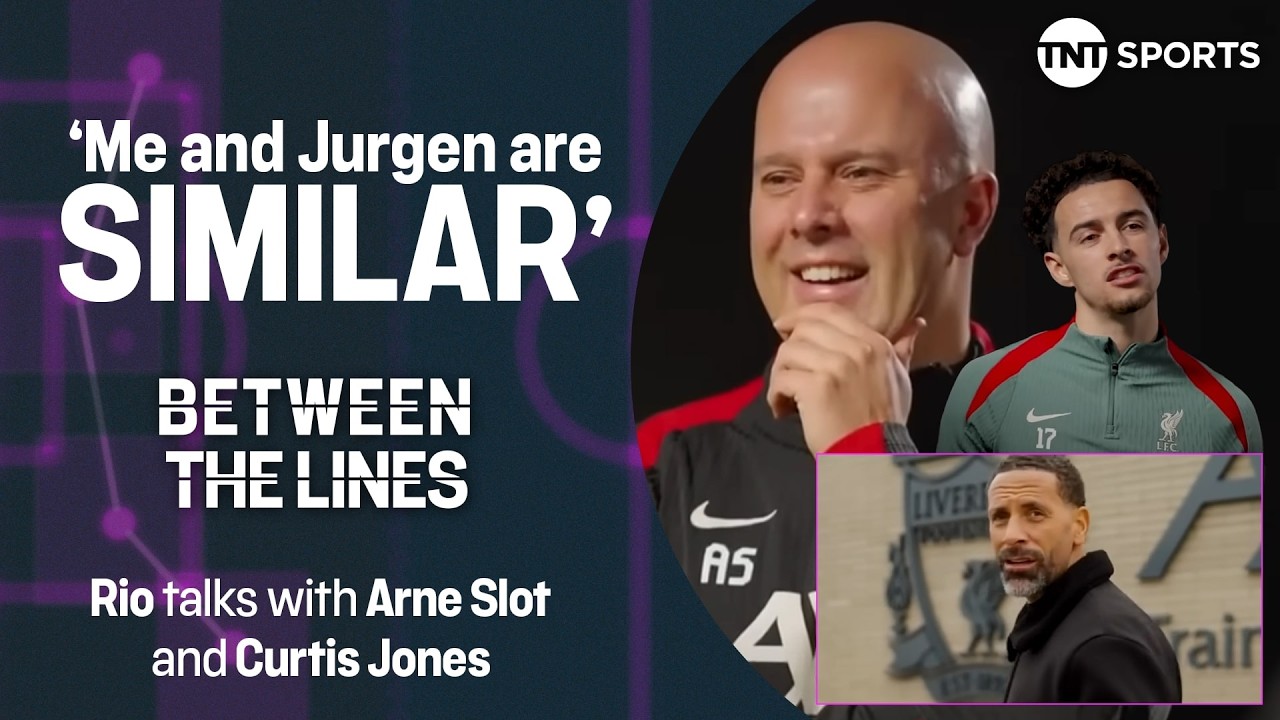
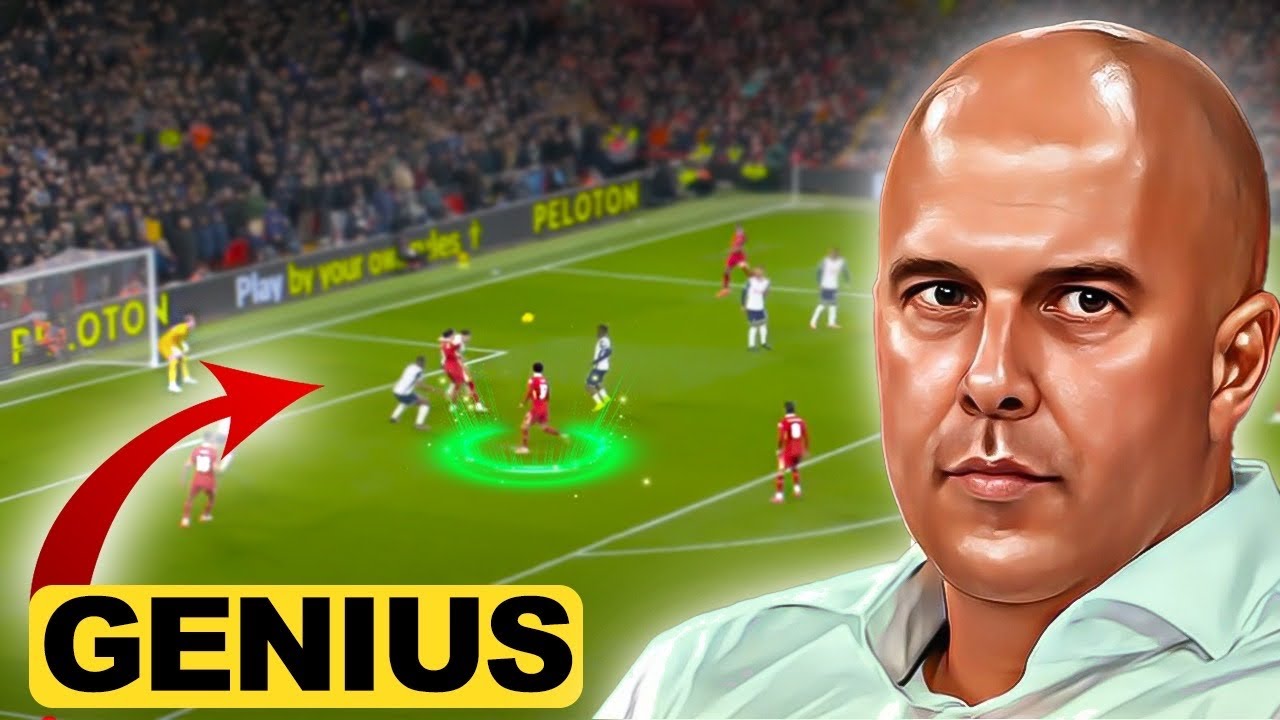
What's up, guys? My name is Miguel Teixeira, and welcome back to the channel! In today’s video, we’re going to analyze some offensive dynamics of Arne Slot's Liverpool, one of the most impressive teams this season.
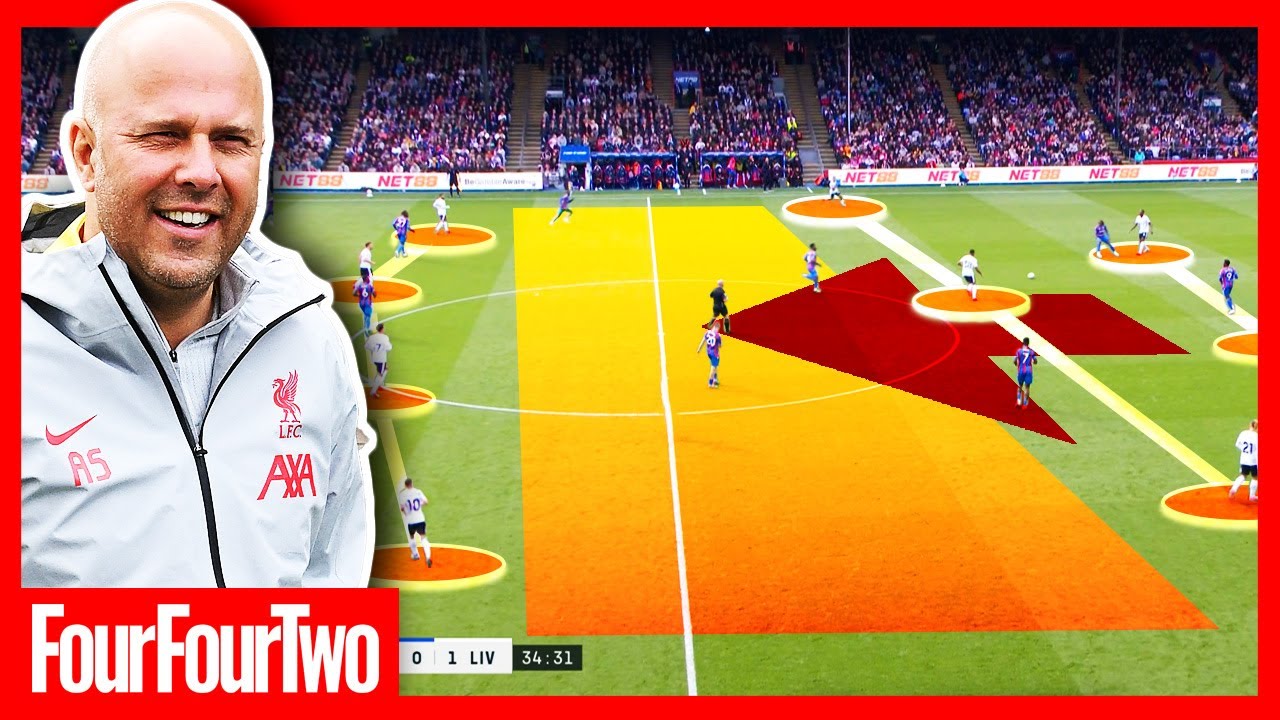
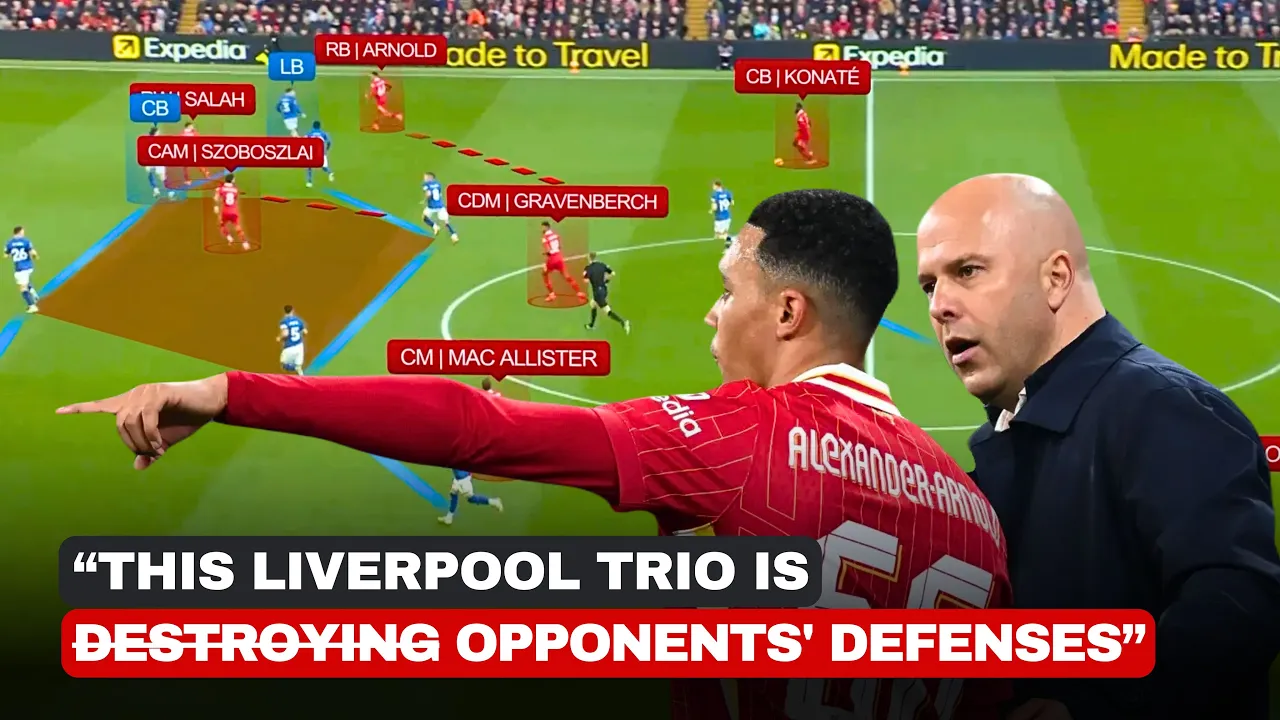
Don’t forget to subscribe to the channel if you enjoy this kind of content. In their offensive organization, Liverpool typically starts in a 4-3-3 or 4-2-3-1 formation, with the team shifting between various dynamics and tactical structures throughout the game. I'll start by showing Liverpool in their base structure, which resembles a 4+2, with the defensive line maintaining possession and the two midfielders offering support behind the opposition’s first line of pressure.
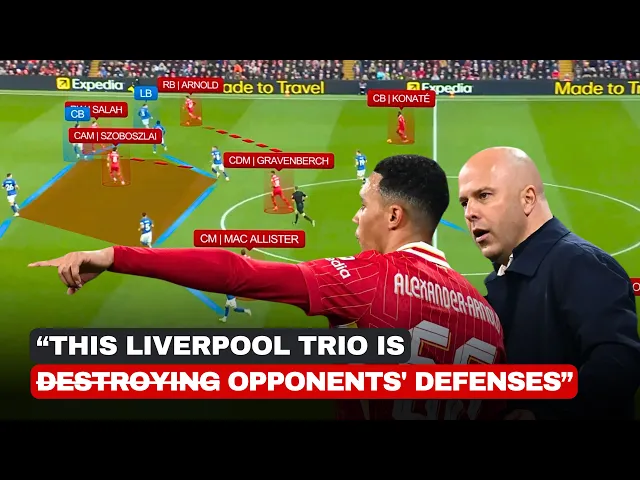
In more advanced areas, Arne Slot positions Szoboszlai between the lines, exploiting the space behind the opposition’s midfield. Gakpo and Salah provide width and depth on the flanks, while in the front line, Luis Díaz frequently alternates his position with Gakpo on the left. As mentioned earlier, Liverpool alternates between the 4-2-3-1 and 4-3-3, with Mac Allister moving out from the double pivot to push higher up the field, becoming an additional option behind the opposition’s midfield line, similar to Szoboszlai.
At this stage, as Liverpool looks to connect the buildup phase with the creation phase, Alexander-Arnold plays a crucial role. He moves into central areas, facing the play, acting as a deep-lying playmaker to connect the team’s buildup with Liverpool’s attacking players in more advanced areas. On the right side, Liverpool displays a highly interesting dynamic between Salah and Szoboszlai.
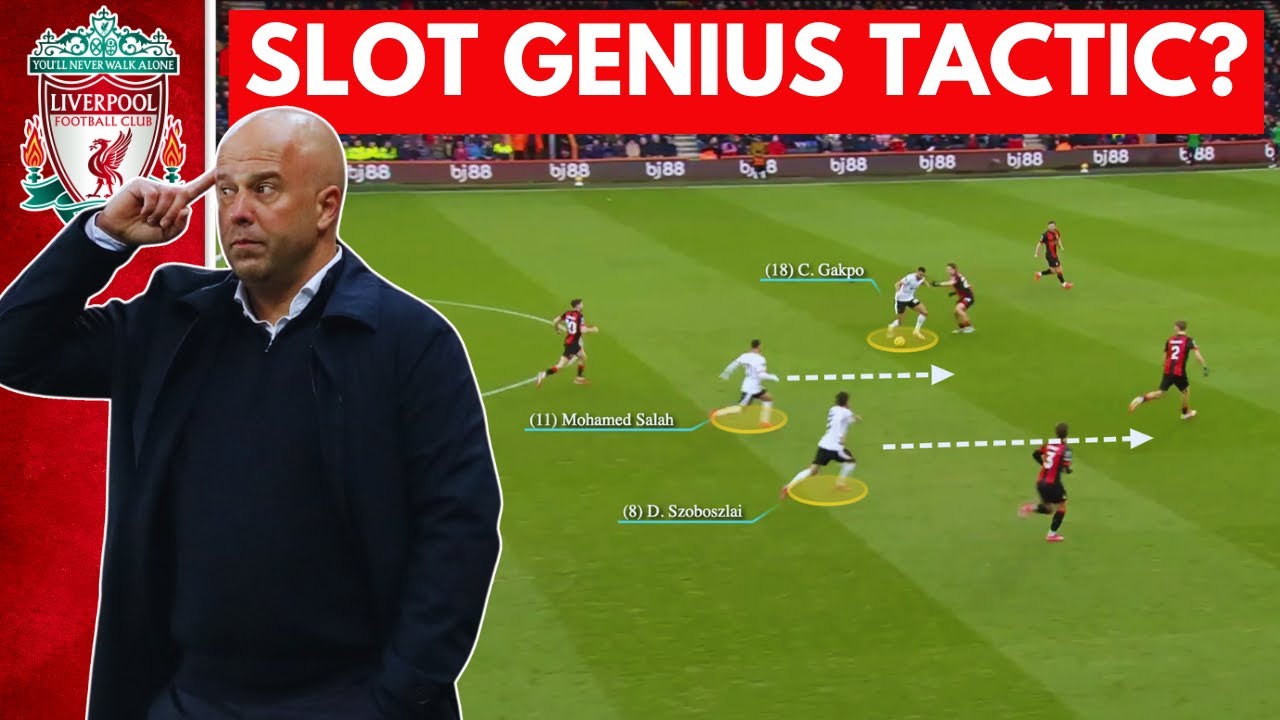
Moving from wide to inside, Salah is a constant threat, making runs in behind the opposition’s defensive line, while Szoboszlai moves in the opposite direction—from inside to out—offering a secondary passing option to the ball carrier and exploiting the space created by Salah’s movement. When Liverpool is unable to progress in this initial phase, Alexander-Arnold becomes the focal point again, receiving the ball facing the opposition’s block, and from there, reconnecting Liverpool’s offensive play. Here, we see another dynamic between Szoboszlai and Salah, with their contrasting movements creating uncertainty in the opposition’s midfield and opening up spaces for one of them to become the free man to receive and accelerate the attack.
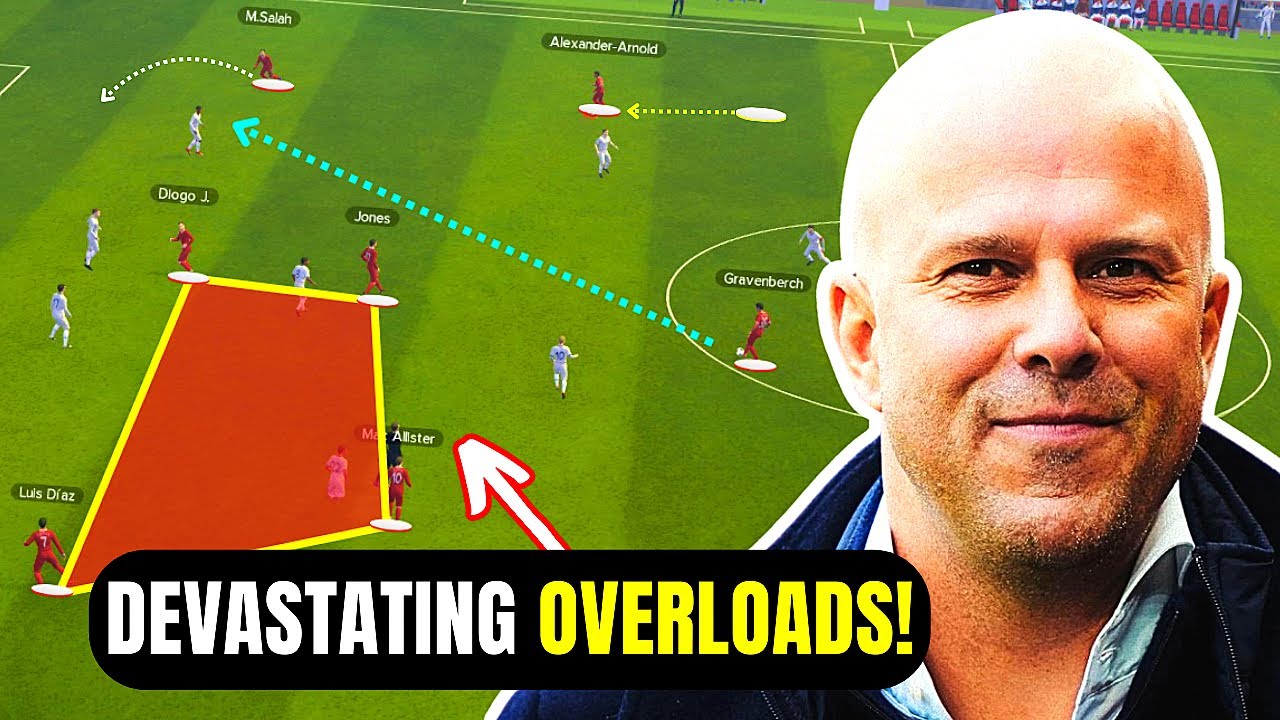
Luis Díaz and Szoboszlai position themselves behind the opposition’s midfield line, crucial for creating passing options through the opposition’s block or breaking into the space behind the last defensive line. Meanwhile, Gravenberch and Mac Allister are key in providing offensive cover for the more advanced players, while also exploiting the space between Ipswich’s first and second lines, allowing them to link up play while facing forward. The imbalance is once again created through the Szoboszlai-Salah dynamic, enabling Liverpool to enter the final third with five players, offering four potential threats in key finishing zones.
[Music] Now, let’s look at a different example, where Alexander-Arnold positions himself higher up the pitch, joining Szoboszlai in the half-space. When the ball enters the wide channel, we see a standard Liverpool dynamic with this offensive triangle in action: Salah receives the ball wide, forcing the opposition’s full-back to step up and apply pressure; Alexander-Arnold, from the half-space, makes a penetrating run between the centre-back and full-back to exploit the space created behind the opposition’s full-back. This run by Alexander-Arnold is eventually tracked by the centre-back on the ball side, but Liverpool doesn't abandon this dynamic.
Once the centre-back is dragged out of position, it creates the opportunity for a second man—Szoboszlai—to exploit the space now available between Ipswich’s centre-backs. From this space, Alexander-Arnold becomes a potential option for the third-man dynamic, able to receive the ball either in depth or width, allowing the team to be more aggressive in their pursuit of the opposition’s goal. In this clip, we see Liverpool’s first goal, where the same attacking dynamic of Liverpool becomes evident once again.
Alexander-Arnold moves wide to provide the reference for width, while this time, it’s Salah who joins Szoboszlai in the half-space. From here, Salah makes a penetrating run to attack the space between the centre-back and the full-back, while Szoboszlai holds his position to offer himself as an option in the space created between Ipswich’s centre-backs. From this position, Szoboszlai once again has the opportunity to activate the third-man dynamic (with Salah).
This time, as we’ll see next, Szoboszlai chooses to take on a 1v1 against the centre-back from the opposite side—who comes towards him to close the space—counteracting his opponent’s movement to gain the advantage and attack the opposition’s goal. To finish, let’s take a look at Liverpool’s second goal, where a recurring dynamic on the left flank becomes evident. Robertson, as usual, is positioned slightly deeper, forming a back three with the centre-backs.
Meanwhile, the width and depth of the left flank are covered by either Gakpo or Luis Díaz, depending on who occupies the left-wing position at that moment. As the first half progresses, the opposing winger stops being drawn to Robertson’s deeper positioning and instead joins the defensive line to form a back five. Rather than making inside overlapping runs to drag the winger inside and create a 1v1 situation on the outside, Liverpool’s full-back begins to focus more on overlapping on the outside, creating 2v1 situations.
In this example, Robertson’s movement is crucial in attracting the opposing winger’s attention, allowing Gakpo to find space and receive the ball uncovered. In the area, Luis Díaz positions himself near the ball zone, between the full-back and centre-back, ready to link up or be an option in the space behind the defensive line. On the opposite side, Szoboszlai and Salah are positioned as potential targets for a cross.
[Music] Let me know your thoughts in the comments about this Arne Slot’s Liverpool! Thanks for watching, and see you in the next video!