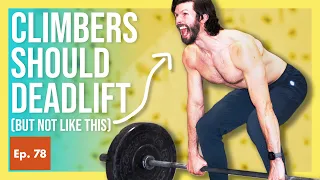
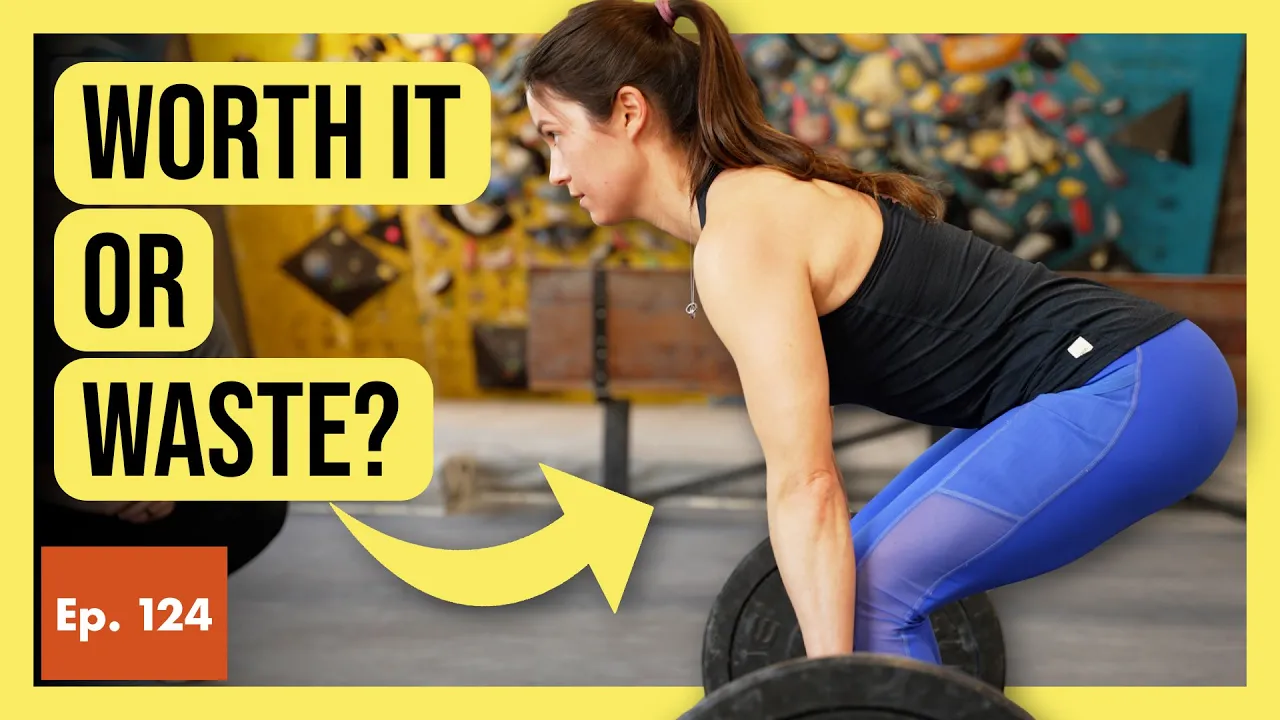
a little while ago we made a video called top 12 worst exercises for climbers where we suggested the deadlift and bench press may not be great choices for some climbers however we got a lot of comments questioning that advice and believing that deadlifts and bench presses are amazing for climbers so who's right to find out we're going to get two outside perspectives we'll have Tom Randall from the wide boys and lattice give us a coach's perspective and then we'll have my YouTube climber Idol Emile Abramson give us a super strong climber's perspective plus we'll have
doctor of physical therapy and tree trunk for legs Michael gaspari to show us how to actually perform them much of this advice will be applicable to other common exercises and training scenarios so let's get into it let's start by quickly learning some of the anatomy behind the deadlift and bench press so we know what we're working with the deadlift though it may look simple involves activation of so many muscles but traditionally the big movers are the glutes hamstrings quads and paraspinals or erector spiny muscles then to help keep our shoulders and in a safe and
strong position various other muscles turn on including the lads traps and delts our core muscles will also be active if we perform the lift correctly so the deadlift pretty much uses everything right in some sense yes but I want to be clear about something just because a muscle or group of muscles is being used during a movement does not mean it is being effectively trained by that movement and more specifically does not mean it is being effectively trained for climbing just keep that in mind for now and we'll discuss it in more depth later in
the video as for bench press Anatomy aspects of the anterior core will be involved for stability but the main focus is on the PEC major and minor the triceps delts favoring the anterior delt and the subscapularis a rotator cuff muscle the serratus anterior is also involved especially if you finish the rep with that scapular protraction as well as the mid back muscles for stabilization of the shoulder blades even the lats are involved to help move the bar when it's at its lowest point but hopefully people aren't using the bench press to build massive Lads rather
many climbers use it as a means to build chest strength for a couple different reasons one they heard they need to balance out their pull training with push training to help avoid certain injuries hashtag antagonists or two they believe the strength gains from benching will help them climb harder particularly with things like compression moves and mantles but is that true let's see what latis has to say hi my name's Tom Randall I am one of the coaches and Founders at lattice training I'm going to be talking to you about dead lifting and bench pressing and
our perspective as coaches at lattice and how we use this with our athletes all the way from people like will bozie Top high-end Elite athlete through to Weekend Warriors who are training or climbing two times a week so one of the questions we always get asked is would you even use them if you're actually trying to get better at climbing so I'm going to give you some of the pros and cons of both of these exercises so that you understand from our perspective how and when we use them one motivation it kind of goes under
the radar that people don't think of this as being an actual Factor but if you find it motivating to do these two exercises in your training and you enjoy this and you get something from it I say go for it also muscle building so increasing muscle mass both these exercises really really excellent for that anecdotally we've also seen really good results for people trying to break through into their first one armors from doing bench press as one exercise in relationship interesting I know anecdotal yes and then lastly is developing a tolerance and a comfort and
a confidence for lifting heavy weights many of you might only be lifting 20 30 kilos so 40 50 pounds of weight but have you ever lift lifted 200 pounds of weight or 250 pounds of weight these are both great exercises at developing towards that okay cons there are some potential pitfalls for both of these exercises and we recognize this as coach which is what we do first up is it can be a waste of time and energy at the wrong time of the Season they're both exercises that are new skills to you potentially so they're
going to take time energy resource to learn and they can also be quite expensive in terms of the equipment that you require for these so they're not a cheap and easy setup and lastly is that the muscle co-activation or coordination involved with these movements may not be relevant to the climbing that you're doing so you do need to be a little careful with that the specificity is low this is not directly related into climbing what are the indicators for using these two exercises when is appropriate and this really comes down to having the right knowledge
for training the right time and then also the resources for training so do you know your methods do you know how to do these exercises do you have adequate time is that Focus deployed in this exercise correctly now and lastly do you have the resources do you have the right equipment to do for these exercise sizes if you've got all three there's a good chance that both of these exercises are really good for you and your climbing but I do want you to remember that you want to create some kind of variability in those exercises
they're not the only things to do for those particular chains of activation or muscles that involve with those movements it's really important that you vary these across the year and also think about the intention so the outcome that you have in terms of your training and your goals super thanks to lattice for sharing their knowledge and in case you're curious about that one-on pull-up anecdote you might be surprised to learn that the pectoral muscles are actually involved in this movement the one-arm pull-up especially from a neutral position is primed for the PEC major muscle to
help as we move from a flexed and abducted position to a more extended and adducted one so having good strength in the pack major is very helpful and the bench press can help build that strength pretty neat but now let's see what Emil has to say on the matter all right Hooper's beta y'all wanted a little bit of information about the DL and the BP well here's the breakdown so I'm on a van trip right now into Chino and obviously I brought weights I do this always every single day a bit of DL in the
morning like just pumping it out and then in the afternoon maybe a bit of BP that's just the way it works when you're like high level climbing and you're on a trip so uh yeah I hope that answers your question but also to extend on that that's maybe not my full opinion I also have some more thoughts on Gym training for climbers and I figured I would go through them in uh in a more honest way because I honestly don't do this every single day I don't think that you need to do deadlifts and bench
pressing like to add to your climbing I personally think it's a good way to avoid injury just kind of keeping my body more strong overall which in turn makes me feel less fragile and I think that's good but I don't think it's necessary to climb hard how I incorporate these is a bit tricky because it often goes in waves I think when I feel like I don't want to climb like I shouldn't be climbing as much as I am I'll include Gym training but I don't do deadlifts or bench press on a very regular basis
I have done it in periodization forms but it's really not something that I feel is super necessary if I'm having good climbing flow and I'm feeling strong and fit but whenever I start to dip I incorporate it a bit into my training and then I get back into shape and it makes me like I feel connected throughout my entire body so if you think of your body as a big chain it connects the different links so it connects my my core like doing deadlifts for instance connects my core down to my my butt and then
all the way down to my feet so I do think it's beneficial but I don't think you should prioritize it over climbing at all unless you kind of have to because of injury or otherwise you might just need a little bit of a break from climbing from time to time it's good to take a few weeks off here and there every six weeks every eight weeks or so and just dial it down a little bit and then you could include some Gym training to to get more overall Fitness instead so that's kind of how I
think is a good way to prioritize it don't gym train six times a week and then climb six times a week instead do like a lot of climbing and then when you've been climbing for a few too many weeks in a row supplement or like add some Gym training onto that and so for the final question should you prioritize Gym training to climbing uh absolutely not climbing always comes first don't forget it but it's fun to do deadlifts as well so if you like him do them all right I'm convinced I'm definitely integrating the DL
and the BP into my daily routine guaranteed v15 but in all seriousness having a stronger body overall can definitely be useful for avoiding injuries and feeling good but neither exercise is absolutely essential to add to your training if you want to climb hard if these exercises suit your intentions resources and abilities then they can be great choices but how do you know of deadlifts in bench press I mean DL and BP are actually doing those things this is where I think it's really easy for climbers to get tripped up so let's try and shed some
light on it we'll talk about the deadlift first because it needs a bit more Nuance we need to remember that training specificity is important and as Tom alluded to the deadlift is not extremely specific for climbers so you might think okay the specificity of the full movement is kind of low but the muscles it uses are super relevant to climbing so it must be good right remember earlier in the video when we mentioned that just because an exercise activates or uses a particular muscle does not mean that that exercise is effectively training that muscle for
your intended purposes for example gripping a barbell uses your finger flexor muscles but it's not an effective way of training finger strength for small holds especially compared to something like hang boarding or even climbing deadlifts engage your Lads but they'd be a terrible choice for trying to get better at pull-up strength and yes the deadlift involves coordination and tension between a lot of relevant climbing muscles but that doesn't mean all of those muscles are receiving an optimal amount or type of stimulus to be trained for climbing next time you see someone equating muscle engagement to
muscle strengthening tread cautiously finally you might say okay fine but I know it's great training for my lower body so that's a huge win well of course having good lower body strength is useful for climbing however again there are many other ways to train lower body strength that can be more specific to certain aspects of climbing while also being less whole body fatiguing also climbers simply don't need massive of lower body strength nor do they want to be weighed down by Massive legs so where does that leave us basically the deadlift is an awesome compound
exercise if it suits your goals but make sure it actually suits your goals [Music] as for the bench press things are simpler in my opinion the bench press simply trains more relevant muscles for climbing than the deadlift though I will say I slightly prefer ring dips over bench press because they strengthen essentially the same muscles and are generally more accessible I would also argue that ring dips are a bit more specific to climbing than the bench press though I will admit that last point is fairly subjective and specificity is not the end all be all
variable But ultimately like we said in the 12 worst exercises video we absolutely do not have a vendetta against the bench press and you hopefully know by now that whether or not an exercise is good or bad is highly dependent on you [Music] if you decide you do want to give the deadlift or bench press a try here's how to do it safely and effectively alright hi everyone so my name is Michael gaspari I'm a physical therapist and today we're going to be working on dead lifting particularly if you're a newcomer uh someone who's climbing
wants to try dead lifting more often but you don't really know where to start you're maybe worried about form and want to make sure you're doing things a little bit more efficiently and optimally so as far as foot position it has taken me a little bit of time to find what's best for me so really I try to defer to comfort when I can but typically I'll shoot for just about hips width apart and I tend to prefer turning the toes out slightly you'll see a wide variety of what people do but I tend to
prefer that just given that the glutes are going to add that rotary component through your legs and I want to get close to the bar if I'm looking directly down it's right over my mid foot so right in the middle of my feet and I want things nice and even so obviously being right in the middle of the bar not being offset one side or the other um my hands are going to be about shoulder width apart too as I come down I just try to sit for a moment and just make sure I'm in
a proper position I'm starting with my shins against the bar when I'm going for a rep I want to usually take a breath first and extend almost showing the world my chest trying to look straight ahead and standing up so as we go again I'm remembering to drag the bar up and down for my shins when I get to about here it really becomes a matter of just trying to push my hips forward uh right around that knee kind of Midway through the rip it sort of shifts from me extending to pushing forward using my
glutes to really push my hips into the bar um I think you brought up a good point about the shoulders maybe starting out just making sure I'm not shrugging or leaning too far forward but really putting them backwards and again I think a good cue is really show your chest really try to push your chest forward if there was a mirror in front of you you want to make sure you're pointing your chest at that mirror and so you can see yourself for for someone more specifically working on dead lifting and wanting to get stronger
with deadlifting working up to working sets of three or lower three to one higher rpe in the eight nine range can be beneficial but for someone whose goal really isn't about dead lifting and you're really just using it to get stronger in general working up to you know sets of around five I think can be really beneficial but making sure you keep some reps in the tank so your RP still probably around seven you got some reps left in the tank but you're still straining pretty hard staying straining pretty heavy and probably shooting for about
maybe starting out three working sets but you can bump that up as you get more more trained to about five or even six working sets of a good three to five all right so for bench press great for just this compound movement for the upper body really obviously working the chest the triceps front of the shoulders as well the deltoids so for this range is going to be a little different in the form obviously very very different so at first when we set up I like to try to make sure you're comfortable on the bench
and that the bar is just about mid of sight like if I was looking straight ahead the bar cuts my vision in half naturally you are going to be slightly you know flexed above 90 degrees but as you lift off you're going to bring it to about vertical over your shoulders so if I'm really starting with it here or if I'm starting with it kind of almost back again I'm going to be spending energy that I want to put into the bar and it'll be a little wasted so as we pull down we are going
to notice it is going to come forward a little bit to the chest and that's okay and as we press we're pressing up vertically and back over towards our vision so um it's rare that the bench is pure side to side my elbows come flared out this is just not a comfortable position so we want it to come a little bit more forward and press up a little diagonally from your chest to directly vertical over your shoulders for the wrists I often want to look at making sure you're packed nice and tight not having you
know the wrists extended like this some people even tend to have this type of grip again I think that's not wrong it's definitely not my favorite method it feels a little uncomfortable in the wrist honestly and you risk the bar rolling if you don't have your thumb around it when you go a lot heavier so just making sure as you come down you get that nice smooth effort those elbows are not flared to the side or super close my elbows are almost directly underneath my wrists and I'm pressing straight up towards the ceiling for the
shoulders often I think a great setup would be as you get on the bench pinching them back for me that's what feels most comfortable just feels like everything's nice and tight and secure so rather than laying on the bench and just having the shoulders here right where they are I want to almost tuck those shoulder blades back and I almost use the the edge of the bench here to get into a better position so naturally you'll notice my chest is going to rise a little bit when I do that so it's almost again similar to
deadlift when you kind of puff your chest out some people rail against arching call it cheating listen I I like it it feels comfortable for me for someone new I wouldn't worry too much about it other than the shoulders really making sure you can pack those shoulder blades behind you and still reach overhead comfortably find that comfortable wrist position make it look as if you're about to throw a punch into the bar and not dipping typically what I'll do is shoot for depending probably about five reps similar to deadlifts five Reps for you know that
rpe seven and doing a good four to five working sets of that I usually do that for about six weeks so I'll do kind of that style um over the course of six weeks and I do ideally keeping track of that weight it'll get a little bit better over that course because if you're still working at that rpe 7 naturally over time a heavier weight is going to be that same intensity once you feel really confident I'd say you can really push up to that rpe even nine at you know two to three reps or
or even one if you want but will you be incorporating either these exercises into your training now do you think one is more useful than the other if you want more training and climbing psych be sure to visit lattices and Emil's channels until next time train climb send repeat