South Asia is a geography that is interesting in many ways. You can find some of the most extraordinary lives in the world in this geography. And sometimes they come to the forefront with unusual events in their cities.
Here is one of them for you. Pakistan! This is a place with a very dense population, and the problems brought about by the population are experienced in life itself.
And you experience chaos up to your bones. So much so that every year, according to studies conducted by various official institutions, this country is the most polluted and dusty city in the world. The country's surface area is 796,000km² and there are more people than you could ever want.
This is a place with a huge population of 240 million people. Stop the video this minute and compare it to your own country. Imagine 240 million people living in an area of about 800,000km².
Of course, there are places where more people live in proportion to the area, like Bangladesh, for example. And what is the first thing you observe in extremely overpopulated areas? Of course, pollution is inevitable.
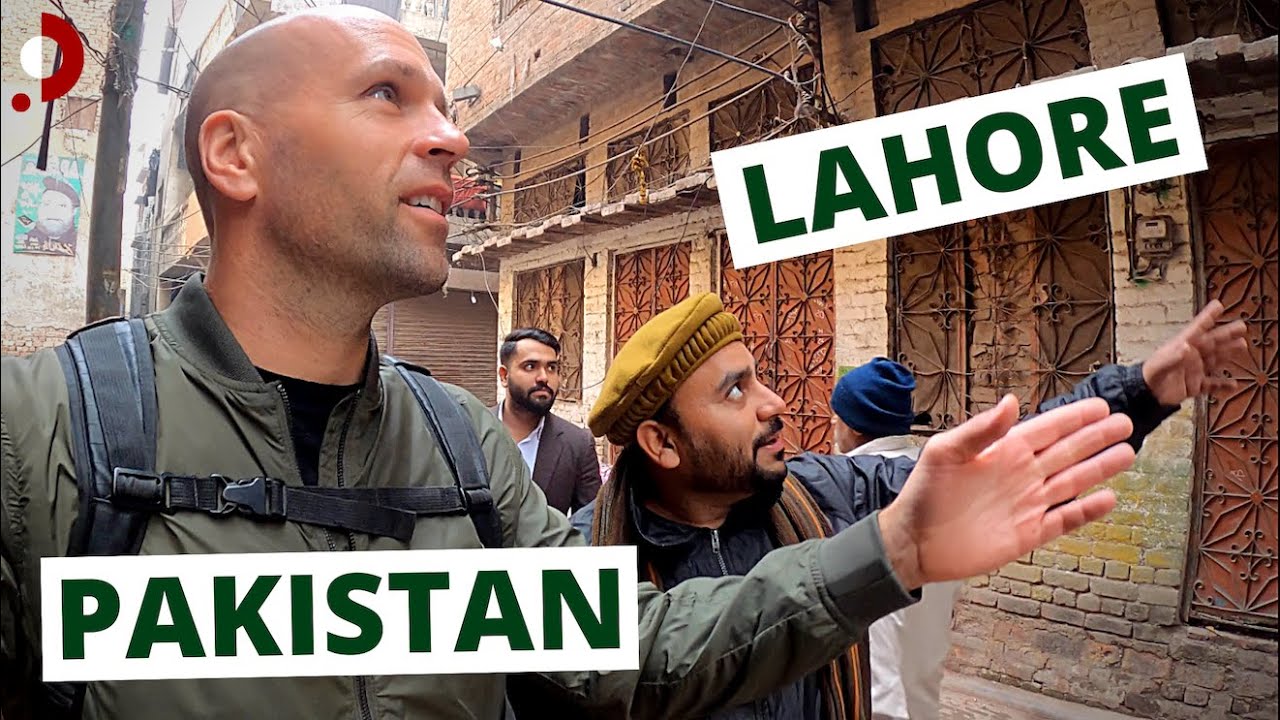
There is a very good example of this in Pakistan. They have a city in the east of the country called Lahore, and every year it competes with Dhaka, the capital of Bangladesh for the most polluted city in the world. Nevertheless, we can roughly call it the dustiest city.
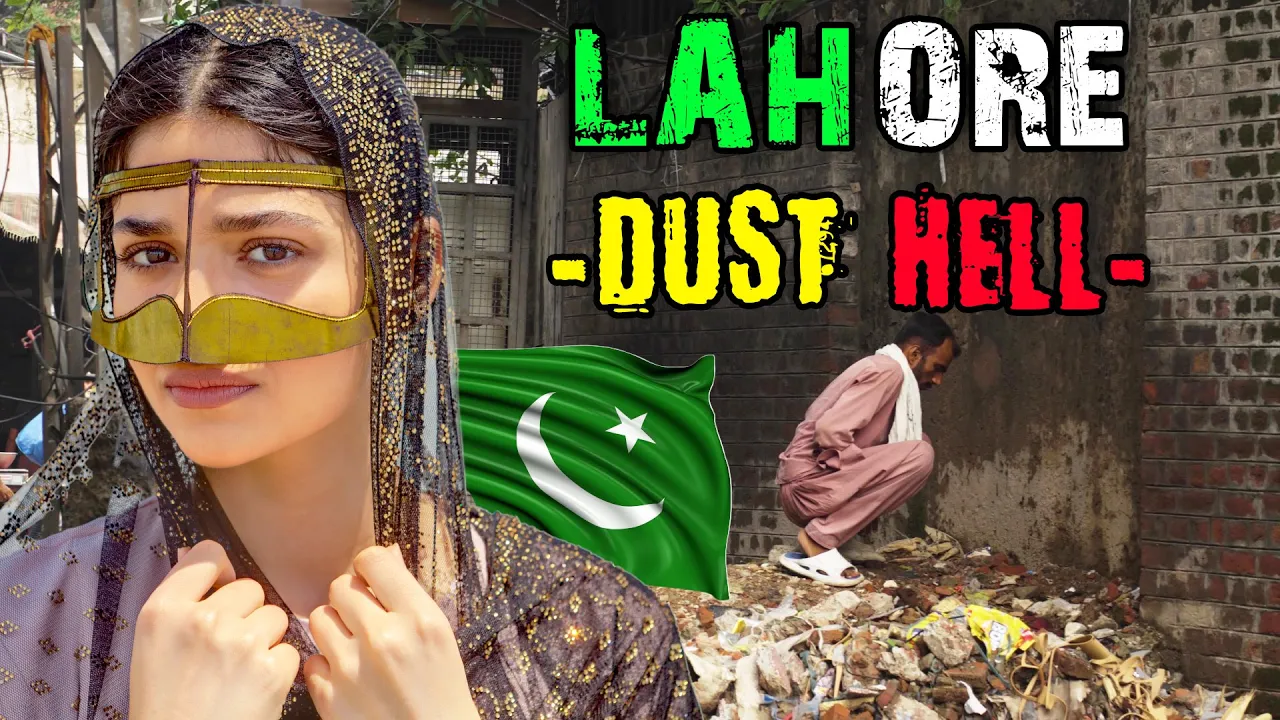
Lahore is the second largest city in Pakistan, with a population of over 13 million. If you wonder how chaotic, unhygienic or noisy a city can be, join us in this video. Let's take a trip to Lahore in Pakistan and decide together if it really is the most polluted city in the world.
Here is the side of a street in the early morning. There is not a garbage container in sight. Garbage is thrown in bags on the side of the street and flies are flying over it.
This not only creates environmental pollution, but also releases bad gases. To make matters worse, just beyond this garbage dump, a butcher slaughters meat in an open environment. In other words, the smell of the gases released by the garbage reaches the point where the meat is slaughtered.
This invites contamination of the meat with germs. The Pakistani shopkeeper is focused on his work early in the morning, and sells meat for ₹630. The equivalent of ₹630 is only 2.
5 U. S. dollars.
If we examine the environment in which the meat is sold, it is in direct contact with the open air and is directly exposed to dust and exhaust fumes. The butcher wipes the counter with bare hands and then cuts the meat with the same hands. At the beginning, these chickens are still alive under the counter.
Then the butcher takes the chicken out from under the table and cuts it into pieces on the spot. Butchers in Pakistan are mostly like this, and you will have to get used to it if you plan to live there. It will of course, be your choice whether to buy meat here or not.
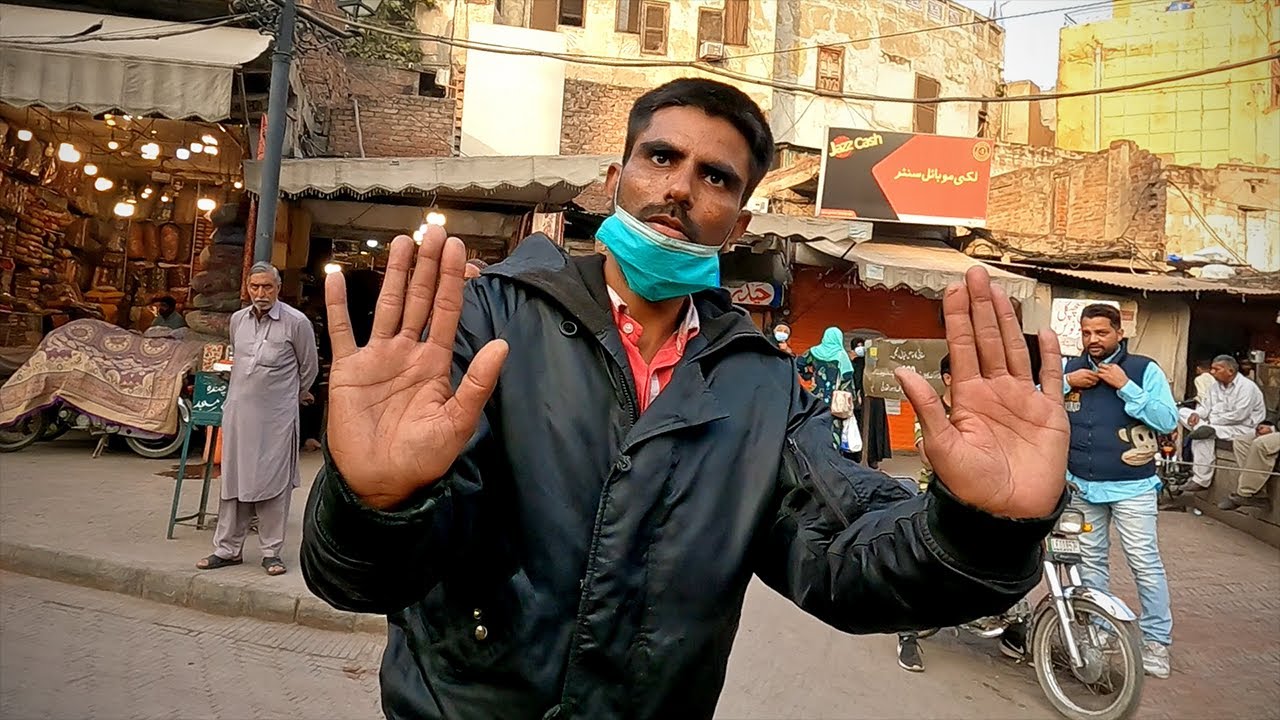
However, the reality is that when you put the camera in the middle of the street and shoot around, people smile at you. So the fact that the area they live in is dirty does not make them an unhappy society. People smile or say hello when they see the camera.
People prefer to use motorcycles for practical transportation, and the noise of motorcycles never diminishes during the daytime. In the Pakistani city of Lahore alone, more than 6 million motor vehicles are on the road. Of these 6.
2 million motor vehicles, 4. 2 million are two wheeled motorcycles. Therefore, when you go to Lahore, you will see dozens or hundreds of motorcycles ast every point you turn your eyes.
Of course, someone will be honking their horns all the time. Their exhausts will emit odors. Especially the horn issue is not something to be ignored.
At traffic jams, people honk their horns for a long time, and don't take their hands off the horn until the traffic is cleared. If the sound of honking horns gets on your nerves, you might get a headache on your first day in Lahore, Pakistan. This creates extra noise pollution in the city.
It is precisely details like these that create the real pollution in Lahore. The high number of vehicles in the city not only creates dust, but also pollutes the air with exhaust gases. Since most of the roads are old and poorly maintained, dust is kicked up from every point where motor vehicles pass and fills lungs.
Some say that spending a day in Lahore is equivalent to smoking a pack of cigarettes. International organizations and the World Health Organization warn you not to walk around Lahore without a mask. In this context, you should not do street exercises in Lahore and you should always keep the window of your home or hotel room closed.
Of course, you should also wear double layer masks on the streets, because the extent of air pollution in Lahore is exactly 16 times the value accepted by the World Health Organization. Particles 2. 5 microns in size or smaller are classified as PM 2.
5. Dirt, smoke, dust, sand, or liquid droplets in the air belong to the class of particles below 2. 5 microns and in Lahore, Pakistan.
This air pollution index is 300 on average and sometimes as high as 400. In an average city with clean air, PM 2. 5 values should hover around 20 to 25.
While in Lahore, you should know that the particles in the air and the amount you inhale into your lungs will be at least 16 times higher. According to scientists, cities with daily PM 2. 5 values above 50 should not be lived in and should be avoided.
Any value above 50 poses a direct threat to human health. In fact, when the Air Pollution Index in Lahore reaches the 400s schools in the city are canceled and there are disruptions in the education and business sectors. Therefore it can be said that it is impossible for an asthma patient to survive in Lahore.
In fact, it has been found that at least 128,000 people die every year in Lahore due to air pollution. Most of them died from respiratory problems such as asthma, bronchitis and lung cancer. Some people in Lahore are so aware of this reality that they regularly wear masks even though the pandemic is almost over.
Living in Lahore is much more dangerous for them than the pandemic, and they can die from respiratory infections at any time. These are, of course, the announced numbers, and it is claimed that the actual numbers are much higher. People living in Lahore will live seven years less than the average life expectancy in the rest of the world.
For example, if you estimate the average human life expectancy in your country to be 70 years, people in Lahore will only live to be 60 years old. Signboards, stores, cars and products in shops are covered with dust, people are constantly itching because of the dust. That is why Pakistani shopkeepers have to constantly clean their packaged products to remove the dust from their products.
Otherwise, the dust accumulated on the products will turn into mud after a while and the products will become unsellable. Moreover, there is no proper greenery in the city. The city is largely an industrial city, and Pakistan's most important factories are located in Lahore.
The chemicals released by these factories cause significant damage to the plants and trees in the city. If we go back to the atmosphere of the city, we need to show that Lahore also has big problems in terms of hygiene and cleanliness. There are animals like donkeys that are used as porters in the city.
The animals rest in areas filled with garbage. Donkeys are part of the Pakistani traffic itself. Even on the main streets you can see donkey carts alongside motorcycles and cars.
Shopkeepers use these donkeys to transport goods in their primitive wheeled vehicles. Both donkeys and cats or dogs look extremely unhealthy and weak in Lahore. If you look at them carefully, you can easily see that they are emaciated.
The better off carry their cargo on motorcycles. Some motorcycles also have a two passenger apparatus on the back, reminiscent of the Tuk-Tuks of Vietnam and Thailand. Pakistanis use these motorcycles to carry passengers for short distance transportation and act as a kind of taxi.
Of course, you should not trust these vehicles too much. Because your life may be at risk in a possible collision. For example, a vehicle on the road has had an accident like this and the driver is waiting for help.
It is impossible to avoid traffic accidents in Pakistan due to the abundance of population. And there are traffic accidents every day in Lahore. You can even see horse carriages decorated like this in traffic.
Pakistanis like to drive decorated horse drawn carriages in traffic on special occasions, and they can go wherever they want to go by horse drawn carriage. On the other hand, there are also problems with the concept of traffic lights in Lahore. Both cars, motorcycles and pedestrians stand in the same area in a chaotic manner.
People move in traffic not according to the concept of pedestrian paths and traffic lights, but according to momentary decisions. This creates chaos there. As a result of chaos, there are traffic accidents and loss of life.
Look, motorcycles, cars and work vehicles pass by on all sides. There is no traffic light system in the streets, and therefore you have to be very careful when crossing the street. What's more, it is possible to see open manhole covers while walking on the road.
If you are walking while looking left and right, you may suddenly fall into a manhole covers and go down the road to shit, so to speak. You should take a very good look under your feet while walking on the streets of the city. Because it is possible to step on anything at any moment.
It could be a leftover food or a dead pigeon. Or you can step on a dead mouse. The municipal mechanism must not be working well in the city because you come face to face, even with dead animals.
Perhaps these simple creatures cannot survive the noise and bad air of the city. Or maybe they get hit by someone in the heavy traffic. Dogs and cats in Lahore feed on garbage scraps.
Probably no one takes care of them, and it is impossible for them to live long in Lahore without contracting diseases. If you look up, you will see hawks and eagle like birds in abundance. Since every corner of Lahore is littered with food, waste and garbage.
It has become a feeding ground for wild birds. These birds of prey often land on the ground and look for something to eat. Cats, dogs, birds, butchers and fishermen's waste, the mosquitoes, donkeys, dead rats.
You just want to escape from the environment as soon as possible. Add to all this traffic chaos, the torrential rains and life in Lahore, Pakistan becomes even more unbearable. Local people may be used to it, but a person from a western country moving to Lahore, Pakistan, may not easily get used to the floods and the difficulties of city life.
Especially, those in Lahore are struggling with all the challenges of the city and geography. When it rains, some are trying to save their crops. Others are trying to get home quickly in the flowing traffic.
Others are desperately waiting for the rain to pass. As in every South Asian country, Pakistan receives heavy rains and these rains sometimes lead to flood disasters. The country suffers a lot from this and often experiences flood disasters.
A boy poses for our camera after the rain, showing his despair or resentment towards the city he lives in, but don't worry. Another handsome boy looks extremely cheerful. Or this young veteran, who sells bananas at his stall, standing tall and looking positive for our camera.
While observing the people there, I noticed that Pakistanis wear long clothes, regardless of men and women. Here, especially my fellow men, do not wear western clothes like pants, t-shirts or shorts. At least I didn't see it.
Both old men, adults and children wear shower style long dresses. This style of dress may also be related to their religious beliefs, because Afghanistan has a similar style of dress and both countries have adopted Islam. These clothes look like a version of the white abayas of Arab men transformed into various color.
It is probably very comfortable to wear and allows men to move their leg and arm muscles easily. Also, the shoe culture of Pakistani people may seem different to Westerners because unlike Westerners, people here wear slippers on the streets instead of wearing comfortable sneakers. This must be related to their cultural habits.