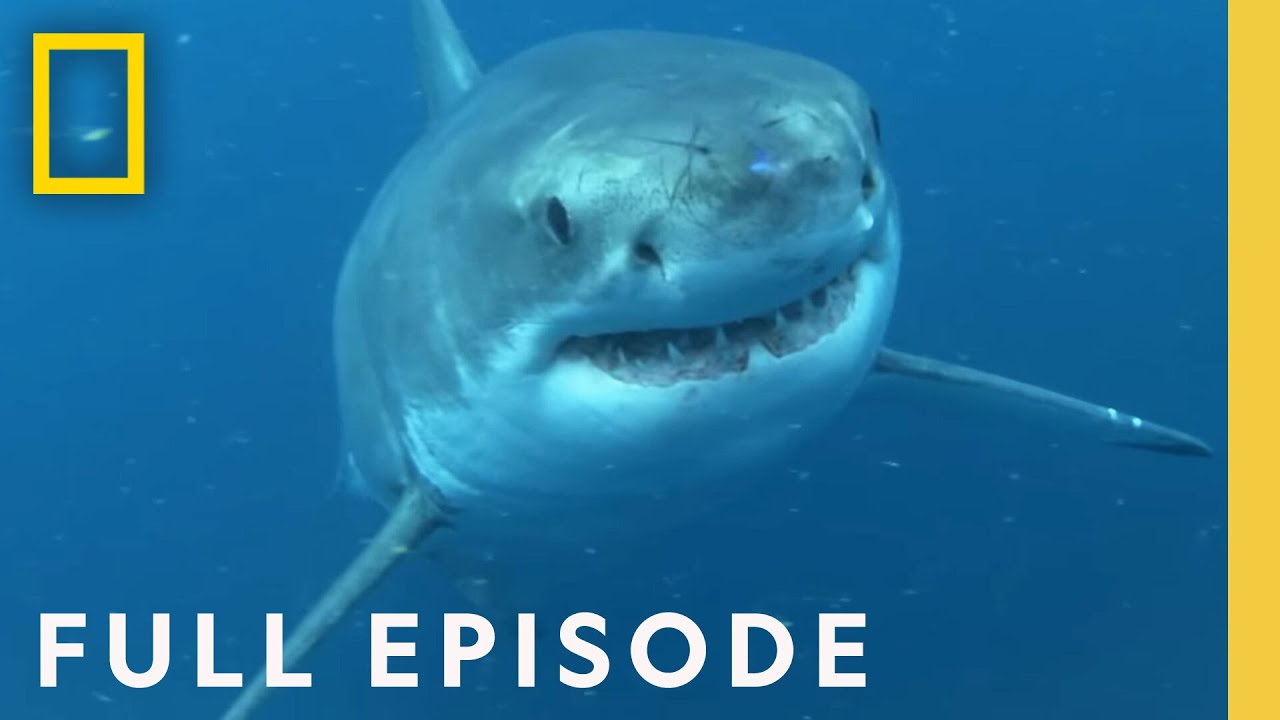
[Applause] we've all been led to believe that sharks especially those of the great and white variety are the fiercest animal on earth and while they are certainly one of them they might not exactly be the top dog there is always a bigger fish as they say after all but could there actually be something out there that is not only big enough to take on a shark but routinely doing so scientists say that something big is hunting great white sharks right now and they're worried let's talk about [Music] it number five The Disappearance of the great white shark great white sharks are often viewed as the ocean's most formidable and lethal creatures they hold the title of apex predators in Marine ecosystem but did you know that even these powerful sharks have their own Predators it's a surprising notion in 2003 Australian scientists set out to learn more about these ocean Giants they affixed a tracking device to a 9-t long great white shark to monitor its movements however just 4 months later the tracking device washed ashore without any sign of the shark what could have happened to such a dominant Predator what force could overpower one of the ocean's most terrifying animals leaving no evidence behind theories ranged from a long extinct megaladon to a colossal squid isn't that intriguing what could possibly have devoured this enormous great white shark the mystery began in 2003 when filmmakers Dave and Janine rigs were creating a nature documentary in Bremer Bay Australia everything was proceeding smoothly until they found themselves on the shore confronted with something dis disturbing in the shallows closer to the beach than usual was a group of hungry great white sharks attracted by the scent of whale carcasses While most would have steered clear Dave saw an opportunity he reached out to a team of scientists who brought geotagging equipment their goal was to tag the Sharks and track their behavior using long poles with specialized needles they inserted tags at the base of the shark's Dorsal fins the first shark they tagged was a 9-ft female dubbed shark Alpha little did they realize this tagging would spark one of the greatest mysteries in Marine Biology doesn't that sound captivating Just 4 months later shark Alpha's tag washed up but there was no sign of the shark the researchers examined the data and uncovered something remarkable on Christmas Eve the shark was swimming normally when it abruptly changed Direction and began a rapid descent to nearly 1,900 ft much deeper than typical great white diving Behavior moments later the tag recorded a temperature Spike from 46° to 78° F what could this indicate the experts were astounded They concluded that shark Alpha must have been consumed by something larger and more powerful weighing nearly a ton and exceptionally strong shark Alpha was overpowered by an unknown entity and dragged Into the Depths what do you think could possess such strength number four the homemade submarine Mission determined to solve the mystery Dave the Intrepid Explorer decided to venture into the ocean's depths himself aware that diving without proper equipment could be fatal he constructed his own underwater vehicle it was made from a metal frame parts of an old lawn mower and five layers of fiberglass does that sound like a reliable submersible this contraption was meant to Shield him from the ocean's most dangerous inhabitants unfortunately it didn't appear to hold up Dave was uncertain of what awaited him below but his curiosity outweighed his years he gathered a team of equally daring individuals they all climbed into this homemade submarine ready to dive into the unknown within minutes it became evident that this Mission would be more challenging than they had envisioned just 65 ft beneath the surface they were surrounded by about 40 Whaler sharks and a pod of killer whales recognizing the Peril they had to abort the mission and return to safety however their efforts weren't completely fruitless they discovered that killer whales and Whaler sharks thrived in this so-called Kill Zone this raised an important question could one of these Predators have been responsible for the incident the bronze Whaler also known as the narrow tooth shark is an intriguing species of requium shark found in temperate Waters its habitat spans the northeastern and Southwestern Atlantic southern Africa the Northwestern and Eastern Pacific and around Australia and New Zealand with occasional sightings in Equatorial regions these sharks inhabit environments from brackish rivers and estuaries to shallow bays and offshore Waters over 100 m deep reaching impressive lengths of up to 3. 3 M spotting a copper shark can be tricky due to its resemblance to other large requium sharks however its distinct narrow hook-shaped upper teeth lack of a prominent Ridge between Dorsal fins and plain bronze coloration help differentiate it but what do they actually eat they're diet primarily consists of seapods bony fishes and other cartilagenous species a great white shark is nowhere near their menu they are Swift swimmers and sometimes hunt in groups particularly during the annual sardine run off South Africa when millions of pilchards fill the waters now here's where it gets fascinating like many requium sharks copper sharks are vivus meaning they give birth to live young females typically have litter of 7 to 24 pups every other year in coastal Nursery areas after a len lengthy gestation period that ranges from 12 to possibly 21 months it doesn't stop there these sharks grow slowly with males maturing between 13 and 19 years and females between 19 and 20 years despite their size and occasional links to shark attacks copper sharks aren't considered major threats to humans they rank 10th in the number of unprovoked shark attacks on people with only a few recorded incidents 15 of which were non-fatal and one fatal as of now the population size of this species remains unknown and it is classified as vulnerable on the iucn Red List due to its vulnerability to overfishing with their slow growth and reproductive rates along with declines in certain areas copper sharks face significant threats while Whaler sharks are fearsome they rarely grow larger than a standard great white making it unlikely for one to have taken down shark Alpha though they seem powerful Whaler sharks could easily be outmatched by a great white but killer whales present a different challenge alt together number three the killer whale possibility killer whales known for their striking black and white coloring dominate the oceans these apex predators are also classified as the largest dolphins and belong to the oceanic dolphin family with their distinctive markings orcas inhabit a variety of Waters from frigid Arctic regions to warm tropical Seas their diet includes a wide range of marine life from fish to seals and even other whales not only are they Predators but they are also highly social creatures orcas live in tight-knit family groups sharing hunting techniques and unique vocal Traditions across Generations wow this is going male orcas can grow to be massive reaching lengths of 6 to 8 m and weighing over 6 tons they are known for their intelligence and complex social structures which vary significantly among different pods for example resident pods are known to specialize in fishing while transient pods May focus on Hunting larger marine mammals with all this in mind it becomes increasingly plausible that killer whales may have played a role in The Mysterious fate of shark Alpha leaving scientists to ponder the complexities of marine life and Predator prey relationships in our oceans as researchers continue to explore these Mysteries the ocean remains an enigmatic Frontier filled with hidden dangers and extraordinary creatures the female orcas are slightly smaller but still impressive ranging from 5 to 7 m in length and weighing about 3 to 4 tons however some males can reach lengths of up to 9. 8 M while females can hit 8.
5 M that's comparable to the size of a bus if you want to visualize it now despite their power and size orcas are actually not aggressive towards humans there has never been a confirmed case of an orca attacking a person in the wild however in captivity things can can be different there have been unfortunate incidents where captive orcas have harmed their trainers at Marine Parks this indicates that while they might not initiate attacks in their natural habitat they can exhibit aggressive tendencies under stress these killer whales are incredibly fast and Powerful capable of taking down a shark however the data doesn't quite support this Theory shark Alpha's tag showed she was attacked at a depth of 1,900 ft and killer whales are known as surface Hunters rarely diving that deep plus the temperature inside the Predator was recorded at 78° F while killer whales have an internal body temperature similar to humans around 100° so if it wasn't a killer whale then what could it have been this leads us to our next possibility the giant squid these massive spilop pods have fascinated scientists and the public alike they belong to the family arua day and are scientifically classified as aretus Ducks these squids can grow to to astonishing sizes with females reaching 12 to 13 M and males measuring around 10 m despite their enormous size much about these creatures remains a mystery genetic studies suggest that there is only one species but there are claims of specimens measuring over 20 M although these reports lack scientific validation the first footage of giant squids in their natural environment was captured by a Japanese team in 2004 giant squids inhabit all of the world's oceans often found near Continental slopes and Island Waters they range from the North Atlantic including regions like Newland and Norway to the South Atlantic around southern Africa as well as the Pacific around Japan New Zealand and Australia however sightings are rare in tropical and polar regions in terms of diet giant squids are formidable Predators they Feast on deep sea fish such as orange ruffy and other squid species with their two tentacles lined with serrated sucker Rings they grasp prey and draw it toward their powerful beaks shredding it with their radula before swallowing despite their size they are primarily solitary Hunters with only individual giant squids recorded in catches some evidence suggests they may occasionally prey on each other due to competition or territorial disputes giant squids reside in the dark depths of the ocean precisely where shark Alpha met her end their powerful tentacles equipped with strong suckers can ens snare prey from up to 33 ft away could a giant squid have overpowered a great white shark this Theory gains traction particularly since giant squids remain somewhat enigmatic to scientists due to their deep sea habitat the depths of the ocean are among the least explored areas of our planet making it a prime candidate for such a mysterious Predator yet there's still one more possibility we have yet to explore explore historically many shark eating creatures roam the oceans could it be possible that one of these supposed extinct beings is responsible for the attack considering that 80% of the ocean remains unexplored this Theory isn't as far-fetched as it might seem now it's time for the sweet topic this shocking image showcases a great example of what we're talking about just off the beaches of Miami a group of swimmers began to scream out in pan panic and fear as they desperately swam for the shore loitering beneath the surface they had seen the most terrifying Beast of them all a great white shark that is terrifying enough but what truly struck fear into them all was blood dribbling from the shark's mouth had it eaten someone was it hungry for more they were right to panic but when the shark burst above the surface of the water the truth was revealed it was the shark's own blood he had been attacked but what on Earth is scar enough to attack a shark in the image on the right you can see a big red arrow pointing at the only glimpse of what the mysterious attacker was all that is seen is some kind of large reptilian find poking out the water it looks a little like Godzilla's spine but what is this thing and if it can attack a shark and wind just how dangerous is it as always let us know your thoughts in the comments section down below using the hashtag sweet topic number two the spinosaurus Theory Spinosaurus known as the ultimate spine lizard ruled North Africa during the late Cretaceous Period approximately to 94 million years ago they thrived at a time when dinosaurs dominated the Earth unlike other dinosaurs spinosaurus captured the attention of German paleontologist Ernst Stromer in 1912 when some Egyptian remains were discovered he officially introduced Spinosaurus to the world in 1915 although the original bone were destroyed during World War II more fossil evidence emerged in the 21st century scientists are still debating whether we are dealing with one species of Spinosaurus or two the primary species s egyptus hails from Egypt while a potential second species s maroccanus is found in Morocco there's also sigilmassasaurus which some researchers believe may be a variation of Spinosaurus in a slightly different pose when discussing Spinosaurus we reference a group of renowned carnivores including T-Rex Giganotosaurus and kerodon toaurdethtdes bite out of anything it fancied its for liims were formidable too with three fingered hands that sported oversized claws the elongated vertebrae extended to form a sail-like structure on their backs which some theorize was for temperature regulation While others suggest it was meant to attract mates or intimidate Rivals what's particularly interesting is that Spinosaurus wasn't strictly a land creature evidence suggests it was semi-aquatic this adaptation would have allowed it to thrive in both environments potentially giving it an edge in hunting its leg bones were denser than those of typical dinosaurs providing better control in the water additionally its tail was likely adapted like a paddle perfect for swimming through ancient Mangrove forests given that Spinosaurus was thought to have prayed on sharks there remains a tantalizing possibility that this species still exists in the ocean unbeknownst to us however since Spinosaurus was primarily semi-aquatic it likely couldn't dive to the death where shark Alpha perished leading to another dead end number one the mosasaurus Theory these were known as the lizards of the Moose river that ruled the Seas during the late Cretaceous around 82 to 66 million years ago mososaurus was first identified when skulls were discovered in a chalk quarry near mustri Netherlands initially mistaken for crocodiles or whales naturalist George kuier identified them as giant Marine lizards in 1808 it wasn't until 1822 that William Daniel con bear officially named mosasaurus in recognition of its Riverbank Origins now let's discuss size because mosasaurus was truly massive traditional estimates pegged the largest species mhof Manny at 17. 1 M longer than a school bus however recent studies suggest it might be somewhat shorter clocking in around 13 m still that's impressive and definitely sounds large enough to consume a whole Shar AR mosasaurus was equipped with rows of sharp teeth designed for slicing through prey its limbs resembled paddles perfect for navigating ancient Seas while its tail featured a unique Bend and paddle-like fluke making it a powerful swimmer these theories together create a fascinating narrative about the potential fates of shark Alpha each possibility from the enigmatic giant squid to the long extinct mosasaurus highlights the Mysteries lurking in our oceans as we continue to explore these depths who knows what we may discover about these incredible creatures and their roles in the ecosystems they inhabit the ocean remains one of the last Frontiers on Earth still filled with Secrets waiting to be uncovered mosasaurus had exceptional eyesight to compensate for its less impressive sense of smell suggesting it might have been warm-blooded however Things become a bit complicated when we consider the diversity within the mosasaurus genus it included a variety of forms from the robust m hoffmani to the sleek and Serpentine M lemoner while more than 50 species were once attributed to this genus Recent research has clarified the situation confirming at least five distinct species mosasaurus was not limited to one region of the ocean it was a true Globe Trotter found in North and South America Europe Africa Western Asia and even Antarctica wherever it roamed mosasaurus feasted on a diet that included bony fish sea turtles and even other MO Murs yet life was not always easy for mosasaurus it faced Fierce competition in its marine environment compared to Spinosaurus which was more suited for life on land mosasaurus thrived in the deep sea its powerful Limbs and tail enabled it to swim at remarkable speeds allowing it to pursue and consume prey including great white sharks to truly understand how the great white shark could have met its demise it helps to examine the unique characteristics of this apex predator great white sharks belong to the genus kerodon which is part of the lamade family alongside other sharks like the moo and salmon sharks these formidable sharks dominate the oceans they inhabit Waters with temperatures ranging from 12 to 24° C with significant populations found in the United States South Africa Japan and the Mediterranean they are not limited to coastal areas these sharks can dive as deep as 1,200 m a feat many Marine creatures cannot achieve recent Studies have shown that great whites can remain in the open ocean for around 100 days traveling between Baja California and Hawaii before returning home their migratory patterns are complex and intriguing with seal populations thriving since the 1970s these sharks are in their element but what do they eat and how do they navigate these crowded Waters many of these questions remain unanswered and can only be addressed by studying the great white shark itself these sharks feature Sleek conical snouts and distinctive modeled coloration their serrated teeth are a formidable tool for catching prey plus their striking blue eyes make them one of the most recognizable species in the ocean great whites can grow to impressive sizes with females reaching up to 6.








![The ANUNNAKI of NIBIRU - "At Last, Everything Is Being Revealed" [COMPLETE BOXSET]](https://img.youtube.com/vi/jdiNbfQ5ddU/maxresdefault.jpg)