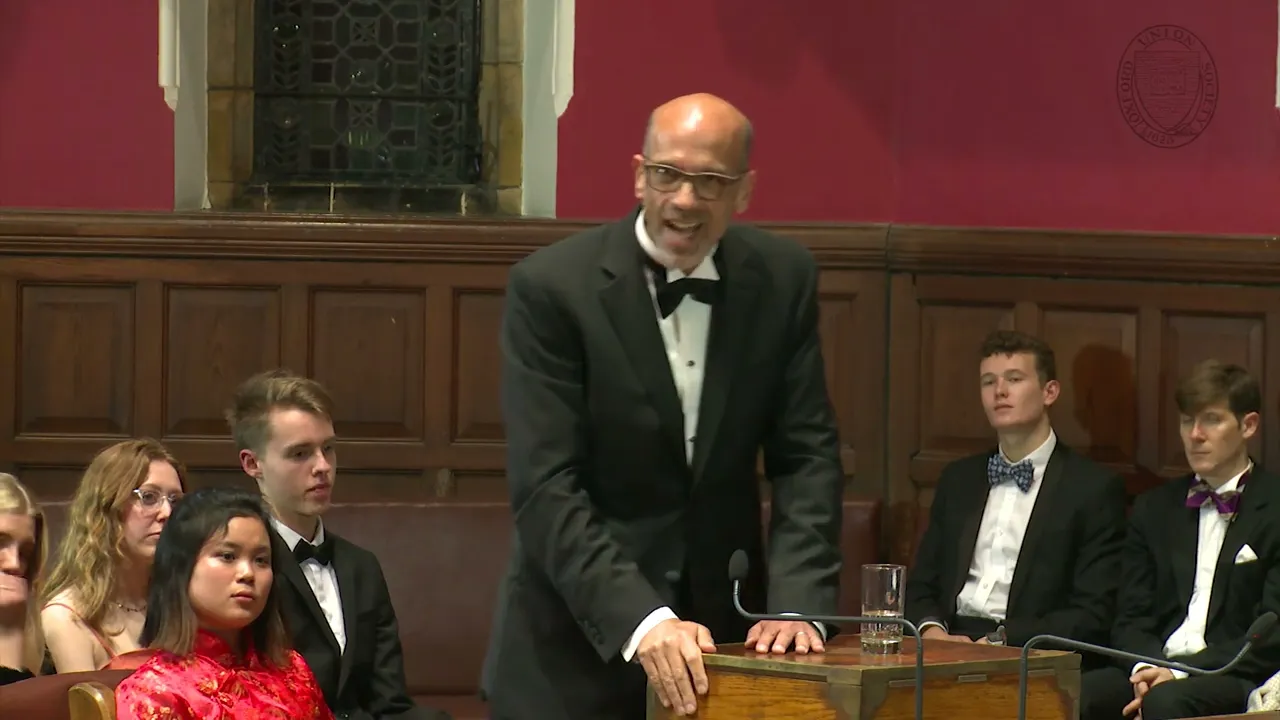
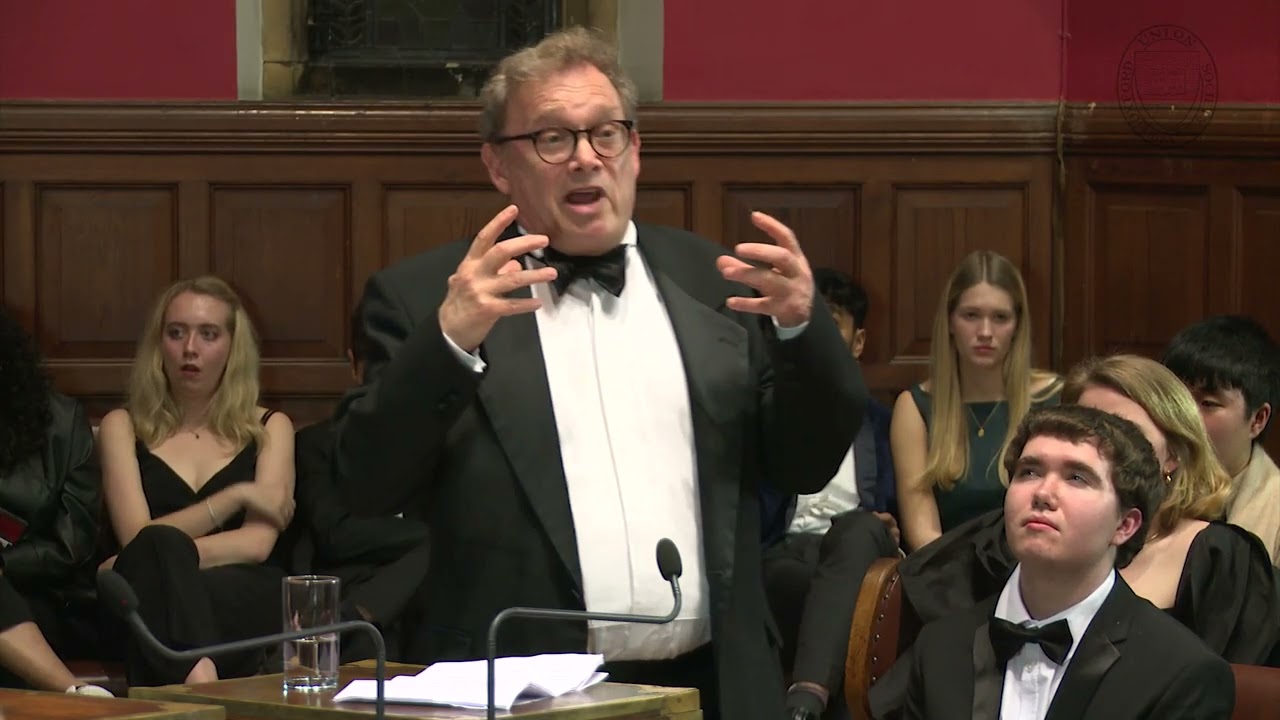
beach now i caught up on professor daniel markovis to continue the case for proposition thank you mr president and thanks to all of you for coming tonight i know there are hundreds of channels and thousands of websites so i'm grateful to you for being here well i am standing in a room of uber meritocrats devoted to the project of attacking meritocracy which means i'll spend a lot of my time attacking all of you now i think it'll be okay for two reasons the first is that one of my themes is going to be that meritocracy
makes the elites gluttons for punishment so you'll enjoy being attacked the second is that i'm genuinely interested in what you think and please after the debate is over you have my name if you have thoughts send them to me i want to make three points the first is that meritocracy excludes most of society from meaningful access to advantage not because we live in in inadequate meritocracy but because meritocracy is operating as designed the second is that meritocracy ensnares even those who seem to succeed in a web of effort manipulation self-distortion that harms them and the
third is that meritocracy does both of these things by focusing all our energies on things that are shallow and not worthy instead of on the human excellencies that we should in fact individually and collectively aspire to achieve let me begin with the first if i look around this room of oxford undergraduates 40 of you were privately educated in a country in which seven percent of students have private educations eighty percent of you come from meaningful social and economic privilege as we heard a moment ago at my university yale there are more students from the top
one percent of the income distribution than from the entire bottom half now my university's admissions process is corrupt and failures of meritocracy might explain it but oxford's is not corrupt you can't buy a place here there is no meaningful legacy preference and yet nevertheless you're all rich and you all come from privileged backgrounds or almost all now why is that the reason is straightforward famous us baseball player once said practice doesn't make perfect perfect practice makes perfect meritocracy in fact is not as we just heard that advantage turns on effort and talent it turns on
effort and talent and one more thing investment it turns on how much is invested in developing a child's talent using their own efforts and the investment that different kinds of children get in meritocratic societies is absolutely enormously different in the united states the richest private schools spend over seventy five thousand dollars per pupil per year on educating their children in a society in which public schools on average spend about twelve thousand dollars in this country the richest private schools spend over thirty thousand pounds a year educating their children these massive investments produce massive differences in
childhood achievement not because of legacy admissions but because when you get trained you get good at things and the result therefore is that a meritocracy when it works as designed favors those whose parents are in a position best to invest in them who have the money who have the skills and who have the free energy and space to do so and believe me meritocrats give rich parents the ability to do so i'll get it in one second when michael young invented the term meritocracy the richest in england had only half the share of national income
that they have today the richest 10 percent of earners made twice as much as the poorest 10 percent of earners today they make four times as much a graduate of this university will make 50 percent more in her first year out than a graduate of the university of york so meritocracy creates an inequality in which rich parents have the opportunity to spend all this money on their children which is why meritocratic children are also rich children that's the first point meritocracy excludes most of society from meaningful advantage second point it's not actually fun to have
that much invested in you as a kid it's not easy you are poked and prodded and tested and subject to tutors and classes and extra help and schools and exams and you do this from the earliest age up until adulthood and then you come here and you work hard and then you get a job at mckinsey or goldman sachs and you work 80 hours a week and then you become parents and you live in fear that your children will lose the cast that you have acquired by working so hard and so as parents you do
two jobs you squeeze into your children the same thing that was squeezed into you as you're working to try to make the money to enable you to do that it's not surprising that in england exam anxiety has now overtaken body image as the largest source of stress in wealthy children it's not surprising that in the study of a wealthy american private school 50 percent of children had moderate to severe clinical symptoms of depression and 75 percent had moderate to severe clinical symptoms of anxiety these are not easy lives to live you will be extremely wealthy
wealthier than you can imagine wealthier than prior elites have been but you will not be well and your children will not be well and so even as meritocracy excludes everyone else it will ensnare those of us in this room who are fortunate but that doesn't mean that in human terms it serves our interests that's the second point third point meritocracy distorts what we value and how we value it to begin with meritocracy has to decide what merit is every meritocracy invents its own way the king dynasty in china had a particular kind of exam based
system based on classical learning and a certain form of very edition our meritocracy also has an exam based system based on the tests you need to take to get into places like this and then a market-based system based on how much your labor is in demand in a market economy that's largely deregulated under neoliberalism now we all know we're good at exams but we also know there's all the difference in the world between being able to take a good test and actually understanding something and there's an even greater difference between test taking and wisdom and
examine focused education distorts us on trying to learn to the test rather than try to understand the world around us or ourselves john dewey said that education is the process of coming to terms with your role in the world taking tests to get into university is not that process second of all meritocracy massively distorts how we think of ourselves and how we value ourselves meritocracy teaches that the elite deserves its advantages and the lived experience of the meritocrat precisely because it's so hard to be one is one that validates that teaching this is not a
group of wastefuls or layabouts this is a group of extremely earnest hard-working serious people who have sacrificed a lot to get here and they've done it under an ideology that says when you sacrifice in this way that's the effort and you do really well at something that's the talent then you've earned it and you deserve it and so meritocracy creates an elite that is indifferent to the common good and that believes in its own entitlements which is very damaging for society and not so great for the elite either at the same time meritocracy tells the
rest of society that it's their fault that they aren't in this room that if they'd been a little more talented if they'd been a little harder working if they'd been a little more virtuous if they'd had a little more merit then they would have been able to measure up they would have succeeded and so they are to blame for what is in fact a form of structural exclusion and so meritocracy makes the elite smug and leaves everyone else naked in their rejection and that's an extremely damaging place to be that explains why in your country
and in my country those who are excluded by marriage by meritocracy now have a lower life expectancy than they did three years ago let me be clear there has been no other time and place in human history in which absent war or massively fatal plague and covet is not that plague there's been a diminution in life expectancy for a large segment of the population the source is addiction the source is alcoholism the source is obesity the source of suicide these are internalized forms of self-hatred produced by what meritocracy says to the people whom it excludes
just as neo-liberalism and davos are internalized forms of conceit produced by what meritocracy says to the elite so once again meritocracy excludes most people from advantage it ensnares the rich in a web of effort and distortion and it distorts all of us individually and collectively making us value the wrong things in the wrong ways and for the wrong reasons which is as the motion says why there is no merit in meritocracy or why as i would say merit is a sham you









![The Case Against Meritocracy - Michael Sandel [2021] | Intelligence Squared](https://img.youtube.com/vi/zcnBM7rlZsI/maxresdefault.jpg)