In this video, we're going to talk about how to get pregnant after the age of 35. If you're watching this video, it might be because you're having a hard time trying. You might have been trying for some time without any success, or maybe you just started, but have heard that you're a little late and it's going to be super difficult.
Let's take a deep breath and continue watching this video, knowing that you can definitely get pregnant over 35, over 40, and for many years. I see it every day with the couples that I help get pregnant. I want you to believe it because this belief comes from my 21 years of experience as a fertility coach, helping couples from all over the world achieve a pregnancy.
If you want to start believing again with a plan to move forward, then keep watching this video. I know that for many of you, now that you've turned 35 or older, maybe even 40, you've been told this is not the start of your fertility, that it's the end of your fertility. I want you to start to change that mindset.
I work with couples all the time who are well over 35, into their 40s, who have a great chance of conceiving and often do. Just now, I've talked to a woman that I'm supporting, who I've been working with for some time. She's 49.
Now, was it easy for her? No. Did it take some time and effort and planning and support?
100 percent it did, but it was possible for her. So I don't want you to believe that it's not possible just because you're 35 or whatever age that you've been told it's just not going to happen for you. Now, do I think you can sit on your couch, do nothing, and just think that you're going to get pregnant?
Absolutely not. But that's not realistic nor practical. So I want to tell you some things that I want you to focus on, some things that I do think will make a significant difference in your ability to conceive.
And the first one of those is actually focusing on how to improve egg quality. I know if you've watched my videos before, and if you haven't, you should go back and watch some of my other videos. But I know if you have, you've heard me say that age is not everything, and egg quality is not the reason for every fertility issue.
And I 100 percent still believe both of those things. I pay very little attention to age, and I do not believe that egg quality is the reason for all fertility issues. But does that mean that we shouldn't pay a little bit of attention to egg quality, or that we shouldn't, you know, put a little bit of effort into supporting egg quality?
No. On the contrary, it should be part of a fertility plan. For some of you who have true egg quality issues, it might be the main part of a plan.
And for those of you who have other ancillary issues, then this just might be a small little piece just to make sure that we are supporting egg quality for you. So it shouldn't be ignored at all. The real question is how much effort and how much of your plan and support really needs to be focused in on that piece overall.
So if you do want some support, and you know that you need some support for egg quality, there are a couple of key things that we're going to talk about. And I will say that a lot of the other points that I'm going to bring up will also be very helpful for egg quality. But many of you always say, "Well, what can I take to support egg quality?
" The first, number one big key thing that I think is going to be super valuable is going to be CoQ10. The next one is going to be vitamin D. That's right, vitamin D3, to be more specific.
And then we want to add in some antioxidants. Lucky for all of you, there is a product that has both CoQ10, vitamin D, and a whole slew of antioxidants that are proven to support egg quality. And you can find that, those products, and that information at GetRejuva.
com. Those would be the supplements that I would recommend that you focus on to improve egg quality. All right.
Number two, the second thing I want to bring up when it comes to supporting egg quality and getting pregnant over 35 is having balanced blood sugar. So many people today in the world that we live in have high blood sugar, have imbalanced blood sugar, have diabetes, either type one or type two, whatever it might be. These things need to be addressed and supported because without that, it causes more inflammation in the body.
And when we have an imbalanced blood sugar, not only do we cause more inflammation, we cause a stress on our body that impacts our adrenal function. It impacts our thyroid function and, in the end, impacts our fertility hormones—okay, your primary reproductive hormones. And so this is something that absolutely needs to be supported.
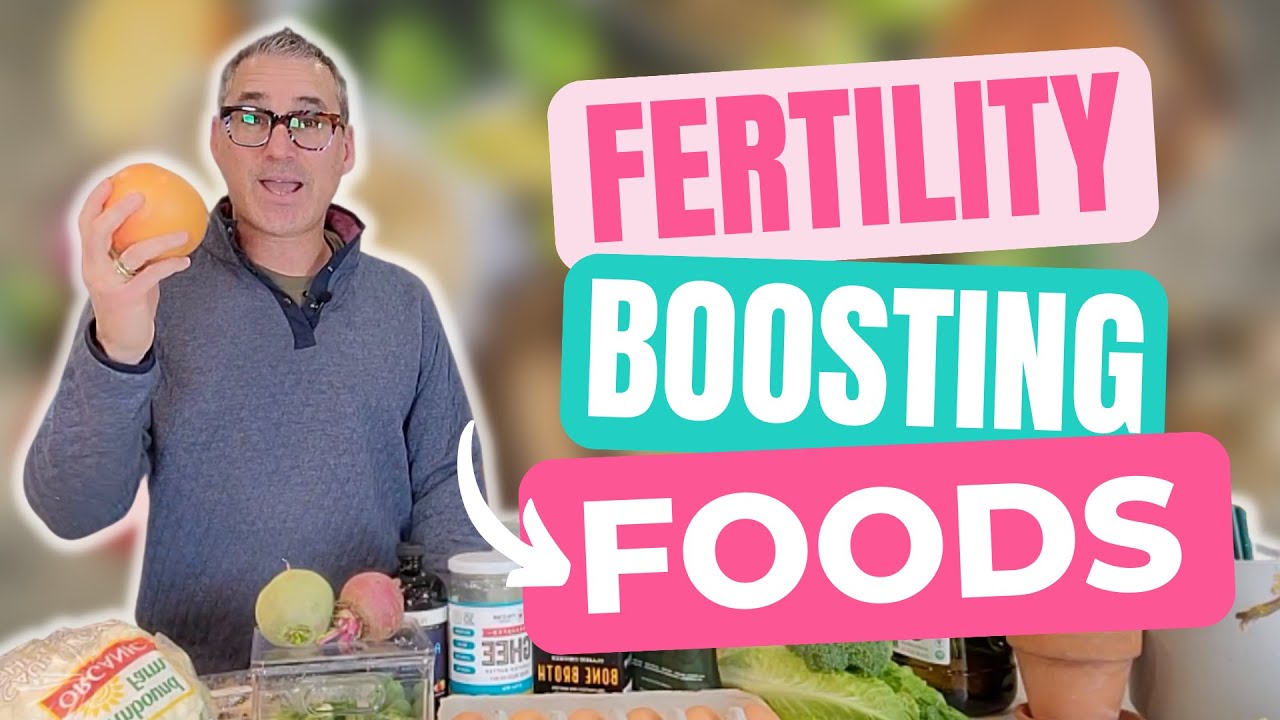
The number one way we're going to do that is by having a healthy, clean, proper diet. What does that mean? It means very low processed sugars, very low processed foods, a clean whole food diet, high in protein, high in good fats, lots of vegetables for the fiber, and having that regularly at every meal.
Essential for overall health, proper healthy blood sugar, lower inflammation in the body, and good fertility. This is essential. So many of you reach out saying, "You know, I'm fasting.
I fast, I do intermittent fasting, or I fast for longer than that. " When you're trying to get pregnant, this is not the time to deprive your body of nourishment and nutrients. This is the time to make sure it's getting everything that it needs.
So I'm not a big fan of fasting except for in certain circumstances. And we want to make sure you're getting good calories, healthy calories, and enough calories. And so if you are fasting, often you're depriving yourself of those things.
Fasting doesn't fix everything. We want to make sure that we're eating well, and this is such a key component to having good, healthy blood sugar. The other thing that is good and really important for healthy blood sugar is regular exercise.
Making sure that you are moving your body for at least 30 minutes every day, but I prefer longer—45 to 60 minutes. You could go for a nice, brisk walk, not a walk where you're walking your dog and he constantly stops to smell the roses, but a walk with a purpose where you are moving and going. That's what I want to see from you.
And even better, do it after your largest meal of the day. So let's regulate your blood sugar so that you can have good, healthy reproductive function. Number three, let's manage your stress.
If you are trying to get pregnant at 35, 40, 45, whatever age, even 25, if you are not managing your stress, then you are doing a disservice to your health and to your reproductive function. Stress is a negative. It will negatively impact your health and your hormones.
And it does this by a system or a triad called the hypothalamic-pituitary-adrenal axis. Your stress response and your stress hormones are produced in the adrenal glands, which sit on top of your kidneys. They communicate to your hypothalamus and pituitary, where your primary hormones, or many of your primary hormones, are produced.
And some of those primary ones are TSH, which is a thyroid hormone; FSH, Follicle Stimulating Hormone, which is the hormone that we look at to determine egg quality; and LH, Luteinizing Hormone, which is the hormone used for ovulation. So, if you're having a lot of stress, it's going to impact your reproductive function over time. And I see this repeatedly.
Just yesterday, I was communicating with a woman in my HOPE program. We were going back and forth about her new lab results, and she was just saying, "You know, it doesn't surprise me that some of them look the way they do because I've been really stressed and anxious. I'm not getting enough sleep.
I'm not taking care of myself the way I should. " And so that is translating to her hormones and not being able to have a regular cycle. Actually, her cycle was really long previously as well.
That cycle that we tested, it was 60 days—50 or 60 days, I don't remember off the top of my head—which tells me she didn't even ovulate that month. Okay? So this is what stress can do.
Now, you can't eliminate stress in your life, okay? It exists. It will be there.
It doesn't just disappear, and you get rid of it. But what you need to learn is how to manage it properly. What are you going to do to manage your stress well in your life?
Are you going to learn to breathe and meditate? Which is great. Are you going to use exercise in proper form to help you manage your stress?
Are you going to paint? Are you going to read? Are you going to quilt?
Are you going to sew? Are you going to hike? What is it you're going to do?
And it can be multiple things that you can do throughout the week. They're all a little bit different, right? How are you going to manage your stress?
I can't tell you what you can do, but you can start to create that list for yourself. And I think that is a huge step in the right direction to making sure that you are putting your body and yourself in the right position to conceive at any age. Number four, which kind of goes a little bit with number three and stress management, is mindset.
Listen, as you get to certain parts of your life, you speak to certain people in your life, you're going to be told negative things, whether that's by your friend who's always negative or the doctor who you went to see who just doesn't believe in you. You're going to be told things that you don't want to believe but that you start to believe. And it's really difficult to get those thoughts out of our head.
So we need to start to train our mind in a better, more positive way. Mindset is key. So first and foremost, you need to start to believe in yourself, believe in your body, believe in how you can produce and have a child.
You were meant to do that. And you need to start to believe that for yourself. So that is the first thing you need to do.
How are you going to do that? Well, you need to start to retrain your mind. Positive affirmations, journaling, you know, a gratitude journal, retelling yourself through meditation and retraining your mindset to believe that you can conceive.
This is such a big component. Those individuals who have the mindset that "I can and I will conceive" are the ones that are routinely more likely to achieve that. So we need to start to do that for you.
Now, you might say, "Well, I just, I don't believe it. " You ever heard that phrase, "Fake it till you make it? " Well, that's exactly what I want you to do here.
I want you to fake it until you start to really believe it. We have to retrain, and we've got to tell ourselves that we can repeatedly, and then you will start to believe. So you've got to start to fake it till you make it and start to tell yourself that you can.
Because I believe that you can, and now you need to start re-believing, recommitting to yourself that you can accomplish this. And now the last point that I want you to focus on if you're trying to get pregnant over 35 is acupuncture. Acupuncture has tremendous amounts of research around it that does show that it can improve your fertility, help you regulate your hormones, and help you get pregnant.
It helps increase circulation to the reproductive organs, to the ovaries, to the uterus, to the pelvic area. If your partner needs it, it will help to increase circulation and blood flow to the testes. And when we increase blood circulation, we can bring more nutrients, more nourishment to the area, and restore function.
And that's something that we absolutely want to do. The other thing that acupuncture does really well is it helps to regulate the nervous system. And we talked previously, when we were talking about stress, about how important regulating the nervous system is and managing stress, right?
Well, acupuncture is a tool that you can use to do that. And as we just described before, when you do that, it allows your adrenal glands to reset, doesn't put that burden on your hypothalamus and pituitary, and allows your hormones to regulate. That's right.
So we want to use this. There's lots of good research to show how effective it is. And I do believe this is a key piece that you can and should be incorporating into your fertility plan, really at any age.
But certainly, in this video, we're talking about being 35 and older, and I think it becomes more important the older that we are. So those are my key thoughts and key recommendations on what you can and should be doing to support your fertility today. We'll drop any of those links in the description below.
And I do want to hear from you. What comments do you have? Which one of these points resonates with you?
Which of these things have you tried? Have you not tried? I want to hear from you, and if you have questions about your fertility, I want to hear those as well.
So drop those in the comments as well. To keep learning more about fertility over 35, watch this video where I go over the common myths and facts about fertility over 35. And if you want my help and want me as your fertility coach, remember to apply to qualify for the HOPE program using the link in the description below.
And until the next video, stay fertile.