So far in this geology series we’ve focused on large-scale geological structures and phenomena. But now it’s time to zoom in and discuss what most people think of first when geology comes to mind: rocks and minerals. In the broadest sense, all rocks are assemblages of specific elements and compounds called minerals, but the precise definition of a mineral depends on who you ask.
Nutritionists might use the word mineral to describe elements like calcium and zinc, which are found in certain types of foods or supplements. Biologists might define a mineral as any inorganic material present within a living organism. But how do geologists define minerals?
James D. Dana, an American geologist who created the first, standardized classification system for over 5,000 minerals in the 1850s, defined a mineral as “. .
. a naturally occurring solid chemical substance formed through biogeochemical processes, having characteristic chemical composition, highly ordered atomic structure, and specific physical properties. ” The International Mineralogical Association, or IMA, has built off of Dana’s original definition and developed a stringent list of criteria for mineral status.
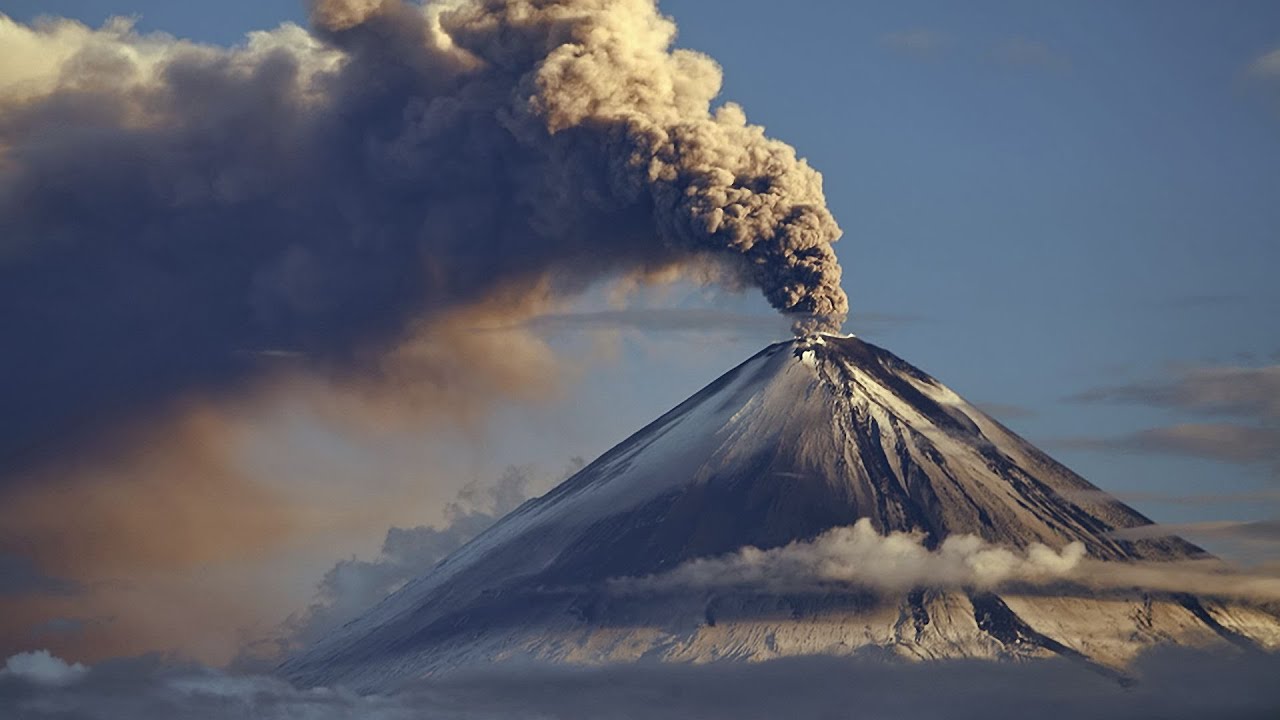
Minerals must be naturally occurring, crystalline solids that are formed by geological processes, composed of elements or compounds, and can be characterized by a standard chemical formula. Amazingly, new minerals are discovered and proposed to the IMA every month! For example, just in May 2021, scientists discovered three new arsenic and copper-containing minerals forming along fissures in the Tolbachik volcano in Russia.
The most fundamental property of a mineral is its crystallinity, or the arrangement of the mineral’s atoms in a repeating three-dimensional framework called a lattice, a term we should be familiar with from the general chemistry series. Some of the items you might find at a local rock or gem shop, like opal or obsidian, aren’t actually minerals at all. They fail to qualify because their atomic structures are amorphous, meaning that they lack a repeating, three-dimensional crystal lattice.
Another defining characteristic of a mineral is its elemental composition, which is represented by a chemical formula that represents one formula unit of the mineral’s structure. Mineralogists use a mineral’s chemical formula along with its crystalline structure to assign it a mineral class. Classes are a convenient way to group minerals together based on shared properties, making it easier for geologists to identify minerals and study rocks, especially in the field.
The IMA uses the Nickel-Strunz classification system, heavily based on Dana’s original classification scheme, which divides all minerals into specific classes based on their elemental composition, crystalline structure, and bonding type. Bonding types are of particular interest in mineralogy because the nature of a mineral’s chemical bonds dictates many of its physical properties. Covalent bonds are the strongest type of chemical bond.
Minerals with predominately covalent bonds are the hardest and most refractory minerals. Diamond, which is composed of linked carbon tetrahedra, is the prime example of a covalently bonded mineral. It is the hardest substance known and has a melting point of over 4000 degrees Celsius.
For a comparison, most rocks begin to melt somewhere between 700 and 1300 degrees Celsius. Ionic bonds are the second strongest type of chemical bond. Minerals with predominately ionic bonds tend to be easier to break, and they often fracture smoothly along planar surfaces.
Geologists call this quality “cleavage”, and a mineral is said to have “good cleavage” if it breaks along a single plane of atoms. Minerals with ionic bonds also tend to be highly symmetrical, have lower melting points, and are highly soluble in water. Table salt, or sodium chloride, and calcium sulfate are two examples of minerals dominated by ionic bonds.
In the world of geology, sodium chloride is called halite and calcium sulfate is anhydrite. Halite exhibits a type of cleavage called cubic cleavage, where the mineral breaks along three orthogonal planes, creating little symmetrical cubes when smashed with a hammer. Calcite, or calcium carbonate exhibits rhombohedral cleavage, where the mineral breaks along planes at 60- and 120-degree angles, creating miniature rhombohedrons when fractured.
Characterization of cleavage is an excellent way to identify minerals in hand samples, especially in the field. Most of Earth’s ionically bonded minerals are evaporite minerals, meaning they precipitate from an evaporating body of water, such as a lake or sea. Metallic bonds are the weakest type of chemical bond, making their minerals soft and weak.
Due to the unique chemical properties of metallic bonds, valence electrons can flow freely throughout the entire lattice, which gives rise to the high conductivity of electricity and heat exhibited by metallic minerals. Metallic minerals can be made of a single element, like iron or platinum, or can be composed of an alloy, or mixture of metals. All metals have a crystalline structure, with most being cubic.
Metals are shiny, opaque, and very insoluble in water. Now that we have discussed the three main bonding types, it is important to note that chemical bonds occur along a spectrum, with metallic, covalent, and ionic being endmembers, or distinctive types of bonding. For example, there is a complete spectrum of bonding ranging from pure metallic to pure covalent, as well as from pure covalent to pure ionic.
It is not possible to have a bond that is mixed ionic and metallic in nature, as they are not compatible. Ionic bonds involve the creation of cations and anions by an exchange of electrons between atoms of contrasting electronegativity, whereas the bonding between metals involves free roaming valence electrons travelling between atoms of near identical electronegativity; they are essentially mutually exclusive. Most of Earth’s minerals are composed of metals bonded to silicate anions and the nature of these bonds is mixed ionic-covalent.
So, we now understand what a mineral is, and know some details regarding their basic properties, such as crystallinity, and the types of chemical bonding that are present in their lattice structure. In the next tutorial we will continue to discuss how bonding and crystal structure affects the physical properties of minerals.