Has you ever felt that certain people seem to systematically drain your vital energy, confuse your mental clarity, and unbalance your inner peace for no apparent reason? Carl Jung, one of the most visionary deep psychologists in history, identified archetypal personality patterns that represent real dangers to our spiritual development. What many do not know is that these dangerous people are not simply external toxic individuals but manifestations of universal psychic forces that also reside in our depths.
Yungian wisdom transcends superficial judgment and invites us on a transformative journey towards self-nowledge. Each dangerous person we encounter outside is also a mirror of unintegrated aspects of our own psyche. Are you prepared to discover the six dark archetypes that according to Jung we must identify both in our environment and within ourselves to advance on our path toward individuation and spiritual fulfillment.
The person who denies their shadow. The danger of false luminosity. Have you met someone who seems excessively virtuous, incapable of recognizing any darkness in themselves while constantly pointing out the flaws in others?
You have encountered Yung's first dangerous archetype, the person who denies their shadow. In conventional understanding, we admire those who seem morally impeccable. Contemporary culture with its emphasis on toxic positivity and apparent perfection reinforces this trend.
However, Jung warns us about a fundamental danger. When a person systematically refuses to recognize their dark aspects, what he called the shadow, these do not disappear, but operate unconsciously with greater power. The Yongian concept of the shadow represents everything we repress and deny about ourselves.
Aggressive impulses, envy, greed, lust, and qualities that contradict our idealized self-image. As Jung expressed it, everyone carries a shadow and the less it is embodied in the conscious life of the individual, the blacker and denser it is. Maria, a spiritual leader recognized for her apparent infinite goodness, perfectly exemplifies this archetype.
In public, she preached unconditional love, but in private, she treated her assistance cruy. Her inability to recognize her own anger and resentment, resulted in unconscious outbursts that harm those around her while maintaining her self-image of purity intact. The real danger of relating to these people is twofold.
First, they massively project their unrecognized shadow, seeing evil in others that actually reflects their own denied aspects. Second, they create energy fields of hypocrisy that distort perception and block authentic growth, both their own and that of others. Ancient spiritual traditions have recognized this danger.
Tibetan Buddhism speaks of vajra poison, the transformation of spiritual teachings into tools to strengthen the ego rather than transcend it. Jesus harshly criticized the Pharisees precisely for this dynamic. You cleanse the outside of the cup, but inside you are full of greed and wickedness.
How can we then consciously relate to those who deny their shadow without being drawn into toxic dynamics? And more crucially, how can we identify our own areas of blindness where we might be denying our own darkness? The emotional manipulator who projects their internal conflicts.
The invisible psychic web imagines someone who constantly makes you feel guilty for their problems, distorts situations to position themselves as a victim, and subtly controls you through unpredictable mood. Swings. You have encountered the second dangerous archetype according to Jung, the emotional manipulator who projects their internal conflicts.
Superficial understanding classifies these people simply as manipulators or toxic. Jung offers a deeper understanding. These individuals unconsciously externalize their internal psychic chaos using others as projection screens for their own unresolved conflicts.
In Yungian terms, they have not integrated the polarities of their psyche and seek to resolve externally what can only be healed internally. Leading Jungian analyst James Hollis explains, "Projection is perhaps the most dangerous psychological mechanism because it operates completely outside of awareness. The emotional manipulator has perfected the art of making others carry their unprocessed psychic material.
" Carlos, a 45-year-old man, perfectly illustrates this pattern. In every significant relationship, he created elaborate scenarios where he was misunderstood and unfairly treated. His partners ended up assuming responsibility for his emotional well-being while he systematically avoided any genuine self-reflection.
His internal conflict between dependence and autonomy manifested as constant manipulation of the boundaries of others. The danger of these individuals lies in their ability to create psychic confusion. What Buddhists call makio or illusions that distort spiritual perception.
Gradually being in their presence makes us doubt our own perception of reality. A phenomenon known in modern times as gaslighting, but which Yung had already identified as a particularly insidious form of projection. Sufi mystical traditions warned about these dynamics through the concept of naps.
the aspects of the ego that distort clear spiritual perception. The poet room wrote, "Your task is not to seek for love, but merely to seek and find all the barriers within yourself that you have built against it. " Emotional manipulators have built elaborate barriers against self-nowledge, transforming others into repositories of their own unrecognized conflicts.
How can we then maintain our psychic clarity when interacting with emotional manipulators? What tools of yungian discernment allow us to recognize when we are being used as projection screens for the conflicts of others? The spiritual narcissist who believes they are enlightened.
The trap of false awakening. Have you met someone who constantly talks about their spiritual awakening uses complex spiritual terminology but treats others with barely veiled condescension. A seeker who seems more interested in being perceived as enlightened than in authentic inner transformation.
Jung identified this archetype as especially dangerous, the spiritual narcissist. The conventional understanding of narcissism focuses on self-centeredness and the pursuit of admiration. Jung deepens this perspective, revealing how the spiritual path itself can be hijacked by the ego, creating what he called psychic inflation, the identification of ordinary consciousness with archetypal contents, particularly the archetype of the sage or the savior.
This phenomenon represents one of the most perplexing paradoxes of the spiritual path. The ego can appropriate genuine transpersonal experiences, creating a superior spiritual identity that actually strengthens egoic structures rather than transcending them. The renowned Buddhist teacher Jack Kornfield describes this phenomenon as spiritual bypass, the accumulation of experiences, concepts, and spiritual states that are used to strengthen a special self-image instead of dissolving the illusions of the separate self.
Anna, a 15-year spiritual practitioner, perfectly exemplifies this pattern. After experiencing elevated states of consciousness in intensive retreats, she began to see herself as awake while perceiving others as asleep. Her language became filled with impressive spiritual jargon, but her behavior exhibited impatience, constant judgment, and a lack of basic empathy.
Her ego had usurped her spiritual experience. The real danger of these individuals is multifaceted. They create distortions in spiritual communities, confusing genuine seekers about the authentic nature of awakening.
Furthermore, they generate energy fields of comparison and spiritual competition, the very antithesis of true spirituality. As Jung observed, one does not become enlightened by imagining figures of light, but by making the darkness conscious. Contemplative traditions have consistently warned about this trap.
Zen speaks of the stench of enlightenment, the subtle spiritual arrogance that can follow genuine awakening experiences. The Hindu sage Ramana Maharshi pointed out that asking who is experiencing this enlightenment is the essential antidote to this penicious trap. How can we then distinguish between authentic and false spiritual authority?
In what subtle ways might we be fueling our own spiritual narcissism, confusing experiences with achievements? The social chameleon who loses their identity to fit in the absence of the authentic center. Consider that person who seems to completely transform according to the social environment.
They appine like conservatives among conservatives, like liberals among liberals, adopting every fashion, belief or jargon without apparent discernment. This is the fourth dangerous archetype identified by Jung, the social chameleon who has lost touch with their authentic core. In the superficial view, we admire adaptability and the ability to fit in in various contexts.
Contemporary culture with its emphasis on social acceptance and fluid identities may inadvertently value this trend. However, Jung warned that when social adaptation occurs at the expense of inner authenticity, there is a catastrophic erosion of the soul and the unique life purpose. Jung called persona the social mask that we all develop to function in society.
The social chameleon has developed multiple personas but has lost contact with what Jung called the selst or self the regulating center of the total psyche that transcends the conscious ego. Eduardo, a 38-year-old executive, perfectly illustrates this pattern. He was initially impressive for his versatility to adapt to any group.
However, when an existential crisis led him to therapy, he confessed with anguish. I don't know who I really am when I'm alone. I feel completely empty without the presence of others to define me.
His excessive adaptability had eroded his connection with his inner truth. The danger of relating to social chameleons is subtle but profound. Their lack of an authentic center creates an energetic void that they unconsciously try to fill by absorbing the identities of those around them.
As Jungian analyst Marian Woodman pointed out, without a stable inner center, the person becomes an empty vessel that must be constantly filled from the outside. Millennial spiritual traditions have warned about this danger. Towoism speaks of maintaining the integrity of the te virtue or inner power regardless of external circumstances.
In the Hindu tradition, the concept of svadharma, the dharma or unique purpose of each individual warns against adopting the path of others at the expense of one's own. As Jung powerfully expressed, the greatest tragedy of the spiritual student is to follow the path of another. The social chameleon has abandoned the difficult but necessary task of discovering and living their own singular truth.
How can we then consciously interact with people who lack an authentic center? And more importantly, how do we discern between healthy adaptability and the gradual loss of our own authentic inner voice? The fanatic who rejects any perspective that is not their own.
The pathology of absolute certainty. Imagine someone who rigidly clings to a belief system, reacts with hostility, t questioning and divides the world into true believers versus wrong or enemies. You have found the fifth dangerous archetype according to Jung, the fanatic possessed by absolute certainty.
The conventional view tends to associate fanaticism exclusively with obvious religious or political extremisms. Jung offers a deeper and more disturbing perspective. Fanaticism represents a psychological defense against the intolerable anxiety of existential uncertainty.
In Yungian terms, the fanatic externally projects the battle that they refuse to wage internally between different aspects of the psyche. Jung's prominent disciple Eric Noman described this phenomenon as identification with a partial content of the psyche. When a limited aspect of the personality usurps the totality, creating a dangerous psychic one-sidedness.
Roberto, a 50-year-old spiritual practitioner, exemplifies this pattern. After discovering a specific tradition, he gradually transformed his interest into obsession. Any suggestion that other traditions might offer valuable perspectives was perceived as a personal attack.
His language became filled with absolutes. the only true path, the definitive teaching. His intolerance increased proportionally to his repressed internal doubts.
The real danger of fanatics lies in their fundamental inability to engage in authentic dialogue. They create binary thought energy fields that force others to position themselves for or against, suffocating the psychological space necessary for genuine exploration. As Jung observed, fanaticism is always a sign of repressed doubt.
Deep contemplative traditions have consistently recognized this danger. Zen Buddhism emphasizes the concept of shin or beginner's mind, a constant openness that transcends accumulated knowledge. Zen master Shunriu Suzuki expressed it powerfully.
In the beginner's mind, there are many possibilities. In the experts mind, there are few. The Christian mystical tradition through figures like Meister Eckhart also warned against dogmatic rigidity.
To know God as he really is, we must free ourselves even from our images of God. This epistemological humility is precisely what the fanatic so fears. How can we then relate constructively to fanatics without being drawn into their polarizing dynamics?
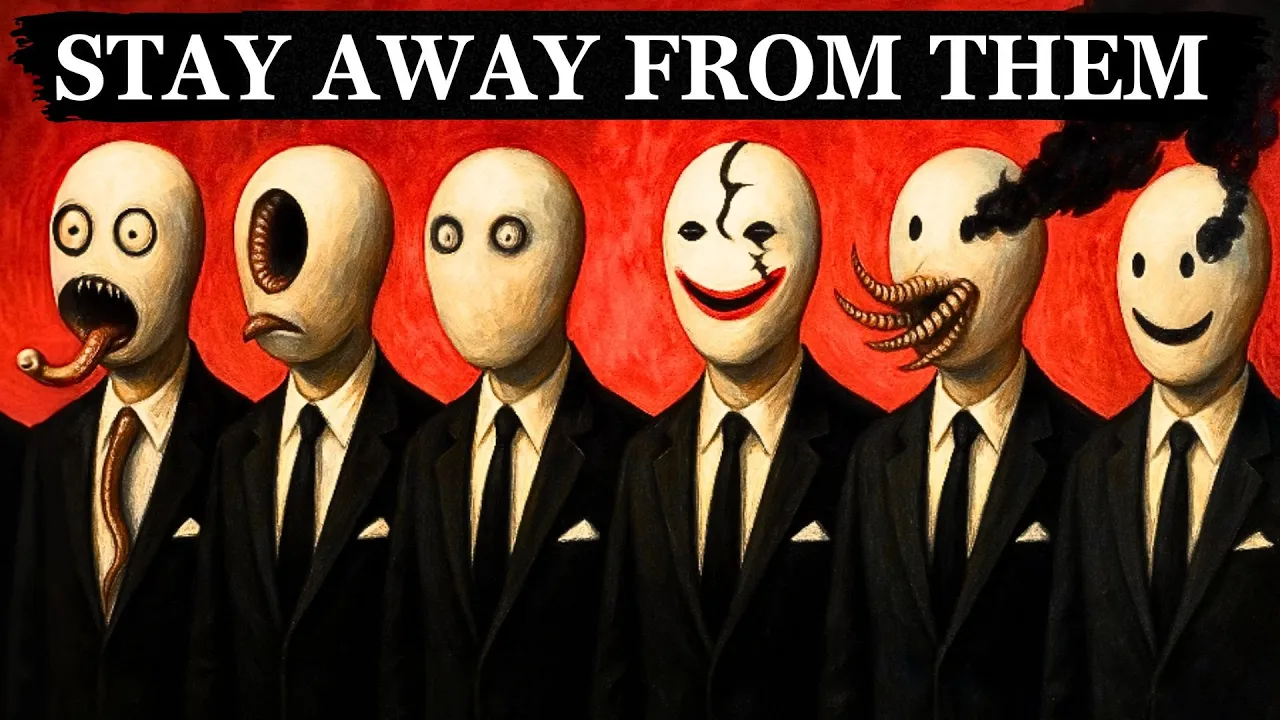
And how can we identify areas of subtle fanaticism in our own spiritual or philosophical convictions? The mask wearer who never shows their true self, the void behind the multiple facades. Consider that person who seems to have a different personality for every situation, whose values change according to convenience, and whose personal history contains bewildering inconsistencies.
This is the sixth and final dangerous archetype. According to Yung, the wearer of multiple masks who has lost connection with their fundamental authenticity. In the superficial understanding, we might see these people simply as false or dishonest.
Jung invites us to a deeper and more compassionate understanding. These individuals suffer an inner fragmentation so severe that they have lost the common thread of their own psychic narrative. They do not consciously lie.
They inhabit different partial versions of themselves without internal integration. Mar Louise von France, a prominent disciple of Jung, described this phenomenon as serial identification with different complexes. The inability to maintain a continuity of being through different contexts due to the fragmentation of personality.
Laura, a 40-year-old woman, perfectly illustrated this pattern. Professionally, she projected fierce independence with her family. She adopted complete submission.
In spiritual circles, she presented herself as deeply devout. While with close friends, she exhibited extreme cynicism. These aspects existed in watertight compartments without internal dialogue, creating a life of irreconcilable contradictions and superficial relationships.
The main danger of these people is the psychic disorientation they generate in those around them. Their fundamental inconsistency erodess the basic trust necessary for any meaningful relationship. As Jung pointed out, until you make the unconscious conscious, it will direct your life and you will call it fate.
The wearer of multiple masks remains unaware of the fragmented forces that direct their existence. Authentic spiritual traditions have recognized this danger. Buddhism speaks of samna, the fragmented perception that does not perceive the interconnected totality.
Sufism emphasizes the concept of fara, the dissolution of the false selves to discover the authentic essence. As the Sufi mystic algazali expressed, knowledge that does not transform life is useless, no matter how precise or profound it may be. The tragedy of the mask wearer is that in their attempt to be accepted through multiple facads, they have lost the ability to be known authentically.
As Jung wrote, "The privilege of a lifetime is to become who you truly are. A privilege that the mask wearer cannot claim. " This archetype confronts us with profound questions.
How do we cultivate meaningful relationships with people who present contradictory versions of themselves? And more fundamentally, what parts of ourselves remain fragmented, expressing themselves unconsciously through contradictory behaviors that we do not recognize as our own? Before we say goodbye, which of these six dangerous Yungian archetypes have you encountered most often on your spiritual path?
If this message touched your heart, write in the comments, I integrate my shadows. Don't forget to share this content with someone who needs to awaken archetypal awareness. Activate the bell and subscribe for more explorations of deep psychology.
Until the next video.