I'm Norma carrier hidden nature with another tea break tip on how to use business models and tools to help you manage your growing business I'm having a bit of a problem with my lip synching at the moment so I've had to resort to a static front page but today we're looking at Lynch and crosses performance pyramid and Johnson Scholes and Whittington six steps for creating critical success factors and key performance indicators the strength of the performance pyramid model lies in the fact that it ties together the hierarchical book view of business performance measurements with the
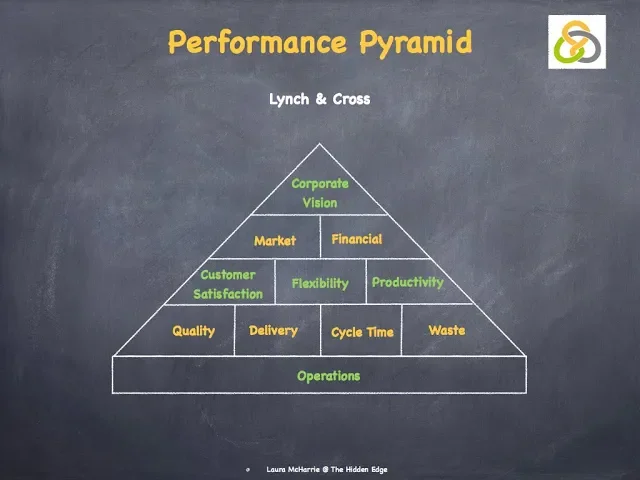
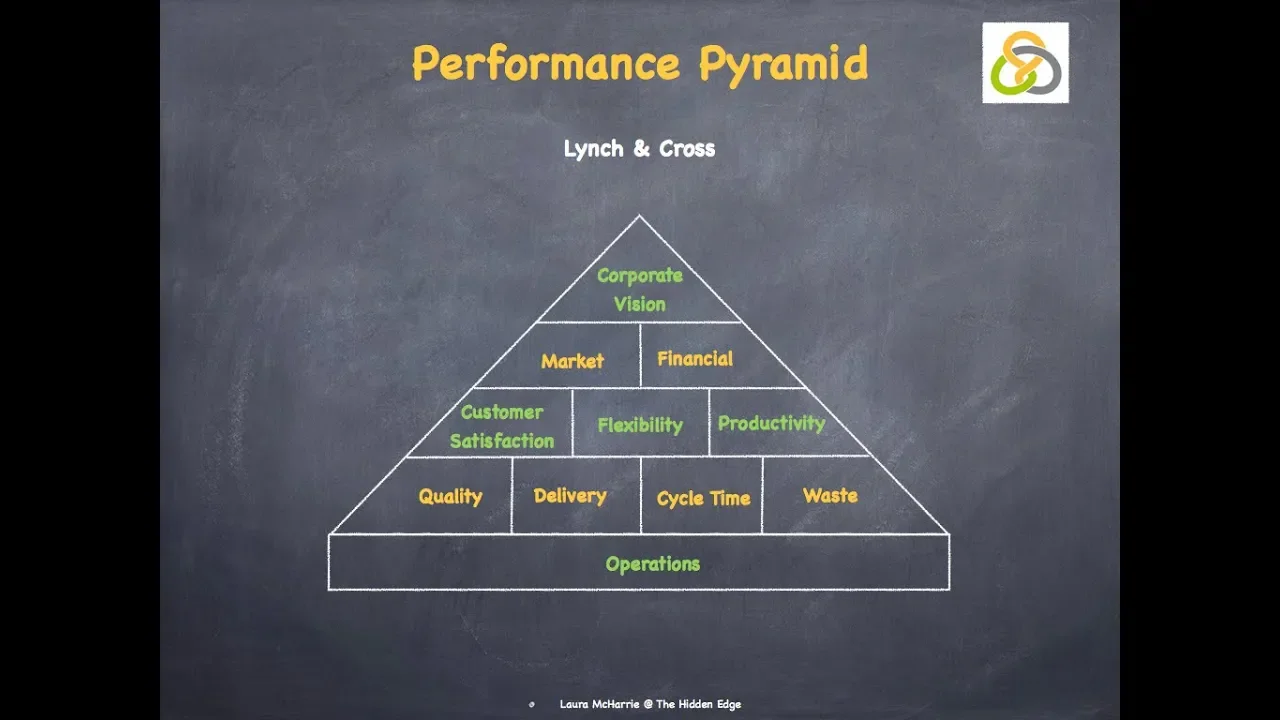
business process review it also makes explicit the differences between measures that are of interest to external parties such as customer satisfaction quality and delivery and measures that are of interest within the business such as productivity cycle time and waste so let's have a look at the first model in the use of the performance pyramids link and cross suggests measuring the performance across nine dimensions from corporate vision at the top to individual objectives at an operational aspect at the bottom within the pyramid the corporate vision is articulated by those responsible for the strategic direction of the
organization the pyramid views a range of objectives for both external effectiveness and internal efficiency these objectives can be achieved through measures at various levels as shown in this pyramid these measures are often seen to interact with one another both horizontally at each level and vertically across the levels of the pyramid at the bottom level of the pyramid is what Lynch and cross refer to as measured measuring in the trenches here the objective is to enhance quality and delivery performance reduce cycle time and waste at this level a number of non-financial indicators will be used in
order to measure the operations the food levels of the pyramid are seen to fit into each other in the achievement of objectives for example reductions in cycle time and always will increase productivity and hence profitability and cash flow Lynch and Kraus concluded that it was essential that the measures chosen should link operations to strategic goals it is vital that departments are aware of the extent to which they are contributing separately and together in achieving strategic aims they should make use of both financial and non-financial information in such a manner that it is of value to
line managers and they should support decision making at all levels within an organization the real value of the system lies in its ability to focus all business activities on the requirements of its customers and outperforming its competitors in this model the strategy sits within the corporate vision it's the way in which the organization will develop and compete the critical success factors are the components of the strategy where the organization must excel in order to outperform its rivals and the key performance indicators measure each objective and can be used to gauge the organization's strategic performance Johnson
Scholes and Whittington created a list of six steps in creating and cascading the critical success factors taking into account the financial resources and the skills that are needed and budgeting for them budgets are the main way in which resources are allocated to ensure that strategic purpose is realized it's important to identify those components of a strategy that are critical in the organization's bid to outperform the competition step 1 identify the key success factors for a specific strategy step 2 identify the skills and resources that are needed to deliver the critical success factors step 3 ensure
that the business has sufficient competence and resources to give it a competitive advantage step 4 identify the key performance indicators the standards for each critical success factor that will enable the business to outperform step 5 assess the extent to which competitors can imitate each underpinning competence Johnson Scholes and Whittington created a list of six steps in creating and cascading the critical success factors taking into account the financial resources and the skills that are needed and budgeting for them budgets are the main way in which resources are allocated to ensure that strategic purpose is realized it's
important to identify those components of a strategy that are critical in the organization's bid to outperform the competition step 1 identify the key success factors for a specific strategy step 2 identify the skills and resources that are needed to deliver the critical success factors step 3 ensure that the business has sufficient competence and resources to give it a competitive advantage step 4 identify the key performance indicators the standards for each critical success factor that will enable the business to outperform step 5 assess the extent to which competitors can imitate each underpinning competence step 6 decide
on the impact of a potential competitor moving in on your differentiator and how this might be counteracted Johnson Scholes and Whittington presents key success factors as performance differentials the things that will enable an organization to win customers or supply the market more efficiently it didn't invent the term and it is sometimes used by other authors to refer to any element essential for a strategy to be successful so there you have Lynch and Cross's performance pyramid and Johnson Scholes and Whittington six steps for creating critical success factors and the follow-on key performance indicators have a go
downloads the templates from the hidden edge website check out the templates to see how they might help you create and cascade your own key performance indicators that's it from me until next ebrake time enjoy the rest of this one