Hello, I'm Professor Timothy Moore. This is the course "Christian Spirituality. " It's Unit Four, and we're going to be talking about what happens the moment we believe.
In all of the units in this course, the theological categories that we're touching on are important for you to know before we launch into this particular lesson. The theological categories we're discussing will help you understand which part of theology, or the stream of theology, we are dealing with. The first stream is soteriology.
Soteriology comes from the Greek word "sōs," which you’ve heard before, meaning salvation. The last part of the word "theology" means the study of, so soteriology is the study of the parts of salvation. The second category of theology is pneumatology, which is derived from the Greek word "pneuma," meaning spirit.
Pneumatology is the study of the work of the Holy Spirit, especially as it relates to salvation. It's kind of going back behind the scenes and seeing what the Holy Spirit has to do in order for us to be able to respond to Christ. The third stream of theology, or category of theology, is ontology, from the Greek word "ontos," meaning essence or being.
Ontology is the study of our human essence, the essential parts of what it means to be a human being, and specifically, a human being created in the image of God. We move from two parts to three parts; we move from what's called a dichotomy (two parts) to a trichotomy (three parts) after we receive Christ as Savior because there's a part of us that's brought to life, a part that's dead and then gets resurrected when we come to the Lord Jesus Christ. So, soteriology, pneumatology, ontology, and now we're moving on to what happens the moment we believe.
The first thing I want us to focus on, the focal passage, is Ephesians chapter 1, verses 3-8, where the Apostle Paul says, "All praise to God, not some praise – that's important – all praise to God, the Father of our Lord Jesus Christ, who has blessed us with every spiritual blessing in the heavenly realms because we are united with Christ. Even before he made the world, God loved us and chose us in Christ to be holy and without fault in his eyes. God decided in advance to adopt us into his own family by bringing us to himself through Jesus Christ.
This is what he wanted to do, and it gave him great pleasure. So we praise God for the glorious grace he has poured out on us who belong to his dear Son. He is so rich in kindness and grace that he purchased our freedom with the blood of his Son and forgave our sins.
He has showered his kindness on us along with all wisdom and understanding. " Let's pray together: Father, you are deserving of all glory and all praise because before you created this Earth, you had us in mind, and you knew what was necessary to rescue us from the effects of our sins and restore us to perfect relationship with yourself. Thank you for sending the Lord Jesus to live as our perfect example, to die in our place, and to conquer death so we could be rescued from the effects of our sin and restored to eternal relationship with you.
Father, thank you for adopting us into your family through Christ and showering upon us your grace and your kindness through our relationship with Christ, in whose good name I pray. Amen. We want to begin at the surface level, at the experiential level, in understanding the gospel, how it's shared with people, and what it looks like when someone responds to the gospel.
Then, we will go deeper, below the surface, to the foundation of what makes all of this possible. So first, let's focus on the gospel and the essential parts of the gospel. We're going to look at a brief video; it's less than two minutes, and this video touches on the essential parts of the gospel.
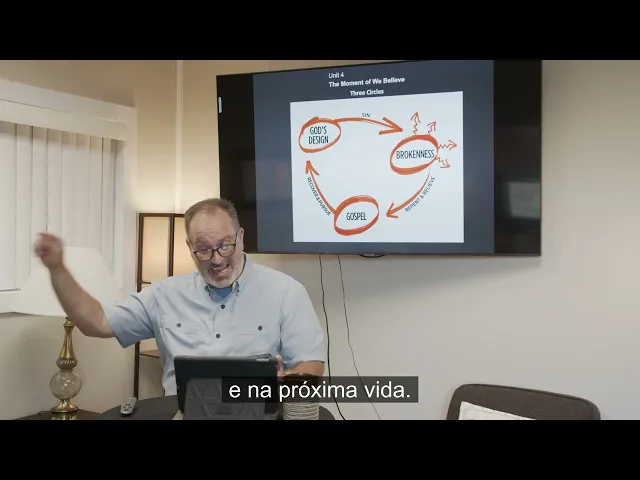
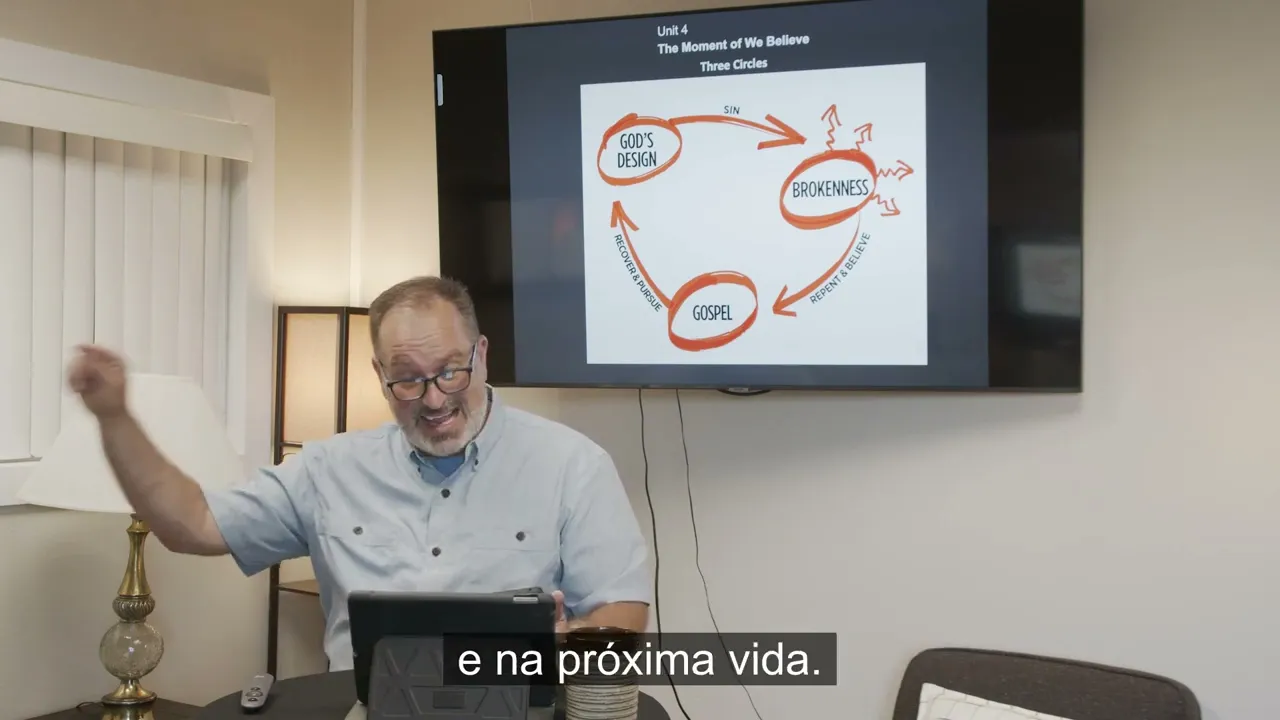
There are three essential parts represented by the three circles in this video. We live in this world, and it's characterized by brokenness. We don't have to look very hard to see that there are things like disease, disasters, and wars – there's a lot of pain in this world.
But this is not God's original design. God has a perfect design, and the way that we have gotten ourselves into brokenness is through something that the Bible calls sin. Sin is turning away from God's design and pursuing our own way, and that leads us to brokenness.
Brokenness eventually leads us to death, and this death will separate us from God forever. But God doesn't want us to stay in brokenness, so he's made a way out, and that way is Jesus. Jesus comes and he enters into our brokenness, and the death that we deserve for pursuing brokenness.
Jesus takes our place and dies on a cross, and his body is broken for us. Three days after he dies, he rose from the dead, and he made a way out of brokenness. People try many things to get out of brokenness, things like religion, success, relationships, education, or drugs and alcohol, but none of these things can get us out of brokenness.
The only way out is Jesus, and if we turn from our sin and believe that Jesus died for us and rose from the dead, we can leave brokenness and grow in a relationship with God and pursue his design. than that, we can go; we can be sent just like Jesus back into brokenness to help others come through Him to pursue God's design. Now, there's two types of people in the world: there are people that are pursuing God's design, and there's people that are still in brokenness.
We have to ask ourselves, where are we? So, where do you think you are? That video can be found online on YouTube at "Three Circles Sharing the Gospel.
" What I'd like to do now is go a little bit deeper to touch on the soteriology, and not just the 1 minute and 48 second expression of this, but to break down each part of this biblically. We have this explanation on an app, and the app is called Life on Mission. It's a free app, and it has the three circles.
It says the three circles is simply a way to have gospel conversations. You can tap through the slides, and it will give you the Bible verses; it will give you an explanation, and you can actually just use this to have a little more extended conversation with people about what Christ has accomplished for them and how they can respond to it. So, I'm just going to use this like I was having a conversation with someone and go to the first part, which is God's design.
It simply says we see beauty, purpose, and evidence of God's design all around us. The Bible tells us that God originally planned a world that worked perfectly, where everything and everyone fit together in perfect harmony. God made each of us with a purpose: to worship Him and to walk with Him.
The Bible says God saw all that He made, and it was very good (Genesis 1:31). Then, Psalm 19:1 says the heavens declare the glory of God, and the sky proclaims the work of His hands. So, God's design was very good.
His world was in perfect harmony; everything declared the glory of God. Then, something happened, and that something is what the Bible calls sin. Sin is doing things our way instead of God's way, and life simply does not work when we ignore God and His original design for our lives.
When we selfishly insist on doing things our way instead of God's way, we are sinning and distorting God's original design, and the consequence of our sin is separation from God in this life and in the next life. So, separation from God now, and separation from God for eternity. The Bible says in Romans 3:23, "All have sinned and fallen short of the glory of God," and in Romans 6:23 it says, "The wages of sin is death.
" Now, that death that it's speaking of is the Greek word "thanatos," which means separation from God. When we die physically, there’s a separation—there's a separation of the soul and the body. When we die spiritually, there's a separation between us and God.
That's why it says the wages of sin is death. It's separation from God. This sin leads to brokenness; we see this all around us, and it's in our own lives.
We feel it when we watch the news; we see news about crimes, we see news about war. There is brokenness in relationships. Brokenness exists all around us, and the Bible teaches that brokenness in the world is the result of human sin.
When we realize life is not working, we try to find a way out, and we tend to go in many different directions, trying different things to figure it out on our own instead of looking to God for a solution. And so, brokenness does lead us to the place of realizing that we need something greater, something to restore us. The Bible says in Romans 1:25, we exchange the truth of God for a lie and worship and serve something created rather than the Creator.
We have a tendency to look for any way other than God and what He supplies for us in Jesus Christ to heal our brokenness. But no matter what we try, it's not a good enough remedy; the brokenness still exists. But there's good news!
The word "gospel" means good news. Because of His love, God did not leave us in our brokenness. Because Jesus, God in human flesh, came to us; He came into our brokenness.
He lived perfectly according to God's design, and He came to rescue us, to do for us what we could never do for ourselves. He took our sin and our shame to the cross. He paid the penalty of our sin by His death, and He was raised from the dead to provide the only way for us to be rescued and restored to a relationship with God.
The Bible says in John 3:16, "God loved the world in this way: He gave His one and only Son that whoever believes in Him will not perish but have everlasting life. " In Colossians 2:14, it says, "He erased the certificate of debt and has taken it out of the way, having nailed it to the cross. " So, what should we do in response to this?
As you see in the three circles, there's the word "repent" and "believe. " Simply hearing the good news about Jesus is not enough. We have to admit our sinful brokenness; we have to stop trusting in ourselves.
We don't have the power to escape brokenness on our own; we need to be rescued. So, we must ask God to forgive us, turn from our sin, and trust only in Jesus. This is what the Bible means when it says "repent and believe.
" Believing, we receive new life through Jesus. God turns our lives in a new direction. Mark 1:15 says, "Repent and believe the good news," and Ephesians 2:8-9 says, "You are saved by grace through faith, and this not from yourselves; it's God's gift—not from works, so that no one can boast.
" Romans 10:9 says, "If you confess with your mouth, 'Jesus is Lord,' and believe in your heart that God has raised him from the dead, you will be saved. " So, once we've responded to the gospel, put our trust in Jesus, and asked him to come into our lives, we move back toward God's design. When God restores our relationship to him, we begin to discover new meaning and new purpose in a broken world.
We're still living in a broken world, but we can pursue God's design in every area of our lives, and even when we fall, we understand God's pathway to be restored. It's the same good news of Jesus. God's Holy Spirit empowers us to pursue his design and assures us of his presence in this life and for all eternity.
The Bible says in Philippians 2:13, "It is God who is working in you, enabling you to desire and to work his good purpose. " In Ephesians 2:10, it says, "We are his creation, created in Christ Jesus for good works, which God prepared ahead of time so that we should walk in them. " So when someone hears this message, what should they do?
God wants those people to respond to him, to talk to him. Romans 10:13 says, "Whoever calls on the name of the Lord will be saved. " A person can call out to God using words like these to express that: "God, my life is broken.
I recognize it's because of my sin, and I need you. I believe Christ came to live, die, and was raised from the dead to rescue me from my sin. Forgive me, Lord.
I turn from my selfish ways, and I put my trust in you. I know, Jesus, that you're the Lord of all, and I'm making the decision to follow you. " Romans 10:9 says, "If you confess with your mouth, 'Jesus is Lord,' and believe in your heart that God has raised him from the dead, you will be saved.
" Romans 10:13, as we said, is that promise that when we call out to the Lord, we will be saved. What a beautiful promise! We've seen many people respond to this message.
I want to share one particular story with you. Many years ago, I needed a part to fix something electrical in my house, so I went to an electrical supply store. I didn't see anyone else in the store; there was a young lady behind the counter.
In the course of buying that part, seeing there wasn't anyone else in the store, I felt prompted to ask her a question. I just said, "There's something that's made a real difference in my life, and I wondered if I could take two or three minutes just to share with you this thing that really changed me for the better. " She said, "Sure, go ahead.
" So I asked if she had a piece of paper and a pen, and she did. I drew out this diagram of the gospel, the good news, and I shared with her how she could respond to this and asked her if she wanted to. She said very frankly, "No, I don't think I believe this, and I don't think I want to respond to this.
" I said, "That's okay. I'll be praying that at some point in your life you trust in what Christ has done for you. Thank you for letting me share this with you.
" So I left and went about my life. About six months later, the mayor of that town, who happened to have an electrical business, invited me to go to lunch. I went over to his office, and when I got there, he wasn't there yet, but his secretary was.
I had a similar conversation with her and drew out a diagram of the gospel message. In the course of explaining it to her, she let me know that she was a believer. As I was finishing my explanation and diagram with her, the mayor of the town came in, along with one of his electricians.
They caught the tail end of that discussion. I turned to them. I knew the mayor was a follower of Christ, but I didn't know about the electrician who worked for him.
I said, "Did you hear what I was sharing with the secretary? " He said, "I sure did. " I asked, "Did it make sense to you?
" and he said, "Yes, it did. " I said, "Do you want to respond to that and put your faith in Christ? " He said, "Actually, you already helped me do that.
" I was surprised, as I had never seen this man before. I asked, "How did I help you do that? " He replied, "Well, I was actually behind some materials in the store six months earlier and I didn't see him.
I heard the conversation that you had with the young lady at the counter. When I heard her say, 'No, I don't want this,' I actually told her she could keep the diagram of the gospel if she wanted it. " I walked over to her after I left the store and said, "Are you going to keep that?
" She said, "No, I don't think I am. " He then asked, "Can I have it? " Fast forward six months.
I'm sitting there in the office having this conversation, and after he said, "Help me understand this," he pulled the diagram out of his pocket because he had kept it with him every day for six months. He opened it up and said, "That day I decided to trust my life to Jesus, receive Him as my Savior, and I carry this with me in my pocket so that I can share with others what you shared with that young lady that day. " Not everyone will receive the message of Christ, but God works miraculously.
Romans 1:16 teaches us that all who believe in the gospel are saved, are rescued, and the work of someone believing is actually the enablement of the Holy Spirit. We're going to see that the moment we believe. Let's focus on what happens to enable us to open our hearts to Christ.
Apart from the work of an outside agent, an outside being, we are incapable of responding to the Gospel of Jesus. We're going to see that in the Scriptures. This is myology; it is studying the work of the Holy Spirit and how He enables us.
Our response to God and our ability to respond is the sole work of the Holy Spirit in our lives. It's not the work of any other thing, of any other agent or being. It's the work of the Holy Spirit.
We're going to see that in Scripture. David Garner, a theologian who writes for the Gospel Coalition, says this about the Holy Spirit: he calls the Holy Spirit the agent of salvation. The Holy Spirit gives Christ and all the redemptive blessings He has secured to the people of God.
The Holy Spirit applies to the church what Christ has accomplished for the church. When we talk about salvation, responding to those three essential pieces of the gospel and receiving Christ into our lives, the Scripture teaches that it is purposed by the Father, accomplished by the Son, Jesus Christ, and applied to our lives by the Holy Spirit. Without the Holy Spirit’s agency in salvation—and by agency I mean involvement, His involvement in that process—all that Christ has accomplished brings absolutely no value to us.
The Scripture uniformly presents the Holy Spirit as graciously, effectively, and permanently giving us Christ Jesus and every blessing that Christ Jesus has secured for us. Our salvation is in Christ alone, but our salvation is by the Holy Spirit alone. He is the only one who can apply what Christ has accomplished to our lives.
He is the only one who can enable us to respond to what Christ has done for us. We are incapable of coming to God if the Holy Spirit does not intervene. Again, in Romans 3:10-18, we see the true predicament of human beings apart from the Holy Spirit’s work in our lives.
In verse 10, it says, "As the Scriptures say, no one is righteous, not even one; no one is truly wise, no one is seeking God. All have turned away; all have become useless. Not one does good, not a single one.
" Someone might say to me, "Timothy, are you telling me that not one person in the world is good? I know that I've seen good people. I've seen people do good things, and I've seen people do horrible things, but it seems to me that there's a balance—there are good people and there are bad people.
" The response is that we are going to look at what the Bible teaches us about how we actually do good things. Apart from the Holy Spirit's work in our lives, we as fallen human beings simply do not have the capability, the desire, or the energy to do good things. Good things happen because there is a good God, and the Holy Spirit of God is at work in our lives.
Continuing in Romans 3:13, it says, "Their talk is foul," talking about the whole human race apart from God. "Their talk is foul like the stench from an open grave; their tongues are filled with lies; snake venom drips from their lips. Their mouths are full of cursing and bitterness; they rush to commit murder.
Destruction and misery always follow them; they do not know where to find peace, and they have no fear of God at all. " This paints the picture that if the Holy Spirit were removed from the world, this is what the world would be like. Some people think that the Holy Spirit's work is just in the life of the believer, but the Holy Spirit's work is also referred to in theology as the common grace of God.
The common grace of God is the work of the Holy Spirit as it extends to all people. The work of the Holy Spirit restrains evil in the world because if there weren't the restraining influence of the Holy Spirit, everything in the world would look like Romans 3:10-18. The fact that we can experience good, that we can experience blessing, the fact that it rains on the just and the unjust—like God's blessing and His work to cause crops to grow and people to be able to eat—is actually connected to the work of the Holy Spirit.
But in particular, we're talking about the Holy Spirit's work in salvation today. And so, in soteriology, salvation the pathology is, um, is contained in these verses. The Holy Spirit awakens us to the fact that we're sinners.
We can't know that we're sinners and need God unless the Holy Spirit is at work, awakening us to that fact. In John chapter 16, Jesus talks about the ministry of the Holy Spirit and what He does. In verse 8, starting in verse 8, it says, "When He comes," this is Jesus speaking of the Holy Spirit, and He doesn't call the Holy Spirit "it" or "a force.
" He says, "When He comes, He will convict the world of its sin, and of God's righteousness, and the coming judgment. " Jesus doesn't refer to the Holy Spirit as "it" because He is the third person of the Holy Trinity that makes up God: God the Father, God the Son, and God the Holy Spirit. In verse 9, it says, "The world's sin is that it refuses to believe in Me.
" This is Jesus talking. He says, "Righteousness is available because I go to the Father, and you will see Me no more. Judgment will come because the ruler of this world has already been judged.
" The ruler of this world is Satan. Verse 12: "There is so much more that I want to tell you, but you can't bear it now. " When the Spirit of truth comes—that's one of the titles for the Holy Spirit, the Spirit of truth—Jesus says, "He will guide you into all truth.
He will not speak on His own, but He will tell you what He has heard, and He will tell you about the future. " And so, the Holy Spirit enables us to see that we have done things our way instead of God's way, that we need to be righteous, and that there's a judgment coming if we're not rescued from our sin. It's the work of the Holy Spirit.
The Holy Spirit is the one that guides us into truth, the truth that sets us free. It's very interesting that Jesus says He will not speak on His own but will tell you what He's heard, um, because Jesus said, "I don't speak on My own. " In John chapter 5, He says, "I only say what the Father gives Me to say.
" And so we see a beautiful difference. Um, even when you're equal to someone, you walk to a door, and you open the door for someone and you say, "After you. " Jesus is in deference to the Father when He is here on planet Earth.
He's always in deference to the Father, and He says, "I only say what the Father gives Me to say. " And then, when Jesus ascends to heaven, the Holy Spirit comes at Pentecost, and the Holy Spirit's in deference to Jesus. The role of the Holy Spirit is to magnify Jesus.
We're going to see that. The Holy Spirit doesn't speak His own words to us while we're here on planet Earth; He speaks and reminds us of the teaching of Jesus Christ. So, the Holy Spirit magnifies Christ.
John 16:14: "He," the Holy Spirit, "will bring Me glory by telling you whatever He receives from Me. " So, the Holy Spirit receives from Christ, and He communicates that to us. Verse 15: "All that belongs to the Father is Mine," Jesus talking.
"This is why I said the Spirit will tell you whatever He receives from Me. " Even though the Holy Spirit is equal to Christ and Christ is equal to the Father, there is a difference: where Jesus speaks to us the words of the Father, the Spirit speaks to us the words of Jesus. The Holy Spirit enables faith.
We cannot exercise faith in God unless the Holy Spirit works in our lives, and Philippians 2:13 says this: "For God is working in you, giving you the desire and power to do what pleases Him. " Now, where's God the Father? The Bible always teaches that God the Father is on the throne in the Heavenly Kingdom.
Where's Jesus? Jesus has ascended, the Bible says, to the right hand of the Father. So both the Father and Christ are in the Heavenly Kingdom; that is where they physically exist.
Where's the Holy Spirit? The Bible teaches that when we open our hearts to Christ, the Holy Spirit takes up residence in our lives. He's in our lives; He's the Spirit of truth in us.
He's the life of God in us; He is God working in us to give us the desire and power to do what pleases Him. Now the word for "desire" here in this passage in the biblical language of Greek is "thma," and that means your will, your wishes, your desires. And so the Holy Spirit, it says, is giving us these desires.
When we come to Christ, when we have the desire to come to Christ or to do anything that is good and brings glory to God, the Holy Spirit is working in us to give us that desire. It not only says that; it says He gives us the power to do what pleases Him, and the word for "power" is "energo," where we get the word "energy. " So, if we have a good desire, including the desire to open our hearts to Christ, it's because the Holy Spirit has created the desire within us.
And if we have the energy to act on that desire, it's because the Holy Spirit has given us the "energo," the energy or the power to act on that "thma," that desire. And so, salvation is the work of God; it's the work of the Holy Spirit. It is done to the glory of God, and Ephesians 3:20 says, "Now all glory to.
. . " God, if you don't understand new mythology; if you don't understand that it's the Holy Spirit working behind the scenes to give us the desire to do God, uh, good and the power to carry it out, then we might react with, well, some glory to God and some glory to us.
This is some kind of partnership where we do some of it and God does some of it, and so we deserve some of that glory. But the Bible never says give some glory to God; the Bible always says give all glory to God. That word "all" is "pontone"; it means everything.
And so, all glory to God. Verse 20 of Ephesians chapter 3 says, "who is able through his mighty power at work within us. " What’s the power at work within us?
That’s the Holy Spirit. And so, through his mighty power at work within us, to accomplish infinitely more than we might ask or think. Why is God able to accomplish infinitely more than we might ask or think in our lives and through our lives?
Because in our lives is the very creative energy of God, the person of the Holy Spirit, who is not powerful; he is all-powerful. He’s not wise; he is all-wise. He’s omniscient; he knows all things, and he lives within us.
And so, when we tap into the Holy Spirit within us, we can do more than we could ever ask or ever think because the Holy Spirit dwells within us, giving us the desire, giving us the energy or the power to do those things. Verse 21 of Ephesians chapter 3 says, "glory to him in the church and in Christ Jesus through all generations, forever and ever. Amen.
" Salvation is the work of God; it is the work of the Holy Spirit. And therefore, we have to give all glory to God, not just for our own salvation, but when we share the gospel with people and they respond positively, it is the work of the Holy Spirit. I had the privilege, um, the past few days to be in Uganda, Africa.
In fact, um, I just got back, and I am pretty jet-lagged right now, so you're getting jet-lagged Professor Timothy! But when I was there in Uganda, I got to share the message of Jesus physically in several villages, and people responded to the gospel; they gave their lives to Christ, and I was able to baptize them in a small river. Well, not only that, but several times on the radio— the main radio station for Uganda, which reaches into Kenya and the Congo—is called the Voice of the People.
And several times while I was there in Africa, I got to share the three circles that I shared with you here in this class on the radio, and people called into the radio station. So, people heard the gospel; people responded to the gospel, and the reason I'm telling you this is because just sharing the gospel is not enough. I didn't in any way save those people.
When they recognized their need for Christ and they responded by praying to receive Christ as Savior, I know that that is a result of the work of the Holy Spirit in that person because, before they come to Christ, if you read Ephesians chapter 2, it says they are spiritually dead. They cannot respond to the gospel message unless the Holy Spirit is at work in their lives, resurrecting their spirit. Human beings are body and soul; we are physical and we are immaterial.
But when we come to Christ, we become a trinity. God is a Trinity: Father, Son, and Holy Spirit. And when we come to Christ, we're made whole, and we are also a trinity: a body, a soul, and a spirit.
With our bodies, we experience the Earth, the material world. We're given senses. Most people know the five senses: sight, smell, hearing, touch, and taste.
There are more than five senses that are hard to express, like the sense of space and the sense of time. But most people can relate to those five senses. Well, those are in our body, and it's through our body that we connect with all physicality in the world.
Our soul relates to motivations, heart matters, and our mentality. They're more immaterial things, things that are not relating to God; it's relating to the world of thought and motivation. But when the Holy Spirit enables us to respond to Jesus, our spirit, which is dead, comes to life, and now we are connected with God forever.
So, our body relates to the physical world, our soul relates to thought life and motivations, and then the spirit relates to God and always desires the things of God. When we believe, the moment we receive Jesus, three blessings happen automatically; they happen immediately. And those three blessings: number one is forgiveness.
Colossians 2:13-14 says, "You were dead again, dead because of your sins and because your sinful nature was not yet cut away. Then God made you alive with Christ, for he forgave all our sins. He canceled the record of the charges against us and took it away by nailing it to the cross.
In this way, he disarmed the spiritual rulers and authorities and he shamed them publicly by his victory over them on the cross. " There’s an enemy, and there are evil-intentioned spiritual beings that do not want human beings to know the good news. They don't want human beings to go from spiritual death to life because these spiritual beings hate God, the things of God.
And the Bible teaches that at one time they were cast out of the Heavenly Kingdom. When Jesus died for us on the cross, he disarmed those spiritual beings, and it says he shamed them publicly with his victory over them on the cross. Victory over them on the cross; and then, the beautiful thing about the Cross of Christ for us is that all of our sin, all of our shame, as though it were a book of accounts, were placed on Jesus.
It says in verse 14: through the cross, through His death for our sins, He cancelled the record of all those charges against us. It was taken away, and figuratively, it was nailed to the cross with Jesus. So, that is a beautiful concept and a beautiful truth.
When the Holy Spirit enables us to believe in Jesus, that happens immediately. We receive the benefit of that, and our sins are forgiven. How many sins?
Well, how old were you when Jesus died on the cross? None of us had even come into existence; that happened roughly 2,000 years ago. So, Jesus didn't just die for the sins that you commit from the time you're born until this day.
Jesus died for all sins, for all eternity. When we come to God through Christ, all of our sins are forgiven. All the record of debt that is against us in the mind of God is nailed to the cross.
That's the magnitude of the good news. The second thing we receive automatically is eternal life with God in heaven. Again, John 3:16: "God so loved the world that He gave His only Son, that whoever believes in Him would not perish but have everlasting life.
" Jesus said this in John 14:1-6: "Don't let your heart be troubled. You believe in God; believe also in Me. In My Father's house are many mansions.
If it were not so, I would have told you. I go to prepare a place for you. And if I go and prepare a place for you, I will come again and receive you to Myself, that where I am, there you may be also.
" Thomas, who was known for doubting, said, "How can we know where you're going? How can we know the way? " And Jesus said, "I am the way, Thomas.
I am the way; I am the truth; I am the life. " So, an eternal home, and eternal life with God, belongs to us the moment we receive Christ as Savior. The third blessing that we get immediately is the presence of the Holy Spirit.
The presence of the Holy Spirit in our lives gives us the possibility of an abundant life. There are many people who receive Jesus who don't live an abundant life; however, it is a real possibility when we come to Christ. Galatians 5:16 says, "Yield yourself to the Holy Spirit.
" When we yield ourselves to the Holy Spirit, that can be as simple as a prayer: "Holy Spirit, I'm yielding myself to You right now. " Galatians 5:22 and 23 define that abundant life. Jesus said He came so that we could have it (John 10:10): "The thief comes to steal, kill, and destroy, but I have come that you may have life and have it more abundantly.
" In Galatians 5:22, the abundant life is described as the fruit of the Holy Spirit, which is love, joy, peace, patience, kindness, goodness, faithfulness, gentleness, self-control, and then, in Romans 15:13, the last fruit is hope. Living our lives with those ten things, full of those ten things, is what it means to have an abundant life here on this earth. We can have that by yielding ourselves to the Holy Spirit and allowing Him to make His adjustments, give His assignments, and empower us for the good things God planned for us before He created the earth.
If you received Christ as your Savior, you are adopted into God's family, you’re forgiven of your sins, you're given a home in heaven, and you have the Holy Spirit within you. Those are the promises of God, and that’s all possible because the Father had the purpose, Christ accomplished the plan, and the Holy Spirit applies it all to our lives. That is soteriology, that is pneumatology, and that is ontology from a Biblical perspective.