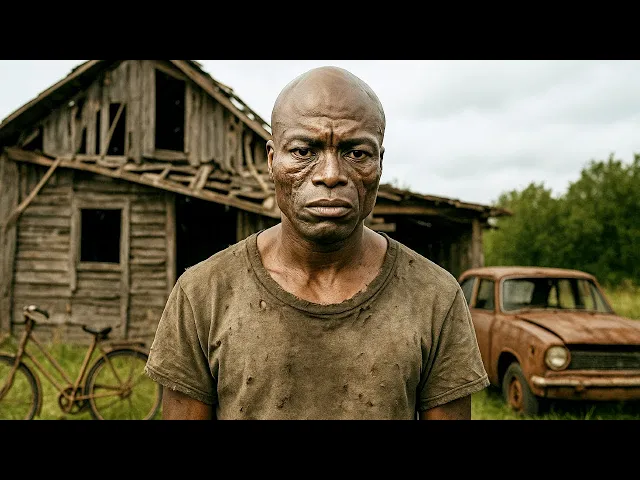
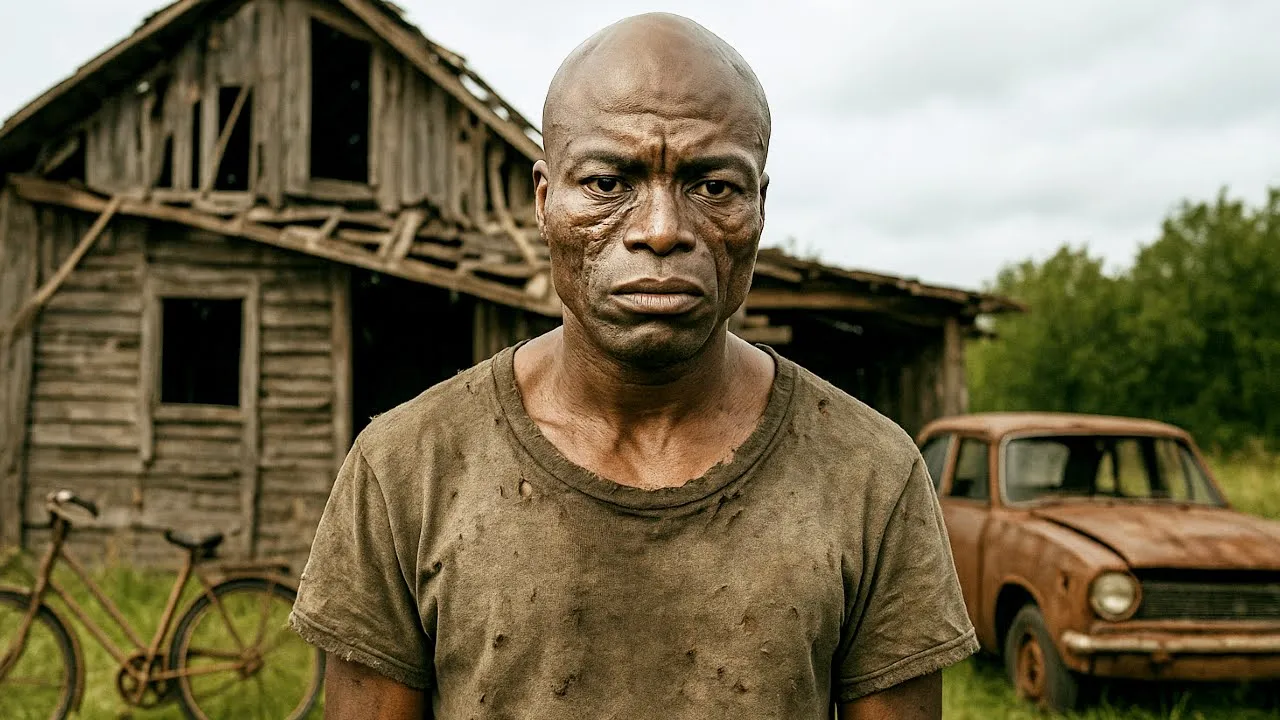
His songs have been streamed over 1 billion times. Give it up for the one and only. [Music] What happens when the world's applause fades and all that's left is solitude?
He once had the world in the palm of his hand with chart topping hits, a voice that silenced crowds, and a love story the world envied. But behind the music and behind the smile, something darker was always lingering. Why did Seal suddenly disappear from the spotlight?
What silent battles was he fighting while cameras flashed and fans screamed his name? And how did the man who once filled stadiums end up in quiet isolation, haunted by things the world never saw? What happened to Seal after the fame is what no one expected, and it changes everything you thought you knew about him.
Early life and journey to fame. There was a time when the roar of pack stadiums followed Seal everywhere he went. He was a living legend whose voice could silence a crowd in awe.
However, today that sound is quieter and very different from the life he used to live. Seal has had to deal with some pretty harsh life realities. But it didn't just start today.
Even his early years and childhood were marked by heartbreaking challenges and experiences that completely transformed his life. Long before Seal became a voice that could shake the world, he was just another boy lost in the chaos of London's gray streets. He was born in 1963 to Nigerian and Brazilian parents, and his early days were anything but stable.
His full name is Seal Henry Olusagun Oluma Adiola. Samuel literally carried the weight of his beautiful cultural heritage, but that didn't shield him from the cold realities of a difficult childhood. From the start, life pulled him in different directions.
His parents were both young and struggling and were hardly a steady presence. Money was tight, but stability was even tighter. Sadly, not long after Seal was born, he was placed into foster care by his parents, a decision that would carve deep emotional scars long before the world could ever see the physical ones.
Seal spent the earliest years of his life with a foster family in Paddington, London. For a while, it seemed almost normal. His foster home was a safer, quieter environment than what his biological parents could even offer at the time.
But then, Seal carried a sense of otherness. A deeprooted feeling that he didn't quite belong. The knowledge that he was placed there and not with his parents followed him everywhere like a shadow, making him feel a constant sense of detachment, even after he had grown up.
When he was four, he was finally returned to live with his biological parents. And that's when things took a harder turn. His mother, who struggled with her own emotional and financial challenges, found it extremely difficult to reconnect with the son she had given up years before.
Their relationship was strained from the beginning. The love was there, but it often got buried under layers of tension, misunderstanding, and unmet needs. His father, on the other hand, was a stricter and harsher figure.
Stories from Seal's youth often hint at a household where discipline crossed into something quite inappropriate and where fear became part of everyday life. Seal once said that his childhood was marked more by survival than by comfort. And it showed while other children learned to dream freely, Seal learned how to brace himself for disappointment.
These experiences, the instability, the loneliness, and the yearning for safety, didn't just shape the boy Seal was. They built the artist he would eventually become. Even years later, after getting to the top of the music industry, he would find himself quietly looking for the same love he couldn't get from his parents and his fans.
He once said, "People tell me they like my music. That is phenomenal. It's like the love that I always wanted from my parents.
The love that I wanted my father to show me. The kind where he puts his arm around me and tells me, you know, Seal, you did a great job. " Like, I never got that from my father.
Even on his deathbed, Seal picked up an interest in music after his primary school teacher encouraged him to sing and even made him perform in front of his parents at a school concert. And from there, his love for music grew deeply. Music wasn't just an interest for Seal.
It was a necessity. It was the place he could pour out all the emotions he was never allowed to express growing up. The anger, the sadness, and the fierce longing to be seen and loved without conditions.
In school, he was different. He wasn't the loudest or the most confident. Instead, he watched, he listened, and he absorbed the emotions around him, storing them deep inside.
But that sensitivity and awareness of human emotions would later become one of Seal's greatest gifts. You can hear it in the way he sings, the way his voice strains and cracks at the perfect moments, almost like he's reliving every heartbreak with you. After bouncing between homes and struggling through adolescence, Seal didn't immediately fall into the music world.
He actually studied architecture for a time, a practical move encouraged by the need to survive. Because sadly, dreams were a luxury he could barely afford. Instead, he worked odd jobs by hustling wherever he could to keep moving forward.
But the music was always there, burning under the surface. He started singing in local clubs, backing smaller bands, doing whatever he could to get on stage. His voice, even while it was still raw and untrained, was magnetic.
Listeners didn't just hear his voice, they felt it. It was different from the bubblegum pop dominating the radio in the late8s. Seal's sound came from a darker place, a place of pain, hope, and survival.
But the real turning point came when Seal joined the British funk band Push. Touring with them gave him his first real taste of a musician's life. But more importantly, it got him out of London.
He traveled through Asia, lived rough, sang in back alley clubs, and slept wherever he could. Those gritty experiences hardened him. But they also expanded him.
Every heartbreak, every lonely hotel room, every crowd that didn't care, all went into his soul and eventually into his songs. By the time Seal returned to England in the late 1980s, he wasn't just another struggling artist anymore. He had developed something rare, the art of authenticity.
Finally, in 1990, fate threw him a lifeline. He met producer Adamsky, who had just recorded a track called Killer. Seal laid down vocals for the song, and everything changed almost overnight.
Killer wasn't just a hit, it was a phenomenon. It topped the United Kingdom charts and put Seal's raw, haunting voice in front of millions for the first time. The success of this song opened every door Seal had once thought was closed forever.
By 1991, he had released his debut solo album, Seal, produced by the legendary Trevor Horn. The album was an emotional warfare that involved a stunning soulbearing blend of rhythm and blues, soul, rock, and electronic music. Songs like Crazy captured a sense of beautiful chaos, while others bared his vulnerabilities wide open.
But what attracted people to Seal the most was the fact that he wasn't trying to fit into a mold. His sound, his look, and his presence carried the heavy, beautiful weight of a boy who had survived things the world would never fully understand, and the world couldn't get enough. Seal's early life, filled with abandonment, hardship, and strained love, had taught him how to survive.
It had also given him the ability to connect with millions of people on a level few artists ever reach. Seal became an international star almost overnight. Awards followed.
So did soldout tours. But underneath the applause, the soaring vocals, and the powerful presence, a much quieter and heartbreaking battle had been raging. One that started long before anyone even knew his name.
Seal's Health Battles. to the world. Seal's voice was strong enough to shake the walls of any stadium.
But deep down, he was battling some tragic realities, including the one that left that famous scar on his face. Seal's health challenges began in his early adulthood, in a way few could understand. When he was just 21 years old, he developed a form of lupus called discoid lupus arythmatitosis.
Unlike the more commonly known systemic lupus, which attacks internal organs, discoid lupus affects the skin, often causing inflamed scarring lesions that can be both painful and disfiguring. Seals lupus left its mark in the most visible way possible across his face. The scarring became permanent, creating the deep, noticeable lines that are now part of his iconic look.
But long before they became iconic, they were actually a source of pain, isolation, and heartbreak. For a young boy already struggling to find his place in a harsh world, the scars made everything harder. Kids can be cruel, and Seal faced relentless stares and inappropriate comments.
People didn't understand lupus. They didn't understand why a young boy would have such deep scars. Instead, he became an easy target for questions, for insults, and for the kind of judgment that cuts deeper than any disease ever could.
He later admitted that the scarring made him feel different, and not in the way every artist longs to be. It made him feel broken. It made him want to hide, and it made him question whether anyone could ever truly see past the marks on his skin and into the person he really was.
But the pain wasn't just emotional. Disco lupus brought a long list of physical challenges that Seal has carried with him his entire life. Fatigue became a constant companion.
No matter how strong he appeared on stage, there were days when his body simply wouldn't cooperate and when getting out of bed felt like climbing a mountain. Joint pain would sometimes flare up without warning, tightening his movements and making even simple tasks exhausting. For someone whose life eventually revolved around performing, recording, touring, and entertaining massive crowds, lupus was an invisible enemy that never truly went away.
The exhaustion wasn't something that could be scheduled around a tour or a recording session. It struck when it wanted to, forcing Seal to push through shows, interviews, and travel with a body that sometimes felt like it was betraying him from the inside out. And yet, for years, he didn't openly talk about it.
He didn't make excuses or ask for sympathy. Instead, he carried the weight of it quietly, channeling every ounce of frustration, every flash of pain into his music. When Seal sang about love, loss, pain, and redemption, it wasn't theoretical.
It was a lived experience because every raw note literally carried the struggles that most fans never even realized he battled. And yet, despite the scars and the suffering, Seal refused to let lupus define him. He once said that the disease taught him resilience.
It forced him to confront very early in life the reality that perfection is an illusion and that beauty, strength, and success come not from having an easy life, but from surviving a hard one. The scars that once made him want to hide became part of his story. They made him different, unforgettable, and eventually they made him proud.
He once said, "Something that had kind of been initially traumatizing turned out to be something that has made me instantly recognizable. I quickly realized this body is not who we are. I got off lightly.
" Seal's refusal to cover up his scars or surgically erase them spoke volumes. In an industry obsessed with appearances, he stood proudly, visibly different, and super authentic. He didn't just break the mold of what a pop star should look like.
He smashed it to pieces. and fans loved him for it. But even with acceptance, the battle with lupus continued quietly behind the scenes.
He had to learn how to live in a kind of constant negotiation with his body. He had to pace himself, listen to warning signs, and protect his energy. Even when the world demanded more from him than he could give.
But the impact of this health challenge wasn't just physical. It was emotional as well. And the impact ran even deeper.
Living with a visible illness from such a young age shaped Seal's view of the world and of himself. He understood rejection intimately. Not just romantic rejection, but the rejection that comes from being different, from being judged before you even open your mouth.
That understanding gave his music a depth that few others could match. But lupus wasn't the only thing Seal had to battle. Aside from physical health challenges, there were mental health challenges as well.
In fact, Seal confessed that he has been living with anxiety and panic attacks for several decades now. It all began one day while he was recording in a studio and he got hit with an extremely massive panic attack. Seal revealed that it was so serious that he was truly convinced that he was having a heart attack.
He was eventually rushed to a hospital where he was treated and later diagnosed. speaking about his mental health challenges and how they have affected him. He said, "It's given me such empathy and understanding for people who can't get help.
" There is no shame. There is no guilt in asking for help and talking about it. Whether it's therapy or it's a friend, it needs to be shared.
But apart from the physical and mental health challenges, Seal has also been faced with some heartbreaking personal challenges, especially when it comes to his love life, love, marriage, and divorce. For a time, it seemed like Seal had found the fairy tale ending he had always deserved. After a lifetime of grueling battles with his health, his upbringing, and his own sense of belonging, love finally came into his life like a lightning bolt, and her name was Heidi Clume.
When Seal and Heidi first crossed paths in the early 2000s, it was like something out of a movie. Heidi was a German supermodel and television personality, and she was already a global star. Seal, on the other hand, with his haunting voice and powerful stage presence, was at the height of his music career.
They met in a New York City hotel lobby, and this became a chance encounter that would change both of their lives forever. 5 weeks after meeting, they went on their first date. However, Heidi was pregnant with her daughter Laneie from a previous relationship that had ended badly.
But Seal didn't just walk into Heidi's life. He actually stepped up. He stood by her through the pregnancy, treating Lenny like his own.
From the very beginning to Heidi, Seal wasn't just a partner. He became a safe place and a promise that real steady love was possible. And to Seal, Heidi represented something he had always longed for, but rarely dared to believe he could have.
She was family, stability, and unconditional acceptance. In fact, Seal confessed in an interview that he was so sure Heidi was the one when they began dating, saying, "We didn't have time for the usual premarital dance that couples get into. For the first time in my life, I had total clarity in a relationship, and I knew exactly what I had to do.
They eventually got married in May 2005 on a beach in Mexico with close friends and family by their side. The ceremony was intimate, heartfelt, and simple, exactly the way they wanted it. And for Seal, it was the start of a new chapter that felt almost too good to be true.
Together, they quickly built a family. Seal officially adopted Lenny, giving her his last name. And together, they welcomed three more children, two sons, Henry and Johan, and a daughter, Lou.
The house was full, loud, and chaotic. And for a man who had grown up in a foster home and in a chaotic environment, it was heaven. Finally, he had the kind of family he had only dreamed of during the darkest nights of his childhood.
Their love wasn't just personal. It was public. Every year, they renewed their vows in grand romantic ceremonies.
Sometimes in front of family, sometimes among close friends. It became a tradition, almost a ritual, as if they were trying to lock their love tighter with each passing year. Speaking of the tradition, they once said, "It's so special to us, something we love, and something our children have gotten accustomed to.
It's like, hey, mom and dad love each other, and they get married every year. " But it wasn't just their children who were impressed. The world actually watched and fell in love with them.
Seal and Heidi seemed untouchable. They were the golden couple who had it all. Beauty, fame, talent, and most importantly, each other.
But behind the perfect pictures and magazine covers, cracks were forming. It started off as slow and invisible, but eventually grew to become cracks that even the most powerful love sometimes can't withstand. By 2012, the fairy tale had unraveled.
Seal and Heidi shocked fans in the entire world when they announced their separation, citing irreconcilable differences. A joint statement released by the couple read, "While we have enjoyed seven very loving, loyal, and happy years of marriage, after much soulsearching, we have decided to separate. We have had the deepest respect for one another throughout our relationship and continue to love each other very much.
But we have grown apart. For fans, it was beyond shocking. How could two people who looked so in love, who renewed their vows so religiously, who built such a beautiful family, fall apart?
But for Seal, the pain ran far deeper than public disappointment. This wasn't just a marriage ending. It was the shattering of a life he had fought so hard to build.
After growing up without a stable family of his own, losing the one he had created felt like being pulled back into a darkness he thought he had outrun. The divorce wasn't explosive. There were no messy tabloid scandals, no vicious public fights.
Instead, there was sadness and a quiet kind of heartbreak that didn't make headlines, but cut deeply all the same. In interviews after the split, Seal remained mostly respectful. He acknowledged that love could change, that people could drift apart even if they didn't want to.
But beneath his calm exterior, it was clear that he wasn't going through just a breakup. He was grieving. Heidi eventually confessed that the marriage wasn't always blissful.
However, she insisted on keeping the details of their marital problems far away from the public's eyes, saying, "People don't need to know who did what. I don't want to talk positively or negatively about the ups and downs that we had. Every couple goes through things.
Unfortunately, we're in the public, so the highs are out there, but I don't think it's necessary, especially for our children, to have the lows being printed in magazines and talked about. Seal's life after the divorce became noticeably quieter. He didn't jump into another high-profile relationship, and he didn't parade new partners in front of cameras.
Instead, he decided to focus on the one thing he could still hold on to, his children. Parenting became his anchor. He remained deeply involved in his kids' lives, sharing custody with Heidi and working hard to maintain strong bonds with each of them.
He spoke often about how much fatherhood meant to him, how important it was to be a steady presence, even as the family structure changed. But co-parenting, as any divorced parent knows, comes with its own set of struggles. There were rumors of tension between Seal and Heidi over travel, custody arrangements, and lifestyle choices.
Seal, who had once cherished the idea of a united family under one roof, now had to navigate the complex reality of shared holidays, different homes, and new routines. Heidi actually moved on publicly, eventually marrying German musician Tom Cowitz. However, Seal kept his romantic life largely private.
He reportedly began dating his former personal assistant, Laura Strayer, in 2021. However, there are no new marriages and no major announcements. In many ways, it seemed as if Seal had pulled inward, choosing solitude over risking another heartbreak.
The emotional toll of the divorce and its aftermath was visible. While he continued to release music and perform, things were different with him, and he seemed like a changed man. He was a little quieter and a little more guarded.
The same man who once belted out love songs with reckless abandon now carried a kind of caution in his interviews and a sadness just beneath the surface. Parenthood remained his focus and he was often spotted spending quality time with his kids, attending their sporting events, going on trips, and making memories whenever he could. Despite the challenges of co-parenting, he made it very clear that his children would always be his priority.
But even the unfortunate experience of losing the united family he always dreamed about couldn't have prepared Seal for the heartbreaking and pretty lonely life he had to eventually live. aging, loneliness, and life today. There was a time when Seal's voice filled stadiums, crowds roared, cameras flashed, and his music was everywhere.
But today, at the age of 62, those sounds have faded into something much quieter. In 2017, Seal released what would be his last full album titled Standards. It wasn't packed with brand new songs.
Instead, it was a tribute to the old classics he grew up loving. They were songs about love, heartbreak, and hope. Theme Seal always sang with real emotion.
But after standards, he didn't rush to make more albums. He didn't chase chart success or try to compete with younger stars. Instead, he pulled back and began picking his performances very carefully.
He would appear on selected shows and participate in a few collaborations here and there. The world of music has changed. Pop stars were being made on Tik Tok and attention spans were shorter.
But Seal chose not to play that game. He's made it clear that he isn't interested in streaming numbers or viral fame. And so slowly, the spotlight sadly moved on, leaving him in a much quieter place than he had once been.
But at the same time, Seal's body had also begun sending him its own painful messages. Living with lupus had never been easy. Since his 20s, he has battled this autoimmune disease.
The scars on his face only hint at the real fight he deals with, including the daily battle with fatigue, joint pain, and inflammation. As he entered his 50s and now his 60s, those symptoms have gotten harder to ignore. Performing was once second nature to him, and eventually even that started to wear him out.
Long tours became exhausting, and recovery took longer. Even his beautiful, rich voice that made him famous now needs more protection. Because with aging and health challenges combined, keeping his voice strong became a much bigger task, he had to be smarter about how he used his energy.
Because he couldn't just push through pain the way he once did when he was much younger. And for a man who once gave everything he had on the stage, slowing down wasn't just physical. It actually hurt him emotionally, too.
In a world that rewards constant posting, Seal did the opposite by becoming quieter. He's barely on social media, rarely gives interviews, and there are definitely no public stunts or desperate comebacks. Instead, he chose to live privately, focusing on music at his own slow, steady pace.
But the truth remains that stepping away from fame isn't always easy, especially for someone who once lived at the very center of it. When you've tasted that kind of success, losing it can feel like losing a part of yourself. Seal has opened up about how difficult this transition was.
When you've spent decades being recognized everywhere you go, when your voice, your face, and your very name meant something to millions, it's a shock to feel like the world has moved on without you. The same fame that had once opened every door now seemed to have quietly closed him off from normal life. The emotional weight of this shift was heavy.
To make matters worse, his anxiety, something he has been living with for years, has left him shrinking away from crowds and the public life he once enjoyed. But get this, he's not bitter about these changes. He's smart enough to understand that the world changes.
But there's no doubt that he sometimes feels like a man out of time and an artist built for a different era when music was about feeling, not followers. Music has always been Seal's way of coping, his way of explaining feelings too heavy for words. But when you're not performing night after night, when the adrenaline fades, the hard feelings are harder to ignore.
However, despite the fact that the world's attention is shifted, Seal is still loved by many loyal fans who recognize all he's been through and just want to see him happy. Of course, he still sings because singing isn't just a career for Seal. It's a means of survival and his way of processing everything he's lived through.
The world might not scream his name like it used to, but his voice definitely still has something to say. His life may be quieter now, but somehow it's even more powerful because sometimes the loudest triumphs are the ones no one sees. But what do you think?
Should Seal get back into the spotlight? Let us know in the comments.