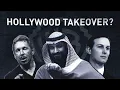
All right. So, I was working on a few different videos, but some news came out and I just wanted to talk about it as soon as possible. >> Netflix.
>> Netflix. >> Major move for Netflix. >> Netflix is the winner.
>> Is the winner. >> Netflix has won a bidding war to acquire Warner Brothers Discovery. >> Netflix just announced it's finalizing a deal to buy Warner Bros.
for $82. 7 billion. Basically the GDP of a small European country, which make Netflix the single largest media company in America in a landscape that's already consolidated into fewer and fewer hands.
Now, normally that would be bad news. Media consolidation has been absolutely wrecking the industry for the past decade. Fewer studios, fewer buyers, fewer places to pitch, fewer people hiring, writers, actors, editors, VFX houses.
The whole ecosystem gets squeezed while CEOs cash out with bonuses big enough to buy Greenland. People in all parts of the industry are having a harder time than ever. And the unions agree.
The writers guild already put out a statement on the Netflix Warner Brothers deal saying that this is what antirust laws were created to prevent that the outcome would eliminate jobs, push down wages, worsen working conditions, and raise prices for consumers. They stated clearly that the merger must be blocked. So yeah, Netflix buying Warner Bros.
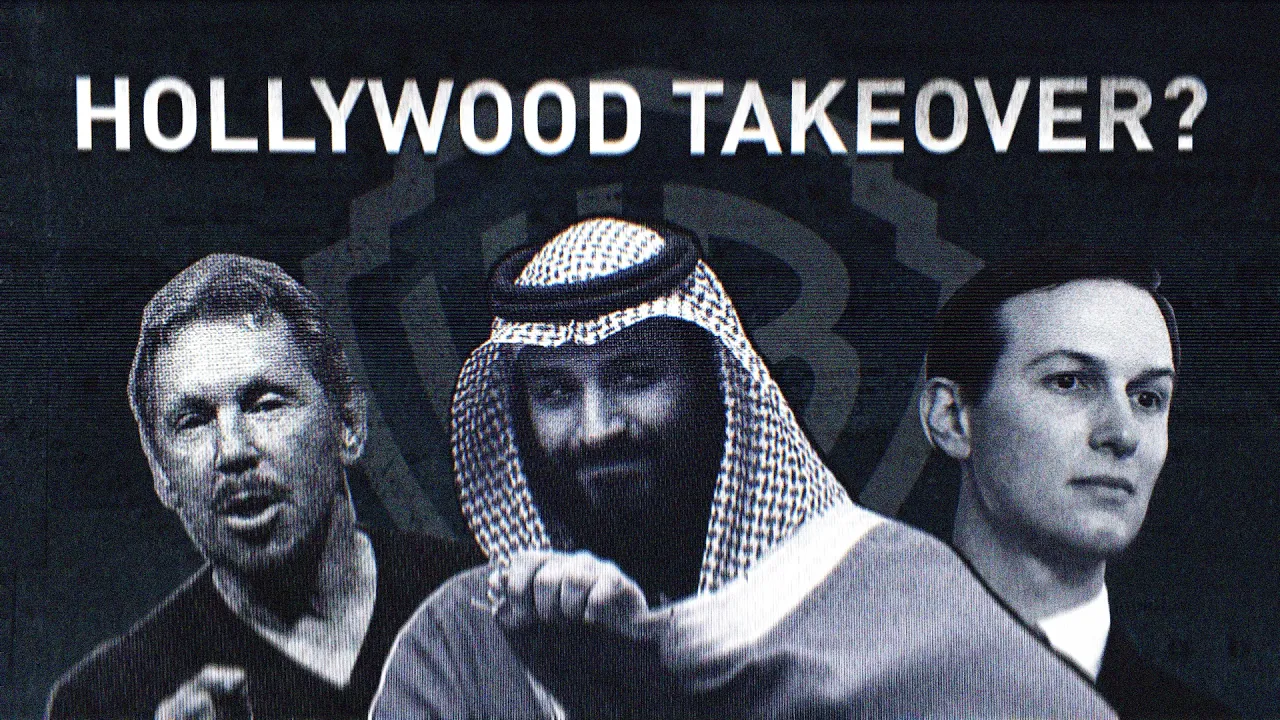
HBO, DC, Discovery, all of it would be, to understate it slightly, bad news. And yet, while the Netflix deal might be illegal, somehow it's our best option. Because the only other people trying to buy Warner Brothers right now are Paramount, backed by the Ellison family, Jared Kushner, and the Saudi government.
So before we talk about Netflix or Saudi money or Jared, please stop being in the news Kushner, we need to understand why WB, this h 100red-year-old colossus of American storytelling, is even on the clearance rack. It starts with AT&T, you know, the phone company, buying Time Warner for $85 billion in 2018 because some executive had a fever dream where HBO magically made people want to buy more wireless data. Shockingly, this didn't work.
It's the final act of one of the dumbest mergers in recent history. >> Then AT&T panicked and sold the entire thing to Discovery in 2022, going with a very creative name, Warner Bros. Discovery, which launched with tens of billions in debt that Discovery took on to make the deal happen.
And when you owe that much, you start cutting and cutting and cutting things that you already cut. We got the tax write off Apocalypse. Entire films just yeetated into the vault just so the company could claim a loss.
We got layoffs. We got disappearing HBO Max shows because residuals were too expensive. We got Zazoff, a man who somehow keeps coming out on top richer and richer while careers and studios burned down around him.
Warner Bros. wasn't being managed. It was being salvager parts.
Creatively, they were doing the job. Financially, they were two steps away from a GoFundMe. So, Warner Bros.
Discovery split the company. Sticking the decaying legacy cable networks in one bucket and the actually valuable assets, that's movies, streaming, HBO, and DC into another. And that second bucket is what Netflix wants here.
But what's happening at One Discovery is happening everywhere. This is an industry that used to have dozens of studios and hundreds of buyers. 10 years ago, a writer could pitch HBO, FX, AMC, Showtime, Netflix, Paramount, Universe, Disney, and a long, long list of mid-tier networks fighting for content.
But every merger shrinks the buyer pool. Every merger depresses wages. Every merger gives executives more leverage and worse conditions for everyone trying to make a living.
And the unions have been screaming about this for years. We had the 2023 WGA strike. We had the SAG after strike, fights over AI, residual staffing, living wages.
None of these were abstract debates. They were the creative class fighting to stop the consolidation of power and death of the middle class of entertainment. And AI made all of this worse.
Studios are already actively testing AI background actors, storyboards, script revisions, previs, and as some of you may have seen quite recently, AI voiceing. Executives absolutely love shoving AI into things because it eliminates payroll. They get to pay fewer people, boost their already gross margins, and collect a bigger bonus.
All of this industry consolidation and AI integration has led to fewer jobs, less competition, less options, worse pay, and arguably a worse creative product. Meanwhile, CEO pay has gone mythical. David Zazzlab, The Human Cockroach, made around $52 million in 2024.
Bob Ager made about 41 million. Netflix execs routinely pull in tens of millions of dollars. It's not just about inequity.
Inequity is old news. It's that the gap between executive compensation and the working class is fueled by the destruction of that workforce. And it's never been more rampant than today.
When a handful of conglomerates control the entire ecosystem, they don't compete to improve conditions. They just take turns squeezing the people in it dry. And this is the environment that Netflix wants to buy WB in.
Netflix has earned a reputation for being absolutely ruthless. If a show doesn't immediately boost subscriber numbers or stop people from cancelling, it's already dead. Decisions aren't made around cultural impact or long-term value.
They're made around a dashboard. And when your entire creative strategy is built around whether something converts fast enough, shows get structured for instant gratification, not sustained storytelling. Anything that isn't based on a familiar IP is treated like a financial liability.
It's how we get a Squid Game cinematic universe that somehow has four spin-offs in development. Netflix's leadership views cinemas as an outdated relic. Warner Bros.
for all its horrible management decisions still believed in putting films in theaters. That's a revenue layer that supports an entire ecosystem of jobs. If Netflix ends up owning Warner Bros.
, you're not just changing how movies are watched. You're changing how thousands of people pay rent. And that's before we even get to how streaming blew out the economic backbone of writing careers.
Before all this, residuals were the thing that made a writing career viable. You were on a show, it reran, it got syndicated, and every time that happened, another check showed up. With streaming, the contracts are so skewed that writers who once made five figure residual checks are now opening Patreon accounts.
And Netflix Pock is the difference. So, you put all that together, a company that already optimizes for turnover culture and give that company control of one of their largest competitors. A Netflix WB mega entity doesn't just become a bigger player, it becomes a fully integrated monopoly.
Right now, Netflix alone accounts for roughly a third of all US streaming subscriptions. Combined with HBO Max, their share of the streaming market becomes exactly the kind of concentration that antirust laws were made to stop. Netflix wouldn't just have the largest platform by subscribers.
It would own the biggest content library in the world, the largest streaming distribution system, the largest portfolio, one of the most prestigious brands in television history, and a massive production apparatus all under one roof. And because those numbers are so large, controlling well over a third of the medium market and a dominant share of production, your bargaining power as a writer, an actor, or crew member shrinks dramatically. The Writers Guild of America have already looked at that picture very clearly and said that this deal needs to be blocked.
But hey, Netflix made their offer. It's finalized. Look, I even got an email from them about it.
Oh, wait. What's that? Oh my god.
108 billion allcash shareholder buyout. This isn't a merger. This is a hostile takeover.
A direct cash bid to buy out shareholders circumventing the board and take control of all of Warner Brothers Discovery. Unlike Netflix, they're not just buying the good bucket of streaming and movie IP. They want everything, including CNN.
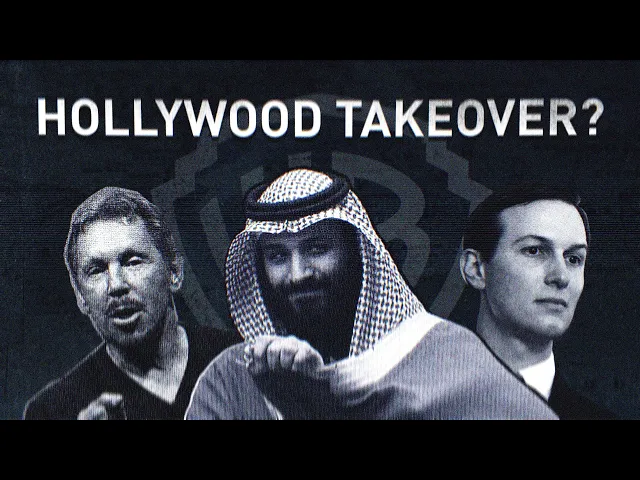
And that's where this gets really concerning because the Paramount Skyance takeover bid is being financed by the Ellison family, the governments of Saudi Arabia, Qatar, and Abu Dhabi, and Jared Kushner. This is different than Black Rockck buying up some shares of Disney. This is a political power play to influence culture.
So, strap on your tinfoil hat. First, you have the Ellison's. So, in 2025, Paramount was acquired by Skyance, a little indie film studio founded by David Ellison and launched with a $350 million small loan from his billionaire daddy, Larry Ellison.
Larry as in the founder of Oracle, sometimes second richest person in the world, former CIA contractor, soon to be overseer of Tik Tok US operations, and one of Donald Trump's biggest donors. He's hosted high dollar fundraisers for Trump at his private estate, personally raised money for the Trump victory committee, and has poured millions into GOP politics over the last decade. Wow, lucky us.
Reporting from the Wall Street Journal, and Ruters has said that David Ellison privately promised Trump that he would make sweeping changes at CNN if his Paramount Skidance takeover bid for Warner Brothers goes through. So, when you put it all together, it stops looking like a rich family who just really loves cinema and starts to look more like a politically aligned billionaire family with decades of ties to US intelligence and the Pentagon, a long record of financially backing Trump, now trying to buy the company that owns the second largest news station in the country. You don't really need a tinfoil hat to connect the dots here, but hey, who's stopping you?
And for anyone thinking they wouldn't let their political affiliations affect the news, CBS, owned by Paramount, owned by Sky Dance, owned by David Ellison, just blocked a 60 Minutes expose on Trump just the other day. That is politically motivated new censorship. Now, strap the [ __ ] in because it's about to get worse.
The other donors here aren't just hedge funds and retirement accounts. They're the investment arms of Saudi Arabia, Qatar, and Abu Dhabi. To keep this tight, I'm just going to focus on Saudi Arabia's public investment fund, the PIF, because once you understand the PIF, you basically understand the whole playbook here.
The PIF is not a neutral national retirement fund. It is chaired by and directly controlled by Muhammad bin Salman, Captain Bonesaw himself. It's a state tool.
And there's really three reasons why the PIF keeps showing up over and over again in entertainment, sports, and media deals. The first is economic diversification. They know that oil won't print money forever.
So on that front, it's a smart move to diversify your economy. The second reason is a little more nefarious. It's about reputation laundering.
What critics call sports washing when it's golf or soccer or Bill Burr calls a paycheck because they have a Chili and hey, they're just like us. You attach the kingdom to reputable international brands, studios, celebrities, festivals, or comedians without any real principles. And over time, Saudi Arabia stops being the country you think of as a Human Rights Watch headline and starts being something you associate with that IP you just love.
Over time, that association itself does work. And they've poured a staggering amount of money into that endgame. Multiple billions have gone through LIB golf, football, esports, celebrity events, influencer tourism campaigns, and an entire machinery designed to make Saudi feel more like a lifestyle brand instead of the place that 15 of the hijackers were from.
But the third reason is why you should be worried here and that's control. When you own the asset or you become a major funer of that asset, you don't need to issue threats. You just shape the incentives.
You decide what gets funded, what gets passed over because it's suddenly complicated or not the right fit. This isn't theoretical. Saudi Arabia has already been publicly caught doing this sort of censorship.
In 2019, they pressured Netflix to remove an episode of the Patriot Act that was critical of the Kingdom and NBS. Netflix, unsurprisingly, subscribed. They've been caught doing this sort of thing multiple times.
The Saudi government sponsors media who do positive coverage of the country and blackball anyone who doesn't. And that isn't even counting their own internal media censorship agency. Gulf regulators have repeatedly blocked or demanded changes over films with queer representation.
We've seen major studio releases banned across the region for queer content. So here's the question. If Saudi Arabia can get Netflix to pull an episode when they don't even own Netflix, what do you think happens when they're actually a major financial backer of the company making these shows?
What happens if CNN ends up inside that deal? What happens the first time CNN wants to do a serious investigation into human rights abuses in the Gulf or Saudi war crimes in Yemen or migrant worker conditions tied to the next dictator ego mega project? We've already seen the absolute tonal shift that hit the Washington Post after the Bezos acquisition.
So why would this be any different? And that's why this deal should make you deeply uncomfortable. The rebranding of Saudi Arabia, UAE, Qatar, and Abu Dhabi is something that deserves a dedicated video.
The point is, this isn't an investment for the love of media. It's barely a financial investment. It's an investment to exert soft power using some of the most loved and trusted brands in media history.
Trump's son-in-law, his best boy, the human embodiment of failing upward. This is the same guy who walked into the White House with zero qualifications, immediately got handed a massive and policy portfolios he didn't understand, and then spent four years treating the presidency like a family business with nukes. The same guy whose security clearance was reportedly denied multiple times until it was magically overridden.
The same guy Trump trusted precisely because he wasn't independent, wasn't principled, and most importantly, was never going to say no. And let's remember how Trump treats the media. He spent his entire presidency calling journalists the enemy of the people.
>> They are the fake fake disgusting news, >> threatening broadcast licenses, blacklisting outlets, and openly fantasizing about shutting networks down. CNN, in particular, wasn't treated like a news organization. It was treated like a political enemy.
So, when Jared Kushner shows up anywhere near the ownership structure of a company that controls CNN, yeah, sound the alarms. When CNN reporters want to aggressively investigate Trump again, dig into corruption, authoritarianism, human rights abuses, does that reporting become easier or harder inside a company partially financed by Trump's own inner circle? You already know the answer.
I feel like this is a little deeper than a normal brand and business play. It feels more like a geopolitical infiltration of the media. Paramount claims these investors would have no governance rights and no say in what gets made and what doesn't.
Yeah. And Facebook promised to protect your data. And Subway promised they would make their sandwiches edible again.
And my landlord promised who would fix the leak in my bathroom 3 months ago. Make no mistake. The Netflix monopoly is terrible for art, workers, wages, and originality.
But the Paramount bid, that's terrible for America. No matter who wins, we lose. So what can you do?
In the grand scheme, not much. As consumers, we can't do too much to actually affect issues this institutional. No, you don't solve this by voting with your wallet, and you can't really patreon your way out of regulatory failure.
Fixing this will have to come from the top down. We need stronger antitrust enforcement that actually treats media consolidation as a threat. We need ownership standards that recognize news as necessary infrastructure, not something foreign governments can invest in.
We need labor protections that actually mean something in the age of streaming. Now, while we wait for our elected officials to actually, you know, do the job we pay them for, you can at least decide what survives in the margins. If you care about cinema, support your local independent theater, support movie, support OID TV, support Criterion, and if you care about creative media that isn't built on consolidation, there's a number of platforms you can support that care about giving their creatives fair compensation.
You probably wouldn't be surprised to know that this isn't just happening in Hollywood, either. There's currently a huge buy up of gaming studios by Saudi Arabia and other players happening as we speak. Go check out this video for more information on how that affects you.