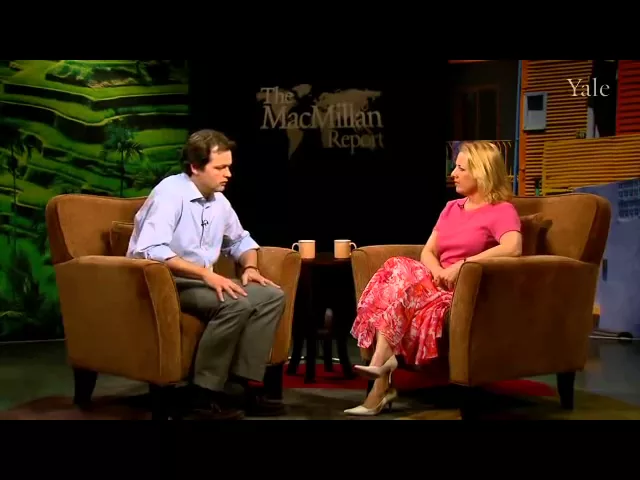
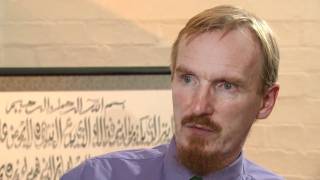
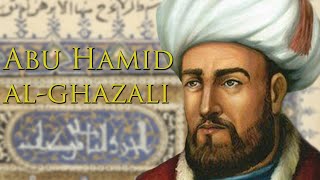
[Music] [Music] welcome to the McMillan report I'm Marilyn wils your host and our guest is Frank griffle a professor of Islamic Studies at Yale University professor griffle teaches courses on the intellectual history of Islam Islam its Theology and the way Islamic thinkers react to Western modernity he has published widely in the fields of Islamic theology Arab and Islamic philosophy Islamic law and Muslim intellectual history today we'll talk with Professor griffle about his new book Al gazali's philosophical theology welcome Professor griffle glad to be here Marilyn so let's start um with Al gazali who is he
and then give give us an overview of your book Al gazali is one of the most important theologians and overall thinkers in the Islamic World he's also probably the one author of classical Islam who is most widely read today and he was most widely read all through the centuries that he had lived he uh lived at the turn to the 12th century uh which was in Europe just the end of the Dark Ages yet in the Islamic world world it was a time of very Lively intellectual activity both in the Natural Sciences in philosophy as
well in theology okay and what led you to write this book what was your inspiration well I've been fascinated with al- gazali for very many years and two reasons first of all his importance as an Islamic author a Muslim Theologian who really formulated to to a large degree what was at least for many centuries regarded as Islamic Orthodoxy mhm for me it was very important at one point in my life to understand what Islam is its intellectual history and at one point I decided understanding Al gazali helps me a lot in doing so so it
is importance that triggered me there was a second aspect that I was also very much interested in which triggered mostly my interest in in the book that I just wrote and that was his position as one might say an angle point between what is the Aristotelian tradition in Islam something that we call falsafa philosophy in Islam and Islamic theology he has often been regarded as The Thinker who somewhat fought Islamic philosophy or philosophy Arabic philosophy within Islam and defeated it and from the very moment I started reading him I thought that this is not entirely
right and I died after this and the fruit of it is the book that I just wrote okay and let's talk a little bit about how you did your research what was your methodology well when you do intellectual history you basically read books you go to the library you check out books you read them once you read them twice and very often you read passages 10 times before you really get what these passages mean in this case of of writing about Al gazali I was surprised to what extent actually I also had to deal with
manuscripts because we think that with such an important author the manuscripts which have of course preserved his Works to us in the modern period which were written in the Middle Ages and then later on that they have now all been turned into printed books but that was not the case there were still a great number of texts in the case of al- gazali that still were only in man manuscripts and not yet printed and there was also the issue that many of the prints that we were dealing with w't entirely reliable so I actually worked
a lot with manuscripts particular in European libraries but also in libraries in the Middle East okay and how does your research differ from the traditional views on Al gazale I would say the position that I have taken with regard to Al gazali is somewhat a part of a larger re-evaluation of the philosophical tradition in Islam mhm the classical view that was put forward uh by uh early our early great scholars in the field of Islamic scholar in Islamic Studies who worked mostly at the beginning of the 20th century uh and this view was then also
shared by uh Arab and Muslim thinkers uh was that Islamic philosophy in Islam Arabic philosophy uh which was pursued in Islam was very Lively and very active until until a certain point in time when the culture somewhat has given up this activity and uh the Prejudice was that in this case an occupation more with religious literature particular with the Quran actually has replaced uh the rationalist inquiry of the philosophers by now we think that this is only half of the story it is true that there was a lifely uh thriving of philosophy of the tradition
of Greek philosophy within Islam but it is also true that at one point this tradition was turned over so to speak from the philosophical discourse to the theological discourse and my position is that al- gazali actually took a very important position in this turning of philosophy into what we call Cam literature which is rationalist theological literature The traditionalist View however is totally different by basically saying that algazali destroyed DED the tradition of falaa he in fact wrote a very important book which criticizes many teachings of the Arabic philosophers most importantly amongst them the philosopher iban
CA known in the west as aisna uh and this particular book wasn't very deeply studied one read the beginning one read the end and draw from it the conclusion that it was an allout reputation of the philosophical tradition which it clearly wasn't in fact it was one part and one parcel one might say of the ER of al- gazali which was to some degree criticizing philosophical tradition yet on the other hand also integrating much of what he does not criticize in this case into the Islamic theological discourse okay and what conclusions do you reach in
your book a number of conclusions uh the book is actually mostly concerned with Al gazali's life uh uh also with Al gazali's students and then I focus on what is his cosmology okay let me go through them one by one um with his life I was surprised to see how how little serious work has been done in the past decades on his life particular since two new important sources have come up in this case his letters uh his Persian letters which were edited in the 1950s and have not yet had much impact on the secondary
literature about his life despite the fact that they offer a huge amount of insight about what he was doing about particular how he felt what he was doing secondly his students um one of the problems that Scholars who were dealing with the life of Al gazali and his Works were always confronted with is that his works are far from being unambiguous sometimes in fact he are argues in favor of a certain position yet in another book he might actually take a position that is opposed to that and my strategy was to look in this case
closely into how his students or his early followers write about him and write about his teachings to basically find out how did they think what he truly taught and from there did use in a matter of speaking how he communicated with his students what he told his students are his in a matter of speaking true teachings and what are the one that he might have taken at one point in his life or in this case how he might in fact reconcile to positions that initially seem to be contradictory and this is actually the main part
of the book this is uh the third part on cosmology now first I should probably explain what cosmology is yes cosmology means uh uh how the world any theory that refers to how the world is constructed in this particular case we might talk about our cosmology for instance uh that most of us uh believe in the existence of a big bang we are convinced actually that there was something like a big bang that from then on the universe spread and from then on we have for instance uh the uh uh development of quarks of neutrinos
of atoms of molecules out of molecules we have bodies bodies react in a certain way uh to cause a loss uh Etc Etc this is what we call cosmology how actually the universe is constructed for medieval thinkers this is closely this subject is closely connected to how God responds or reacts or in this case acts upon his creation the world is of course regarded as God's creation and here is particular important how does God create that is the interesting question there and there has been developed a particular Islamic view I might say which we refer
to as occasionalism which by and large and I make it short simply teaches that God creates every object and every in every moment a new so we might talk we might think about it as if God as if this world would be like a film where we have frame after frame after frame after frame and each frame in this case each moment in itself is newly created that is one View and then there is the other view which is I would say probably uh uh more closer to our current understanding because it comes from the
work of Aristotle particular that there are causal laws that determine how things actually react to one another in this world and that this CA a law of of course our God's creation and that matter and all these things are also God's creation and that in a matter of speaking God creates by means of these causal laws so far before I actually finished my book one might say or before I came to the to the main conclusion of my book people in our field were divided in saying that al-gazali was either one who was totally in
favor of the so-called occasionalist view where God creates everything in every moment a new or in favor of the view that God uses so-called secondary causality God employs causal chains of of effects and of causes and effects in order to achieve uh the goals that he actually wants to achieve in this case aims to achieve what I came to conclude is that Al gazali in this case held both views he thought that these two views although they seem to be contradictory for him they were not they would express the same kind of cosmology for him
it was most important to acknowledge that God is the creator of everything in this world be it either in the way that he creates everything in every moment a new or be it in the on the other hand as the starting point of all the caal change that we actually do see unfolding in this world okay and uh lastly what was the most surprising thing you found in doing research for your book well two things I think um first of all when I uh when I looked into his life in particular when I looked into
his letters and what he writes about his own life I found found out that he was actually born at a day different from what we currently have in all our dictionaries and in all our encyclopedias about him that of course is only a small matter the other thing that uh fascinated me is that Al gazali thought about Sciences uh in a very very modern way MH and that was certainly even a surprise to me but it was probably more a surprise to other people who always thought that al- gazali was one of the people who
had destroyed the science in Islam I think nothing is further from the truth in fact he is someone who supported the Sciences who wanted to find the cosmology that actually leads to first of all acknowledging God as the creator of the world but also in in helping scientists to pursue the Sciences so in a nutshell one might say he thought in his cosmology of course which did not have the big bang but if we would translate his cosmology to the Big Bang as God as the Creator of the Big Bang God created the big bang
and from that moment on all the causes and effects that have unfolded since then with necessity are mediated God's creation in this case God deliberately chose one might say how to create the big bang and everything that has happened since then is in this case a causal effect of this one event that God actually put into this world which I thought was a very fitting way way for a theologian to think about this universe very good thank you very much for being here with us today and sharing some of your research my pleasure for more
information about professor griffle and his work please visit our website at yale.edu McMillan report be sure to join us again for another episode of the McMillan report made possible through funding from the Whitney and Betty McMillan Center for international and area studies at Yale [Music]