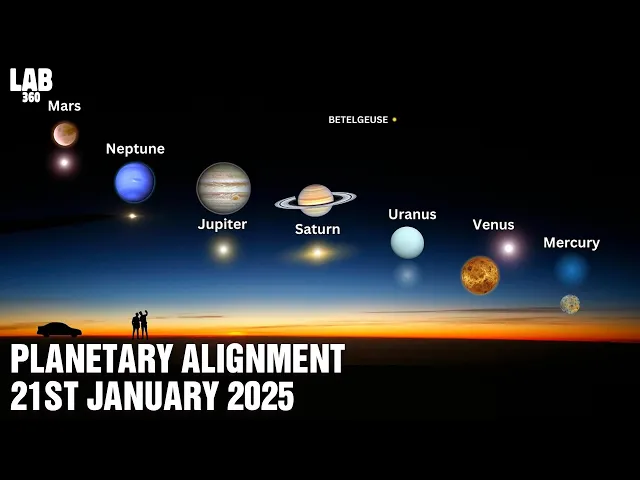
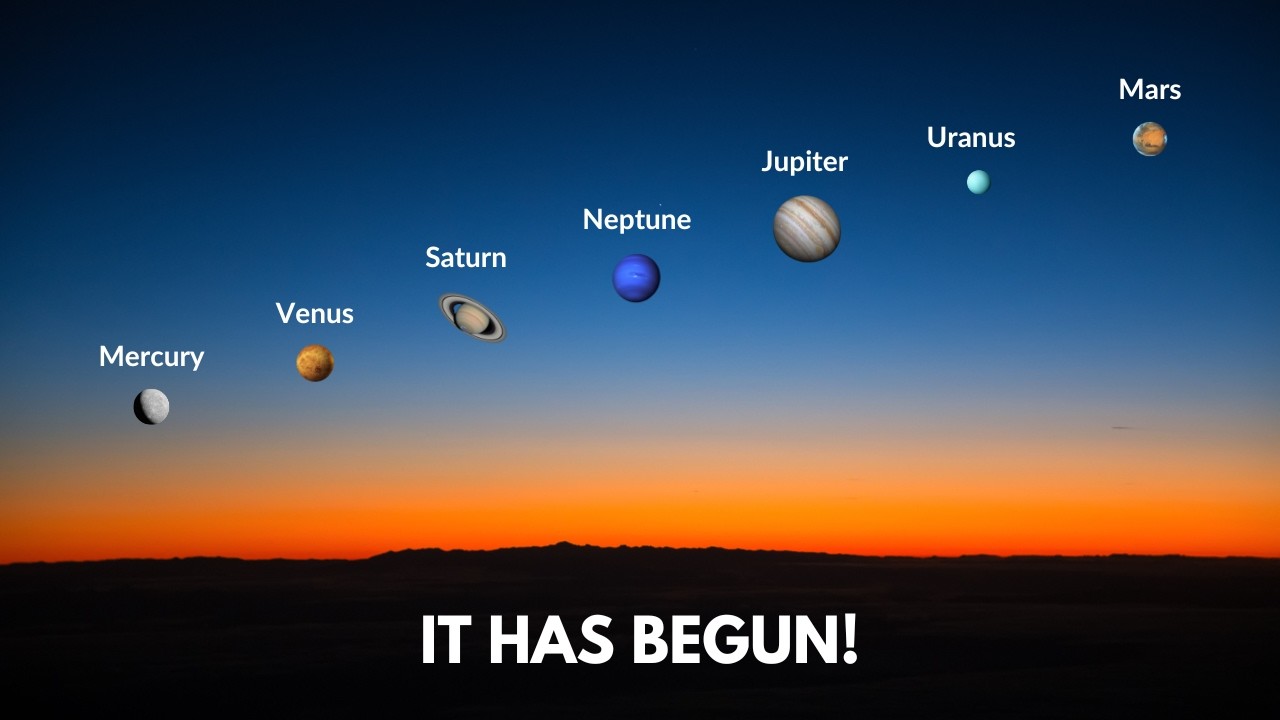
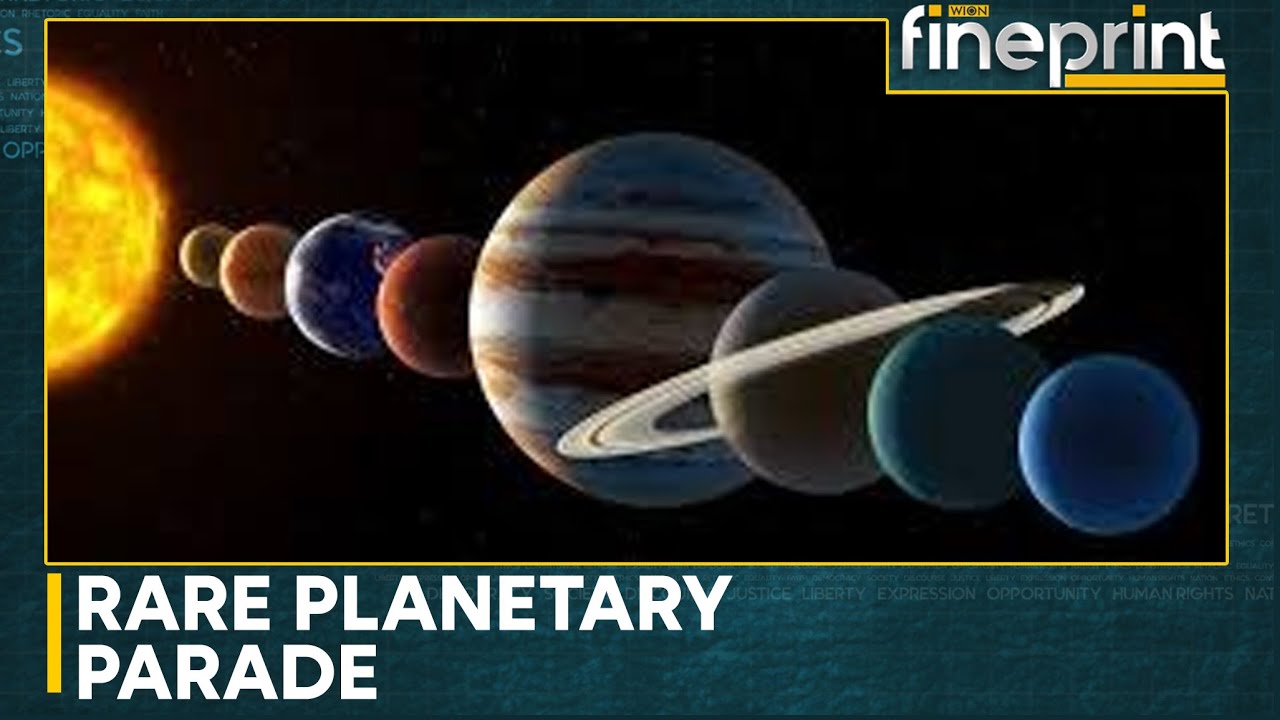
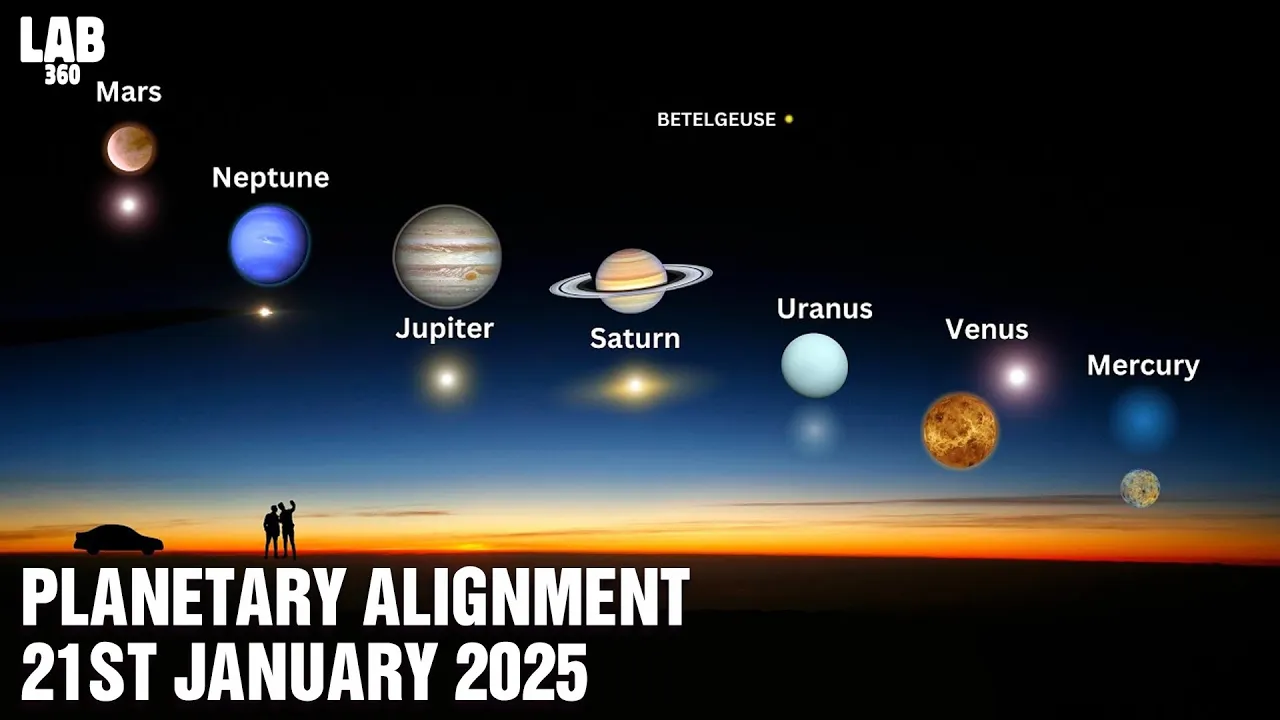
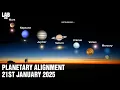
by the last week of January Venus Mars Jupiter Saturn Uranus and Neptune will all be visible in the night sky offering a rare Cosmic spectacle but beyond the breathtaking sight what drives these celestial events could they offer clues about the forces that govern the universe and most importantly when and where can you view this heavenly Marvel let's find out welcome to lab 360 it's time to explore on January 21st 2025 a planetary alignment will occur where several key planets in the solar system Venus Mars Jupiter Saturn Uranus and Neptune will appear in close proximity to
each other from Earth's perspective this alignment is a result of the relative positions of the planets along their elliptical orbits around the Sun although the planets will not align per perfectly in a straight line they will be positioned in a way that creates a visually striking Arrangement when observed from Earth the event will be observable through telescopes or binoculars and will offer a rare chance for astronomers to study the positioning of these planets in the sky this alignment involves planets from different regions of the solar system Mercury will be closest to the Sun followed by
Venus Mars Jupiter Saturn Uranus and Neptune these planets orbits vary in speed and distance from the Sun so alignments like this are relatively infrequent the alignment itself is not a rare event in astronomical terms as alignments of planets in the solar system happen periodically however the alignment on January 21st 2025 stands out due to the involvement of several large planets in astronom iCal terms such alignments do not have any physical impact on Earth they do not affect earth's gravitational field or cause any significant changes in the planet's conditions the appearance of these planets in close
alignment is a visual effect caused by the planets being in similar positions along their orbits but the actual alignment is not a physical event in space observing the alignment provides an opportunity for astronomers to study the relative positions of these planets and their orbits helping to deepen our understanding of the Dynamics of the solar system for observers on Earth the alignment will appear as a grouping of planets in the sky though they will not all appear in a perfectly straight line the six planets will be visible in the days leading up to January 21st and
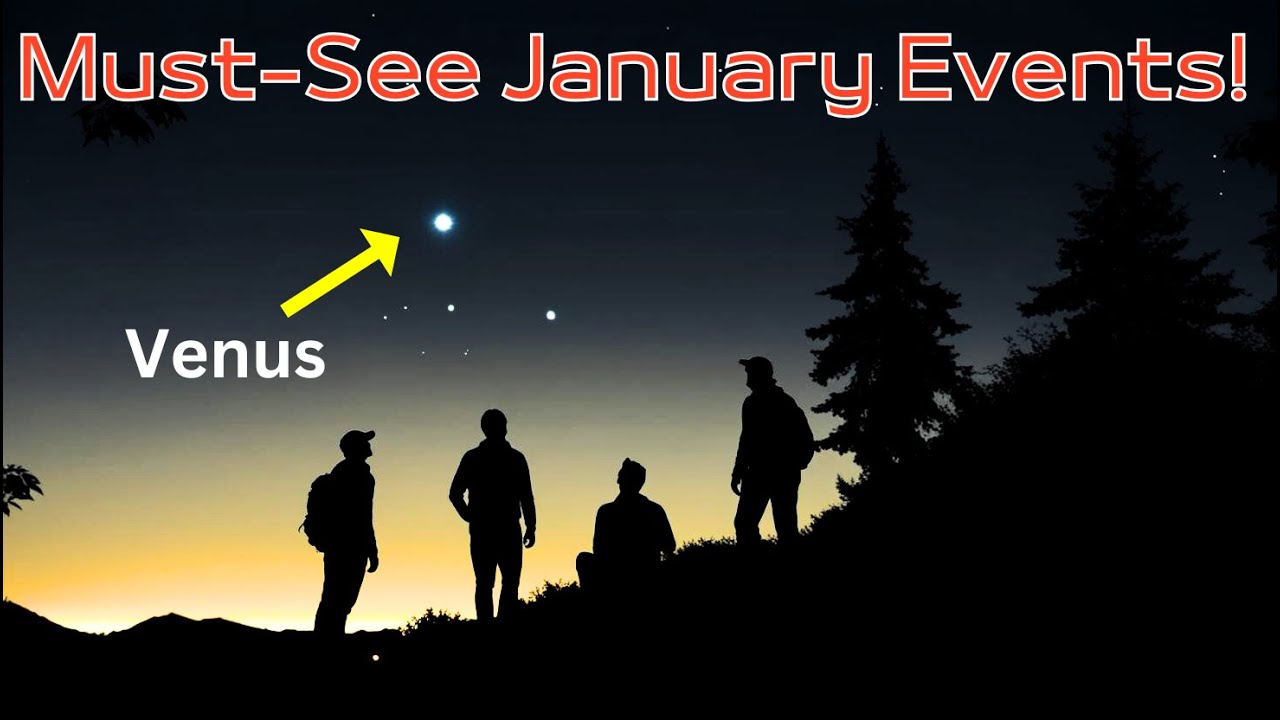
for approximately 4 weeks thereafter Mars Venus Jupiter and Saturn will be visible to the naked eye while Neptune and Uranus will require a powerful telescope to observe the optimal time to observe the planets from the northern hemisphere is shortly after Sunset around 8:30 p.m. local time you may still catch Venus Saturn and Neptune near the Horizon after that but by 11:30 p.m. to midnight depending on your location all three will have dipped below the Horizon afterward Mars Jupiter and Uranus will stay visible for several more hours with Mars setting Just Before Dawn nearly all locations
in the US Canada and Mexico should be able to view the planetary parade this time thanks to its extended duration and the slow movement of the planets in general the ideal time to observe the planetary parade will be between January 21st and February 21st with the optimal viewing occurring during the we of January 29th around the new moon so are you excited for this Celestial Marvel share your thoughts in the comments section below and be sure to subscribe to the channel for the latest revelations in space exploration hit the Bell icon to stay updated and
let's continue to explore together [Music]