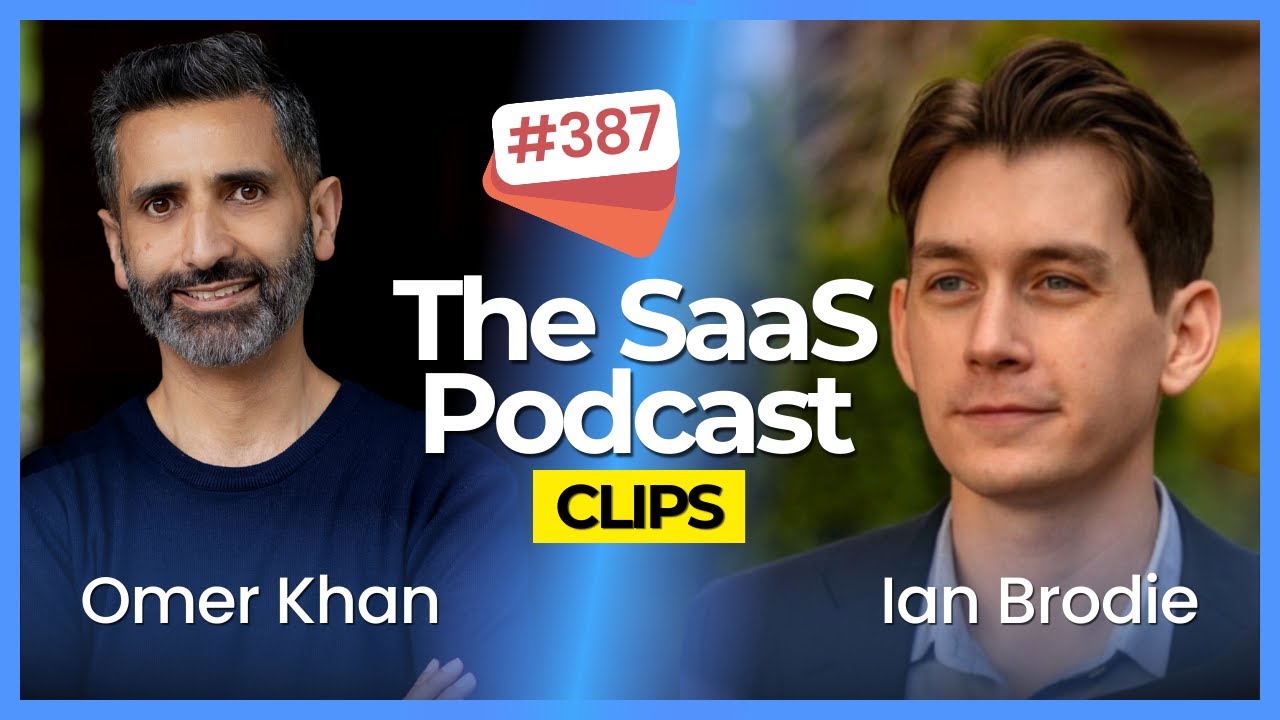
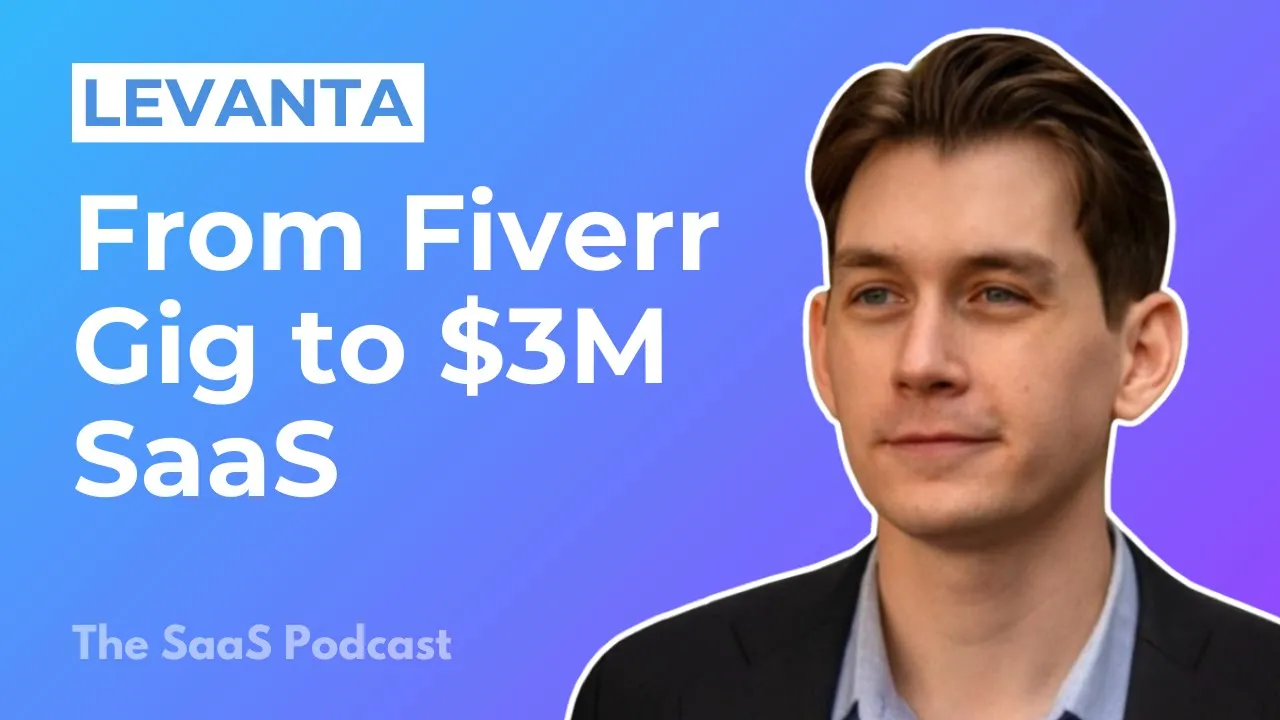
Ian welcome to the show thank you so much Omar thanks for having me my pleasure do you have a favorite quote something that inspires or motivates you that you can share with us yeah it's actually from Rand fishkin from his book lost and founder it is uh great ideas and products are often born from mediocre ones the keys are time enough to iterate and evolve into something remarkable humility enough to see what's wrong and admit a failure so you can move forward and survival you know a profitable Services business can be a godsend here great
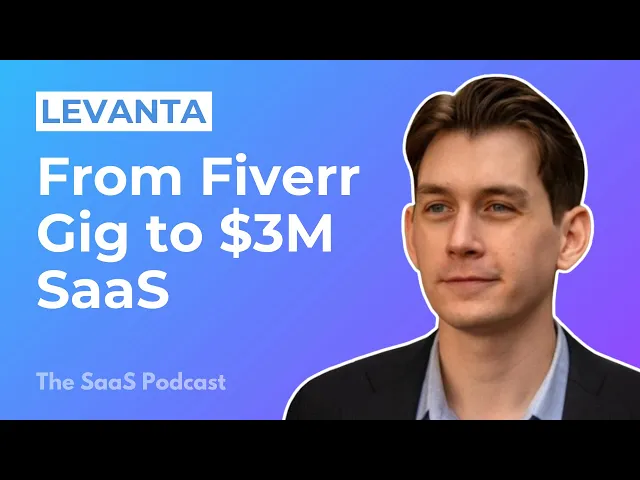
quote I love that guy it's just uh some of the things he says I'm just like why didn't I think of that he's an amazing blogger too I I read all the stuff yeah great so tell us about Levant what does the product do who's it for what's the main problem you're helping to solve yeah so Levant is an Amazon affiliate marketing platform for Amazon sellers specifically we enable Amazon sellers to connect with content creators and Publishers to drive new sales and traffic to their Amazon storefront we handle link generation click and conversion tracking affiliate
payments so you can kind of just focus on partnering with Affiliates great and give us a sense of the size of the business where are you in terms of Revenue customers and all that stuff so we launched in March of 2023 and surpassed 230k in Mr in December so we're we're profitable all of Q4 and then we just recently raised a round and we're headed into the kind of the growth phase now so we currently have over 650 brands on the platform over 2,500 Affiliates uh we grew to 10 FTE in January and have a
couple more on the way okay so this business you launched this business less than a year ago and last month you already hit a run rate of almost 3 million in AR yes sir right now people listening to this are going to be going oh God it's one of those stories right so what I think is really interesting about what you guys have done is is not just the last year but the story really begins several years ago when you and your co-founders wanted to start a SAS company and you started out with a Services
business and for several years you tried to turn that Services business into a SAS company and failed at it and then once you launched Levant all those struggles and failures actually turned out to be valuable lessons and experiences that helped you get to where you are today and and and Achieve what you've done in the last year or so so I think that's really a great place for us to start the story so what was the name of of the agency of the services business and what did it do yeah it's called groia um originally
groia Partners uh there a little play on words we helped businesses grow via partners and it was a a tech enabled service that was all around affiliate recruitment so we had a Services team and also a little like Tech Tool that basically allowed us to go help e-commerce companies SAS companies go and recruit Affiliates agency partners influencers at scale and kind of recruit them into their partner program great so why don't we we stop there before you started groia why did you want to start a SAS company where did this idea come from in terms
of how you got started you know and I think just just to to help kind of frame this with people like you know I want to talk a little bit about how you build the services business but it's not because you know just we want to talk about Services business I think there's just just a ton of valuable lessons there when it comes to how that's helped you uh you know finally get to uh running a SAS company so yeah let's start at the beginning like where did the idea come from me and my co-founder
his name is Rob I'll be mentioning him a lot um he's my co-founder from grovia same co-founder in Levant and we met in college and had always wanted to start a SAS company that was that was our dream uh I majored in entrepreneurship took classes around SAS when I graduated went worked for a software company so it always been our our our Dream to do this we actually right when Co kind of happened you know was like March of 2020 we both quit our jobs and just said hey we're going to go start a company
we don't really quite know exactly what it is um yet but we'll figure it out as we go rob had the idea um because he was working for an affiliate tracking platform at the time called tune it's actually a Seattle company and he had this idea hey we could go and help people recruit Affiliates and he had this idea for a software product I loved it and so we quit and I started going immediately and talking to VCS Talking to Angels and say hey we want to build this software I think it's a great idea
here's the whole kind of scope and of course we got like laughed out of a couple rooms because we had no product we were right out of college we didn't have an engineer so that was another thing is it was just we we were two business guys that were trying to start a SAS company and so our our solution was to start groia as a Services business um we sketched out like a scope of work that we'd use for every client and it was all inspired by the software we eventually wanted to build um and
we put listings out on Fiverr So within a couple days of making that Fiverr listing we had over like 100 inquiries saying hey yeah we'd love to try out your service so we knew we were on to something then so tell tell me more about uh Fiverr I think that's a great way to to validate an idea I've never heard of it being used to validate basically a SAS business that's what you did so what what did you actually post and what was it like we're going to help you with with Affiliates and we're going
to do it for like five bucks or something and yeah it was super cheap I don't even actually remember what the exact pricing was but it was like absurdly cheap and what we offered was we broke it up into kind of three uh pillars Discovery so we' go and find Affiliates for you um recruitment we would go and email them and then activation we'd get them into your affiliate program and get them Revenue active so that was the service we eventually wanted to build you know the software that kind of allow you to do all
those things in a more automated way um but yeah we started it with just that service and we posted on Fiverr because we wanted to validate that people actually wanted this before going and building a website or you know obviously building the product Fiverr is like a great way to just kind of throw something that gets a lot of exposure and and see if people wanted it and we got so much that we could actually move off of Fiverr almost immediately I think we only took maybe two or three clients off of Fiverr before we
started using some other marketing strategies that helped us kind of get more clients after that yeah I I love that I mean I I don't know why I've never thought about that before and it makes me think there's got to be so many other you know Founders who starting out and they're saying you know I don't know how to validate my idea or you know I don't even have a great idea well you know what can you do what can you help people with like package it up as a Fiverr service and see if you
can get people to respond and and actually go through the process helping them right and you can you can learn a lot just from from doing that so I think that's great okay so you get all these inquiries right but then what did you do did you actually start like delivering on the service or that was just like actually you know we we just kind of wanted to to test the the demand yeah no we we definitely delivered the service um you know with Fiverr a downside with Fiverr is you get some some companies who
are definitely a little earlier U Maybe not maybe don't have the great greatest products for affiliate marketing so I remember one of our very first clients actually sold dog food dewormer and it it turns out it's it's quite hard to recruit content creators to go and promote deworming dog food we tried our our tried hard to make that happen um but it was pretty tough we has we had a lot of clients like that we realized okay man like this we we've definitely established that there is demand in this SMB market for this but maybe
we can kind of break out of these really really small customers and move a little bit more up Market okay so you you validated the demand you've got a little bit of a better idea of who your Target customers are or who your Target customers you maybe shouldn't be where did you go from there yeah from there um well the goal was always to go and build that that software product um and so the the goal was to kind of get some profit and start being profitable and then eventually kind of have enough profit to
go and like hire an Engineers that was the goal and how we actually caught our first break was we started reaching out to affiliate tracking software companies so we were an affiliate recruitment service there was software companies out there that offered affiliate tracking software our idea was that these affiliate tracking platforms you know had the software but maybe didn't have the service offering to go and find Affiliates and and help their customers actually build the affiliate program that they were kind of selling to them so it turns that we were right we found a Partnerships
manager at a company called refersion and she liked the idea and immediately started referring as clients so that's where we got our first big client and then we got a few more from there we said okay maybe we can scale this out so then we contacted all the affiliate tracking platforms like impact partner stack Awin and eventually kind of built out mutually beneficial Partnerships with each of them where they would go and sell e-commerce companies or SAS companies on affiliate tracking software we would be the service provider helping them kind of go out and recruit
Affiliates um so we kept the strategy going and our kind of business took off pretty quickly after that okay great so that gets you clients it gets you Revenue uh presum you mentioned you were dealing with like you know bigger companies and kind of more more kind of serious players which is great did you were you able to raise enough money there to start funding the SAS business in yeah we were so we ended up um you know growing to 26 employees about and by this time we had hired a CTO and he started building
out this software product that we had dreamed of interestingly enough what we quickly Learned was that software product that we had always imagined really actually didn't work that well as a self-service tool people loved it as like a tech add-on to our service so they wanted our team to be kind of using this tool and then they can kind of check in see what our progress had been what the pipeline of Affiliates were uh it's kind of like a CRM for Partnerships but they didn't actually want to be the ones going and like scraping for
Affiliates and tracking all these and going and doing all that Outreach so it actually ended up being more of a tool for our internal team than a self-service product which was kind of a big take away from us from this first business which was man if we actually had gone and raised a big VC round right off the bat to build this SAS product we hadn't actually really validated much at that point we would have spent a ton of money and time um building a self-service tool and then kind of had no Revenue to show
for it but instead we started you know a little bit more scrappily with a proven model that we knew worked and then ended up with a a tech product that actually really supported our internal Services team okay great so you you you you you you still haven't got a SAS business but you you keep doing the right things to grow the services business which is which is I guess it's good but maybe not good because it's not the ultimate goal that that the two of you uh wanted so what did you do with that that
tool did you kind of go back to the drawing board and say you know we need to go and build a different product or was the SAS business still in sight or or were you getting to the point which is like maybe we were just destined to run this Services Company yeah as we started kind of building out the the SAS tool I think it occurred to us as we were building it that hey we actually have an internal team that also is going to benefit from this so we should definitely build it in a
way that our internal team and all of our customers who are benefiting from our service can also use this and then we'll also have like a self-service portal as well for people who aren't using our service and there just wasn't a lot of traction even after we launched it we marketed it it had been probably 6 seven months of trying to like push this thing out as a self-service tool and it just wasn't gaining a ton of traction however our service customers loved it our internal team loved it and yeah we we started to realize
okay I think groia is a tech enabled Service Company it's not a SAS business and then how how long were you running groia for it was exactly 2 years so right around the 18th month mark we started getting a lot of inquiries for acquisition and it was something that was definitely interesting to us because we did have that dream of starting a SAS company and we were starting to realize okay this is definitely a services company and a lot of the companies that were reaching out to buy us were big affiliate services company that kind
of liked our model liked the recruitment approach liked the the tech we had built um so we started getting offers it was It was a difficult challenge for us to kind of identify okay is this the right time to sell or not right yeah how how big had the business grown by then we were um the largest we got was 26 employees and right around 3 million of AR so that that was where we were when we sold oh that's not bad for for what two years of building that business yeah yeah it grew fast
we never really got super profitable though so there was it was basically Break Even month over month we were investing a lot into the tech um so there was there was probably opportunity to be more profitable than we were but we were really excited about the tech very bullish in the tech so we're pouring a lot of money back into that and and was did this growth all come through those those Partnerships that you did with those affiliate platforms yeah it was it was almost entirely driven by Partnerships we weren't doing any paid marketing we
weren't sponsoring events it was all from our Partnerships program referrals from these tracking platforms and we also had some like affiliate thought leaders that liked what we were about liked our methodology liked the tech and refer as clients as well okay so you eventually decide that you're going to sell this Services business cell grovia when did that happen is that like the the late later part of 2022 it was actually it was January of 2022 when we had kind of made the decision okay we have these two three buyers we're g to we're going to
make one of them happen and so we started negotiating and we actually ended up getting a deal that excited us you know it was it was like a mid seven figure deal that made sense for the founders it made sense for the employees and we kind of came to grips with the idea like okay we built a good business here that's exciting people in the industry you know our employees are happy but we the founders want to go build build SAS and this isn't that um so maybe maybe it makes sense um and so we
got we got this deal and it it was it was a good outcome for us so we we we started kind of pursuing it and making it happen Okay and had you raised any money for groia or was this you know bootstrapped it was bootstrapped yeah it was it was almost entirely bootstrapped right at the beginning I had a a family friend who gave us I think 25k so not not exactly you know not a hugely profitable business but you you got the you know you're able to sell the company and and did you go
and you worked with the company that acquired you you you you guys went and worked there for a while right there was no golden handcuffs in the deal so that was kind of obviously an important factor for us um and we obviously really wanted to make sure the integration went well so we stayed it was eight months which was kind of more than enough time to integrate the business into the the acquirer and then we started to kind of look at what our our next thing would be okay so you start looking at what your
next thing is going to be you guys have had a good outcome with grovia but you set out to build a SAS business been trying to do that without much success for for a couple of years what what was the next idea it was an idea that formed while we were at groia uh one of the customers we were servicing was a big amazon aggregator so they bought up a bunch of Amazon Brands um and owned a ton of them uh and what they had figured out was Amazon has had launched this new attribution API
that allowed them to For the First Time Track the external marketing efforts uh and see when they actually resulted in conversions and clicks they took that attribution API and started going and building negotiating affiliate Partnerships and for the longest time Amazon sellers Amazon aggregators have not been able to go and like build affiliate relationships and like track attribution and make affiliate payments that didn't exist we saw them doing this while we were at groy and we actually helped them go and recruit Affiliates and it kind of clicked to us like wow what if we built
an affiliate platform around this attribution API that kind of matched all the the bells and whistles you find with a d Toc affiliate platform and we brought it into kind of the Amazon world so that was the that was kind of the Genesis of the idea okay great so how did you validate the idea this time around because you didn't do it the first time until realizing a couple of years later that God we would have buil you know we built the product and it's the wrong product it's a good thing we didn't do that
from day one so did you validate the idea this time around yeah we were uh we put a lot of effort this time around into validating it we went and it was mostly Rob my co-founder who he went and was on the phone all day for months just calling up Amazon sellers coming up calling up Amazon um aggregators Affiliates who were previously promoting Amazon stuff like hey does this sound interesting like if we could build this platform if we could build the impact.com of the Amazon world would you be interested in that and we were
just getting yeses across the board and we had already worked in this space before groia supporting that company who was kind of trying to do this manually so we kind of had validated it there and then between these phone calls over the course of a couple months um with everyone kind of giving us the thumbs up we're like okay I think I think there's something here well just for people who don't uh aren't familiar and I'm not even sure I'm clear is I just just explain what an Amazon aggregator is sure yeah they are usually
very well-funded but usually by like VC or private Equity companies who just buy up Amazon Brands and kind of aggate them together and their value prop is we can run Amazon on businesses uh more efficiently um kind of at scale and we can buy tools and offer more efficiencies when we're kind of doing this at scale so like the the most popular example of this is like thrasio and they just went bankrupt so wow yeah actually like a kind of interesting time for Amazon aggregators um a lot of them raised a ton of money in
kind of the co era and a lot of it was debt and so now a lot of them are trying to kind of restructure so that was the Genesis of our business was kind of working with these Amazon AGG creators and we still work with a ton of them and they're actually great customers but we're not just built for Amazon agors we also have you know direct relationships with individual Amazon sellers okay uh so this time around so you spent a few months validating the idea having all of these conversations uh you also have a
bit more money in your bank accounts how did you go about starting to build the product because at this point it was still the two of you right two business guys yeah well this time around we actually brought on our CTO that we had hired kind of Midway through groia as a co-founder we had a technical co-founder right off the bat that made a huge difference in starting a SAS company I highly recommend having a technical co-founder when you're starting a SAS company the thing that was really different this time around is we had that
additional credibility um and confidence so we right off the bat went and raised uh a kind of a seed fun preed funding round um from seven angels and this was pre-product this I basically wrote up a white paper and sent it out to 15 angels that I had met or knew and seven of them said yes we raised the round in two weeks and that kind of gave us enough it was 430k it gave us enough fuel to hire three people a CSM A salesperson and another Dev and then give our the three co-founders a
kind of a basic salary the first time you you told me about going out to raise money you said some of those meetings you got lefted out of of the room because you didn't have a product you didn't have you know the engineering you know Talent OR co-founder so this time around you have you know a technical co-founder but you still don't have a product you still don't have any customers why were you or why do you think you were able to raise money so quickly I think a a a big part of it was
just kind of having that recent acquisition right off like right under my belt just from a few months prior so that was definitely an important part of it other part is that you know I lived and breathed this world for for two years you know I wasn't going and starting a company in a completely different space it was right in the exact space um that that groia was in so I had a little bit more just trust from the people I was talking to and a lot of the people who invested were actually industry folks
so they had maybe heard about groia or met Rob or myself over the last few years so it was definitely a lot easier to get them to buy in okay so you've you've raised um you know a seed round you've got you know you start to put a team together how long did it take to build that that first version of the product and um like what what did it do I'm sure it was very different to you know what you have right now although having said that it's only been a year or so so
maybe it isn't it was November of 2022 when we incorporated the business we raised the round in December of 20122 and during this time while I was raising the round we the the CTO was starting to build the product we had a beta ready in February of 2023 and then the live production version was ready in March that's when we kind of publicly launched the business announced it on LinkedIn um All That Jazz and right off the bat we knew we wanted to grow this business via Partnerships similar to how we had kind of grown
groia okay and and so let's talk about those first 10 customers you got the product out there how did you find those those initial customers yeah so the way so we were targeting Amazon sellers um that was our our Target Market on you know kind of the seller side of things obviously we also need to go and get Affiliates because we're building an affiliate platform affiliate Marketplace kind of have to build both sides so rather than going and individually selling each Amazon Seller going and individually selling each um affiliate we actually went and targeted affiliate
agencies actually quite similar to groia so our our Target kind of partner Persona was actually affiliate agencies like groia so we're kind of building a product in a way for our previous Sal at our last company we knew from our time at groia that affiliate agencies would absolutely go crazy for an affiliate tracking platform that would enable them to build uh affiliate programs on Amazon you know historically affiliate agencies have only been able to manage affiliate programs for dtoc merchants um but by creating a platform that unlocked Amazon affiliate marketing we are essentially enabling AFF
agencies to expand their target market unlock a whole new service offering for kind of the Amazon side of things so you you're basically selling to you groia right that's kind of what I heard how how easy or hard was it to make make that that sale it was pretty straightforward because we kind of spoke that language already we we knew this target Persona so well and we weren't actually you know selling them um you know asking them for money we're really asking them hey do you want to use this for your clients because the end
client is the the person who's actually going to be paying us the affiliate agency isn't our customer they're the partner uh and so they refer us clients and then the affiliate agency actually manages the servicing on that account and then they also go and recruit Affiliates so what affiliate agencies are really good at is you know obviously running an affiliate program a big part of that is recruiting Affiliates managing affiliates and all that so by having affiliate agencies be our first kind of Target partner and closing that partnership they're going to bring us the client
and they're going to bring us the Affiliates and so that allowed us to scale super super fast did did you have any CH I mean it sounds too easy you know what was the process in terms of okay they don't have to pay anything great but there's still work involved right I mean they've still got to I guess at least understand the product be comfortable with it they've got to before they start recommending it to to Affiliates Affiliates have got to kind of understand the pro it just feels like there's there's a lot of moving
Parts here to get adoption yet you know we when you I think what was the number you told me it was like like two and a half thousand Affiliates in a very short space of time 2,500 Affiliates is correct yeah but yeah it did strangely it kind of all click together I think a big reason why it was able to work that way is these affiliate agencies were already operating their services businesses for the DC space and we built Levant in a way to match the exact processes they were already going and using on the
D Toc side um so the D Toc affiliate marketing platforms had kind of a set number of features and when we built lantto we made sure to kind of model our product off of these features and these processes that were already going in D Toc so the idea was that they could quickly kind of jump in it look at the UI it makes perfect sense to them and do the exact same process they're already doing on the DC side but now just doing it for Amazon sellers um it's the same Affiliates so they don't have
to like go and recruit a different type of affiliate it's the exact same Affiliates that are promoting D Toc promote Amazon um and a lot of the DC sellers also have an Amazon channel so it's sometimes even the same Merchant so you're not even necessarily having to go and close a new type of customer your existing customers already have an Amazon channel so it's the same process it's the same Affiliates it's the same Merchants it's just a new channel but yeah there's definitely um aspects of the Amazon affiliate world that are different from the D
Toc affiliate world so there's certainly some some change management and a big growth channel for us in that sense is content so one question about the product that you built it it sounds like making the sale was relatively easy because you knew the type you knew exactly the type of product that these you know these these Affiliates these agencies wanted you you you spent two years building uh groia and I guess had a bunch of insights from that like do you maybe this is a loaded question but do you think if if you hadn't spent
those two odd years working on grovia you would have been still able to build that product absolutely not I've actually been asked that question before um and my answer is kind of always been the same it's there's there's no way we would have been able to to build Levant without having spent two years at at groia learning the space learning the agency ecosystem learning the affiliate ecosystem learning how to recruit Affiliates learning how to closed deals all that there's just no way we' have even been able to identify this problem in the space if we
hadn't spent kind of two years Neck Deep um offering a service around this so yeah no way okay great so we talked about recruiting the Affiliates but then you've got the other side of this which is sellers so how did you go about finding those people yeah when we first started uh in March made that big public launch the very first customers we went and closed were those big aggregators the idea being that we could close one aggregator and they would have a 100 brands and so we can just kind of load the platform up
with with Amazon products without having to go and close a bunch individually so I think like the first 10 people who adopted our product were some of these Amazon aggregators and then from there we would start to go and and sell the individual sellers often through the affiliate agency Partnerships we had they would kind of bring him over to us so that was a big part of it and then I think the other big part of it was the educational content making people aware of this new channel that we had built Amazon sellers for the
most part aren't aware that they can now do affiliate marketing and same as kind of on the affiliate side a lot of Affiliates don't know that they can do a affiliate marketing for Amazon so so before you launched Levant there was like no way for for for them to do affiliate marketing there was no way for them to directly partner with Amazon sellers Amazon Associates is a centralized affiliate program run by Amazon and it's the largest and longest running affiliate program ever was launched in 1996 and Affiliates have been promoting Amazon products through that channel
for a long time but Amazon essentially manages that they kind of have set commission rates for products and it's not like an Amazon Seller who wants to go work with let's say wire cutter they can't just go and like build an affiliate relationship directly with wire cutter to promote their specific products so prior to Levant I mentioned earlier there was a couple people who were trying to make this work in kind of like a service offering and were kind of doing this manually but there wasn't an affiliate platform that allowed people to kind of do
this at scale recruit tons of Affiliates or as an affiliate go and work with tons of sellers okay makes sense so yeah I mean you you I guess it's almost like a new category right and so affiliate sellers don't even know they can do this so no one is out there looking for this probably or or most people are not bothering so you said you started creating content but I guess you have to do it at at some scale to be able to reach all the right people so how are you creating the content and
again we're talking about a very short window we're talking about you know 10 11 months like how how did you create enough content you know within uh relatively short space of time and then how did you get eyeballs to it feels almost like I'm like a broken record but it is it was through our agency partners we we were actually able to scale out this content strategy via our agency partners and a lot of our case studies ebooks and guides are actually co-branded and co-authored by our affiliate agency and these agencies you know if you
say hey we want to do a piece of content with you they're really quick to raise their hand and say I'd love to participate um I'll bring in my my client we'll write a case study we can help you distribute it um we can help Market the content we can help design the content and so by kind of starting these like co-marketing efforts with multiple affiliate agencies multiple partners at once we can create a lot of content at scale and then they go and distribute it to their own networks um and it definitely has a
bit of a Snowball Effect and and was it mostly case studies that that you were creating not just case studies we've created some case studies via that method but some of them were were ebooks and we did even like a a white paper and we repurposed the content quite a bit so we'll kind of do our initial launch for example we had an ebook we did recently with a agency called Invision Horizons they actually wrote a lot of the content we designed the ebook we pushed it out and at launch it was great but now
we're actually running LinkedIn ads with the content and driving kind of more traffic to to this ebook and getting people aware of what Amazon affiliate marketing is so yeah it's it's part of the whole category creation awareness uh campaign okay one thing I need I want to understand here like you go to these agency partners effectively what you're saying is can you create some content well we'll help with the content but you know can you create content can you distribute the content to your customers so we can get customers right there's a lot of upsite
for you what was the benefit for them to do all that work yeah um well if you think about a lot of these affiliate agencies previously were just um kind of relegated to the D Toc Channel a lot of their own customers don't know that they can now go do Amazon affiliate marketing as well and a lot of these agencies have opened up new SKS new service offerings around Amazon affiliate marketing so what's in it for them is they also want to go drive awareness about the fact that hey we opened up a new service
offering for Amazon affiliate marketing if you have an Amazon Channel let's start running affiliate traffic to it as in addition to your D Toc Channel got it okay okay so there was a there was there was some clear you know what's in it for me for them as well like to to get involved in doing this yeah okay got it putting this story into context I think we we did that at the start here the you've got almost 3 million AR with SAS business in in less than a year but the reality is it's probably
taken three plus years of what you went through with groia and and you know building that you know that agency business to be able to get you to this point other than what we've talked about when you look back what have been you know some of the hardest parts of of build building this business cuz we don't want people to go away here and thinking it was all too easy and I think hopefully we've done a you know a good job to to kind of explain some of the struggles along the way but what else
has been kind of difficult for you as a Founder in terms of building this business well it's it's always been a challenge to identify the right level of funding and the right source of funding both for for groia and Levant was was hard for groia because I had really no idea what I was doing um and trying to figure out like okay is is VC right like is this a VC worthy business or not um lantai had some experience in R belt but there was still some some challenges associated with with finding that right source
of funding because you have the the dieh hard bootstrappers who tell you you know you gotta pull yourself up um don't take VC funding uh don't dilute yourself and then you have like on the opposite which you have these high growth unicorn big funding rounds it's very sexy the big launch parties um and that's very attractive and there you know there's a bit of a VC scene in in Seattle and so there's some pressure to do that so it's hard to it's hard to know how much funding you need and it's also hard to know
like where you're going to get that funding from right and and so what what was the takeaway what was the big lesson for you from what you've gone through well for for groia we learned really quickly that it was just we weren't going to get V VC funding it was Services business you know we ended up getting some Revenue based financing it was kind of like basically a loan um on the the amounts of revenues we had coming in recurring Levant was a bit different you know we had some validation coming off of the sale
of groia we had Angel interest right off the bat and I mentioned we closed that small round of you know 430k pre-product but then once we had traction I think this is kind of where things get a little bit more interesting once we had traction we had some profitability um things were looking very good we were at a bit of a Crossroads you know we had a ton of VC interest but many of them wanted us to raise boatloads of cash uh sign our lives away kind of try and go after that unicorn exit and
the USB Founders were like I don't know if this is a multi-billion dollar company and then we looked at just maybe going off of the profit we had going and and growing more steadily uh but then we looked at some of the competition that was starting to kind of build and we're like huh we have this Market leading position right now we have this first mover Advantage it would kind of be a shame to not put a little bit more fuel on and and and grow so we all met up and we decided we wanted
to to raise around but we didn't want to raise too much money that we were kind of caught up in this world where we're constantly trying to meet our Skyhigh valuation and then kind of then becoming dependent on round after round of of funding so we kind of had this idea to find a middle ground that left us a lot of flexibility on exit timeline so not too skyh high of a valuation so a reasonable valuation that allowed us to to put a multiple on that valuation quickly so if we did want to exit in
you know two to five years we could still do that but it's hard to find a VC who's interested in a 10 million valuation which is what we did a lot of them wanted a much higher valuation said I need to return my fund I can't return my fund off of this investment so I'm not interested in this we T had probably 30 conversations like that and finally we found this kind of more Boutique firm that said okay we actually only need 3 to 5x return we don't need it we don't need to return our
whole fund we're comfortable with uh a smaller valuation a smaller amount invested and we went with that and it was right for us so I think that's that a lesson learned here is you know funding is is kind of a Fickle art you know every business is different every founder is different every funding source is different so you got to kind of figure out what's right for your business and right for the direction you want to take things and don't want to get swept up into the sexy VC round or feeling really hearty because you
pulled yourself up from your bootstraps and accepted no outside funding and got zero dilution so it's a balance yeah yeah that's a good good good good takeaway sounds like you guys find a happy medium I think if you're having a lot of those conversations and everybody's saying the same thing I I don't know if you were tempted just to say maybe we should have a higher valuation and maybe that's the only way to do this but uh you didn't so kudos to you stuck to your guns we did we tried yeah we definitely tried hard
to to get to a place where we were happy with great all right uh we should uh wrap up let's get on to the lightning round I've got uh seven quick fire questions for you just try to answer them as quickly as you can uh what's one of the best pieces of business advice you've received validate market demand before going all in good lesson what book would you recommend to our audience and why I really like Rand fishkins book lost and founder it kind of talks about a lot of the stuff I was talking about
validating market demand and also kind of getting the right source of funding so highly recommend it what's one attribute or characteristic in your mind of a successful founder probably emotional intelligence what's your favorite personal productivity tool or habit I love linear our whole company runs on linear we started as a Dev project management tool we just took it to the whole company it's awesome highly recommend it what's a new or crazy business idea you'd love to pursue if you had the time it's cliche but we're definitely interested by some of the chat GPT stuff going
on how do we blend affiliate marketing with with the GPT store how do we monetize GPT product suggestions so we've been looking into that what's an interesting or fun fact about you that most people don't know I'm a competitive fencer in my free time wow my sword fight wow um and finally what's one of your most important passions outside of your work I travel and I try food in those new regions and new countries I think that's it's probably my favorite thing to do is travel somewhere new and try the food sounds like a good
passion uh so I thank you thank you for joining me it's been a pleasure definitely fascinating story uh I think that uh congratulations on the the success that you've had over the last year or so um you know wish you and the team the best for for the future if uh people want to check out Levant they can go to levanta doio and if folks want to get in touch with you what's the best way for them to do that yeah Ian l.o is is a great place you can also follow me and connect with
me on LinkedIn or just our contact us uh page on on leon. it's all great awesome thank you my friend been a pleasure and uh good luck uh with 2024 and uh yeah I'll definitely be uh checking in to see how you're doing yeah it would be great to stay in touch thank you so much for having me and hopefully it's been helpful totally my pleasure cheers