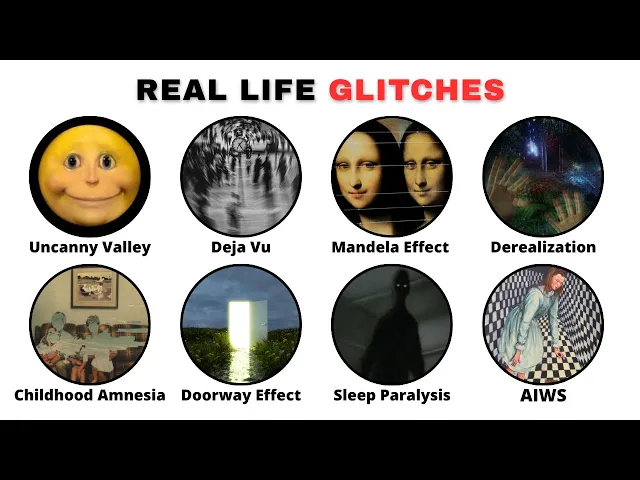
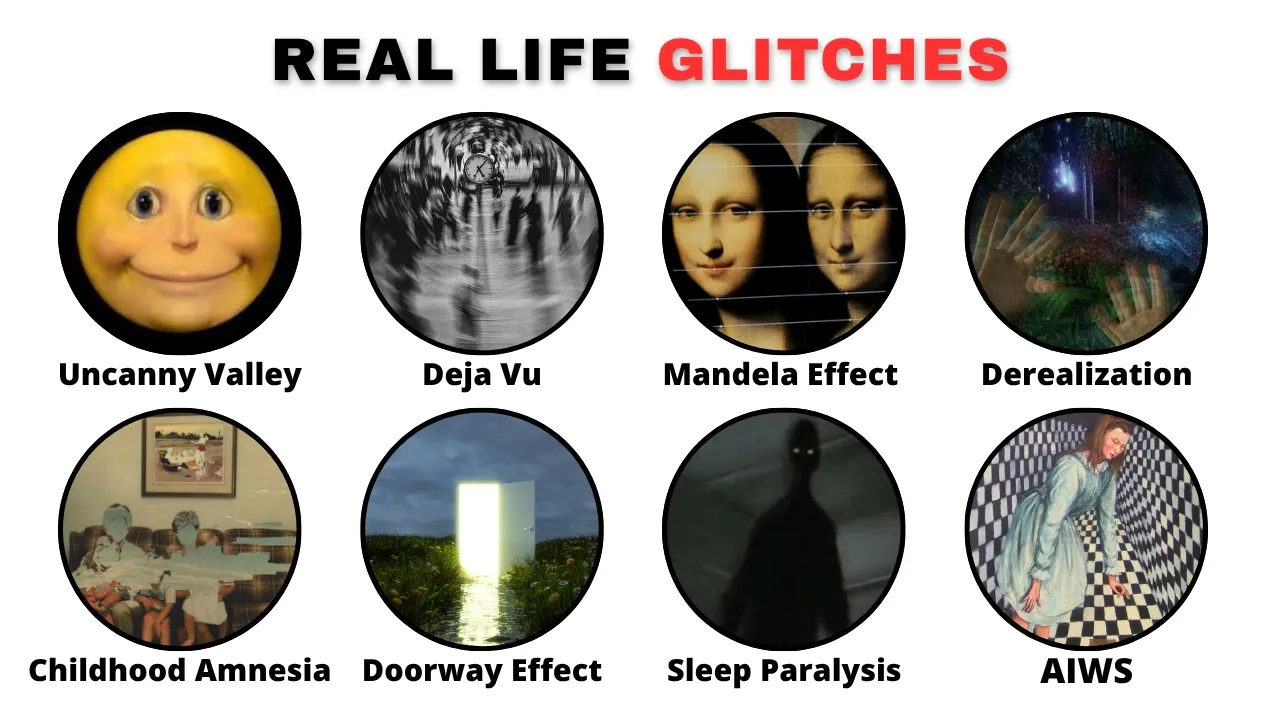
Uncanny Valley. There's a specific kind of discomfort you get when something looks almost human, but not quite. A CGI character in a movie that's realistic, but something about the eyes feels wrong.
A humanoid robot that moves slightly too smoothly or slightly too stiffly. A wax figure of a celebrity that looks exactly like them, but somehow makes your skin crawl. This is called the Uncanny Valley.
The name comes from the idea that as something becomes more human-like, your comfort with it generally increases right up until it gets very close to human. And then suddenly, your reaction drops off a cliff into unease. It's a valley on a graph between clearly not human and actually human.
And things that fall into it trigger a deep, instinctive wrongness. The leading explanation is that your brain is pattern matching constantly, and something that's close but not right triggers a mismatch alarm. It also may have evolutionary roots.
Humans learned to detect subtle signs of illness, injury, or deception in other humans. And something that looks almost but not quite right activates that ancient warning system. Your brain can't figure out what it's looking at, and that uncertainty reads as threat.
Déjà vu. You're somewhere you've never been before. A new city, a first conversation, a situation you definitely haven't experienced.
But there's this feeling, this sense that this exact moment has happened before. You can't say when. You just feel sure about it.
That's déjà vu, French for already seen. And almost everyone has had it. The most accepted explanation is a misfiring in memory processing.
Your brain has two systems that normally work in sync. One that handles new experiences, one that handles memory retrieval. Sometimes, the memory system fires when it shouldn't and labels a completely new moment as something familiar.
The experience is new. The feeling of recognition is a mistake. And then there's the flip side, which almost nobody's heard of.
Jamais vu. French for never seen. It's when something you know completely well suddenly feels totally unfamiliar.
A word you've written your whole life looks like it's spelled wrong. A route you've driven a hundred times feels like somewhere you've never been. It's the same glitch, just in reverse.
Your brain calling something familiar new instead of something new familiar. The Mandela effect. A lot of people have a clear memory of Nelson Mandela dying in prison in the 1980s.
The problem is, it never happened. He was released in 1990 and died in 2013 as a former president. And yet the memory feels real to a surprising number of people.
This is the Mandela effect, when large groups of people share the same false memory. The Monopoly Man having a monocle. The line being mirror, mirror on the wall when it was always >> Magic mirror on the wall, who is the fairest one of all?
>> Or when Pikachu never, ever had a black tip on his tail. Countless people remember these things the wrong way and remember them confidently. The explanation isn't parallel universes, it's just how memory works.
Your brain doesn't record events like a camera. It reconstructs them, filling in gaps using logic and expectation. The Monopoly Man wears a top hat and a suit, so of course he has a monocle.
That's what that type of character looks like, except he doesn't. The expectation was so strong that millions of brains filled it in the same way and now millions of people have the same wrong memory. Shared false memories aren't proof of alternate timelines, they're proof that everyone's memory is less reliable than they think.
Derealization. You're going about your day and then, out of nowhere, reality feels slightly wrong. Not in any way you can point to.
Everything looks the same, but it feels like you're watching your life through a pane of glass, like the world around you is a very convincing set and you're not entirely sure you're actually in it. It's like you've suddenly entered a dream in which you're slightly conscious. This is derealization and it's more common than most people realize.
It usually shows up during periods of stress, exhaustion, or anxiety and can last anywhere from a few seconds to several hours. There's another version called depersonalization, where instead of the world feeling unreal, you feel unreal. Like you're watching yourself from outside your own body, yet you feel like a stranger to this body and mind.
Both are generally the brain's stress response doing something unhelpful. When things feel overwhelming, the brain sometimes dials down the intensity of your experience as a kind of buffer. The side effect is that everything feels slightly fake.
You're both numbed and slightly panicked. It's really weird and not pleasant at all. It passes on its own for most people, and knowing what it is makes it considerably less frightening when it shows up.
Sleep paralysis. You wake up, or you think you do. You're conscious.
You can see your room. You know exactly where you are, but you can't move. Not a finger.
And sometimes there's something in the room with you. A shadow, a figure, a presence somewhere at the edge of your vision, and you still can't move. Sleep paralysis has been reported across every culture in history.
Before anyone understood it, people called it demons, witches, a supernatural visitor sitting on your chest. The Old English name was the hag. Across thousands of years and dozens of cultures, the descriptions are almost identical.
A dark figure, a weight on the chest, something watching. What's actually happening is a timing error. During REM sleep, your brain paralyzes your body so you don't act out your dreams.
Normally, this switch is off the moment you wake up. In sleep paralysis, the paralysis lingers after your consciousness returns. You're awake, but your body is still in sleep mode.
The figures are hallucinations. Your brain's still half in a dream state, generating images that bleed into waking. It's not a ghost.
It's your brain caught between two states at once. Childhood amnesia. Think back as far as you can.
For most people, the earliest clear memory is around age three or four. Before that, almost nothing. Maybe a few blurry fragments, and even those are hard to trust, which is strange because those first years were some of the most intense experiences of your life.
You learned to walk, to talk, to understand the world, and you remember almost none of it. This is childhood amnesia, and it happens to basically everyone. The part of the brain responsible for forming long-term memories, the hippocampus, is still developing in early childhood and isn't yet equipped to store experiences in a way that survives into adulthood.
There's also a language component. A lot of how we store memories involves attaching words to experiences, and before language fully develops, events are much harder to hold on to. The strange part is that young children aren't experiencing life any less vividly.
They're laughing, crying, forming attachments, having strong feelings about things. It's all happening in full intensity. It just doesn't make it through to the other side.
Whoever you were at age two is almost completely gone to you now. The doorway effect. You get up with a clear purpose, walk into the next room, and the second you get there, the thought is completely gone.
You stand there trying to retrieve it, you can't. Walk back to where you started, and then you remember. This is called the doorway effect, and it happens because your brain organizes memory by environment.
When you're in a specific space, your brain groups together the thoughts and intentions that belong to that context. Walking through a doorway triggers a kind of mental reset. The brain closes out the previous context and opens a new one.
The intention you had in the other room got filed with that room. Going back works because you've re-entered the context where the thought was formed. Your memory wasn't failing, it was organizing by location, the way it always does.
It just happens to be inconvenient when you're trying to remember why you walked into the kitchen. Alice in Wonderland syndrome. You're lying in bed or sitting quietly and something feels off about your own body.
Your hands look too small or too large. The room feels like it's stretching away from you. Objects nearby seem way bigger or way further than they actually are.
Everything feels slightly wrong in scale, like the world has been resized without telling you. This is Alice in Wonderland syndrome, named after Lewis Carroll's story where Alice spends most of her time either too big or too small for the space she's in. It's a neurological condition that distorts perception of size, distance, and sometimes time.
It's most common in children and tends to show up at night or just before sleep, though it can occur at any age. It's most often associated with migraines, viral illness, or the brain's activity just before sleep. The leading cause is thought to be unusual electrical activity in the parts of the brain that process size and spatial perception.
The same areas that, when working normally, help you judge how far away something is and how large it actually is. When they misfire, your sense of scale goes with them. Lewis Carroll himself is believed to have experienced it, which may have been part of what inspired the story.
Semantic satiation. Pick any word and repeat it 10 times in a row. Chair.
Chair. Chair. Chair.
Chair. Chair. By the end, the word has stopped sounding like a word.
It sounds like a noise, a random collection of sounds that doesn't seem to mean anything. You know what it means, but it's temporarily lost all sense of meaning and it just sounds strange. This is semantic satiation.
When you repeat a word rapidly, the neural pathways that connect the sound to its meaning get temporarily fatigued from firing so fast. The connection between the sound and the concept weakens for a moment and the meaning just doesn't load. The sound remains.
The sense disappears. It recovers within a few seconds once you stop, but in that window, completely ordinary words feel alien. It works on written words, too.
Stare at any word long enough and it starts to look like it might be spelled wrong or like something from another language entirely. Your brain just needs a short break before it can process it normally again. If you like this video, leave a thumbs up.
But if you really liked it, hit the subscribe button for more and feel free to comment new video ideas below.